Cat Carrier Pet Groomer: Mobile Salon
200 sanitation cycles should be the starting qualification for a mobile-groomer cat carrier exposed to hair, spray, shampoo residue, and frequent client turnover. Use a removable smooth lower tub, shielded zippers, rust-resistant fittings, a 10 kg working load, and a reinforced van anchor interface. Keep client animals separated and make every wet component visible for drying inspection.
A mobile salon compresses receiving, animal holding, cleaning, storage, and vehicle transport into a small moving workspace. The carrier must therefore resist wet contamination, release clipped hair, remain stable on a grooming-van shelf, and present a professional branded surface at the client's driveway. Translate appointment sequence into a raised lower tub, removable hair screens, externally shielded closures, closed-cell support, wipeable identity panels, and a restraint path compatible with the operator's approved van system. A configurable two-cell version may serve assessed cats from the same household, but each cell needs independent access and the business must prohibit cross-client sharing. Commercial planning begins with MOQ 500 pieces per colourway. Samples can be supplied in 6-10 working days for wet-clean, dryer-noise, shelf-vibration, and loaded handling trials. Once the sealed construction, branding, and sanitation protocol are approved, allow bulk production 35-50 days. Final random inspection is set at AQL 2.5, with failed closures, open anchors, sharp parts, water-damaged structural layers, or a missing load label receiving stricter disposition. This engineering path creates service equipment that can be cleaned, dried, staged, transported, and visually presented between scheduled appointments.
Pet carrier OEM builds to your drawing, while pet carrier ODM adapts an existing cat carrier platform and removes the tooling cost. Both start from the same tech pack.
Map the mobile salon's clean-to-dirty appointment flow
The carrier passes through more zones than its compact size suggests. It may enter a client's home, receive an ungroomed cat, move across a driveway, sit in a van holding position, receive clipped hair and moisture near the work area, and return with a finished animal. Map these steps in order and mark clean, transition, and dirty touch points. The return trip is not automatically clean merely because the cat is groomed; the base, handles, and vehicle shelf may still carry earlier soil.
Record appointment spacing and processing time. If the operator schedules six cats per day with twenty minutes between clients, a carrier that needs ninety minutes to dry cannot be the only rotating unit. Either the material system must dry faster under validated conditions or the business needs a larger clean inventory. Define a service target such as 250 appointment cycles, 1,500 van transfers, 2,000 door operations, and 200 sanitation cycles. This duty cycle is more relevant than a nominal warranty period because wet exposure and handling drive wear.
Establish custody states: CLEAN-STAGED, OCCUPIED, TO CLEAN, DRYING, INSPECTION, and REPAIR. Use a reversible status plate at the solid end, not a loose tag that can fall into the grooming area. The animal identity card should be erasable or insertable and should display only the information the operator needs under their privacy process. Colour cannot be the only status signal because salon lighting, fading, and colour-vision differences can create errors; pair colour with words and simple shapes.
Run a timed process simulation from home pickup through return, using inert articulated ballast before supervised animal trials. Measure door control, shelf setup, dirty-glove contact, cleaning reach, component removal, and dry-to-ready time. A mobile-groomer carrier performs correctly only when its materials and access points preserve the salon's clean-to-dirty sequence across every appointment transition.
Capacity planning should count carriers by state rather than by van. A route with six appointments may require three or four rotating units if drying overlaps later bookings, plus one quarantined spare for a zipper or contamination exception. Use a magnetic or digital board outside the wet work surface to record unit identity and state. Never place a TO CLEAN carrier in the same shelf bay as CLEAN-STAGED equipment simply because the next client is waiting. This operational allocation informs order quantity and shelf layout before the physical design is frozen.
Create a removable wet zone without trapping hair
The lowest 80 mm should function as a containment zone. Instead of relying on a fully textile floor, use a removable thermoformed polypropylene tub with 20 mm radiused corners and a shallow raised lip. A retained 4 mm board beneath the tub carries load, while a removable low-lint pad sits inside. The tub should lift out through the largest door without excessive bending, and its finger recesses must not create exposed edges or urine traps.
Where a soft pack is required, a welded TPU-coated liner can form the lower tray, but high-frequency weld geometry, corner folds, and seam continuity need validation on the finished insert. Do not advertise the whole carrier as waterproof merely because the insert contains a measured spill. Specify the test volume, dwell time, and observed migration. The structural outer shell should remain dry during the defined challenge so odour does not become embedded between layers.
Hair control requires smooth transitions. Exposed hook-and-loop, coarse binding, deep zipper coils, and open foam collect clipped fur. Use a reverse-coil zipper under a shaped shield, low-profile snaps or covered magnets only where safety evaluation permits, and tight woven binding. A removable mesh pre-screen can cover the lower ventilation intake during the grooming-stage hold, but it must preserve required open area and never detach toward the animal. Its purpose is easier cleaning, not filtration or disease prevention.
Disassemble the sample after a synthetic hair challenge. Weigh or visually grade retained fibre in the zipper, tub groove, floor sleeve, mesh edge, and anchor patches. Require tool-free removal from cleaning zones and define any area that legitimately needs a vacuum. A practical mobile-salon wet zone is removable, inspectable, and geometrically smooth enough that hair and liquid do not disappear into inaccessible structural layers.
Control noise, airflow, and staging inside the van
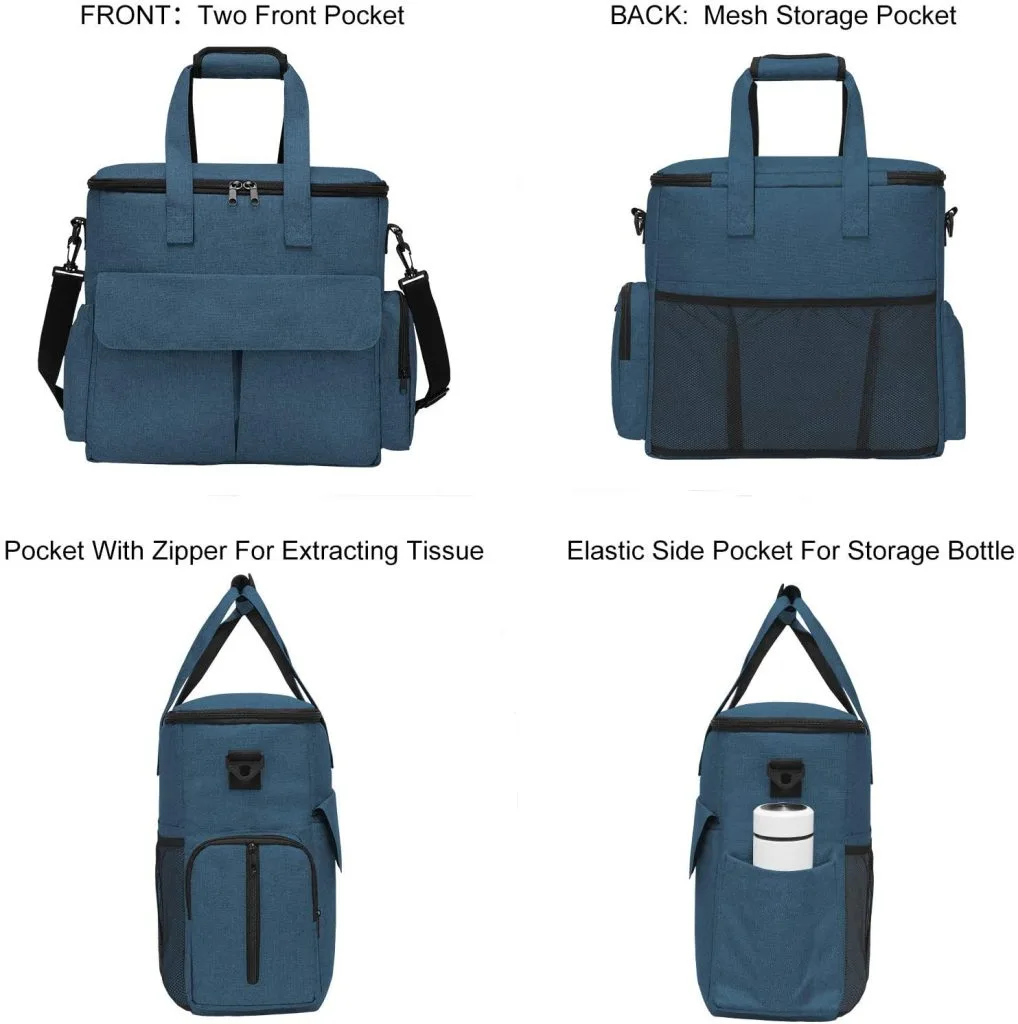
Mobile salons contain dryers, clippers, water pumps, ventilation fans, and road vibration. The carrier cannot eliminate those stimuli, but its structure should avoid adding rattles or creating a closed acoustic box. Cover metal zipper pulls with textile tabs, isolate the floor tub from hard fittings, and restrain the shoulder strap during staging. A solid partial roof can reduce direct visual stimulation, while mesh on three elevated faces maintains observation and airflow. Any removable privacy flap must stop in a defined open position and must not cover more ventilation than the operating protocol permits.
Measure the intended shelf and aisle before fixing dimensions. An outer envelope near 47 x 31 x 33 cm and 10 kg working load can serve many cats, but the groomer's actual population, shelf clearance, and lifting posture govern approval. Provide a flat, non-skid base and two restraint sleeves aligned with the van's approved strap or seat-belt system. Do not attach occupied carriers to grooming arms, water lines, or shelving that is not rated for transport.
Use an instrumented empty prototype to record sound pressure inside and outside during representative dryer and road-noise playback. Compare solid-flap positions without animals, and inspect whether vibration makes hardware strike the shell. Map airflow with all service pockets filled, the status plate installed, and the vehicle restraint routed. These tests support configuration decisions; they do not establish a universal stress response. The operator still needs behavioural observation and a plan to pause service.
Road staging should be tested with the carrier empty, centred at working load, and loaded off-centre. Verify translation, roll, strap abrasion, and access after a controlled braking input on a suitable test rig. Van-compatible design combines measured shelf fit, low-rattle construction, unobstructed airflow, and a reinforced restraint path rather than relying on a generic travel label.
Locate the carrier away from the direct spray arc, heater discharge, chemical decanting shelf, and clipper-cord route. A transparent footprint template can help the van converter reserve adequate shelf area and mesh clearance before hardware is installed. Include a minimum front-door swing volume and enough aisle width for level two-handed placement. If the van uses a lip or retaining rail, confirm that it bears on the solid base perimeter rather than the mesh or zipper shield. The product drawing and vehicle layout should identify these interface zones explicitly.
Separate same-household cats without mixing appointments
Some mobile groomers receive two cats from one household, but client separation remains absolute. A modular centre wall may divide the approved carrier into two same-household bays for short staging, with an 8 kg combined limit and a 4.5 kg limit per bay. Those example values are lower than the 10 kg single-cell limit because space, airflow, and off-centre stability become controlling factors. Cats from different homes must never share the enclosure or its divider session.
Use a smooth semi-rigid partition that keys into the removable tub and attaches at four upper covered points. Each bay needs its own end door, status marker, and ventilation path. The tub can include two shallow removable sub-trays so a contamination event in one bay does not require touching the opposite pad during unloading. This is workflow separation, not a sterile barrier, and the entire carrier still follows the full sanitation cycle before another household.
| Salon configuration | Working boundary | Construction control | Required check |
|---|---|---|---|
| Single adult cat | 10 kg declared load | Full chamber and one-piece tub | Loaded lift and shelf fit |
| Approved household pair | 8 kg combined, 4.5 kg per bay | Keyed smooth divider, separate doors | One-sided stability and airflow |
| Different client households | Never share a carrier session | Separate cleaned equipment | Appointment-state audit |
| Drying configuration | No animal present | All modules removed and exposed | Timed moisture inspection |
| Vehicle staging | One approved position per carrier | Non-skid base and restraint sleeves | Braking-simulation observation |
Test the divider against a 150 N distributed side force, 250 installation cycles, and 200 cleaning cycles. Inspect lower-key wear and verify that opening one bay cannot release the other. Multi-cat capacity in a mobile salon must be limited to assessed same-household cases, with independent bays and a sanitation rule that still treats the complete unit as one appointment asset.
Select chemistries and materials for wet, repeated service
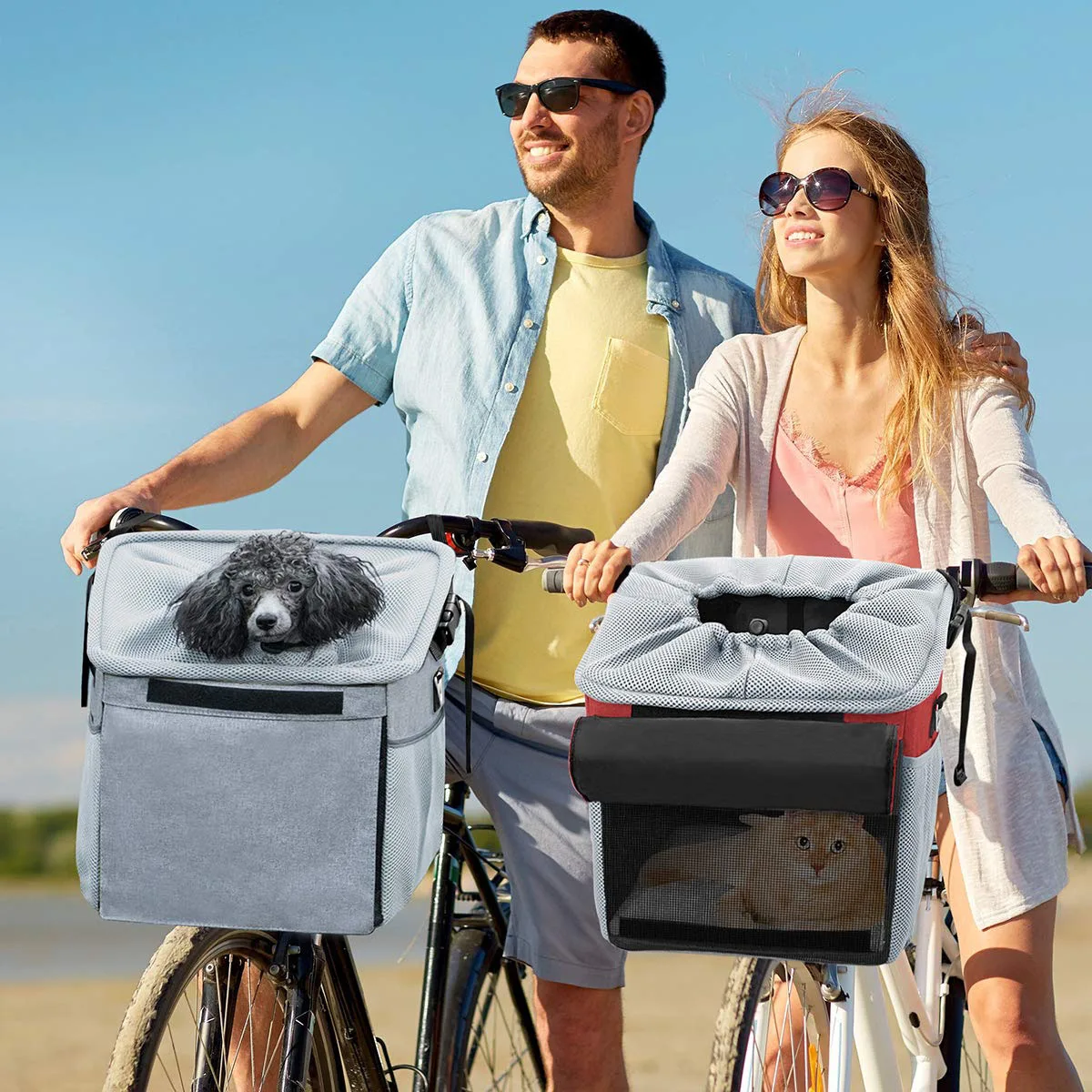
A suitable body stack may combine 600D solution-dyed polyester upper panels, a 1200D abrasion layer at the base corners, smooth 300D PU-coated lining, and the removable polypropylene tub. Use polyester webbing and bonded polyester thread to limit moisture retention. Closed-cell EVA can cushion the floor or shoulder pad if edge sealing and compression recovery pass testing. Select acetal hardware for noncritical adjustments and corrosion-resistant metal only where a metal load path is justified.
Collect the groomer's actual shampoo residues, disinfectant, descaler risk, and general-purpose wipes in a compatibility list. Shampoo can leave surfactant films that attract soil, while concentrated salon chemicals may attack prints or coatings. Test coupons with realistic diluted products and a documented accidental-concentrate splash. On completed bags, run 200 normal sanitation cycles, 50 shampoo-residue cleanups, and 20 hard-water drying cycles. Evaluate gloss, tack, whitening, swelling, seam wicking, odour, tub fit, and label readability.
Drying must be measured after reassembly as well as while disassembled. The shell can feel dry while moisture remains under the tub or within a bound lower seam. Use mass comparison and touch-free moisture measurement where appropriate, with a defined release criterion. Do not place the assembled carrier directly in a high-temperature grooming dryer unless that process has been designed and validated; heat can distort boards, coatings, adhesives, and stays.
For chemical sourcing controls in relevant markets, purchasing teams can consult the European Chemicals Agency and translate applicable obligations into component-level declarations and tests. Mobile-salon material approval requires resistance to the named grooming and sanitation chemicals in the actual sequence, not a generic “washable” statement.
Material mass also affects the groomer's repeated lift. Record the complete dry mass with tub, board, pad, straps, and divider covers, then record the mass immediately after the standard wipe-and-drain process. An unexpected increase indicates water retention in bindings, webbing, or foam. Set a maximum acceptable wet-mass gain and check the heaviest likely configuration during shelf-transfer trials. Reducing fabric weight is not automatically beneficial if it lowers abrasion life; the correct decision balances retained moisture, carry effort, seam performance, and cleaning access in the finished assembly.
Put mobile branding on cleanable, camera-safe surfaces
The carrier may appear in driveway handovers, van tours, before-and-after posts, and franchise training. Use a low-lustre solid side panel that photographs without bright reflections and can be wiped without disturbing the mark. A 120 x 60 mm replaceable TPU or woven badge provides clear identity while leaving the coated lower splash zone uninterrupted. Keep artwork away from the status marker so a promotional shape cannot be mistaken for CLEAN or TO CLEAN.
Dark black surfaces hide some hair but show mineral spots and create harsh contrast on camera. A medium graphite, muted teal, or warm stone colour can balance soil visibility and presentation. Approve physical swatches with common white, black, and tabby hair placed on the surface, then photograph under daylight, van LEDs, and phone flash. Set a gloss range or signed visual standard for the main panel and badge rather than describing the finish only as premium.
Decoration must survive the sanitation protocol. Run badge peel, colour rub, and edge-lift checks after 200 cycles. If embroidery is selected, keep it on a removable patch so dense needle holes do not penetrate a containment panel. Screen or transfer ink needs adhesion testing on the actual coating. Franchise names or operator identifiers can use a separate narrow slot, allowing personnel changes without replacing the safety label or main shell.
Brand layout should remain visible with the carrier on its van shelf, at knee-height handover, and during a level carry. Photograph the decorated sample in those positions with restraint straps and handles installed. Include one wet-surface photograph after wiping, because residual droplets can change apparent colour and contrast. Check the mark from three metres in the driveway but keep safety labels readable at handling distance. A practical approval set records lighting, camera exposure, sample lot, and badge process so later franchise orders can be compared without relying on memory. Effective mobile-groomer branding is replaceable, low-glare, chemically durable, and visually separate from hygiene-state information.
Control welded inserts, sewing, and corrosion-sensitive parts
The removable tub or welded liner introduces processes beyond ordinary sewing. For a thermoformed tub, control resin grade, sheet thickness, corner radius, trimming edge, dimensional shrinkage, and fit in the retained sleeve. For a welded TPU insert, specify film weight, weld width, electrode geometry, overlap, and peel acceptance. Inspect every containment insert for uninterrupted joints using a defined low-pressure or liquid method that will not damage the product.
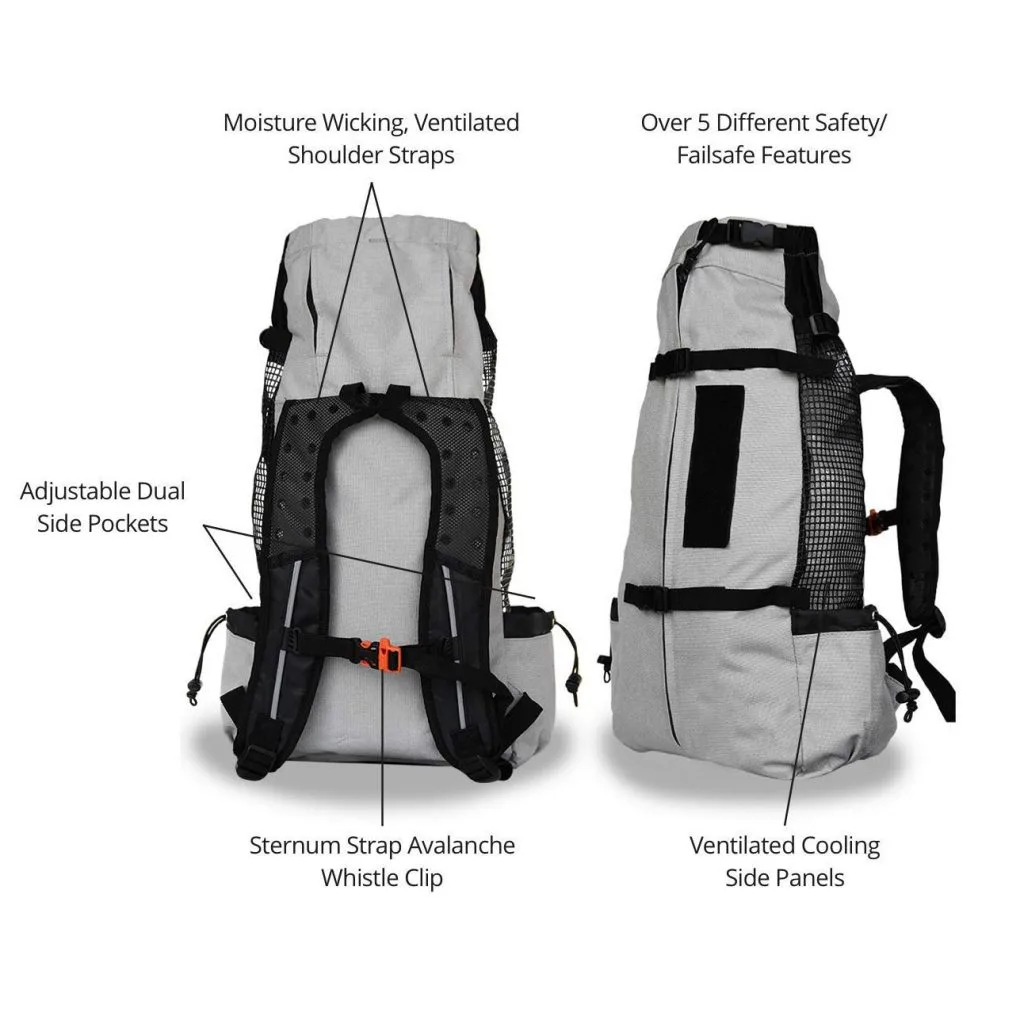
Load sewing remains independent from the wet insert. The 25 mm webbing cradle should pass under the rigid board and connect to handles and van-restraint sleeves through reinforced patches. Inspect the path before closing the lining. Protect thread lines from direct floor contact with the 1200D corner layer. Reverse-coil door zippers require controlled shields that do not enter the slider, and removable hair screens need captive fasteners with no loose interior component.
Metal fittings should be minimized, then documented by alloy or finish and placement. Run corrosion screening after chemical exposure because a finish that survives salt mist alone may react differently to salon residues. Needle and broken-part control is essential in an enclosed animal product. Conduct illuminated interior inspection after thread trimming, paying particular attention to tub recesses and partition fittings where fragments could hide.
The production team should approve first pieces at insert forming or welding, shell assembly, cradle closure, divider fitting, decoration, and pack-out. Maintain gauge records for tub fit and restraint spacing. The SGS-verified production base can retain sealed inserts, material swatches, seam coupons, and a complete golden sample for repeat-order comparison. Mobile-salon consistency requires separate controls for liquid containment and structural carrying, then a final fit test proving both systems work together.
Pack-out must prevent the thermoformed part from creating permanent creases in mesh or shell panels. Use a shaped insert or controlled nesting orientation and limit the number of tubs nested together according to compression trials. Each carton should contain matched shell, tub, floor board, pad, screen, status plate, and instruction revision; loose service parts belong in separately labelled packs. After seven days in the proposed export pack, erect a sample without heat, inspect recovery, fit the tub, operate every door, and repeat a short leak challenge before approving carton density.
Verify wet service, vibration, load, and clean release
Begin with a 15 kg static proof load for one hour against the proposed 10 kg single-cell working load. Run 1,500 handle lifts and 750 shoulder cycles with the assembled wet-zone module installed. Add 20 ml of water to the tub before selected cycles to reveal unwanted movement, while ensuring the test remains controlled. Measure webbing migration, floor deflection, tub displacement, and door alignment. Repeat off-centre tests for the dual-bay configuration at its lower limits.
Cycle each door 2,500 times with synthetic hair applied at planned intervals, then clean according to instructions and record zipper force. The removable tub completes 500 insertions, and the divider completes 250. Conduct a 30-minute van-vibration profile on occupied-weight dummies, checking restraint-sleeve abrasion, hardware noise, status-marker retention, and floor movement. Follow with the configured braking simulation; these tests assess transport stability, not collision protection.
The containment challenge should use a declared liquid volume and dwell time, followed by blot and seam observations beneath the tub. After 200 sanitation cycles, repeat static load, zipper, tub-fit, and label tests. Inspect all surfaces under white light and use synthetic hair to verify cleaning access. Test methods can draw from relevant resources catalogued by ASTM International, with the exact conditioning and project deviations recorded.
At final inspection, AQL 2.5 covers major workmanship characteristics and packing. Critical dispositions include an open load seam, insecure exit, sharp fragment, missing tub, damaged restraint sleeve, or wet-zone part that cannot seat correctly. Final cartons should keep tubs and boards from being permanently distorted. A mobile-groomer carrier earns release only after load, wet containment, hair exposure, vibration, cleaning, and post-clean retesting confirm the same production construction.
Add a temperature-conditioning sequence to reflect parked-van storage without implying that an animal may be left in the vehicle. Condition empty samples at the agreed high and low storage temperatures, return them to room conditions, and examine tub dimensions, coating blocking, zipper force, stay recovery, badge adhesion, and odour. Repeat the shelf fit and one loaded lift. This test addresses equipment storage only; operating labels must still require active climate control whenever an animal is present. Any temperature limits belong in the equipment manual and shipping specification.
Why brands source here
- Pet carrier programs run since 2014; founding team in sewn goods since 2004
- SGS-verified production floor of 4,950 m² with 137 workers across 7 lines
- Monthly capacity of 200,000 units, audited to BSCI and ISO 9001
People Also Ask
What makes a cat carrier suitable for a mobile groomer?
It needs a removable wet zone, hair-controlled closures, fast inspection and drying, low-rattle van staging, reinforced restraint, and durable professional branding.
How many sanitation cycles should a grooming carrier pass?
This program uses 200 completed cycles as a design target, followed by repeat load, closure, fit, and label checks to detect chemical aging.
What material resists grooming-salon moisture?
A qualified coated polyester shell with a removable polypropylene or welded TPU lower insert can work when the exact laminate, seams, and chemicals are tested together.
How should a carrier dry between grooming clients?
Remove the tub, board, pads, screens, and divider, expose every surface in a defined rack orientation, and release only after the measured drying criterion is met.
Can a grooming carrier have two compartments?
Yes for approved cats from one household, using a keyed smooth divider, independent doors, separate sub-trays, and reduced load and duration limits.
How is a mobile carrier tested in a van?
Verify shelf fit, restraint routing, vibration noise, translation, roll, airflow clearance, and controlled braking performance with centred and off-centre test loads.
Where should mobile-groomer branding be applied?
Use a replaceable matte badge on a solid wipeable panel, away from wet containment, ventilation, status controls, and restraint straps.
Frequently Asked Questions
Can a mobile groomer use one carrier for different clients?
Yes, only after the complete carrier follows the approved cleaning, drying, reassembly, and inspection process. Different client animals must not share one carrier session.
Is the lower tub completely waterproof?
State only the measured containment performance. The removable tub may resist a defined volume and dwell time, but that does not make the entire textile carrier waterproof.
Can the carrier go under a grooming dryer?
Not unless the complete material stack has been validated for the temperature and airflow. Disassembled ambient drying is safer for many coatings, boards, and stays.
How is clipped hair removed from the zipper?
Use a shielded reverse-coil design, follow the specified vacuum or brush step, and verify slider force after a synthetic-hair cycle during qualification.
Can two cats from one household share the carrier?
Only assessed cats may use the independent divided bays within the lower individual and combined limits. The operator's behaviour and health policy still governs use.
What colour best hides salon soil?
A medium matte neutral often balances hair visibility, water spots, and camera presentation better than deep black. Approval should use actual hair and lighting trials.
How is the carrier restrained in a grooming van?
Use the reinforced sleeves with the operator's approved vehicle system and a dedicated stable position. Never attach it to a grooming arm or unqualified shelf fitting.
What is included in a wet-zone service kit?
A coded tub or welded liner, low-lint pads, hair screens, status markers, and compatible floor components can be supplied as controlled replacement parts.
How often should the wet zone be inspected?
Inspect it after every appointment and conduct a deeper dimensional and surface review at the defined service interval or after any concentrated chemical exposure.
Can the logo be embroidered directly on the bag?
Keep dense embroidery on a removable patch and away from containment surfaces. Direct stitching through coated wet-zone panels can create cleaning and seepage problems.
What records should a franchise keep?
Track carrier identity, cleaning release, repair state, chemical exceptions, replacement parts, and retirement cause under the franchise's equipment procedure.
What causes immediate quarantine?
An insecure door, open load seam, sharp part, distorted tub, damaged restraint interface, retained contamination, or missing load instruction requires quarantine.
Talk to QUANZHOU JUNYUAN BAGS about a pet carrier program: MOQ 500 pieces per colourway, samples in 6-10 working days, bulk production in 35-50 days under AQL 2.5 inspection.
Get a free quote Request a sample