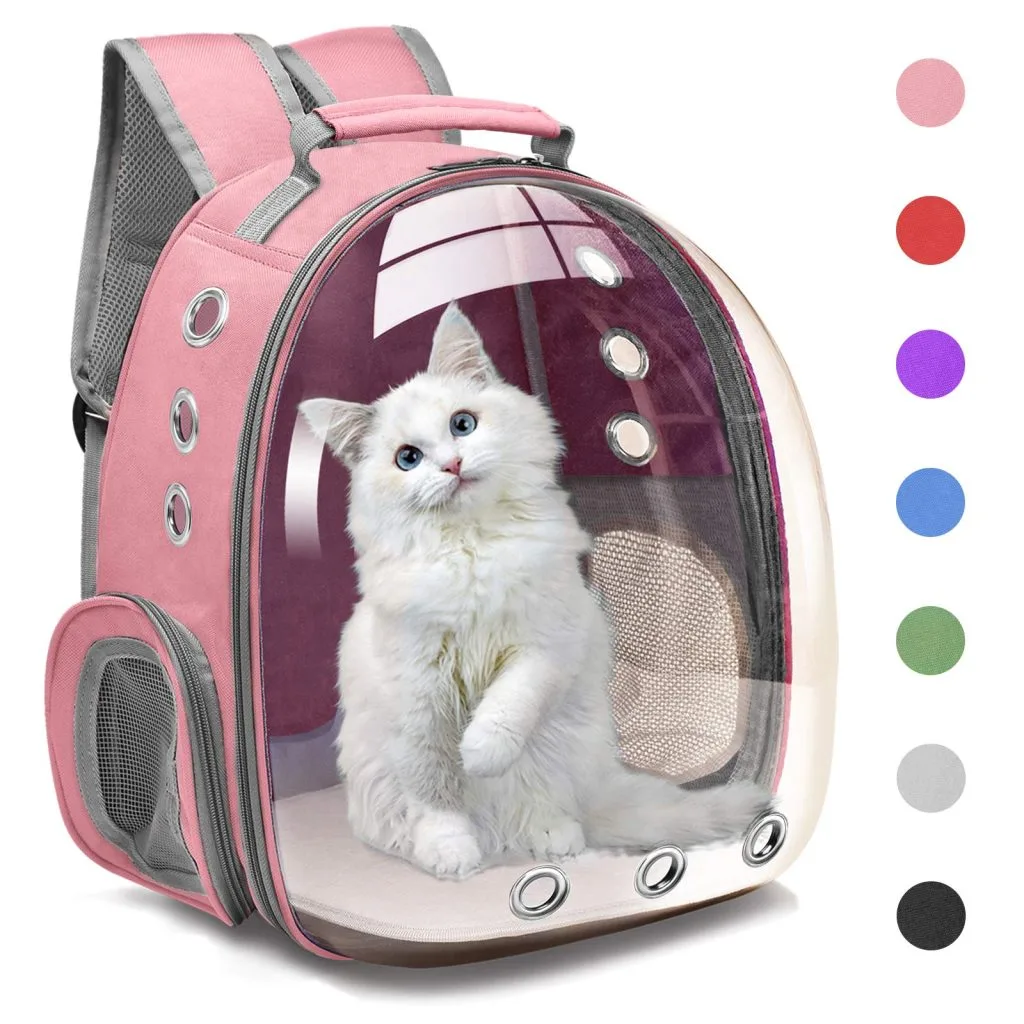
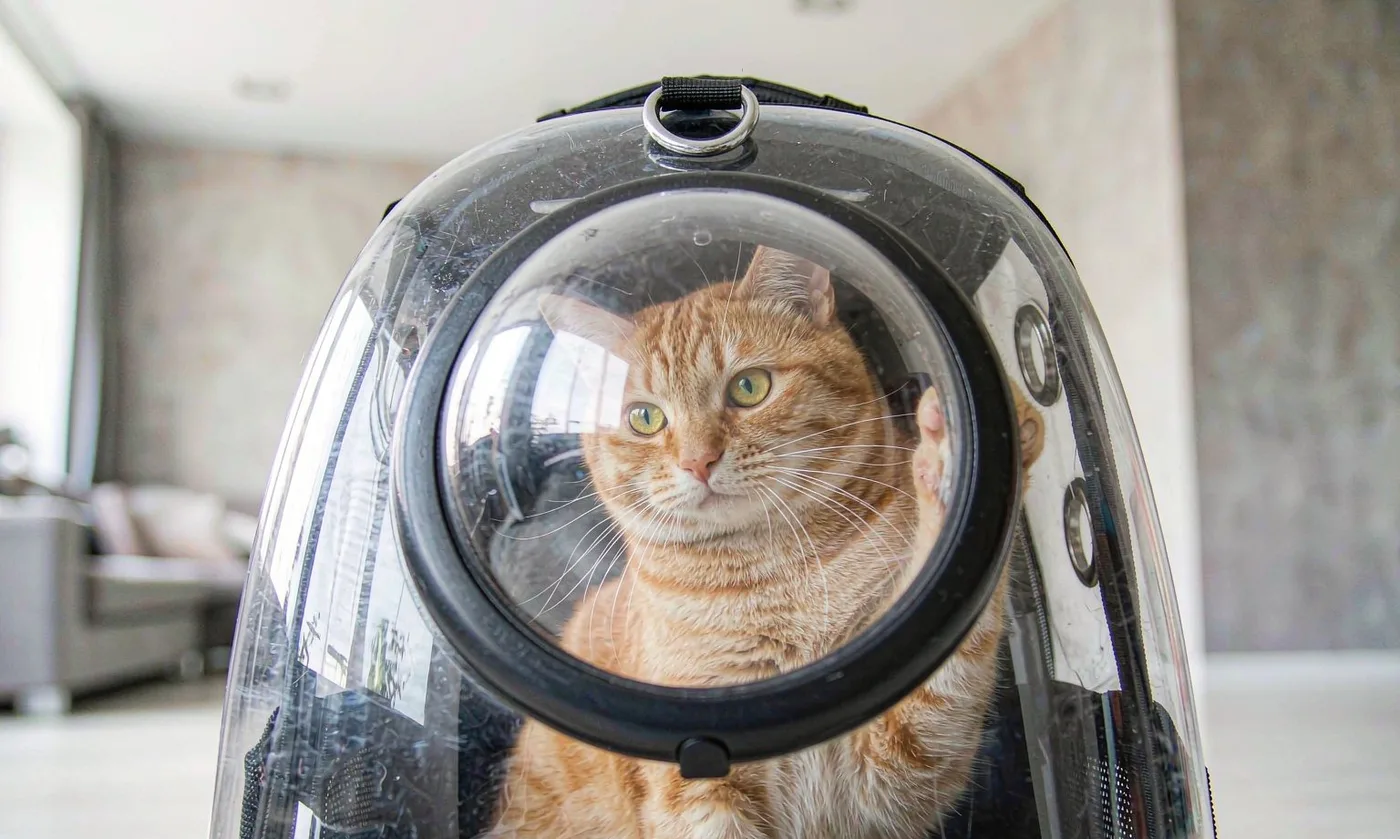
Cat Carrier & Travel Bag programmes run at MOQ 500 pieces per colourway with samples in 6-10 working days and bulk production in 35-50 days. Cat carriers engineered around escape resistance, hard-shell options and low-stress ventilation.
Specification baseline
| Item | Figure | Note |
|---|---|---|
| Target weight | 1.5-10 kg | Two size platforms |
| Closure | Reverse-coil zipper | Locking slider, inward pull |
| Shell options | Soft / hard shell | Injection or vacuum formed |
| Base | Removable 4-6 mm board | Machine washable cover |
| Ventilation | 25-40% of surface | Shaded front zone option |
| MOQ | 500 pcs / colourway | MOQ applies per shell type |
Closure engineering against escape behaviour
Cats defeat closures by pushing rather than pulling, which is why an ordinary slider bag fails. Specification starts with reverse-coil zipper tape, so the coil sits inside and a claw cannot lever the chain open, then adds a locking slider whose tab locks into the teeth rather than relying on friction. A second mechanical capture follows: either an internal tether ring clipped to a harness, or a turn-button panel covering the zipper end. During validation we run 200 push/pull cycles on a loaded shell and measure slider back-drive; anything above 1 mm of travel per cycle goes back to hardware sourcing.
Seam construction matters for the same reason. Bound internal seams remove the loose thread loops that a cat works at with its claws. Where a design genuinely needs an internal pocket seam, it is bound rather than overlocked, and the stitch density is raised so a bitten thread does not propagate into a run.
Soft shell versus hard shell
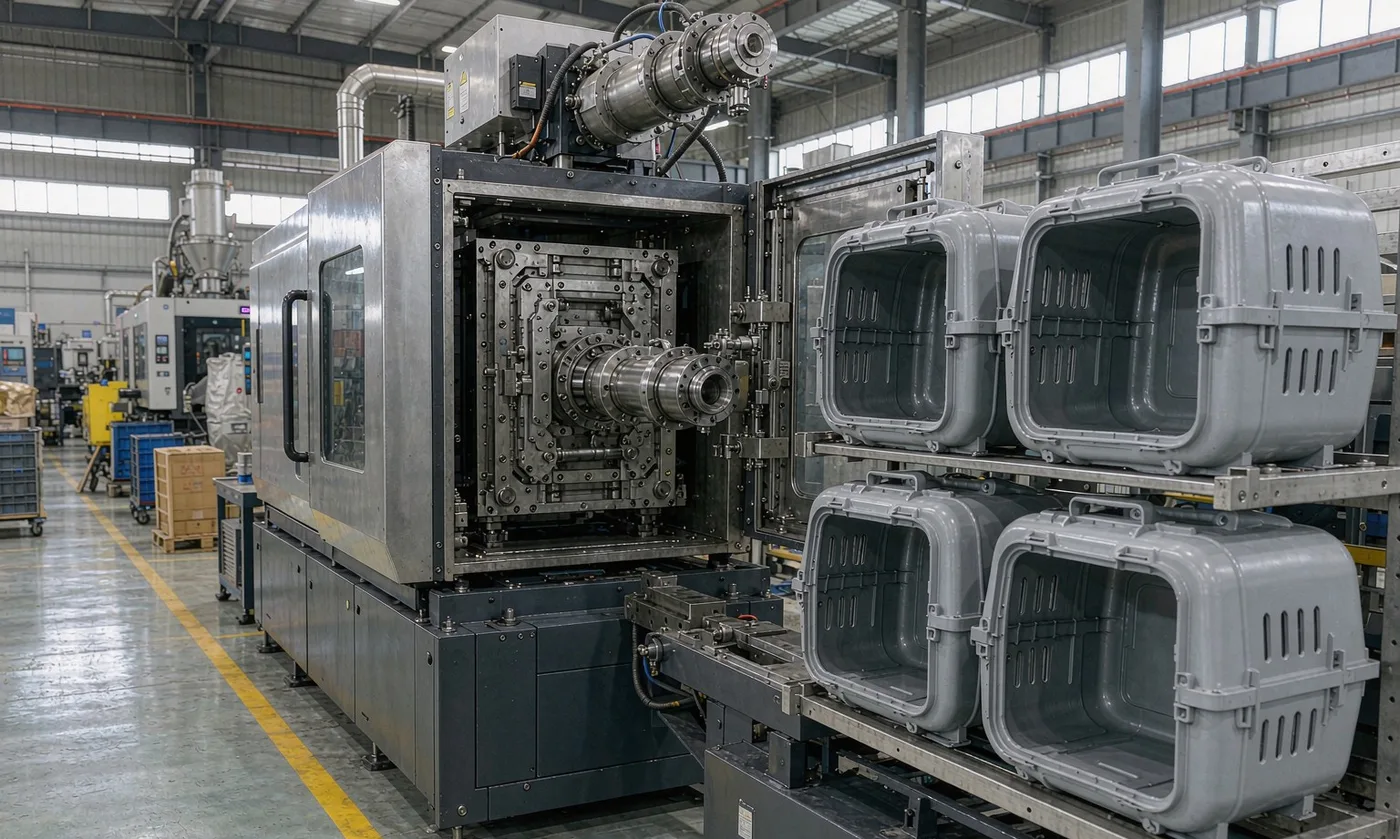
The decision is usually commercial rather than technical. Injection-moulded shells carry tooling cost but give cleaner retail stacking and better protection in cargo holds; vacuum-formed shells sit between the two. Soft shells win on packability - a folding soft carrier ships at roughly a third of the volumetric weight of an equivalent hard shell - and on machine washability, which veterinary and grooming buyers prioritise. We quote both against the same brief and show the landed cost difference per unit, because the right answer depends on whether the buyer optimises for shelf presence or freight.
| Shell type | Care method | Packability | Typical weight | Best channel |
|---|---|---|---|---|
| Soft shell | Machine washable | Folds flat | Approx. 0.9 kg | Vet and grooming channels |
| Vacuum formed | Semi rigid, wipe clean | Nestable | Approx. 1.4 kg | Mid-price retail |
| Injection shell | Full rigid, wipe clean | Stackable | Approx. 1.9 kg | Cargo and airline use |
| Hybrid soft + rail | Removable liner | Folds to half height | Approx. 1.3 kg | Pet specialty retail |
Cleaning, odour and re-use cycles
Cat carriers get contaminated more often than any other pet soft good: urine, vomit, hair and litter dust. The default specification is therefore a removable machine-washable base pad over a wipe-clean coated shell, with the zipper line raised away from the pad channel so liquid does not wick into the seam. Coatings are specified for hydrolysis resistance rather than initial beading alone, and each finish is checked after a 20-cycle machine wash to confirm the repellency has not flattened.
Specification and engineering guides
All Cat Carrier & Travel Bag articles
- Cat Carrier Manufacturer: Complete Sourcing Guide
- Wholesale Cat Carrier: Best Materials and Designs
- Custom Cat Carrier: OEM Production Process
- Cat Travel Bag: Manufacturing Standards
- Cat Carrier Backpack: Design and Features
- Cat Carrier Tote Bag: Stylish Travel Solution
- Cat Carrier Shoulder Bag: Hands-Free Design
- Cat Carrier Sling: Comfortable and Secure
- Cat Carrier Purse: Fashionable Pet Travel
- Cat Carrier Hard Shell: Airline Approved Options
- Cat Carrier Soft Sided: Lightweight Design
- Cat Carrier Expandable: Extra Space Options
- Cat Carrier Collapsible: Storage Friendly
- Cat Carrier with Wheels: Rolling Travel
- Cat Carrier with Backpack Straps: Convertible Design
- Cat Carrier for Car Travel: Safety Standards
- Cat Carrier for Air Travel: Airline Requirements
- Cat Carrier for Vet Trips: Stress-Free Design
- Cat Carrier for Grooming: Easy Access
- Cat Carrier for Kittens: Safe and Cozy
- Cat Carrier for Adult Cats: Size Guide
- Cat Carrier for Senior Cats: Comfort Features
- Cat Carrier for Multiple Cats: Double Compartment
- Cat Carrier for Anxiety: Calming Design
- Cat Carrier for Car Sick: Ventilation and Comfort
- Cat Carrier with Litter Box: All-In-One Travel
- Cat Carrier with Food Bowl: Travel Accessories
- Cat Carrier with Water Bottle: Hydration On-the- Go
- Cat Carrier with Bed Pad: Cozy Interior
- Cat Carrier with Fleece Lining: Warm and Soft
- Cat Carrier with Removable Pad: Easy Cleaning
- Cat Carrier with Washable Cover: Hygiene Guide
- Cat Carrier Waterproof: Rain Protection
- Cat Carrier Breathable: Mesh Ventilation
- Cat Carrier Anti-Escape: Safety Features
- Cat Carrier Locking Zipper: Prevent Accidents
- Cat Carrier Safety Strap: Car Seat Belt Attachment
- Cat Carrier Crash Tested: Safety Certification
- Cat Carrier Center for Pet Safety: Rated Options
- Cat Carrier with ID Tag: Identification Guide
- Cat Carrier Custom Label: Branding Options
- Cat Carrier Private Label: White Label Program
- Cat Carrier OEM: Manufacturing Process
- Cat Carrier ODM: Design and Development
- Cat Carrier MOQ: Minimum Order Guide
- Cat Carrier Sample: Lead Time and Cost
- Cat Carrier Production Time: Bulk Order Timeline
- Cat Carrier FOB China: Shipping Terms
- Cat Carrier DDP: Door-to-Door Delivery
- Cat Carrier Wholesale Price: Cost Breakdown
- Cat Carrier Packaging: Retail Box Options
- Cat Carrier Hang Tag: Custom Design
- Cat Carrier Instruction Manual: Compliance
- Cat Carrier Warranty: Quality Guarantee
- Cat Carrier Return Policy: B2B Guide
- Cat Carrier Amazon Seller: FBA Preparation
- Cat Carrier Shopify Brand: DTC Ecommerce
- Cat Carrier Pet Store: Retail Display
- Cat Carrier Veterinary Clinic: Professional Use
- Cat Carrier Animal Shelter: Bulk Donation
- Cat Carrier Rescue Organization: Wholesale Program
- Cat Carrier Pet Sitter: Professional Gear
- Cat Carrier Dog Walker: Dual Pet Use
- Cat Carrier Pet Groomer: Mobile Salon
- Cat Carrier Pet Taxi: Transportation Service
- Cat Carrier Pet Hotel: Boarding Facility
- Cat Carrier Pet Daycare: Daily Use
- Cat Carrier Pet Trainer: Training Sessions
- Cat Carrier Pet Photographer: Studio Props
- Cat Carrier Pet Influencer: Content Creation
- Cat Carrier Pet Blogger: Product Reviews
- Cat Carrier Pet Vlogger: Video Production
- Cat Carrier Pet Youtuber: Channel Growth
- Cat Carrier Pet Instagrammer: Visual Content
- Cat Carrier Pet TikTok: Short Video Marketing
- Cat Carrier Pet Facebook Group: Community Building
- Cat Carrier Pet Reddit: Niche Marketing
- Cat Carrier Pet Pinterest: Visual Discovery
- Cat Carrier Pet Twitter/X: Real-Time Updates
- Cat Carrier Pet LinkedIn: B2B Networking
- Cat Carrier Pet Medium: Long-Form Content
- Cat Carrier Pet Substack: Newsletter Growth
- Cat Carrier Pet Patreon: Fan Support
- Cat Carrier Pet Etsy: Handmade Marketplace
- Cat Carrier Pet eBay: Auction Sales
- Cat Carrier Pet Walmart: Large Retailer
- Cat Carrier Pet Target: Chain Store
- Cat Carrier Pet Petco: Pet Specialty
- Cat Carrier Pet Petsmart: Big Box Retail
- Cat Carrier Pet Chewy: Online Pet Store
- Cat Carrier Pet Amazon: Marketplace Giant
- Cat Carrier Pet AliExpress: Global Sourcing
- Cat Carrier Pet Alibaba: B2B Platform
- Cat Carrier Pet DHgate: Wholesale Portal
- Cat Carrier Pet Global Sources: Trade Show
- Cat Carrier Pet Canton Fair: Trade Event
- Cat Carrier Pet Hong Kong Fair: Asia Expo
- Cat Carrier Pet Frankfurt Fair: European Show
- Cat Carrier Pet Zoomark: Bologna Exhibition
Frequently asked questions
What is the minimum order for cat carriers?
500 pieces per colourway, applied per shell type - soft, vacuum formed and injection shells each count as their own colourway pool.
Do your carriers meet airline under-seat dimensions?
Dimensions differ by carrier, so we build to the strictest published limit you nominate and confirm the collapsed or compressed measurement in the technical pack before tooling starts.
Can the base pad be machine washed repeatedly?
Yes, standard specification is a removable pad rated for repeated domestic machine cycles, with hydrolysis-resistant coating checked after 20 wash cycles.
How do you test escape resistance?
Reverse-coil zipper tape with a locking slider, then 200 push and pull cycles on a loaded shell with slider back-drive measured per cycle. Anything above 1 mm of travel goes back to hardware sourcing.
What ventilation ratio do you specify?
25-40% of the visible surface, split between high side panels and a shaded front zone, because full exposure raises stress in cats even when airflow is technically adequate.
Which shell type sells best in retail?
Soft shells lead on packability and freight cost, shipping at roughly a third of the volumetric weight of an equivalent hard shell. Injection shells win where shelf stacking and cargo protection matter more than freight.
Can the shell carry our printed artwork?
Yes. Soft shells take heat transfer or screen print on the panel before assembly; injection shells take an in-mould label or a printed insert, which is quoted with the tooling.
Are the materials REACH and Prop 65 compliant?
Material sets are declared against REACH SVHC and California Prop 65 at quotation stage, and the test report is tied to the exact dye lot and hardware batch shipped.
Can we mix shell types in one order?
Yes within a colourway pool, but each shell type carries its own tooling or mould scheduling, so mixed orders are planned as separate production windows inside one shipment.
How many sample revisions are included?
The first prototype ships in 6-10 working days after tech pack confirmation, and each revision round typically adds 3-5 working days. Pattern changes that need a new mould are quoted separately.
How long does sampling take?
First prototypes ship in 6-10 working days after the tech pack is confirmed; revisions typically add 3-5 working days per round.
What about bulk lead time?
35-50 days after sample approval, depending on material availability and order size.
Planning a cat carrier & travel bag programme? MOQ 500 pieces per colourway, samples in 6-10 working days, bulk production in 35-50 days under AQL 2.5 inspection.
Request a quote Ask for samples