Cat Carrier Safety Strap: Car Seat Belt Attachment
A cat carrier seat belt attachment should use 25 mm polyester webbing rated 8-12 kN with 8-15 % elongation, sewn to the carrier with a box-X pattern carrying at least 2.5 kN, and routed so the belt loads the frame rather than a fabric panel. The design load case is a 6 kg cat at 20 g, which is 1.2 kN applied over a 30-50 ms pulse.
Securing a carrier in a vehicle is a restraint engineering problem, and it is governed by a load case that can be calculated before anything is sewn. A 6 kg cat in a 20 g deceleration produces 1.2 kN of force, applied in 30-50 milliseconds, and every component between the animal and the vehicle structure has to carry that load with margin. The components that actually fail in testing are rarely the webbing, which is cheap and strong; they are the stitch pattern that attaches the webbing to a fabric shell, the anchor point geometry, and the load path through a structure that was never designed to take one. Our production team specifies restraint systems on four axes: webbing, hardware, attachment and load path, and validates the whole assembly on a sled rather than on a static pull test, because a static test does not reproduce the pulse. Commercial terms follow the standard programme: MOQ 500 pieces per colourway, prototypes in 6-10 working days, bulk production 35-50 days after sample approval, final random inspection to AQL 2.5, T/T 30/70 and FOB Xiamen.
Private label pet bags sit at the centre of most cat carrier briefs we handle: the buyer owns the brand, the barcode and the artwork, while our production team holds the pattern.
The Load Case: What a Collision Actually Demands
Restraint design starts from a deceleration pulse, not from a force. A vehicle in a frontal impact at 50 km/h into a deformable barrier produces a mean deceleration of 18-25 g over 60-120 ms, with a peak of 35-50 g for a shorter duration. The restrained mass is the cat plus the carrier, and the load is that mass times the deceleration.
For a 6 kg cat in a 2.5 kg carrier at 20 g, the load is 8.5 × 20 × 9.81, which is about 1.67 kN, and at a 35 g peak it is about 2.9 kN. Those are the numbers a restraint has to carry. A 25 mm polyester webbing of standard automotive grade has a minimum breaking strength of 8-12 kN, so the webbing itself has a margin of 3-7×, which is why webbing almost never fails. The margin exists in the webbing and disappears at the attachment, which is where the engineering effort belongs.
Duration matters as much as magnitude. A 30-50 ms pulse is short enough that materials do not have time to redistribute load, so local stress concentrations at a stitch line or at a hardware radius behave differently from the same load applied slowly. A webbing anchor that holds 3 kN on a static tensile tester can fail at 1.8 kN on a sled, and that difference is the entire reason for dynamic testing.
There is no regulation that sets a performance requirement for pet carrier restraints. Child restraint systems are regulated and pet products are not, which means the design has to be justified by reference to the nearest applicable body of practice. Two references are useful: the child restraint test pulse, and the independent crash test work carried out for pet travel products, which is published by the Center for Pet Safety at centerforpetsafety.org. Aligning a design to the published pulse and to their published pass criteria is the most defensible position available to a brand.
| Load case | Mass restrained | Deceleration | Peak load | Design margin target |
|---|---|---|---|---|
| Emergency braking | 8.5 kg | 0.8-1.1 g | 0.08 kN | 20× |
| Hard braking with slide | 8.5 kg | 1.5-2.0 g | 0.17 kN | 10× |
| Frontal impact, 30 km/h | 8.5 kg | 12-16 g | 1.3 kN | 3× |
| Frontal impact, 50 km/h | 8.5 kg | 18-25 g mean | 2.1 kN | 2× |
| Frontal impact, peak pulse | 8.5 kg | 35-50 g peak | 2.9 kN | 1.5-2× |
The table is the reasoning behind the specification. Every component in the load path is specified to at least 1.5 times the 2.9 kN peak, which means a working minimum of 4.5 kN at the attachment and 8 kN at the webbing.
Webbing Specification: Material, Width, Strength and Elongation
Webbing is the cheapest strong component in the assembly and the easiest to specify correctly, provided the specification includes more than the width.
Material is polyester, not polypropylene or nylon. Polyester has a moisture regain near 0.4 %, it resists UV degradation better than nylon, and it holds its dimensional stability under load. Nylon is slightly stronger per unit width but it stretches 18-25 % at break and it loses 15-25 % of its strength after prolonged UV exposure, which matters on a product that sits on a rear seat in sunlight. Polypropylene is cheap and it has poor UV and abrasion resistance, and it should not be used in any load path.
Width of 25 mm is the standard and it gives a breaking strength of 8-12 kN in a plain weave at 1.2-1.5 mm thickness. A 20 mm webbing gives 6-9 kN, which is still above the design load, and it is used where a slimmer appearance is wanted. Below 20 mm the webbing becomes uncomfortable to handle and the stitch pattern has less area to work with, which is the real constraint.
Elongation is the parameter buyers forget. A webbing that elongates 8-15 % at 2 kN absorbs energy and reduces the peak load transmitted to the carrier structure, which is beneficial. A webbing that elongates under 5 % is stiff and transmits a sharper pulse; one above 20 % lets the carrier travel too far and strike the seat back or the vehicle interior. The target band is 8-15 % at the design load, and it is measured on a tensile tester at a crosshead speed appropriate to a quasi-static test, with the pulse behaviour verified separately on the sled.
Two further properties are specified. Abrasion resistance, because a strap that rubs against a seat edge or a buckle loses strength: a webbing abraded for 5,000 cycles against a standard abradant should retain above 80 % of its breaking strength, and a webbing that has been cut or nicked should not be used at all. And UV stability, tested as a strength retention after 300-500 hours of accelerated exposure, with a minimum retention of 70 %, which is the difference between a strap that is safe in year five and one that is not.
Attachment Topologies: Pass-Through, Clip-On and Tether
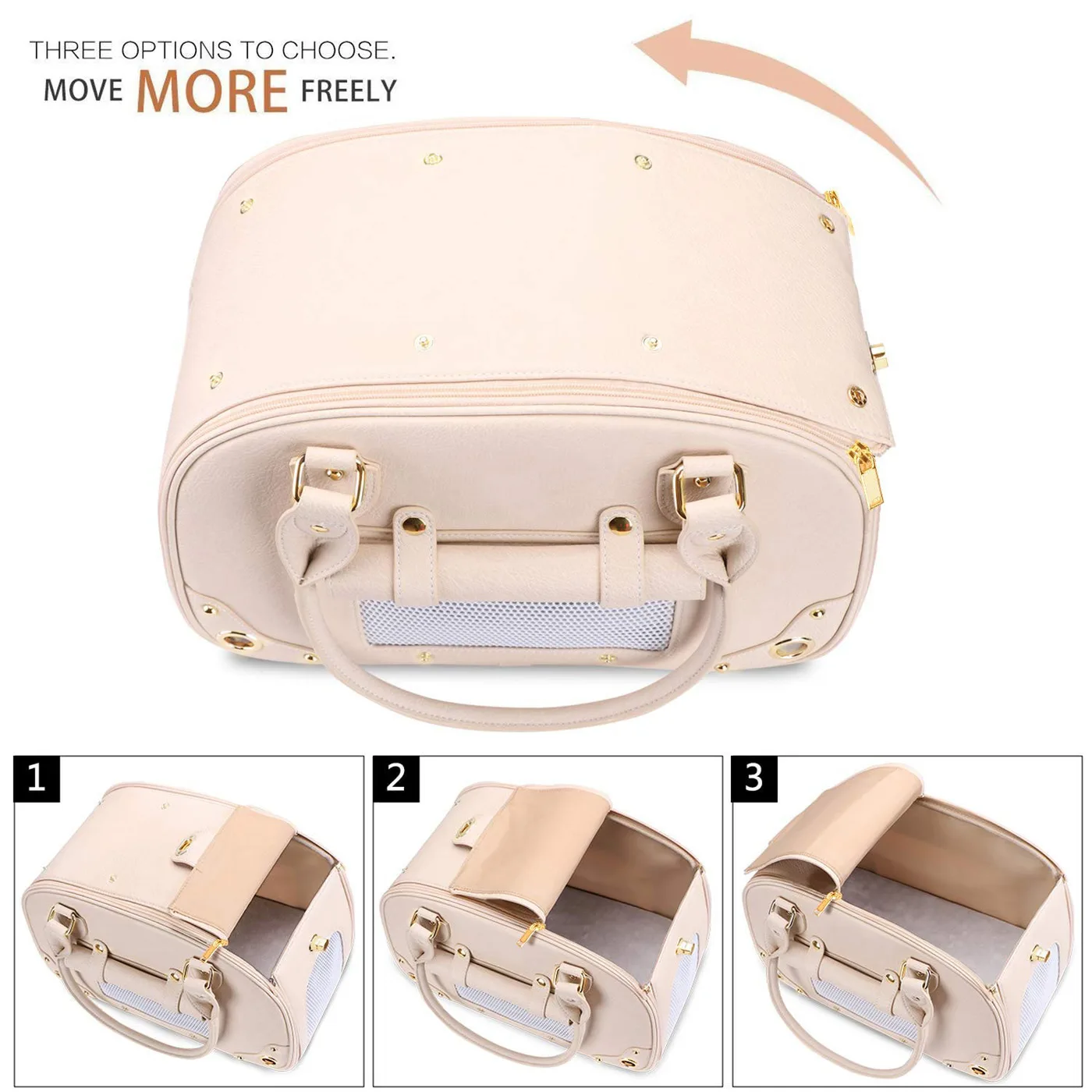
Three topologies are used to connect a carrier to a vehicle, and they differ in how much of the load the carrier structure has to carry and in how much the user can get wrong.
A pass-through sleeve is a webbing or fabric tunnel on the back or the base of the carrier through which the vehicle seat belt is threaded. It is the simplest and the most foolproof topology, because the vehicle belt, which is rated far above any load in this application, does the restraining and the carrier only has to hold the sleeve. It costs 0.35-0.75 USD. Its weakness is geometry: a sleeve on the back panel restrains the carrier against forward motion but allows it to rotate, and a sleeve at the base is more stable but harder for a user to thread. The correct construction is two sleeves, one vertical at the back and one horizontal at the base, which prevents both translation and rotation.
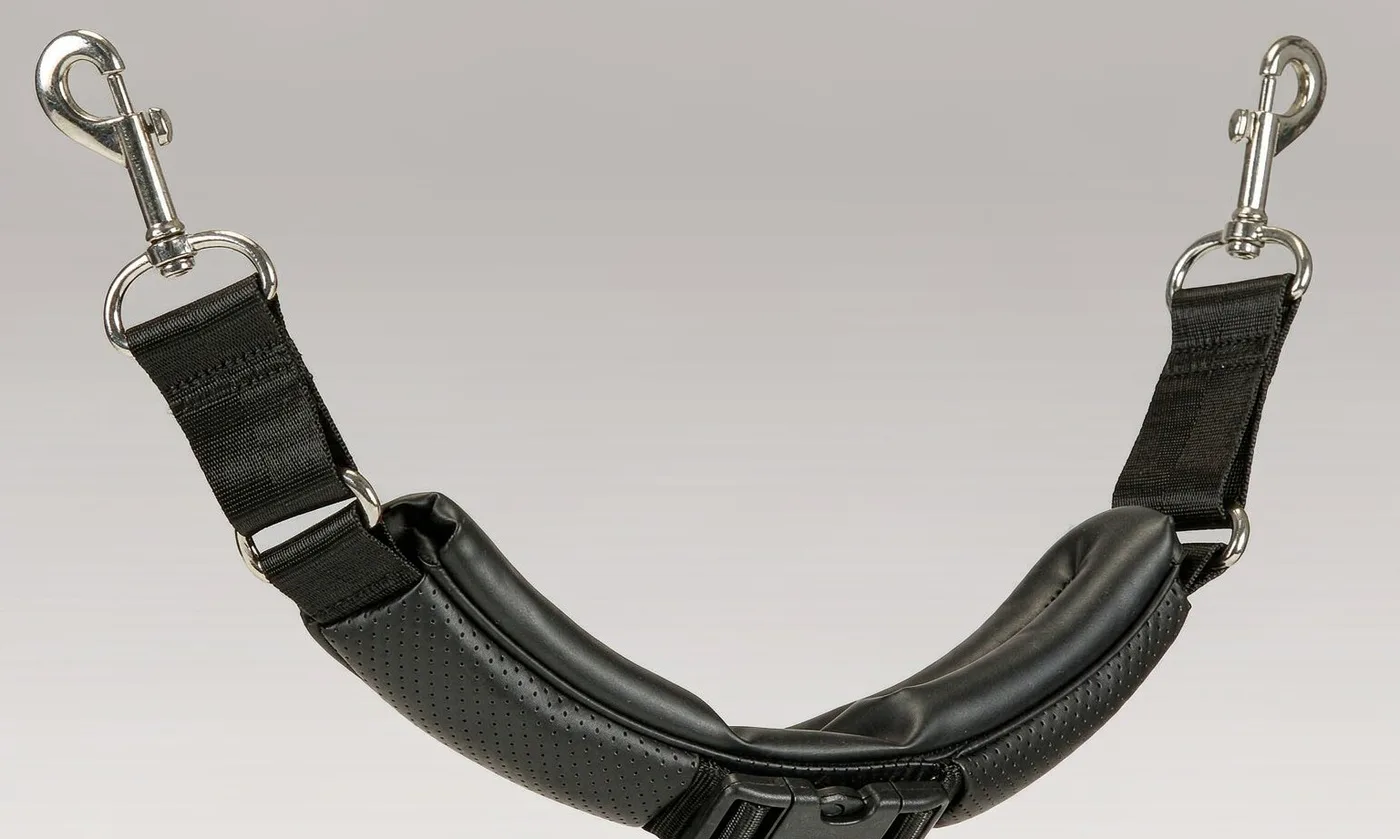
A clip-on strap is a webbing assembly, usually 1.2-1.8 m long, with a buckle or a snap hook at one end and either a loop or a fixed attachment at the carrier. It is the most flexible topology and the one with the most user error, because it can be routed around a seat back, through a belt path or around a headrest post in ways that either work or do not. The specification should include a routing diagram, and the strap should be marked at the correct length, because an unmarked strap is fitted differently every time.
A tether connects an anchor point on the carrier to a fixed point in the vehicle, usually a child seat top-tether anchor, a load anchor in the boot or a seat frame. It is the topology that best prevents rotation, and it is the least available, because dedicated anchor points are not present in all markets. Where a tether is used it should be adjustable over 300-600 mm, fitted with a cam or a ladderlock adjuster, and rated to the same 4.5 kN as the rest of the load path.
Our production team recommends a pass-through sleeve as standard on any car-oriented carrier and a clip-on strap as an accessory, because the sleeve cannot be misrouted and the strap can. Where a buyer wants both, the two are complementary rather than redundant: the sleeve handles the crash load and the strap suppresses the everyday sliding and tipping that accounts for most customer complaints.
Stitch Patterns and Anchor Engineering
The attachment is where restraint systems fail, and the reason is that a stitch line concentrates load into a fabric that was not designed to carry it. Four parameters control the outcome: pattern, thread, reinforcement and the substrate.
Pattern is the first. A straight stitch line of 50 mm sewn across a webbing end reaches 1.2-1.8 kN before the thread tears through the fabric. A box-X pattern, two crossing diagonal lines inside a rectangle, reaches 2.5-4.0 kN because it distributes the load across four legs at different angles rather than along one line. A full box with an X inside, sewn over a 40 × 50 mm area, is the pattern our production team specifies for any restraint anchor, and it costs 0.05-0.12 USD more than a straight line.
Thread is the second. Bonded polyester in a 30s or 40s count, with a minimum single-thread strength of 20-30 N, is the correct choice. A cotton-wrapped thread loses 25-40 % of strength under humidity cycling, which happens in a car, and it should not be used in a load path. Thread tension matters as much as type: a loose stitch produces a loop that pulls out progressively, and a tight stitch cuts the substrate. The check is visual and tactile — the stitch should lie flat with no loop visible on either face.
Reinforcement is the third. A webbing anchor sewn directly to a 600 D shell fabric pulls through at 1.0-1.8 kN. The same anchor over a 400 D or 1000 D reinforcement patch of 60 × 80 mm reaches 2.5-4.0 kN, because the patch spreads the load into a larger area of the shell, and because the shell itself then distributes into the frame. Where the carrier has a frame, the anchor should be taken to the frame webbing rather than to the fabric, which is the single largest improvement available and typically costs 0.20-0.45 USD.
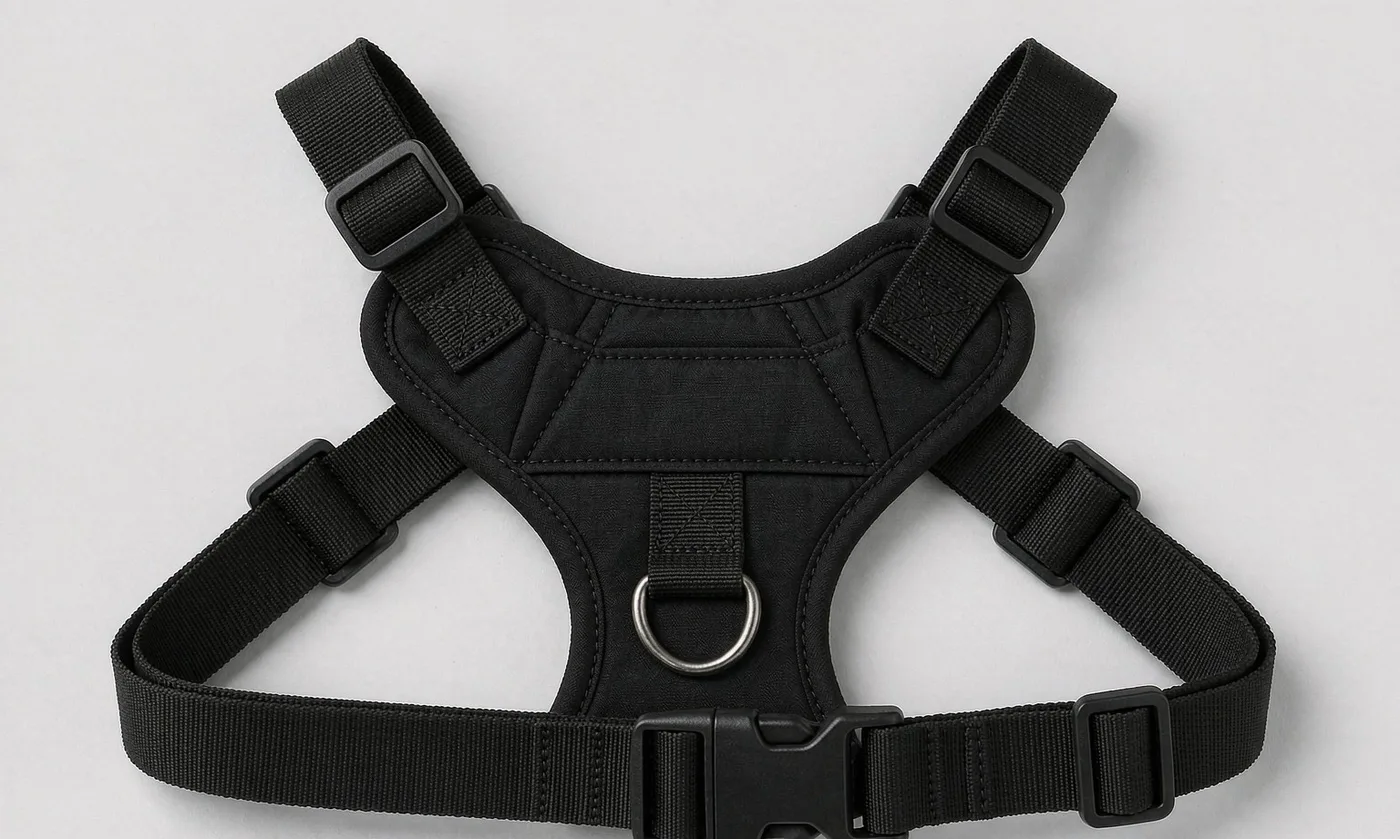
Hardware is the fourth. A snap hook or a carabiner in a load path must be rated to the full design load, which means a working load limit of at least 4.5 kN and a gate that cannot open under load. A cast zinc-alloy hook is not acceptable; a forged aluminium or stamped stainless hook is. Moulded polymer hardware is acceptable in a strap adjuster but not in a load-bearing connector, because polymer creep under sustained load is a real effect and a polymer hook deformed by a sustained seat belt preload will release.
Testing: Static Pull, Sled Pulse and Installation Study
Three test levels are used, and a restraint that passes only the first is not validated. The cost difference between them is large, which is why most suppliers stop at the first.
Static pull testing is the screening level. The assembled carrier with a mass of 8.5 kg distributed inside is restrained, and a tensile tester applies load through the attachment at 50-100 mm/min until failure. Pass at 4.5 kN with no separation and no damage to the load path. This test catches bad stitch patterns and weak anchors and it costs 60-150 USD per configuration in-house. Its limitation is that it does not reproduce the pulse, so it does not catch a load path that fails dynamically.
Sled testing is the validation level. A sled carrying a representative seat and the restrained carrier is accelerated to 48 km/h and decelerated over a defined pulse, with instrumentation recording load, displacement and high-speed video. Pass criteria are that the restraint does not separate, that the carrier does not travel more than 300 mm forward, that no component fractures, and that the simulated animal is retained. A sled run costs 800-2,500 USD per configuration depending on instrumentation, which is why it is run once per platform rather than per colourway. The published work on pet travel product crash testing at the Center for Pet Safety is the reference our production team aligns the pulse to, because it is public and a buyer can compare results against it.
An installation study is the level most often skipped and the one that determines field outcomes. Thirty to fifty users are asked to fit the carrier into their own vehicles with no instruction beyond the printed sheet, and the results are scored on whether the belt path is correct, whether the strap is routed as designed, and how long it took. A design that requires more than 90 seconds or that is misrouted by more than 20 % of users will produce complaints and, eventually, an incident. The study costs 300-900 USD and it routinely changes the design more than any other test.
Field reporting closes the loop. Any restraint programme should have a defined route for a customer to report a failure, and a rule that every reported failure triggers a pull test on a retained sample from the same batch. That is the difference between a quality system and a hope.
Interaction with the Carrier Structure
A strap is only as good as the structure it pulls on. A restraint rated to 4.5 kN attached to a fabric panel that tears at 1.5 kN is a 1.5 kN system, and the rating is meaningless. This is the conceptual error that most carrier restraint designs make.
The load path has to be traced from the vehicle anchor, through the hardware, through the webbing, into the anchor on the carrier, into the shell, and into the frame. Every link has to be rated to the same minimum. In a soft carrier the shell is usually a 400-600 D woven polyester with a tear strength of 60-120 N, which is nowhere near adequate, so the load has to be delivered to the frame. The practical methods are a webbing cradle that passes under the carrier and up both sides, so that the frame hoops take the load in compression, or a direct attachment to a base board that spans the floor and is tied to the frames.
A base board earns its place twice here. A 4-6 mm polypropylene or composite board of 350-500 g/m², spanning the floor and bolted or riveted to the frame at four points, raises the attachment capacity from 1.5 kN to 4-6 kN and adds 0.55-1.20 USD. In a crash load it is the single most effective structural measure on a soft carrier, and it also improves everyday rigidity.
Rigid carriers have a different problem. A moulded shell has the strength, but the attachment point is usually a moulded boss or a slot in the shell wall, and a boss loaded in peel rather than in shear pulls out at a fraction of its rated strength. The design rule is to load any moulded feature in shear, which means a strap that wraps the shell rather than one that bolts to a single point, and where a bolted attachment is unavoidable, a backing plate of 1.5-2.5 mm steel or 3-4 mm aluminium spreading the load over 40-60 cm².
The final structural item is the panel the animal itself loads. In a crash the cat is thrown against the interior of the carrier, and the closure, the mesh and the frame all take that load. A carrier that restrains itself perfectly but releases the animal is not a restraint system at all, which is why the anti-escape closure specification and the restraint specification have to be written together rather than as separate features.
Installation Geometry, User Error and Instructions
Most restraint failures in the field are installation failures, and they are predictable. Four errors account for the majority, and each has a design or instruction answer.
The first is routing the belt over the carrier rather than through the sleeve. It looks secure and it is not, because a belt over the top of a soft carrier compresses the animal and does not prevent forward motion. The answer is a sleeve with a high-contrast binding and a printed arrow, plus an instruction illustration that shows the belt passing through.
The second is leaving slack. A belt threaded through a sleeve but not tightened allows 100-250 mm of free travel, which converts a 20 g event into a 35-50 g one as the carrier accelerates and then stops. The answer is a sleeve with a cam adjuster and an instruction to pull the belt until the carrier cannot be moved more than 20 mm by hand.
The third is orientation. A carrier with a single rear sleeve is stable only when installed facing forward, and a cat owner will install it sideways because that is what fits. The answer is sleeves on two faces, or a clearly asymmetric design that will not sit sideways.
The fourth is placement in the vehicle. A carrier on a front passenger seat is in the deployment path of an airbag, and a deploying airbag against a carrier applies a load far above anything the restraint is designed for. The instruction sheet must state rear seat only, and it should state it as a safety instruction rather than a suggestion. General travel guidance for pets in vehicles is also available from the American Veterinary Medical Association at avma.org, and aligning the instruction wording to that guidance is both accurate and reassuring to a buyer.
Instruction design itself is a specification item. A single A6 sheet with three illustrations, printed in two colours, covers routing, tightening and placement, and costs 0.03-0.08 USD. It is the cheapest safety component in the whole product.
Cost, MOQ and the Specification Line
The cost of a properly engineered restraint package is smaller than buyers expect, because webbing and hardware are cheap and the expensive parts are testing and reinforcement, both of which are one-time or modest.
At 500 pieces: two pass-through sleeves with bound edges and a contrast binding cost 0.35-0.75 USD. A clip-on strap of 1.5 m with a cam adjuster and a forged hook costs 1.10-2.20 USD. A frame-tied anchor with reinforcing patches costs 0.45-0.95 USD. A 4-6 mm base board tied to the frame at four points costs 0.55-1.20 USD. An A6 instruction sheet costs 0.03-0.08 USD. The full package lands at 2.50-5.20 USD over a carrier with no restraint feature, and it supports a retail premium of 12-25 USD.
Testing is amortised rather than per unit. Static pull screening is run in-house on every configuration. Sled validation at 800-2,500 USD per configuration is run once per platform, so at 500 units it adds 1.60-5.00 USD and at 5,000 units it adds 0.16-0.50 USD. The installation study at 300-900 USD is likewise one-time. Buyers launching a first programme should budget 1,100-3,400 USD for validation and should treat it as a platform investment rather than a unit cost.
MOQ is 500 pieces per colourway and lead time is 6-10 working days for a sample, 35-50 days for bulk. A custom webbing colour carries a 1,000-2,000 m minimum and adds 12-20 days; a printed webbing with a brand mark carries a 3,000 m minimum and adds 18-25 days. Our production team recommends stock black webbing for a first order and custom webbing from the second.
The specification line for a tech pack reads: 25 mm polyester webbing, minimum breaking strength 8 kN, elongation 8-15 % at 2 kN, UV retention above 70 % after 300 hours, anchor sewn with a box-X over a 40 × 50 mm area on a 60 × 80 mm reinforcement patch, load delivered to the frame or to a 4-6 mm base board, hardware forged or stamped metal with a 4.5 kN working load limit, assembly pass at 4.5 kN static and at the published sled pulse with under 300 mm of travel. That single sentence is verifiable at every stage from sample to AQL 2.5 inspection.
Why brands source here
- Pet carrier programs run since 2014; founding team in sewn goods since 2004
- SGS-verified production floor of 4,950 m² with 137 workers across 7 lines
- Monthly capacity of 200,000 units, audited to BSCI and ISO 9001
People Also Ask
How much force does a cat carrier restraint need to hold?
About 1.67 kN at 20 g for a 6 kg cat in a 2.5 kg carrier, rising to roughly 2.9 kN at a 35-50 g peak. The load path is specified to 4.5 kN, giving a 1.5-2× margin.
What webbing is best for a car seat belt attachment?
25 mm polyester at 1.2-1.5 mm thickness, minimum breaking strength 8-12 kN and elongation of 8-15 % at 2 kN. Nylon stretches more and loses 15-25 % of strength under UV; polypropylene should not be used in a load path.
Is a seat belt pass-through better than a clip-on strap?
Yes, because it cannot be misrouted and the vehicle belt carries the load. Two sleeves, one vertical at the back and one horizontal at the base, prevent both translation and rotation.
What stitch pattern should hold a restraint anchor?
A box-X inside a full rectangle over a 40 × 50 mm area, giving 2.5-4.0 kN against 1.2-1.8 kN for a straight line, sewn with bonded polyester over a 60 × 80 mm reinforcement patch.
Do pet carrier restraints have a regulated standard?
No. Child restraints are regulated and pet products are not, so the defensible position is to align the test pulse and pass criteria to the published independent crash test work of the Center for Pet Safety.
How much does sled testing cost?
800-2,500 USD per configuration depending on instrumentation, run once per platform. At 500 units that is 1.60-5.00 USD per carrier and at 5,000 units 0.16-0.50 USD.
Can a carrier be installed on a front passenger seat?
No. It is in the airbag deployment path and a deploying airbag applies a load far above any design case. The instruction sheet must state rear seat only.
How much should a carrier be allowed to move when secured?
Under 20 mm by hand before departure and under 300 mm of forward travel in a sled test. Slack of 100-250 mm converts a 20 g event into a 35-50 g one.
Frequently Asked Questions
Why is static pull testing not enough?
Because a 30-50 ms pulse does not allow materials to redistribute load. An anchor that holds 3 kN on a static tester can fail at 1.8 kN on a sled, so dynamic validation is required.
What is the difference between a working load limit and a breaking strength?
Breaking strength is the load at which a component actually fails; the working load limit is the maximum load it is designed to carry, normally breaking strength divided by a safety factor of 3-5. Hardware in a restraint is specified to a 4.5 kN working load limit.
Should the strap attach to the fabric or the frame?
The frame. A 600 D shell fabric tears at 60-120 N, so a fabric anchor fails well below the design load. Taking the anchor to the frame webbing costs 0.20-0.45 USD and roughly triples capacity.
Why does a base board matter for restraint?
It gives the load somewhere to go. A 4-6 mm board tied to the frame at four points raises attachment capacity from 1.5 kN to 4-6 kN for 0.55-1.20 USD.
Can moulded plastic hardware be used in a load path?
In an adjuster, yes; in a connector, no. Polymer creep under sustained seat belt preload deforms a hook until it releases, so connectors are forged aluminium or stamped stainless.
How does UV exposure affect a strap?
Nylon loses 15-25 % of strength after prolonged exposure and polyester much less. The specification is a minimum of 70 % retention after 300-500 hours of accelerated exposure.
What is a cam adjuster and why specify one?
A spring-loaded buckle that grips the webbing and lets it be tightened in place. It is what lets a user remove the 100-250 mm of slack that turns a survivable event into a severe one.
How long should installation take?
Under 90 seconds. An installation study of 30-50 users measures this, and a design misrouted by more than 20 % of users is redesigned before release.
Does a restraint system need to work with the closure?
Yes. In a crash the animal loads the closure from inside, so a carrier that restrains itself and releases the cat is not a restraint system. The two specifications are written together.
What is the MOQ and lead time for a restraint programme?
MOQ 500 pieces per colourway, samples in 6-10 working days, bulk in 35-50 days. Custom webbing colour adds 12-20 days and printed branded webbing 18-25 days.
How much does the restraint package add to unit cost?
2.50-5.20 USD at 500 pieces for two sleeves, a clip-on strap, frame-tied anchors, a base board and the instruction sheet, supporting a retail premium of 12-25 USD.
Should the instruction sheet be printed in colour?
Two colours is enough for three clear illustrations, at 0.03-0.08 USD. It is the cheapest safety component in the product and it prevents the commonest field failures.
Talk to QUANZHOU JUNYUAN BAGS about a pet carrier program: MOQ 500 pieces per colourway, samples in 6-10 working days, bulk production in 35-50 days under AQL 2.5 inspection.
Get a free quote Request a sample