Cat Carrier Pet Facebook Group: Community Building
A community group buy needs MOQ consolidation across sizes rather than per size — 1,500 units split 25/45/30 across small, medium and large — tiered pricing from 18.90 USD at 300 units to 13.80 USD at 2,000, and per-member cartons at 0.85-2.10 USD each. Collection to delivery runs 10-14 weeks.
A community group buy is a consolidated order with an unusual constraint: the quantity is not known when the programme starts, the variant split is decided by a poll rather than by a buyer, and every unit ships to a different address. Each of those changes the manufacturing plan. This page sets out how the consolidation is structured so that MOQ is met across a variant mix rather than within a single SKU, how community size data is converted into a production split with the right allowances, how tiered pricing is built against a quantity that is still moving, and what per-member packing and labelling actually cost. It also covers the sampling pattern for a group, because the fit-test set that circulates among members is a different artefact from a buyer sample. Commercial terms follow the standard programme: MOQ 500 pieces per colourway, prototypes in 6-10 working days, bulk production 35-50 days after sample approval, final random inspection to AQL 2.5, T/T 30/70 and FOB Xiamen. The variations are in consolidation, packing and the deposit structure.
Wholesale pet carrier programmes for cat carrier ranges run 35-50 days after sample approval, shipped FOB Xiamen under T/T 30/70 terms.
Group Buy Mechanics and the MOQ Consolidation They Require
A group buy aggregates demand from dozens or hundreds of individuals into one order, and the aggregation is what makes it manufacturable at all. An individual member wants one unit; a group wants 400-2,000. The manufacturing question is how those units are distributed across variants, because MOQ is normally stated per colourway and a group wants several sizes and several colours.
The standard MOQ of 500 pieces per colourway cannot be met per size in most group buys: 1,500 units split three ways is 500 each, which is exactly at the line, and split four ways it is 375, which is below it. The resolution is consolidation at programme level rather than at variant level, with the MOQ applied to the programme total and the variant split constrained by a different mechanism.
That mechanism is fabric and trim. If all sizes share one shell fabric and one trim set, the fabric minimum is met by the programme total and size only affects cutting, which has no minimum. Colour is what carries the MOQ, not size. The practical rule is therefore: consolidate freely across sizes, consolidate across colourways only down to 500 each.
| Variant type | Shares fabric | Shares trim | Minimum per variant | Consolidates into programme MOQ | Constraint |
|---|---|---|---|---|---|
| Size, S/M/L | Yes | Yes, mostly | None | Yes | Cutting and pattern grading |
| Colourway of shell | No | Sometimes | 500 | No | Dye lot minimum 300-600 m |
| Lining colour | No | Yes | 300-500 | Partly | Second fabric minimum |
| Trim and hardware finish | Yes | No | None, but one setup each | Yes | Changeover 20-45 min |
| Logo variant | Yes | Yes | None | Yes | Patch or label change |
| Packaging variant | Yes | Yes | 500 print run | No | Print minimum |
Grading is the manufacturing work behind the size split. A three-size range is graded from one pattern at ±8-12% per step, which produces the medium from the small by scaling rather than by re-drawing. Grading costs 120-320 USD for a three-size range and is a one-off per pattern. It also introduces the one technical risk in size consolidation: a graded pattern that is not re-tested can fail at the extremes, because seam load and panel tension do not scale linearly.
Where a group wants more variation than the rules allow, the alternative is to reduce the variation rather than to break the MOQ. Two colourways at 750 each is cheaper to make and easier to sell than four at 375, and a group poll that offers fewer options usually converts better anyway.
The deposit structure is the last mechanic. Because quantity is unknown at the start, the standard T/T 30/70 is replaced by a two-stage deposit: a 30% deposit against the committed minimum to release materials, and the balance against the final consolidated quantity before production. That protects both sides against a group that under-delivers on its own poll.
Consolidate freely across sizes, hold colourways at 500 each, and price against the programme total rather than the variant.
Size Mix: Turning Community Poll Data Into a Production Split
Community groups are unusually good at producing size data, because members will answer a poll. That data is valuable and it is systematically biased, and both facts matter when converting it into a production split.
The bias is self-selection and it runs in one direction. Members who own larger cats are more likely to respond to a sizing question, because they are the ones with a problem. Across group buys, poll-derived size distributions overstate the large end by 8-18 percentage points against eventual actual sales.
The correction is a historical adjustment: apply a downward factor of 0.75-0.90 to the large share, distribute the difference to the medium, and hold the small share roughly as polled. Applying the correction is worth 4-9% of the order in avoided dead stock, which on a 1,500-unit group buy is 60-135 units.
| Size | Poll share | Correction factor | Corrected split | Units | Fabric per unit (m) | Total fabric (m) |
|---|---|---|---|---|---|---|
| Small | 18% | 1.00 | 20% | 300 | 0.62 | 186 |
| Medium | 42% | 1.12 | 52% | 780 | 0.78 | 608 |
| Large | 40% | 0.78 | 28% | 420 | 0.96 | 403 |
| Total | 100% | n/a | 100% | 1,500 | n/a | 1,197 plus waste |
Marker efficiency is the second conversion step and it is where the fabric number comes from. Nesting three sizes together rather than cutting them separately improves material utilisation from 78-84% to 86-91%, because small panels fill the voids between large ones. On 1,500 units that is 90-160 m of fabric saved, or 270-800 USD.
The split should also carry a contingency. Group buys change after the poll closes: members drop out, and late joiners arrive. Holding 4-8% of the order as an unallocated buffer, cut after the final headcount is confirmed, absorbs most of that movement. The buffer is only possible because cutting happens after consolidation, which is another reason the schedule is built around a firm cut date rather than a rolling one.
Weight data is worth collecting alongside size, because it is the number that actually determines fit. A poll asking for cat weight in kilograms gives a distribution that maps to internal dimensions far better than a poll asking members to self-identify as small, medium or large, and it costs nothing extra to ask.
Apply a 0.75-0.90 correction to the large share, nest all sizes together for 86-91% utilisation, and hold a 4-8% buffer cut after the headcount firms.
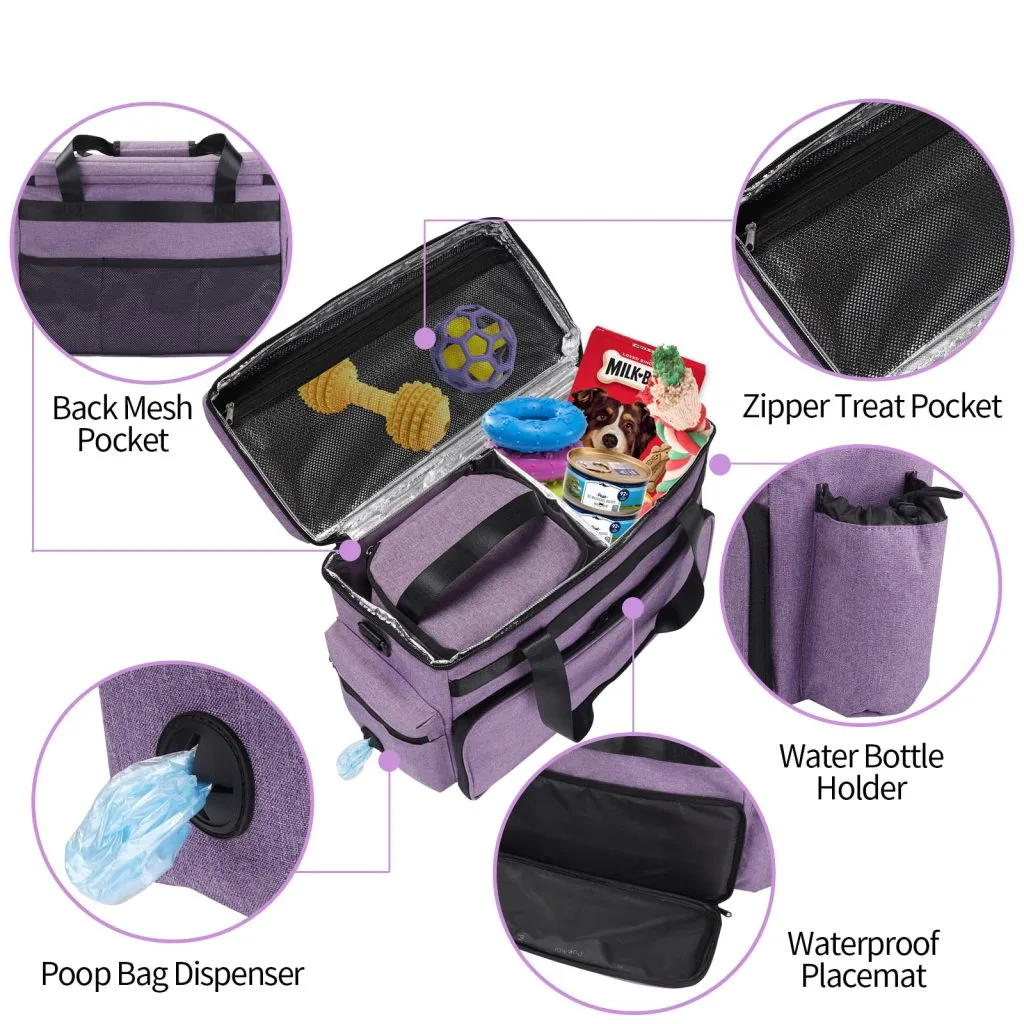
Tiered Pricing Against a Committed Quantity Curve
A group buy price has to be published before the quantity is known, which means tiered pricing against a committed quantity curve. The tiers have to be honest about the cost structure, because a tier that underprices a small group is a loss-making order rather than a marketing expense.
The cost structure behind the tiers has three components: a variable cost that falls with volume, a fixed setup cost amortised across the run, and a per-variant cost that rises with the number of variants. A tier table built from those three is defensible and predictable.
The variable component falls from 15.40 USD at 500 units to 13.55 at 1,200 and 12.90 at 2,000. The setup component falls from 3.12 USD per unit at 500 to 0.78 at 2,000. The variant component adds 0.30-1.40 USD per unit for each size step above two and 0.20-0.90 for each additional colourway.
| Committed units | Variable (USD) | Setup amortised (USD) | Variant loading (USD) | Tier price (USD) | Margin at 20% target |
|---|---|---|---|---|---|
| 300 | 16.80 | 5.20 | 0.90 | 22.90 | Negative, discourage |
| 500 | 15.40 | 3.12 | 0.90 | 19.42 | 0% |
| 800 | 14.17 | 1.95 | 0.90 | 17.02 | 14% |
| 1,200 | 13.55 | 1.30 | 0.90 | 15.75 | 23% |
| 1,600 | 13.20 | 0.98 | 0.90 | 15.08 | 27% |
| 2,000 | 12.90 | 0.78 | 0.90 | 14.58 | 30% |
| 2,000, one colourway | 12.90 | 0.62 | 0.50 | 14.02 | 32% |
The 300-unit row is deliberately unattractive and that is the point. A group that commits to 300 units costs more per unit to make than a group that commits to 500, and publishing that honestly either pushes the group to recruit more members or prices the small order correctly. Publishing a flat price across all tiers means subsidising small groups from large ones.
Tier mechanics need a rule for what happens when a group lands between tiers. The standard is to price at the lower tier when the group reaches 90% of the next threshold, which gives the organiser a reason to push for the last few members and costs the supplier very little.
The curve should also be published with a closing date, because an open-ended tier table produces an indefinitely extending collection period. A 21-35 day collection window with a published close is what turns a group buy into a schedulable order.
Per-member pricing follows from the tier with a markup for the organiser, typically 25-45%, which covers their administration, their payment processing and the returns they will absorb. That markup is what makes a group buy viable for the organiser and it should be assumed in the programme rather than resented.
Publish six tiers from 300 to 2,000 with the small tiers priced honestly, and close the collection window at 21-35 days.
Multi-SKU Consolidation: One Order, Many Variants
A consolidated group order is one production order containing multiple variants, and the manufacturing plan has to sequence them so that the line is not stopped for every change. The sequencing problem is the same one that governs any multi-SKU run, with the addition that the variant mix is fixed late.
The sequencing rule is to group by the changeover that costs most. Hardware and trim setups cost 20-45 minutes, colour setups 35-70, pattern changes 90-240. Running all sizes of one colourway consecutively means one colour setup and three pattern changes, which is cheaper than interleaving colourways across sizes.
Cutting is the exception and it should be consolidated across the whole order. All sizes and all colourways are nested together where the fabric allows, because nesting efficiency is worth more than the sequencing saving. Cut panels are then kitted by variant and issued to the line in sequenced bundles.
| Sequence | Colour setups | Pattern changes | Total changeover (min) | Changeover cost (USD) | Nesting efficiency |
|---|---|---|---|---|---|
| By colourway, then size | 2 | 6 | 610-1,510 | 405-1,005 | 86-91% |
| By size, then colourway | 6 | 2 | 390-860 | 260-575 | 86-91% |
| Interleaved by member order | Up to 24 | Up to 24 | 1,900-4,300 | 1,265-2,865 | 78-84% |
| Single colourway, three sizes | 1 | 3 | 305-755 | 205-505 | 86-91% |
| Consolidated cut, sequenced bundles | 2 | 6 | 610-1,510 | 405-1,005 | 90-93% |
The interleaved row is what happens when a supplier tries to build the order in member-shipping sequence, and it is the most expensive option by a factor of three. Packing should be sequenced at the packing bench, not on the sewing line: units come off the line by variant and are assembled into per-member parcels afterwards.
Kitting is the operational heart of consolidation. Each variant gets a kit — cut panels, trim, hardware, lining, labels — prepared before the line starts, so the line operator is not selecting components. Kitting a 1,500-unit, six-variant order takes 2-4 days and costs 0.12-0.30 USD per unit, and it removes most of the errors that occur when a line switches variants.
Consolidation also changes inspection. A six-variant order is inspected as one lot for general defects but sampled per variant for variant-specific ones — colour, size, label, trim. The practical approach is the standard AQL 2.5 sample across the lot plus three units per variant checked against the variant specification.
Sequence by size then colourway, consolidate all cutting, kit by variant, and sequence member parcels at the packing bench rather than on the line.
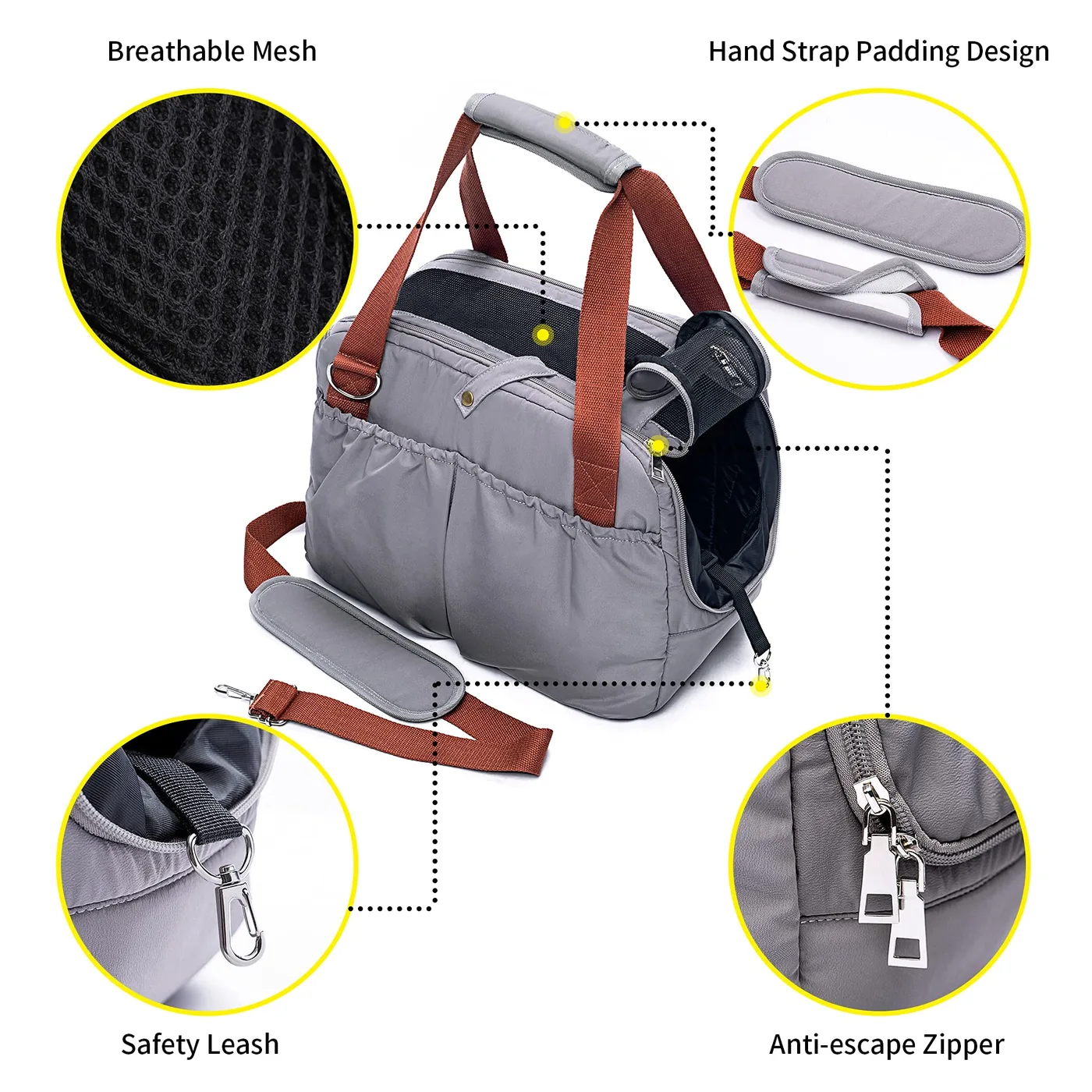
Per-Member Packing: Individual Cartons, Labelling and Drop-Ship
A group buy ends with one parcel per member, and that is a packing operation unlike any other in this category. A wholesale order ships 500 cartons to one address; a group buy ships 500 single-unit parcels to 500 addresses, and the per-parcel cost dominates the economics.
The first decision is the carton. A single-unit shipper needs to protect the product without a master carton around it, which means a higher board grade than a retail carton inside a master pack: 350-450 g/m2 with a B-flute, at 0.85-2.10 USD against 0.55-1.30 for a retail carton. Below 350 g/m2 the corner-crush rate in single-parcel transit rises above 4-7%, and every crushed parcel is a return.
The second is void and protection. A single parcel is handled far more roughly than a palletised master carton, so the void fill requirement is 10-20 mm on all sides rather than 5-10, at 0.22-0.55 USD. Paper fill rather than plastic, both for the presentation and because several destination markets restrict plastic fill.
| Element | Specification | Cost (USD) | Failure if underspecified | Failure rate | Cost of failure |
|---|---|---|---|---|---|
| Shipper carton | 350-450 g/m2, B flute | 0.85-2.10 | Corner crush | 4-7% | Return plus replacement |
| Void fill | Paper, 10-20 mm all sides | 0.22-0.55 | Compression, movement | 2-5% | Return |
| Address label | Thermal, 100 x 150 mm | 0.06-0.18 | Misdelivery | 1-3% | Re-ship |
| Packing list insert | Variant, size, colour, member ID | 0.05-0.16 | Wrong variant claim | 1-2% | Exchange |
| Variant label on carton | Size and colour, 40 x 60 mm | 0.04-0.12 | Picking error | 0.5-2% | Exchange |
| Sealing tape | 48 mm reinforced | 0.03-0.09 | Opening in transit | Under 1% | Loss |
| Packing labour | 3-6 min per parcel | 0.35-0.90 | n/a | n/a | n/a |
| Total per parcel | Full specification | 1.60-4.10 | n/a | 9-19% combined | One return costs 18-42 |
The combined failure rate of 9-19% looks alarming and it is the reason per-member packing is specified rather than improvised. A single return costs 18-42 USD in freight, replacement and administration, so spending an extra 0.60 USD per parcel to move the failure rate from 15% to 6% saves 1.62-5.40 USD per parcel in expected cost.
Data handling is the hidden cost. Five hundred member records with variant, size and address have to be transferred, validated and mapped to cartons, and an error in that mapping produces a wrong-variant delivery. The control is a two-field match at packing — member ID and variant — read from the label rather than from a list, at an added labour cost of 0.08-0.20 USD per parcel.
Delivery mode depends on destination density. Where members cluster in one market, consolidated freight to a domestic hub followed by local parcel delivery costs 4.20-9.80 USD per parcel; direct international parcel from origin costs 11-26 USD. For a group concentrated in one country, the hub route is less than half the cost and two to five days faster.
Per-member packing costs 1.60-4.10 USD and every 0.60 USD spent on specification removes 1.62-5.40 USD of expected return cost.
Sampling for a Group: Fit-Test Sets and Admin Approval Units
A group buy samples differently because the approval is collective. One unit goes to the organiser and a fit-test set circulates among members, and both artefacts have to be planned for.
The fit-test set is the distinctive one. It is a set of one unit per size, built to production specification, sent to the organiser with instructions to circulate it among members with cats at the weight extremes of the range. Its purpose is to validate the size grading against real animals before 1,500 units are cut, and it is the single highest-value sampling investment in a group programme.
The set costs 45-120 USD per size in samples, so 135-360 USD for a three-size range, plus 60-180 USD in circulation freight if members are geographically spread. Against a grading error that would affect 20-30% of a 1,500-unit order, that is inexpensive insurance.
| Artefact | Units | Cost (USD) | Circulation freight (USD) | Purpose | Timeline |
|---|---|---|---|---|---|
| Admin construction sample | 1 | 45-120 | 35-90 | Construction and finish approval | 6-10 working days |
| Colourway chip set | 1 set | 25-70 | Included | Colour voting by the group | 5-8 working days |
| Fit-test set, one per size | 3 | 135-360 | 60-180 | Grading validation on real animals | 8-14 working days |
| Pre-production approval unit | 1-2 | 40-160 | 35-90 | Final approval against bulk | 6-10 working days |
| Retained reference set | 3 | Unit cost | 0 | Dispute resolution | Held 24 months |
The colourway chip set earns its place through the voting mechanic. A group that votes on colours from a screen will produce a split that does not match what members actually want when they see the fabric; a group that votes on physical chips is 15-30% more likely to be satisfied with the outcome. At 25-70 USD the set is cheap.
Timing the fit-test is the operational difficulty, because circulation takes 10-25 days and it sits on the critical path. The resolution is to run the fit-test during the collection window: the set circulates while members are joining, and the size split is finalised using both the poll and the fit-test results together.
Feedback structure matters for the fit-test to produce usable data. A structured form asking for cat weight, cat length, whether the cat could turn around, and whether the cat could lie down produces data that maps to dimensions. An unstructured comment thread produces opinions that cannot be actioned.
Circulate a fit-test set during the collection window, ask structured questions, and run the colour vote on physical chips rather than on screen.
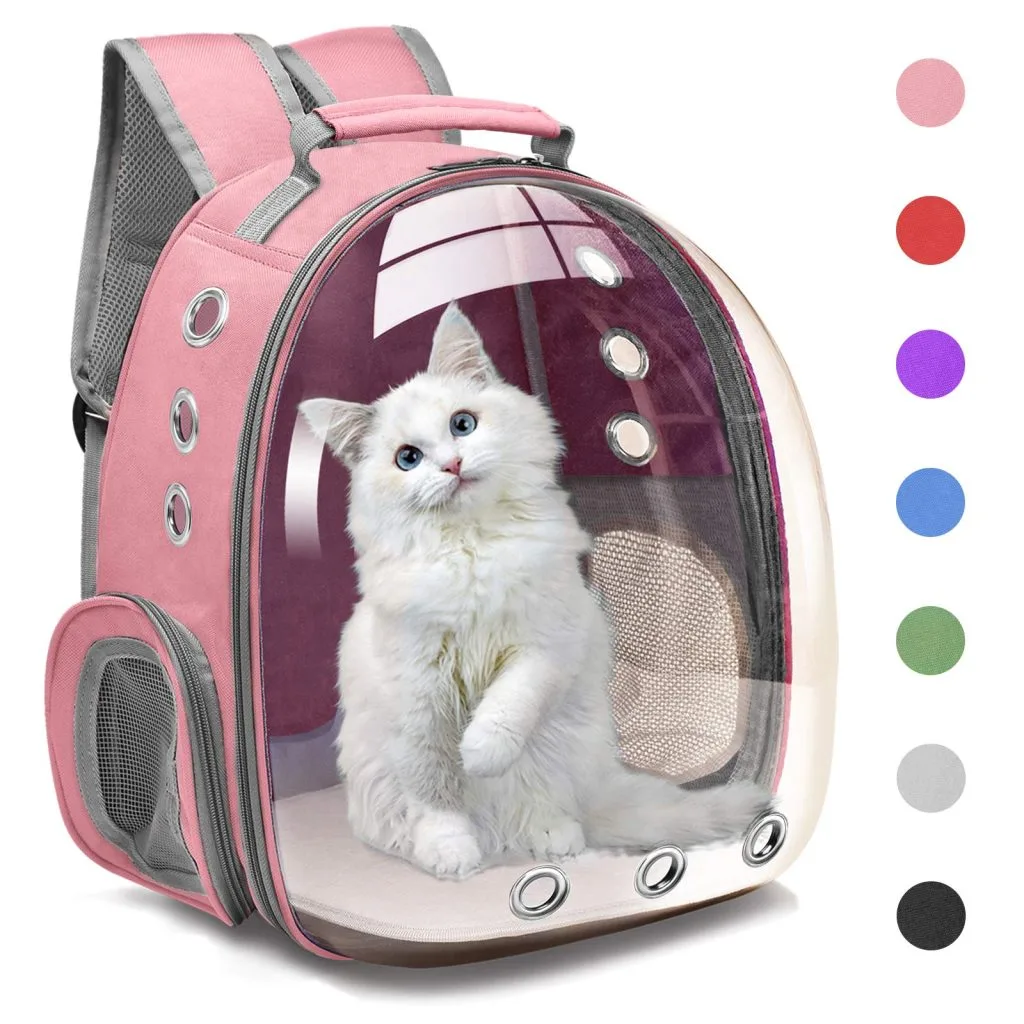
Timeline: Collection Window, Production and Delivery
A group buy timeline has an extra stage at the front that no other channel has: the collection window. It also has a hard dependency in the middle, because production cannot start until the variant split is fixed, and the split cannot be fixed until the window closes.
The standard path runs 10-14 weeks end to end. Collection 3-5 weeks, sampling overlapped with collection 2-4 weeks, cutting and production 5-7 weeks, freight 1-5 weeks depending on mode, and per-member packing and dispatch 1-2 weeks. Each stage has slack only if the previous one closed cleanly.
The critical dependency is the cut date. Fabric is ordered against the programme total, but cutting needs the exact size split, and a split that arrives three days late pushes the cut three days and everything after it. Protecting the cut date is the single most valuable thing an organiser can do.
| Stage | Duration | Depends on | Can overlap | Slack | Risk if late |
|---|---|---|---|---|---|
| Announcement and poll | 7-10 days | None | Yes | High | Low commitment |
| Collection window | 21-35 days | Poll | Sampling, fit-test | None at close | Under-commitment |
| Colour vote on chips | 7-14 days | Chip set | Collection | Low | Wrong split |
| Fit-test circulation | 10-25 days | Fit-test set | Collection | Moderate | Grading error |
| Sampling and approval | 2-4 weeks | None | Collection | Low | Delays everything |
| Fabric and trim procurement | 14-35 days | Committed minimum | Partly | None | Delays production |
| Cutting and production | 35-50 days | Final split | No | None | Delays delivery |
| Inspection | 1-2 days | Production | No | None | Ships uninspected |
| Freight | 4-38 days | Inspection | No | None | Member complaints |
| Per-member packing and dispatch | 7-14 days | Arrival at hub | No | Low | Member complaints |
Compression is possible in two places. Sampling can be overlapped almost entirely with the collection window, which removes 2-4 weeks. Procurement can start against the committed minimum before the window closes, which removes 7-21 days. Doing both brings the timeline to 8-11 weeks without touching production or freight.
Freight mode is the decision that most affects the back end. Air at 4-9 days against sea at 26-38 is a 17-34 day difference, and on a group buy that difference is felt by every member individually. Where the group is paying a per-unit price that includes delivery, air adds 5.20-7.60 USD per unit, which on a published tier price of 15.75 is a 33-48% increase — usually too much. The middle path is sea freight to a domestic hub followed by local parcel delivery, at 4.20-9.80 USD per parcel.
Communication is part of the timeline rather than an accessory to it. A group that hears nothing for eleven weeks will assume the worst; a programme with published milestone dates at weeks 2, 6 and 10 has materially fewer complaints even when it runs late.
Overlap sampling and procurement with the collection window to reach 8-11 weeks, protect the cut date, and publish milestones.
Cost Model for a Community Group Programme
A group programme costs more per unit than an equivalent wholesale order and the difference is concentrated in packing, in variant handling and in the administration of member data. Seeing the three together is what allows an organiser to price a group buy correctly.
Product cost sits on the standard ladder, at 13.55-15.40 USD for a 1,200-1,500-unit programme in two colourways and three sizes. Variant loading adds 0.90-1.40 USD for the size range and the second colourway. Per-member packing adds 1.60-4.10 USD. Freight to a domestic hub adds 4.20-9.80 USD. Duty and handling add 0.68-2.09 USD.
Administration is the line most organisers forget. Member data handling, payment processing at 2-4%, a returns reserve at 3-7% of units, and organiser time all belong in the price. A realistic administration loading is 1.80-4.60 USD per unit.
| Cost element | Low | High | Share | Controllable by organiser |
|---|---|---|---|---|
| Product, tier price at 1,500 | 13.55 | 15.40 | 44-52% | Yes, by tier |
| Variant loading, 3 sizes, 2 colours | 0.90 | 1.40 | 3-5% | Yes, fewer variants |
| Per-member packing | 1.60 | 4.10 | 5-14% | Yes, by specification |
| Freight to domestic hub | 4.20 | 9.80 | 14-33% | Yes, by mode |
| Duty and handling | 0.68 | 2.09 | 2-7% | No |
| Administration and payment | 1.80 | 4.60 | 6-16% | Yes, by process |
| Returns reserve at 3-7% | 0.55 | 1.62 | 2-5% | Yes, by fit quality |
| Total cost per member unit | 23.28 | 39.01 | 100% | Roughly 60% controllable |
The spread between the low and high columns is 15.73 USD, and most of it is in two lines the organiser controls: freight mode and packing specification. Choosing sea-to-hub over direct air parcel saves 6.90-16.20 USD; specifying the packing properly saves 1.62-5.40 USD in expected returns. Together that is the difference between a group buy that prices at 39 USD and one that prices at 52 USD for the same product.
Variant count is the third lever and the easiest to pull. Moving from three sizes and two colourways to three sizes and one colourway removes 0.45-0.90 USD of variant loading and improves nesting efficiency by 2-4 points, at the cost of some choice. Most groups will accept one colour when the alternative is a higher price.
The programme runs on adapted commercial terms: MOQ 500 pieces per colourway applied at programme level for sizes, prototypes in 6-10 working days, bulk production 35-50 days after sample approval, final random inspection to AQL 2.5 with three units per variant checked, T/T 30/70 against a two-stage deposit, FOB Xiamen. Our production team runs consolidated group programmes through the SGS-verified production base under ISO 9001 and BSCI coverage, with test methods referenced to ASTM International and textile declarations issued against OEKO-TEX criteria. A group unit costs 23.28-39.01 USD landed, and freight mode and packing specification control most of the 15.73 USD spread.
Why brands source here
- Pet carrier programs run since 2014; founding team in sewn goods since 2004
- SGS-verified production floor of 4,950 m² with 137 workers across 7 lines
- Monthly capacity of 200,000 units, audited to BSCI and ISO 9001
People Also Ask
How is MOQ met in a community group buy?
At programme level rather than per variant. Sizes share fabric and trim so they consolidate freely; colourways carry the 500-unit minimum because each needs its own dye lot of 300-600 m.
Why should poll size data be corrected before production?
Poll responses overstate the large end by 8-18 percentage points because owners of larger cats are more likely to respond. Apply a 0.75-0.90 factor to large and redistribute to medium.
How many units should a size split hold back as buffer?
4-8% of the order, cut after the final headcount is confirmed. Cutting happens after consolidation, so a buffer absorbs the dropouts and late joiners that follow the poll closing.
How should group buy tier pricing be structured?
Six tiers from 300 to 2,000 units, priced from variable cost plus amortised setup plus variant loading. Price the 300-unit tier honestly at 22.90 USD rather than subsidising it.
What order should variants be produced in?
By size then colourway: six pattern changes and two colour setups, at 260-575 USD. Interleaving by member shipping sequence costs up to 2,865 USD in changeovers.
What carton grade suits a single-unit parcel?
350-450 g/m2 with a B flute at 0.85-2.10 USD. Below 350 g/m2, corner-crush rates in single-parcel transit rise above 4-7% and every crushed parcel is a return.
What is a fit-test set and why is it worth it?
One unit per size circulated among members with cats at the weight extremes, costing 135-360 USD for three sizes. It validates grading before 1,500 units are cut.
How long does a group buy take from announcement to delivery?
10-14 weeks, or 8-11 with sampling and procurement overlapped against the collection window. Production is 35-50 days and cannot start before the cut date.
Frequently Asked Questions
Why does size not carry an MOQ but colourway does?
Sizes share one shell fabric and one trim set, so the fabric minimum is met by the programme total and size only affects cutting. A colourway needs its own dye lot of 300-600 m, which is the binding minimum.
What does grading a three-size range cost?
120-320 USD as a one-off per pattern, grading the medium from the small at 8-12% per step. The technical risk is that seam load does not scale linearly, so the extremes need re-testing.
How much fabric does nesting all sizes together save?
Utilisation improves from 78-84% to 86-91%, saving 90-160 m on 1,500 units, or 270-800 USD. Consolidated cutting with sequenced bundles reaches 90-93%.
Why ask members for cat weight rather than size preference?
Weight maps to internal dimensions far better than self-identified size, which is heavily influenced by how a member perceives their own cat. It costs nothing extra to ask.
What happens when a group lands between two pricing tiers?
The standard rule is to price at the lower tier once the group reaches 90% of the next threshold, which gives the organiser a reason to recruit the last few members at very little supplier cost.
Why should the collection window have a published close?
An open-ended tier table produces an indefinitely extending collection period. A 21-35 day window with a published close turns the group buy into a schedulable order.
What markup does a group organiser typically need?
25-45% over the tier price, covering administration, payment processing at 2-4% and the returns they absorb. It should be assumed in the programme rather than resented.
What is kitting and why does it matter for multi-variant orders?
Preparing cut panels, trim, hardware, lining and labels per variant before the line starts, at 0.12-0.30 USD per unit. It removes most of the errors that occur when a line switches variants.
How is a multi-variant group order inspected?
One lot under AQL 2.5 for general defects, plus three units per variant checked against the variant specification for colour, size, label and trim.
Why is paper void fill specified over plastic?
For presentation and because several destination markets restrict plastic fill. The requirement is 10-20 mm on all sides for a single parcel rather than 5-10 for a master carton.
How much does a single wrong-variant delivery cost?
18-42 USD in freight, replacement and administration. A two-field match at packing, member ID and variant read from the label, costs 0.08-0.20 USD and prevents most of them.
How much cheaper is hub consolidation than direct international parcel?
4.20-9.80 USD per parcel against 11-26 USD, and two to five days faster for a group concentrated in one market.
Why vote on colour with physical chips rather than a screen?
A group voting from a screen produces a split that does not match what members want when they see the fabric. Voting on chips is 15-30% more likely to produce a satisfied group, at 25-70 USD for the set.
What should a fit-test feedback form ask?
Cat weight, cat length, whether the cat could turn around and whether it could lie down. Those map to dimensions; an unstructured comment thread produces opinions that cannot be actioned.
Talk to QUANZHOU JUNYUAN BAGS about a pet carrier program: MOQ 500 pieces per colourway, samples in 6-10 working days, bulk production in 35-50 days under AQL 2.5 inspection.
Get a free quote Request a sample