Cat Carrier Production Time: Bulk Order Timeline
Bulk production of a cat carrier runs 35-50 days from sample approval to vessel departure. Material procurement is 7-28 days, production queue 10-25, conversion 2-14, and inspection plus documentation 6-14. Only 4-28% of the window is spent actually making the product.
Production time is quoted as one number and experienced as a sequence, and the sequence matters because the largest blocks are not the ones buyers negotiate about. This page decomposes the 35-50 day window into six stages with day ranges and states which run in parallel, then walks the conversion stage day by day for a 5,000-unit order so that output and takt are visible. Inspection, rework and documentation are treated as scheduled blocks rather than as an afterthought, because they are where a shipment either makes its vessel or misses it by four days. The final sections analyse the critical path, price the available acceleration options, and set out the seasonal booking pattern that determines whether an order gets a line at all. Terms: MOQ 500 pieces per colourway, samples in 6-10 working days, bulk production 35-50 days after sample approval, final random inspection to AQL 2.5, T/T 30/70 and FOB Xiamen.
Working as a pet carrier manufacturer on cat carrier ranges means the technical file is shared before any quotation: pattern, bill of materials, test report and packing specification.
Decomposing the 35-50 Day Window
A production quotation of 35-50 days is a calendar statement covering sample approval to vessel departure. Six stages make it up, and the distribution is not what most buyers assume: the product is being made for a minority of the window.
Material procurement is the first stage at 7-28 days and it starts before sample approval in a well-run programme, because fabric and hardware are booked against the specification rather than against the signed sample. Starting it early is the single largest schedule saving available and it costs nothing.
Production queue is the second at 10-25 days and it is the block buyers find hardest to accept. A line is scheduled by booking, and an order confirmed late waits behind orders confirmed early. In a full season the queue is longer than the conversion.
Conversion is the third and the shortest at 2-14 days. Five thousand units is 12-14 line-days of work across seven lines, which is roughly two calendar days of network capacity; five hundred units is 2-3 line-days.
Inspection and rework are the fourth at 2-6 days, documentation and booking the fifth at 3-7, and vessel cut-off the sixth at 2-5.
| Stage | Days | Share of window | Runs in parallel | Buyer influence |
|---|---|---|---|---|
| Material procurement | 7-28 | 20-56% | With tooling and sampling | Medium |
| Sample approval | 2-9 | 4-18% | With procurement | High |
| Production queue | 10-25 | 20-50% | No | High |
| Conversion | 2-14 | 4-28% | No | Low |
| Inspection and rework | 2-6 | 4-12% | With documentation | Medium |
| Documentation and cut-off | 5-12 | 10-24% | With inspection | Medium |
Two readings of the table matter commercially. The first is that buyer-influenced stages — sample approval and queue — account for 24-68% of the window, so a buyer who approves in one round and books at deposit can realistically land at the short end of the range while a buyer who does neither lands at the long end.
The second is that conversion is nearly constant across order sizes. An order of 500 and an order of 5,000 differ by 10-12 days of conversion and by almost nothing else, which is why the quoted window barely moves between them and why a buyer should not expect a small order to be dramatically faster.
The window is quoted in calendar days rather than working days, and that difference is worth stating: 35-50 calendar days is 25-36 working days at a six-day week. A buyer planning backwards from a shelf date should use calendar days and add their own inland transit. Six stages make up the window and conversion is only 4-28% of it; sample approval and queue, both buyer-controlled, are 24-68%.
Material Procurement: The Longest Single Block
Procurement sets the floor on the schedule, because nothing can be cut until fabric arrives and nothing can be assembled until hardware arrives. Each component has its own lead time and the longest one sets the block.
Fabric is the longest at 7-28 days. A stock colour from a held roll is 3-7 days; a dyed-to-order colour at a 300-800 m minimum is 14-28 days including dyeing, finishing and inspection. Every textile lot is screened against OEKO-TEX criteria on receipt, which adds 1-3 days to the block and is not optional for a pet-contact product. Coated and laminated constructions add 3-7 days over a plain woven, and a fabric with a printed pattern adds 5-10.
Hardware is the second at 10-20 days. Zipper chain is usually held in black and natural and is 5-10 days in a special colour; buckles and adjusters are 10-20 days; a moulded custom component is 20-38 including first-article trials.
Trim is the third at 6-18 days: webbing 6-14, binding tape 6-12, mesh 7-15, and printed or woven labels 10-18 because of the mill minimum and the loom schedule.
| Component | Stock option days | Custom option days | Ordered at | Critical |
|---|---|---|---|---|
| Shell fabric | 3-7 | 14-28 | Specification freeze | Yes |
| Lining fabric | 3-7 | 14-28 | Specification freeze | Yes |
| Zipper chain | 2-5 | 10-20 | Specification freeze | Yes |
| Buckles and adjusters | 3-7 | 10-20 | Specification freeze | Yes |
| Webbing and binding | 3-7 | 6-14 | Specification freeze | No |
| Woven labels | None | 10-18 | Artwork approval | No |
| Printed cartons | 3-5 | 7-14 | Artwork approval | No |
| Moulded component | None | 20-38 | Drawing freeze | Yes |
The ordered-at column is the schedule lever. Fabric, zipper and hardware are booked at specification freeze, which is before sample approval, and doing so removes 7-20 days from the critical path. Labels and cartons depend on artwork and cannot be brought forward, which is why artwork approval is its own gate.
Risk in procurement is managed by a buffer rather than by hope. Two buffers are standard: a fabric buffer of 3-5% over the marker requirement, because a cutting fault or a shade problem discovered at cutting is otherwise unrecoverable, and a hardware buffer of 2-4% for the same reason on assembly.
The failure mode to plan for is a fabric lot rejected at incoming inspection for shade or coating weight. That is a 14-28 day re-order and it is the single event most likely to blow a production window. Incoming inspection at day one rather than at cutting is what catches it early enough to recover, and it is run under the quality system certified to ISO 9001. Fabric at 14-28 days dyed-to-order is the longest item and is booked at specification freeze; a lot rejected at incoming inspection is a 14-28 day re-order and the most likely cause of a blown window.
Line Booking, Takt and Daily Output
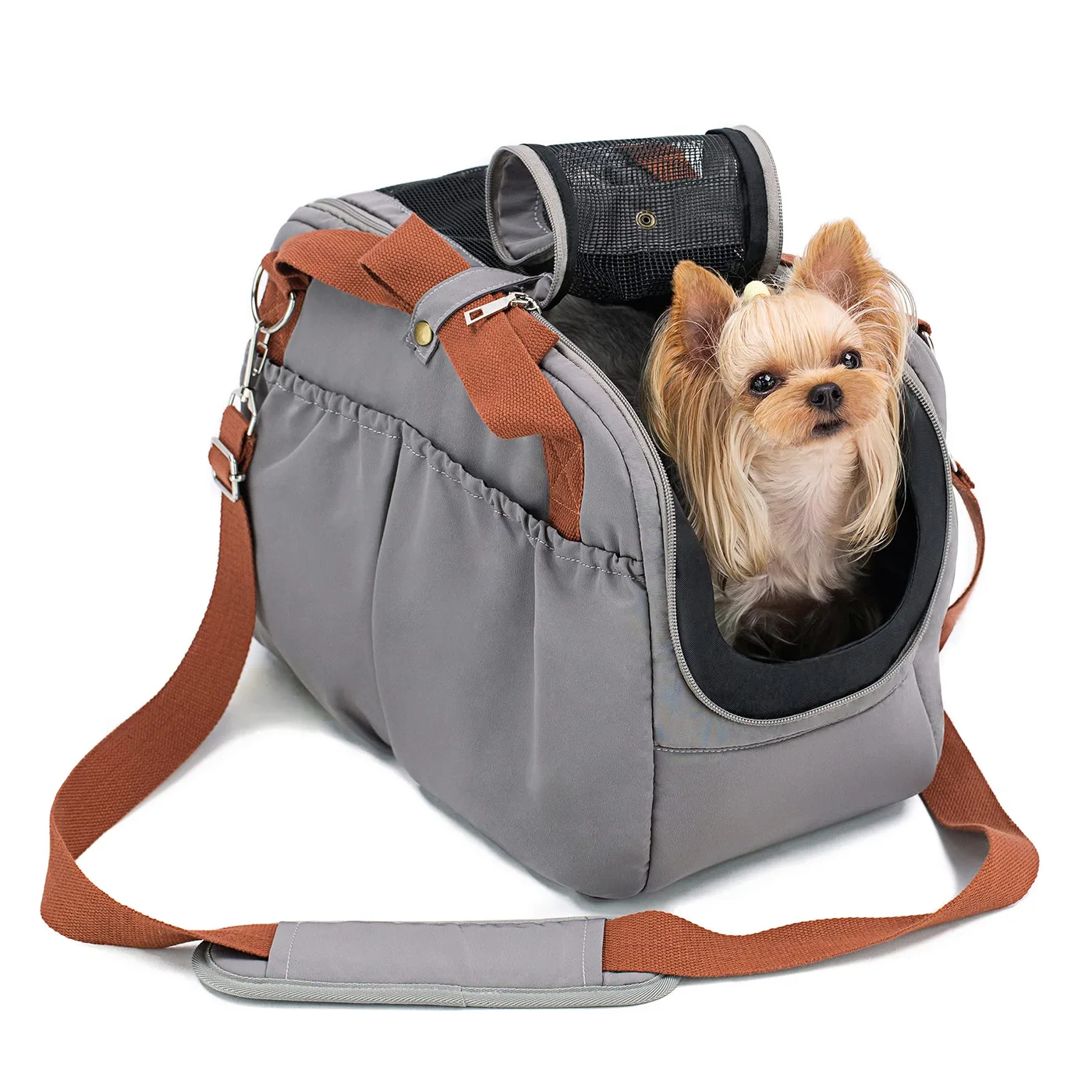
Conversion is scheduled rather than simply started, and the schedule follows from takt: available time divided by required quantity, with an operator count derived from the labour content.
For a 5,000-unit order the arithmetic is straightforward. Total labour content is 21-29 minutes per unit; a shift provides 450 effective minutes after breaks; and a line runs 24-28 operators at 85-92% balance efficiency. Output per line per shift is therefore 380-420 units, and 5,000 units is 12-14 line-days.
Whether those line-days are 3 calendar days or 14 depends on how many lines are assigned. Across seven lines running in parallel, 12-14 line-days is 2 calendar days; on a single line it is 12-14 calendar days. Assignment is a scheduling decision made at booking, and it is the reason two buyers with identical orders can see different dates.
| Lines assigned | Operators | Output per day | Calendar days | Notes |
|---|---|---|---|---|
| 1 | 24-28 | 380-420 | 12-14 | Leaves capacity for others |
| 2 | 48-56 | 760-840 | 6-7 | Common assignment |
| 3 | 72-84 | 1,140-1,260 | 4-5 | Standard for 5,000 |
| 5 | 120-140 | 1,900-2,100 | 2-3 | Requires a quiet season |
| 7 | 168-196 | 2,660-2,940 | 2 | Whole network, rare |
The three-line assignment is the standard for a 5,000-unit order, and it produces 4-5 calendar days of conversion. That is the number to hold in mind when reading a quotation: a 5,000-unit order is four to five days of actual making.
Learning curve affects the first days and should be in the plan. Operator efficiency on a new style rises 12-25% over the first 2,000-5,000 units, so day one output is typically 75-88% of steady state and day three onward is at rate. A schedule built on steady-state output from day one will slip by half a day to a day on a first run.
Work in progress between stations is held at 30-90 minutes, which is what keeps the line recoverable when a station stops. It also means the line cannot be accelerated by simply adding operators beyond the balanced count — the extra operators have no station to stand at. Conversion of 5,000 units is 12-14 line-days, which is 4-5 calendar days on a standard three-line assignment, and day one runs at 75-88% of rate because of the learning curve.
Day by Day Inside the Conversion Stage
Walking the conversion stage day by day shows what is happening when a buyer asks for a progress report, and it tells them which question to ask. The schedule below is a 5,000-unit order on three lines.
Days one to two are cutting and preparation. Fabric is laid in plies of 20-60 and cut to markers at 78-88% efficiency, bundles are ticketed by roll and shade, and panels are fused or prepared. Output of this stage is measured in bundles rather than units and it runs ahead of assembly by one to two days.
Days two to six are the main build: welding where specified, shell assembly, binding and trim, hardware installation and frame insertion across the three lines. Daily output rises from 1,050-1,200 on day two to 1,150-1,300 from day three as the learning curve resolves.
Days six to eight are the tail: interior configuration, pad and liner insertion, identification marks, and final assembly. Branding application runs last because it is downstream of assembly, at 120-260 units per hour per station.
| Day | Activity | Units completed | Cumulative | Check |
|---|---|---|---|---|
| 1 | Lay and cut, bundle by roll | 0 | 0 | Shade, grain |
| 2 | Weld and shell assembly start | 1,050-1,200 | 1,050-1,200 | Peel sample |
| 3 | Shell, binding, hardware | 1,150-1,300 | 2,200-2,500 | Stitch density |
| 4 | Shell, binding, hardware | 1,150-1,300 | 3,350-3,800 | Pull test |
| 5 | Frame and structure | 1,150-1,300 | 4,500-5,100 | Squareness |
| 6 | Tail, interior, marks | Remainder | 5,000 | Mark position |
| 7 | Finishing and pack | 5,000 | Complete | Carton count |
| 8 | Buffer | Rework |
The buffer day is deliberate and it should not be negotiated away. One day of 5-8% of the schedule absorbs the rework from in-process findings, a material shortage discovered at assembly, or an equipment stop. A schedule with no buffer is a schedule that slips.
Progress reporting should follow this structure rather than asking for a percentage complete. Units completed against day is a checkable number; a percentage is not. A buyer asking on day three whether 2,200-2,500 units are done will get a straight answer and will know early if the order is behind.
The critical item inside conversion is the zipper station at 40-90 units per hour, which is the bottleneck. If that station falls behind, everything downstream of it stops, which is why it is staffed at four to ten operators rather than one. A 5,000-unit order on three lines is seven working days of conversion plus one buffer day, and the zipper station at 40-90 units per hour is the bottleneck that sets the pace.
Inspection, Rework and the Buffer Days
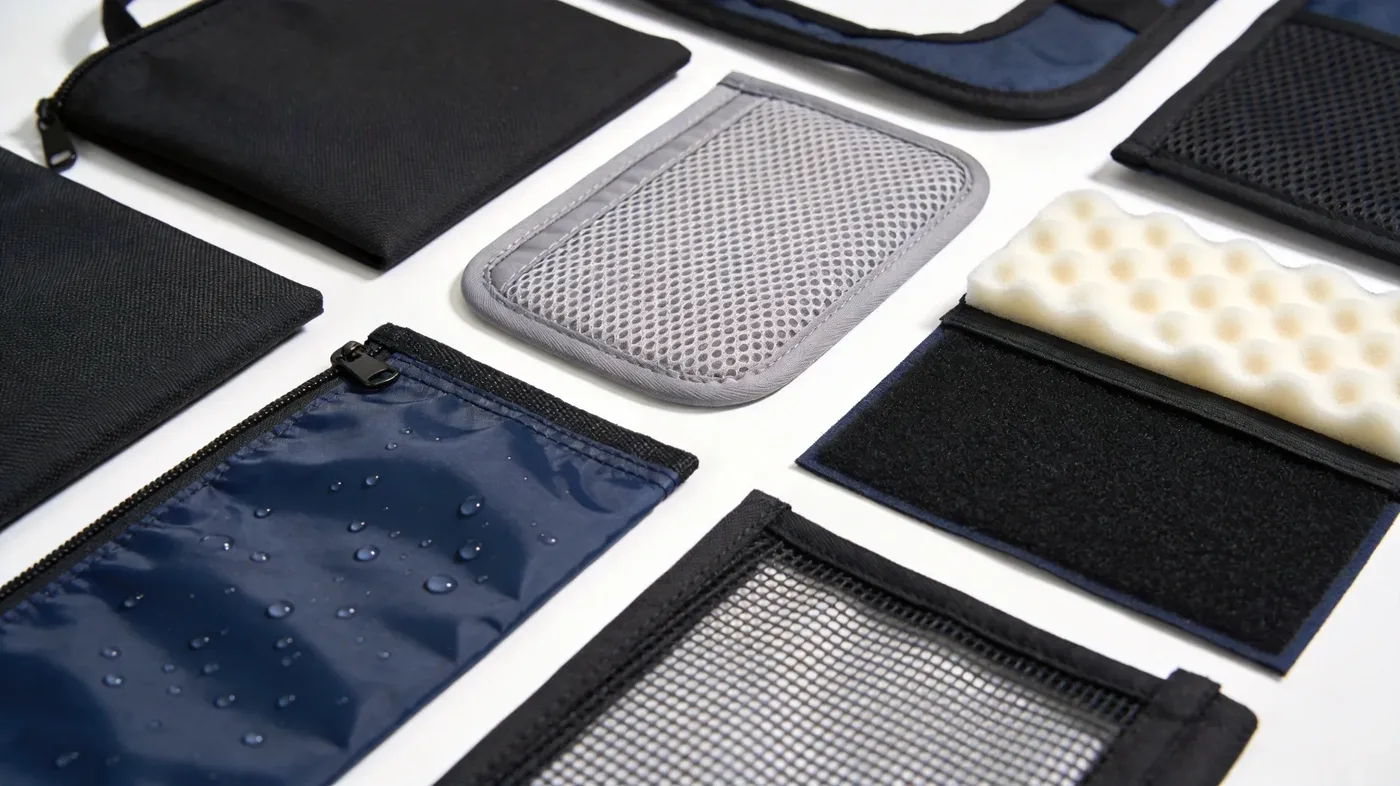
Inspection is a scheduled block, not an event that happens when production finishes. It is 2-6 days and it includes the rework loop, which is the part that catches buyers out.
Final random inspection is one to two days for a 500-unit lot and two to three for 5,000, including the report. Sampling is to AQL 2.5 at general level II: 50 units at a 500-piece lot with 3 majors accepted and 4 rejected, 200 units at 5,000 with 10 and 11, and critical defects at zero tolerance at any size.
Rework is the variable block. If the inspection passes first time, rework is zero and the block is the inspection duration. If it fails, the lot is reworked and re-inspected, which is 2-5 additional days plus the rework labour. The probability of a first-time pass on a repeat style is 80-92% and on a first run 62-80%, which is why a first run should carry more buffer.
| Outcome | Inspection days | Rework days | Re-inspect days | Total | Probability |
|---|---|---|---|---|---|
| Pass first time | 1-3 | 0 | 0 | 1-3 | 62-92% |
| Minor findings, rework | 1-3 | 1-2 | 0.5-1 | 2.5-6 | 8-30% |
| Major findings, full re-sort | 1-3 | 2-4 | 1-2 | 4-9 | 2-8% |
| Critical finding, reject | 1-3 | Re-make | 1-2 | 35-50 | Under 2% |
The probability column is a planning input rather than a statistic. A first run of a new style should be planned as though it will need rework, which means carrying 3-5 days rather than 1-3 in the schedule. A repeat run can be planned at 1-3.
Prevention is cheaper than the rework loop and it is entirely an in-process discipline. In-process inspection at station seven catches 62-78% of defects at 0.10-0.80 USD each; the same defects found at final inspection cost 0.30-2.40 USD each plus the re-inspection and the days.
The buyer-side lever is the inspection standard itself. A buyer who specifies a level tighter than AQL 2.5 — level III sampling, or a 1.0 AQL — will see more lots fail and therefore more rework days, without necessarily receiving a better product. That is a legitimate choice and it should be made with the schedule cost in mind. Inspection is 2-6 days including the rework loop, and a first run should be planned at 3-5 because the first-time pass rate on a new style is 62-80%.
Documentation, Booking and Vessel Cut-Off
The last 5-12 days of the window are paperwork and logistics, and they are the block where shipments miss vessels by two or three days for avoidable reasons.
Documentation is three to seven days. It covers the commercial invoice, the packing list with carton-level detail, the certificate of origin where required, the test report references and any market-specific declaration. A packing list that lists cartons rather than just totals is what lets a broker clear a partial shipment without re-measuring.
Booking is two to five days to the vessel cut-off, and the cut-off is absolute: a container that arrives at the terminal after cut-off does not load, and the next sailing is 3-10 days later. In peak season, space itself has to be booked 7-14 days ahead.
| Item | Duration days | Owner | Failure consequence | Prevention |
|---|---|---|---|---|
| Commercial invoice | 1-2 | Supplier | Clearance delay | Template agreed early |
| Packing list, carton level | 1-2 | Supplier | Re-measure at destination | Carton data at sealing |
| Certificate of origin | 2-5 | Chamber or authority | Duty rate difference | Apply at production start |
| Test report references | 0-3 | Supplier | Retail portal rejection | Generate in validation |
| Freight booking | 1-3 | Buyer or forwarder | No space in peak | Book 7-14 days ahead |
| Inland to terminal | 1-2 | Supplier | Missed cut-off | Allow one day slack |
| Vessel cut-off wait | 2-5 | Carrier | Roll to next sailing | Work backwards from date |
Working backwards is the discipline that prevents misses. A buyer with a required on-shelf date should subtract inland transit at destination, ocean transit, cut-off wait, documentation and inspection to reach the date by which production must finish — and then subtract the queue and procurement to reach the date by which they must confirm.
Ocean transit itself is outside the production window but it dominates the buyer's total lead time: 18-35 days from Xiamen to northern Europe, 14-28 to the United States west coast, 25-40 to the east coast, and 8-18 within Asia. Adding that to 35-50 days of production gives a total door-to-port lead time of 50-90 days, which is the number a planner should use.
One document is worth singling out because it is cheap and it prevents the most expensive failure: the certificate of origin takes 2-5 days and is applied for at production start rather than at shipment. A shipment held for a missing origin certificate costs 3-10 days of demurrage and a missed selling window. The back end is 5-12 days and the certificate of origin should be applied for at production start, because a shipment held for it costs 3-10 days.
Critical Path and Priced Acceleration Options
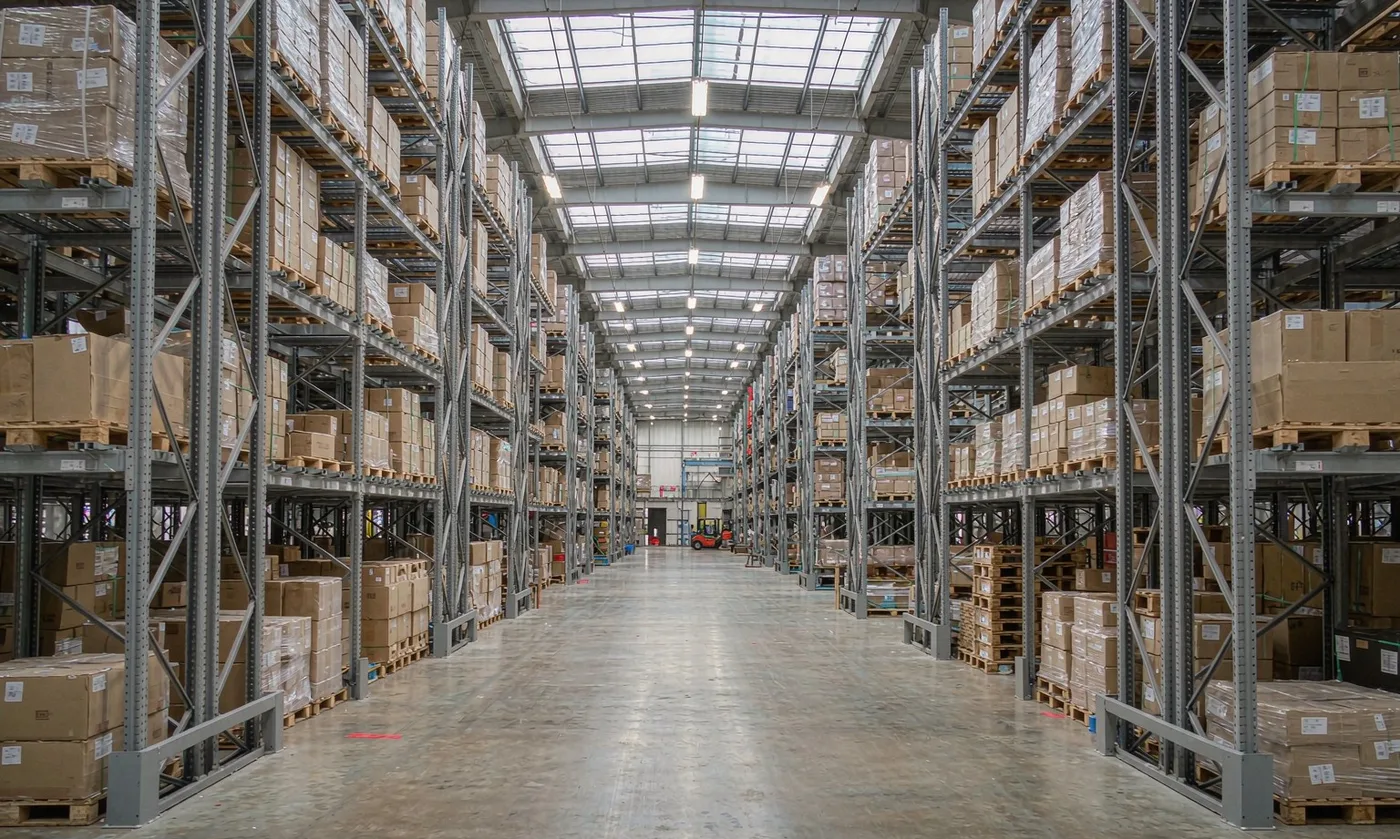
The critical path through a bulk order is procurement and queue, not conversion. Acceleration therefore has to be bought at the front end, and each option has a price.
Booking at deposit is the first option and it is free. It removes the 10-25 day queue block by reserving a line slot at the point the order is confirmed rather than at sample approval. It is the largest single saving available and it costs nothing but a decision made earlier.
Stock material is the second and it is cheap. Choosing a stock fabric colour over dyed-to-order removes 7-21 days of procurement at a cost of design flexibility; choosing stock hardware over custom removes 5-15 days at no visible cost in most cases.
Air freight for materials is the third and it is priced. Flying a fabric lot rather than shipping it is 4-9 USD per kilogram against 0.4-1.2 by sea, so a 200 kg lot is 800-1,800 USD to save 12-22 days. It is justified when a selling window is at risk and not otherwise.
| Option | Days saved | Cost USD | Cost per day | Recommended when |
|---|---|---|---|---|
| Book line at deposit | 10-25 | 0 | 0 | Always |
| Approve sample in one round | 2-7 | 0 | 0 | Always |
| Stock fabric colour | 7-21 | 0-600 | 0-86 | Colour not critical |
| Stock hardware | 5-15 | 0-300 | 0-60 | Usually |
| Air freight the fabric lot | 12-22 | 800-1,800 | 36-150 | Selling window at risk |
| Extra lines assigned | 2-10 | 0-900 | 0-450 | Quiet season only |
| Overtime and weekend shifts | 2-5 | 300-1,400 | 60-700 | Last resort |
| Air freight the finished goods | 14-32 | 2,400-9,600 | 75-300 | Stock-out emergency |
The cost-per-day column is the ranking that matters. Booking at deposit and approving in one round are free and they save 12-32 days between them; everything else costs money, and air freighting finished goods at 75-300 USD per day saved is the most expensive option by an order of magnitude.
Overtime deserves a caution. It saves 2-5 days at 300-1,400 USD, but it also raises the defect rate: in-process findings rise 1-3 percentage points on overtime shifts, which can trigger the rework loop and give back the days saved. It is a last resort rather than a planning tool.
The realistic floor on the window is worth stating: with a booked slot, stock materials and a one-round approval, 35 days is achievable and below about 32 is not, because conversion, inspection and documentation cannot be compressed below 12-18 days in total. Acceleration is bought at the front end — booking at deposit and a one-round approval save 12-32 days free, and the realistic floor on the window is about 32 days.
Seasonality and Booking Capacity
Production capacity is seasonal and the season is driven by the retail calendar rather than by the factory calendar. A buyer who books against the season rather than against their own urgency gets a shorter queue at no cost.
The peak runs from roughly March to July for northern-hemisphere autumn and holiday programmes, with a secondary peak in September to November for spring ranges. In peak, the queue block is 18-25 days and line assignment is limited to two or three lines for a mid-sized order. In the trough — December to February and late July to August — the queue is 5-12 days and five lines may be available.
The difference is 10-18 days on the same order for the same money, which makes it the cheapest schedule intervention available after booking early. A buyer with flexibility and a 12-month horizon should place orders into the trough.
| Period | Demand | Queue days | Lines available | Booking lead |
|---|---|---|---|---|
| December to February | Low, holiday shutdown | 5-12 | 5-7 | 2-4 weeks |
| March to May | Rising, autumn programmes | 12-20 | 3-5 | 4-8 weeks |
| June to July | Peak | 18-25 | 2-3 | 6-12 weeks |
| Late July to August | Falling, trough | 6-14 | 4-6 | 2-5 weeks |
| September to November | Secondary peak | 14-22 | 2-4 | 5-10 weeks |
The holiday shutdown is the item buyers plan worst. A lunar new year or national holiday period stops production for 10-21 days and it stops procurement for longer, because suppliers upstream close first and reopen last. An order confirmed two weeks before a shutdown will not start until three weeks after it.
The planning rule is to have materials in and the line booked before a shutdown rather than during it. A programme confirmed in November for a February start avoids the shutdown entirely; one confirmed in January loses 4-8 weeks to it.
Capacity itself is stable and worth stating: seven lines, 137 people, 149 machines and a network output of 200,000 pieces monthly across the product mix. A cat carrier consumes 21-29 minutes of content, so carrier-equivalent network capacity is roughly 2,700 units per day. The queue exists because a mix of products competes for those lines, not because capacity is short. The queue is 5-12 days in the trough and 18-25 at peak, so the same order placed in December or August lands 10-18 days earlier than one placed in June.
Production capability
- SGS-verified production space of 4,950 m², 149 machines, 7 assembly lines
- Pet carrier and pet bag output since 2014 from a 137-person team
- 200,000 units shipped monthly under BSCI and ISO 9001 systems
People Also Ask
How long does bulk production of cat carriers take?
35-50 days from sample approval to vessel departure across six stages. Material procurement is 7-28 days, queue 10-25, conversion 2-14, inspection 2-6 and documentation 5-12.
Why does production take 35 days if making the product takes only a few?
Because conversion is 4-28% of the window. Fabric dyed to order is 14-28 days and the production queue is 10-25, and neither is shortened by making the product faster.
How many units can be produced per day?
380-420 per line per shift at 24-28 operators and 85-92% balance efficiency. On a standard three-line assignment that is 1,140-1,260 per day.
How can I shorten a production lead time?
Book the line at deposit to remove the 10-25 day queue and approve the sample in one round to save 2-7 days. Both are free and together they save 12-32 days.
What is the fastest realistic production window?
About 32 days. Conversion, inspection and documentation cannot be compressed below 12-18 days in total, so with a booked slot and stock materials 35 is achievable and below 32 is not.
How long does final inspection take?
One to two days for a 500-unit lot and two to three for 5,000, plus 1-5 days if rework is needed. The first-time pass rate is 62-80% on a new style and 80-92% on a repeat.
When is the best time of year to place an order?
December to February and late July to August, when the queue is 5-14 days against 18-25 at the June-July peak. That is 10-18 days saved on the same order.
What sampling plan is used for final inspection?
AQL 2.5 at general level II: 50 units sampled at a 500-piece lot with 3 accepted and 4 rejected on majors, 200 units at 5,000 with 10 and 11, and critical defects at zero tolerance.
Frequently Asked Questions
What is MOQ and how does it affect production time?
500 pieces per colourway, and it barely affects the window. An order of 500 and one of 5,000 differ by 10-12 days of conversion and almost nothing else, because procurement and queue dominate.
Can production start before the sample is approved?
Material procurement can and should, booked at specification freeze. Conversion cannot start before approval, because the approved sample is the reference the run is built to.
How much does it cost to air freight materials to save time?
4-9 USD per kilogram against 0.4-1.2 by sea, so a 200 kg fabric lot is 800-1,800 USD to save 12-22 days. Justified when a selling window is at risk.
Should I accept overtime to speed up my order?
Only as a last resort. It saves 2-5 days at 300-1,400 USD but raises in-process findings by 1-3 percentage points, which can trigger rework and give back the days saved.
How much fabric buffer should be planned?
3-5% over the marker requirement, and 2-4% on hardware. A cutting fault or a shade problem discovered at cutting is otherwise unrecoverable inside the window.
What happens if a container misses the vessel cut-off?
It does not load, and the next sailing is 3-10 days later. Working backwards from the cut-off with one day of slack on inland transport is the prevention.
How long is ocean transit from Xiamen?
18-35 days to northern Europe, 14-28 to the United States west coast, 25-40 to the east coast and 8-18 within Asia. Added to production that is a 50-90 day total lead time.
Why is a certificate of origin applied for at production start?
It takes 2-5 days from a chamber or authority, and a shipment held for a missing one costs 3-10 days of demurrage and a missed selling window.
How does a holiday shutdown affect an order?
It stops production for 10-21 days and procurement for longer. An order confirmed two weeks before a shutdown will not start until three weeks after it.
What is network production capacity?
Seven lines with 137 people and 149 machines, and 200,000 pieces monthly across the product mix. A carrier consumes 21-29 minutes of content, so carrier-equivalent capacity is about 2,700 per day.
Should a buyer specify a tighter AQL than 2.5?
It is a legitimate choice with a schedule cost. Level III sampling or a 1.0 AQL sees more lots fail and therefore more rework days, without necessarily delivering a better product.
How should progress be reported during production?
In units completed against day, not as a percentage. On day three of a 5,000-unit run, 2,200-2,500 units should be complete, and that is a checkable number.
Which station is the production bottleneck?
The zipper station at 40-90 units per hour. It is staffed at four to ten operators rather than one precisely because everything downstream stops if it falls behind.
How much work in progress is held between stations?
30-90 minutes of buffer. It is what keeps the line recoverable when a station stops, and it is why a line cannot be accelerated simply by adding operators beyond the balanced count.
Talk to QUANZHOU JUNYUAN BAGS about a pet carrier program: MOQ 500 pieces per colourway, samples in 6-10 working days, bulk production in 35-50 days under AQL 2.5 inspection.
Get a free quote Request a sample