Cat Carrier FOB China: Shipping Terms
FOB Xiamen means the seller pays materials, conversion, packing, inland haulage to the terminal and export clearance, and risk transfers when the goods pass the ship's rail. On a 9.80 USD carrier, 0.42-1.15 USD is origin logistics and 2.60-6.90 USD of landed cost sits outside the FOB price.
Free on board is the default term in bag and carrier sourcing and it is the one most often misunderstood, usually by buyers who assume it includes more than it does. This page states the obligation precisely, compares it against the five alternatives on a responsibility matrix, and then builds the FOB price from six components so that a quotation can be read rather than guessed at. Origin charges, container loading arithmetic and freight cost per unit follow, because they are where a low FOB price is either confirmed or exposed. The closing sections cover HS classification and duty, which is where the buyer's cost begins rather than ends, and a worked comparison of FOB against CIF and DDP at three volumes. Terms: MOQ 500 pieces per colourway, samples in 6-10 working days, bulk production 35-50 days after sample approval, final random inspection to AQL 2.5, T/T 30/70.
A pet carrier manufacturer is judged on three numbers in this category - MOQ per colourway, sample turnaround and the AQL level applied at final inspection. Ours are 500 pieces, 6-10 working days and AQL 2.5.
What FOB Xiamen Obliges Each Party to Do
Free on board is a delivery term with a precise boundary: the seller delivers when the goods pass the ship's rail at the named port, and everything after that is the buyer's. Naming the port matters because FOB without a port is not a complete term.
The seller's obligations run to five items. Manufacture and pack the goods to the agreed specification; carry them to the terminal at Xiamen; clear export from China including any licence or inspection; load them on board the nominated vessel; and provide the commercial invoice, packing list and proof of delivery.
The buyer's obligations begin at the rail. Nominate the vessel and the forwarder, contract and pay for ocean freight, insure the cargo from the rail onward, clear import at destination, pay duty and tax, and arrange inland carriage from the discharge port.
Risk transfers at the rail, which is the part buyers find counter-intuitive: from that moment the goods are the buyer's risk even though they are still physically on a vessel the seller loaded. Marine insurance is therefore the buyer's contract, and a buyer who has not placed it has an uninsured exposure for 14-40 days.
Cost transfers at the same point, with one commercial caveat. The seller pays everything up to loading, including the terminal handling charge at origin, but the buyer pays the freight and, in practice, often pays origin documentation fees that are presented as seller costs. Whether those are inside or outside the FOB price should be stated on the quotation.
| Item | Seller | Buyer | Typical cost USD | Notes |
|---|---|---|---|---|
| Manufacture and packing | Yes | No | In FOB price | Specification bound |
| Inland haulage to terminal | Yes | No | 0.06-0.18 per unit | Trucking |
| Export clearance | Yes | No | 0.03-0.10 per unit | Declaration |
| Terminal handling, origin | Yes | No | 0.04-0.12 per unit | THC |
| Loading on board | Yes | No | 0.02-0.08 per unit | Lashing included |
| Ocean freight | No | Yes | 0.40-2.60 per unit | By mode and volume |
| Marine insurance | No | Yes | 0.05-0.35 per unit | 0.3-0.6% of value |
| Import clearance and duty | No | Yes | 0.60-3.40 per unit | Market dependent |
| Inland at destination | No | Yes | 0.20-1.20 per unit | By distance |
The practical reading is that FOB suits a buyer with a forwarder, a broker and some import experience, and it suits a seller who does not want to carry destination risk. It is the correct default for a repeat buyer and it is occasionally the wrong choice for a first-time importer, who may find the destination-side work larger than expected.
One ambiguity deserves a specific clause: who pays detention or demurrage if the container sits at the terminal. Under FOB the risk has transferred, so it is the buyer's, but the cause may be the seller's documentation. Stating the cause-based allocation prevents the most common FOB dispute. FOB transfers risk and cost at the ship's rail, which means marine insurance for 14-40 days of ocean transit is the buyer's contract to place.
Incoterms Compared: Where Risk and Cost Transfer
Six terms appear in carrier sourcing and they differ only in how far along the journey the seller's obligation extends. Choosing among them is a function of the buyer's import capability and their appetite for risk, not of price.
EXW puts everything on the buyer from the seller's door. It is rarely appropriate for an international buyer because export clearance from China requires a local entity, and a buyer without one cannot perform it.
FOB is the default, as above. CFR adds ocean freight to the seller's obligation; CIF adds freight and minimum insurance. DAP delivers at the destination place, with the buyer clearing import and paying duty; DDP adds import clearance, duty and tax to the seller.
| Term | Export clearance | Ocean freight | Insurance | Import duty | Risk transfers at |
|---|---|---|---|---|---|
| EXW Xiamen | Buyer | Buyer | Buyer | Buyer | Seller premises |
| FOB Xiamen | Seller | Buyer | Buyer | Buyer | Ship rail at origin |
| CFR destination | Seller | Seller | Buyer | Buyer | Ship rail at origin |
| CIF destination | Seller | Seller | Seller, minimum | Buyer | Ship rail at origin |
| DAP destination | Seller | Seller | Seller | Buyer | Place of destination |
| DDP destination | Seller | Seller | Seller | Seller | Place of destination |
Two subtleties change decisions. Carriage of goods by sea is governed by the contract of carriage and, for live animal consignments, by the IATA framework where air is used; for a normal commercial freight movement the relevant point is that CFR and CIF transfer risk at the origin rail even though the seller pays freight to destination, so a buyer under CIF still carries the marine risk despite not controlling the carrier. The second is that CIF insurance is a minimum cover — typically 110% of invoice value at institute cargo clauses C — which is narrower than most buyers assume and is worth upgrading.
Price differences between terms are simply the cost of the obligations transferred. Moving from FOB to CIF adds the freight and minimum insurance the seller now pays, plus a handling margin of 3-8%; moving from CIF to DDP adds duty, import clearance and a duty-advance margin.
Which is correct depends on the buyer. A first-time importer without a broker should consider DAP or DDP despite the higher headline price, because the destination-side work — classification, duty payment, clearance — is the part that goes wrong. An experienced importer with a forwarder relationship should stay on FOB, because they can buy freight better than a supplier can mark it up. The terms differ only in how far the seller's obligation runs, and CFR still transfers marine risk at the origin rail despite the seller paying freight.

Building the FOB Price From Six Components
An FOB quotation is a build-up of six components and reading it that way is what turns a price negotiation into a specification conversation. On a mid-market carrier the FOB price is 6.40-14.60 USD and the components divide as follows.
Materials are the largest at 42-58%, covering shell, lining, mesh, foam, hardware, webbing and thread. Conversion labour is 14-22%, covering cutting, welding, sewing, assembly and inspection at 21-29 minutes per unit. Branding is 2-11% depending on tier and volume. Packing is 4-9%, covering polybag, retail box where specified, carton and carton print.
Origin logistics is 4-8%, covering inland haulage, export clearance, terminal handling and loading. Overhead and margin is 16-30%, covering factory overhead, the amortised development or tooling, and margin.
| Component | White label | Private label | Share | Volume sensitivity |
|---|---|---|---|---|
| Materials | 3.70-6.00 | 5.00-9.30 | 42-58% | Low, 3-8% fall |
| Conversion labour | 1.10-1.70 | 1.30-2.10 | 14-22% | Medium, 8-18% fall |
| Branding | 0.40-1.40 | 0.90-2.40 | 2-11% | High, 55-70% fall |
| Packing | 0.35-0.85 | 0.45-1.20 | 4-9% | Medium, 10-20% fall |
| Origin logistics | 0.30-0.75 | 0.35-0.85 | 4-8% | Low |
| Overhead and margin | 0.85-1.85 | 1.55-3.60 | 16-30% | High on overhead |
| FOB total | 6.40-9.80 | 8.20-14.60 | 100% |
The volume sensitivity column is the useful one. Materials barely move with volume, so a buyer negotiating on a large order is negotiating mostly over branding amortisation and overhead — which is why the price fall from 500 to 25,000 units is 22-29% rather than 50%.
Origin logistics is the component most often misread. At 0.30-0.85 USD per unit it is small, and buyers sometimes ask for it to be removed by switching to EXW. That is usually a mistake: the buyer then pays the same costs plus a local agent's fee, without the seller's ability to book the terminal slot.
Currency and payment terms sit outside the build-up but move the effective price. A quotation in USD with T/T 30/70 places the currency risk on the buyer for the 70% balance; a letter of credit adds 0.15-0.50% of invoice value in bank charges. Neither appears in the FOB price and both belong in the comparison. An FOB price is six components, and because materials barely move with volume the 22-29% fall from 500 to 25,000 units comes mostly from branding and overhead.
Origin Charges: What the Seller Pays Before the Rail
The origin charges inside FOB are small per unit and they are the ones that appear as unexpected fees when a term is ambiguous. Listing them removes the ambiguity.
Inland haulage from the production base to the terminal is 0.06-0.18 USD per unit at 500 pieces and 0.02-0.06 at 5,000, because a truck carries 800-1,600 carrier cartons regardless of whether the order is 500 or 5,000 units. It is a per-shipment cost that looks like a per-unit one on a small order.
Export declaration is 0.03-0.10 USD per unit, covering the customs declaration and any inspection called. Terminal handling is 0.04-0.12, covering receipt, storage before loading and movement within the terminal. Loading and lashing is 0.02-0.08.
| Charge | Basis | 500 units | 2,000 units | 5,000 units |
|---|---|---|---|---|
| Inland haulage | Per truck, 180-420 USD | 0.36-0.84 | 0.09-0.21 | 0.04-0.08 |
| Export declaration | Per shipment, 40-140 USD | 0.08-0.28 | 0.02-0.07 | 0.01-0.03 |
| Terminal handling | Per container or per m³ | 0.10-0.34 | 0.05-0.14 | 0.03-0.08 |
| Loading and lashing | Per container, 60-180 USD | 0.12-0.36 | 0.03-0.09 | 0.01-0.04 |
| Documentation fee | Per shipment, 30-90 USD | 0.06-0.18 | 0.02-0.05 | 0.01-0.02 |
| Total origin | 0.72-2.00 | 0.21-0.56 | 0.10-0.25 |
The scaling is the point of the table. Origin charges are 0.72-2.00 USD per unit at 500 pieces and 0.10-0.25 at 5,000 — a 6-8 times difference for identical work, because nearly every charge is per shipment or per container rather than per unit.
That has a direct commercial consequence: it is one of the reasons a small order has a worse landed cost than its FOB price suggests, and it is an argument for consolidating shipments. Two orders of 500 shipped together pay one set of origin charges instead of two, saving 0.36-1.00 USD per unit.
Detention and demurrage are the exception that can dwarf everything else. A container held at the terminal beyond its free time — typically 3-7 days — incurs 40-120 USD per day, and a documentation error that causes a 5-day hold adds 200-600 USD to a shipment. On a 500-unit order that is 0.40-1.20 USD per unit, more than all the other origin charges combined. Origin charges are 0.72-2.00 USD per unit at 500 pieces and 0.10-0.25 at 5,000, because almost every one of them is per shipment rather than per unit.

Container Loading and Freight Cost per Unit
Freight is the largest cost outside the FOB price and it is driven by volume rather than by weight for a soft carrier. A carrier is bulky and light, so the container fills before it reaches its weight limit.
A folded soft carrier occupies 0.028-0.042 m³ packed and weighs 0.9-1.6 kg. A 40HQ has 67-76 m³ of usable volume and a payload of 22-26 tonnes; at 0.035 m³ and 1.2 kg per unit, 1,570-1,940 units fill the volume at 1.9-2.3 tonnes, which is under 10% of the payload. The container is cubed out long before it is weighed out.
Loading efficiency of 82-90% is the practical figure for bagged soft goods in cartons, against a theoretical 100%, because cartons do not tessellate perfectly around the container's internal ribs and because a door-side void is unavoidable.
| Mode | Volume shipped m³ | Units | Freight USD | Per unit USD | Transit days |
|---|---|---|---|---|---|
| Air express, 500 units | 14-21 | 500 | 3,600-9,600 | 7.20-19.20 | 3-6 |
| LCL sea, 500 units | 14-21 | 500 | 700-2,100 | 1.40-4.20 | 25-40 |
| 20GP, 800 units | 23-30 | 660-850 | 1,100-2,600 | 1.30-3.90 | 22-35 |
| 40GP, 1,600 units | 48-60 | 1,370-1,710 | 1,700-4,200 | 1.00-3.10 | 22-35 |
| 40HQ, 2,000 units | 55-68 | 1,570-1,940 | 1,900-4,800 | 0.95-3.10 | 22-35 |
| 40HQ, full, 5,000 units | 55-68 each | 5,000 | 5,700-14,400 | 1.14-2.88 | 22-35 |
Two conclusions follow. The first is that LCL at 1.40-4.20 USD per unit is competitive with a part-filled container and it is the correct choice below roughly 700 units, because a 20GP that is a third full costs the same as a full one. The second is that air freight at 7.20-19.20 USD per unit is 5-13 times sea freight, which is a decision made only against a stock-out or a launch date.
Density is the lever on freight per unit and it is a design decision as much as a packing one. A carrier that collapses from 0.042 m³ to 0.030 m³ packed puts 33% more units in the same container, which is 0.30-1.10 USD per unit of freight. Over a 5,000-unit year that is 1,500-5,500 USD, which is a strong argument for designing the packing state alongside the product.
Freight rates themselves are volatile and should be quoted as of a date. A rate quoted more than 14 days before booking is indicative rather than firm, and a buyer planning landed cost should use a range rather than a point. Freight is 0.95-3.10 USD per unit by sea and 7.20-19.20 by air, and a carrier that packs 30% smaller saves 0.30-1.10 USD per unit of freight.
HS Classification and Duty: Where the Buyer's Cost Begins
Classification is the buyer's obligation under FOB and it is the single largest variable in landed cost. A soft pet carrier is normally classified under heading 4202 for travel goods, with the sub-heading determined by the material of the outer surface.
A carrier with an outer surface of textile material falls in 4202.92; one with an outer surface of plastics or moulded material falls in 4202.92 as well where the construction is soft-sided, and a wholly rigid moulded carrier may be classified elsewhere depending on the market. The distinction matters because duty rates differ by sub-heading and by fibre.
Duty rates are indicative and must be verified with a licensed broker for the specific product and market, because they change and because fibre content moves the line. Typical general rates are 3.7% in the European Union, 6.3-17.6% in the United States depending on the outer surface fibre, 10-11% in Canada and 5% in Australia.
| Market | Likely heading | General duty | Import tax | Additional measures | Verify with |
|---|---|---|---|---|---|
| European Union | 4202.92 | About 3.7% | VAT 17-27% | None general | Broker or TARIC |
| United States | 4202.92 | 6.3-17.6% | None federal | Additional China-origin measures may apply | Broker or HTSUS |
| United Kingdom | 4202.92 | About 3.7% | VAT 20% | None general | Broker or UK tariff |
| Canada | 4202.92 | 10-11% | GST 5% | None general | Broker or CBSA |
| Australia | 4202.92 | About 5% | GST 10% | None general | Broker or ABF |
The additional-measures column is the one that catches buyers out and it should be checked before every shipment rather than assumed from the last one. Trade measures on China-origin goods change, and a programme priced on last year's duty can be 5-25 points wrong this year.
Valuation is the second variable. Duty is assessed on the customs value, which for a China-origin import into the European Union and the United Kingdom is the transaction value — generally the FOB-equivalent price. Freight and insurance are excluded where the declared basis is FOB, which is one of the reasons FOB is a clean term for customs purposes: the invoice value is already the right basis.
Documentation closes the item. Product safety in the United States is assessed against the framework administered by the U.S. Consumer Product Safety Commission, and textile components are screened against OEKO-TEX criteria, both of which produce documents a broker may be asked for. A certificate of origin takes 2-5 days and is required for any preferential claim; a declaration of the fibre content by percentage supports the sub-heading; and a mis-declaration is a penalty rather than a correction. Classification determines duty, and at 3.7% in the European Union against 6.3-17.6% in the United States the same product has materially different landed costs by market.
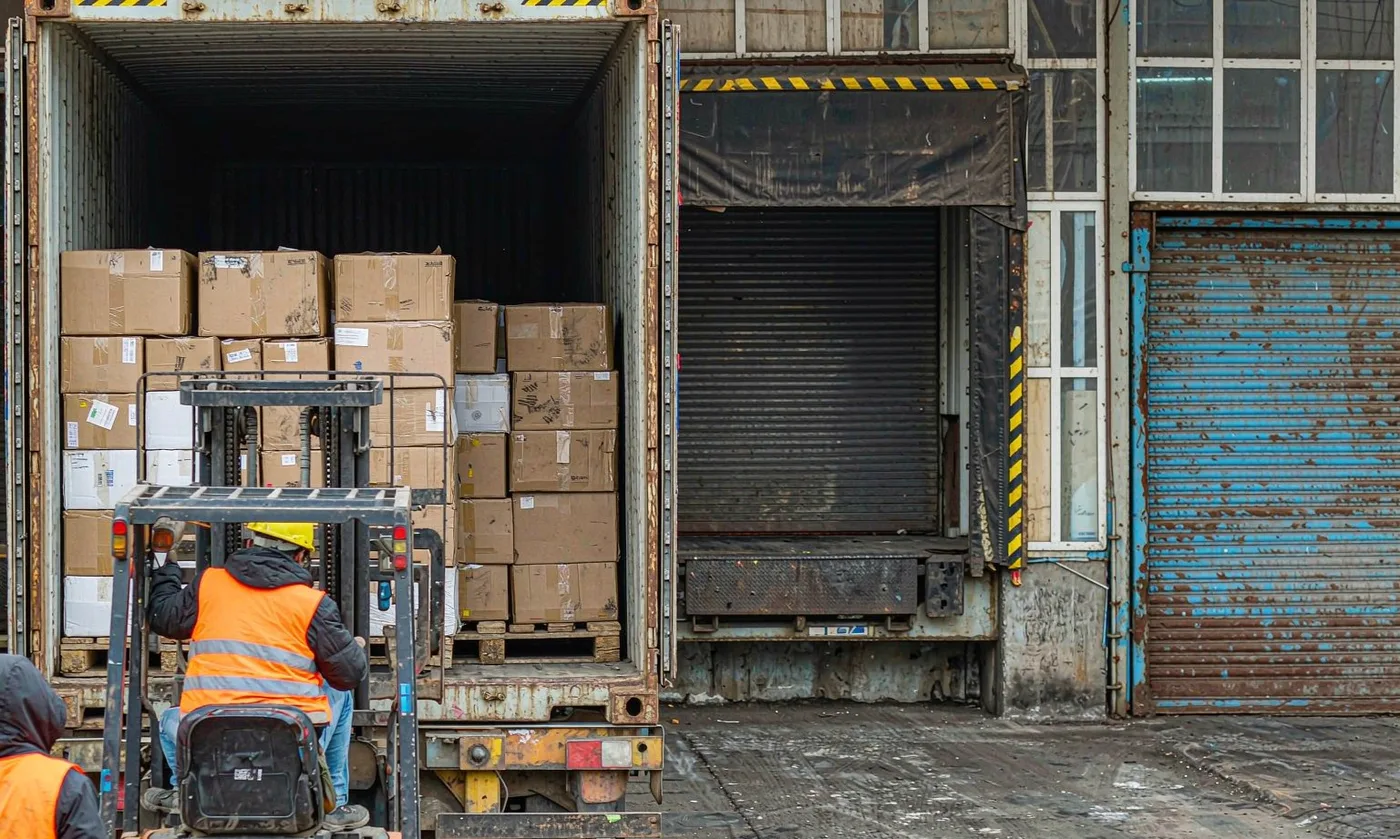
FOB Versus CIF and DDP: A Worked Landed Cost
Comparing terms requires comparing landed cost rather than invoice price, because each term moves a different set of costs into or out of the price. The table below works the same 2,000-unit order three ways.
Under FOB the buyer pays freight, insurance, duty and destination charges separately. Under CIF the seller bundles freight and minimum insurance with a 3-8% handling margin. Under DDP the seller bundles everything including duty, with a margin on the duty advance and on the clearance service.
The arithmetic on a 9.80 USD FOB carrier at 2,000 units: freight at 0.95-3.10 per unit, insurance at 0.05-0.35, duty at 0.36-1.72 depending on market, import clearance and documentation at 0.10-0.40, and inland at destination at 0.20-1.20. Landed cost is therefore 11.46-16.57 USD against an FOB price of 9.80.
| Cost element | FOB Xiamen | CIF | DDP | Notes |
|---|---|---|---|---|
| FOB invoice price | 9.80 | 10.85-13.60 | 12.40-18.20 | Later terms include more |
| Ocean freight | 0.95-3.10 | Included | Included | 40HQ at 2,000 units |
| Marine insurance | 0.05-0.35 | Included, minimum | Included | 0.3-0.6% of value |
| Duty | 0.36-1.72 | 0.36-1.72 | Included | Market dependent |
| Clearance and docs | 0.10-0.40 | 0.10-0.40 | Included | Broker fee |
| Inland at destination | 0.20-1.20 | 0.20-1.20 | Included | By distance |
| Total landed | 11.46-16.57 | 11.51-15.92 | 12.40-18.20 |
Read carefully, the totals are closer than the invoice prices suggest, because the costs do not disappear — they move. CIF is within 0.05-0.65 USD of FOB on landed cost for a buyer who can buy freight at market rates, and it is worse for a buyer with a good forwarder contract. DDP is 0.90-1.60 USD more per unit, which is the price of not having to operate an import.
That gap is the decision. A buyer importing four containers a year should be on FOB and should employ a broker; a buyer importing one shipment a year, or one with no entity able to clear customs, should consider DDP and treat the 0.90-1.60 USD as a service fee rather than as a margin grab.
Cash flow is the second difference and it favours the earlier terms less than expected. Under FOB the buyer pays 30% at order and 70% at shipment, then freight and duty over the following 30-60 days; under DDP nearly everything is paid at or before shipment, which concentrates the cash but removes the arrival-day surprises. Landed cost differences between FOB, CIF and DDP are 0.05-1.60 USD per unit, because the costs move rather than disappear — DDP is a service fee, not a margin grab.
Contract Clauses That Prevent Shipping Disputes
Most shipping disputes are not about the term; they are about an event the term does not address. Six clauses close the gaps and none of them costs anything to include.
The first is the named place and date. FOB Xiamen is complete; FOB China is not, because the port determines the inland haulage and the terminal charges. A delivery window in calendar weeks rather than a single date also prevents a dispute about a two-day slip.
The second is the demurrage and detention allocation by cause: seller-caused delay from late documentation is the seller's; buyer-caused delay from late vessel nomination is the buyer's; carrier-caused delay follows the carrier's terms.
The third is the inspection and rejection right. Final random inspection to AQL 2.5 before loading, with the buyer's right to reject a lot that fails, is the standard position and it should state what happens to the goods and to the schedule on rejection.
The fourth is the currency and payment mechanics: currency of invoice, the exchange-rate basis if not USD, bank charge allocation, and the exact event that triggers the balance payment.
The fifth is the documentation list: commercial invoice, packing list at carton level, certificate of origin, bill of lading instructions, and test report references, each with a deadline.
| Clause | Standard wording | Dispute it prevents | Cost to include |
|---|---|---|---|
| Named port and window | FOB Xiamen, week commencing | Which terminal, which charges | None |
| Demurrage by cause | Seller-caused delay is seller's | 200-600 USD terminal holds | None |
| Inspection right | AQL 2.5 pre-loading, reject right | Accepting a failed lot | None |
| Currency and bank charges | USD, charges by originator | 0.15-0.50% bank fee arguments | None |
| Documentation list | Named documents with deadlines | Clearance delay at destination | None |
| Title transfer | On balance payment | Ownership during transit | None |
Title transfer is the sixth and the least discussed. Risk transfers at the rail under FOB, but title usually transfers on payment of the balance, which means that between loading and payment the buyer carries the risk of goods they do not yet own. That is normal and it is worth stating, because it determines who can make an insurance claim.
One more item belongs in the contract rather than in the email thread: the freight forwarder nomination, with the contact and the deadline. A vessel nominated late is the most common cause of a missed cut-off, and it is entirely a communication failure.
Finally, the quality reference should be attached: the sealed pre-production sample, the drawing revision number and the test report references. A shipment dispute is resolved against those three documents, and a contract without them has no reference point. Six clauses close the gaps FOB does not address, and all of them are free to include at contract stage and expensive to argue about later.
Order and quality terms
- MOQ 500 pieces per colourway; samples in 6-10 working days
- Bulk production 35-50 days after approval; AQL 2.5 inspection standard
- T/T 30/70 terms, FOB Xiamen, full document set per shipment
People Also Ask
What does FOB Xiamen mean for a cat carrier order?
The seller pays manufacture, inland haulage, export clearance and loading, and risk transfers when the goods pass the ship's rail. Freight, insurance, duty and destination carriage are the buyer's.
What is the difference between FOB and CIF?
CIF adds ocean freight and minimum insurance to the seller's obligation, with risk still transferring at the origin rail. On landed cost the two are within 0.05-0.65 USD per unit.
How much is freight per unit for a cat carrier?
0.95-3.10 USD by sea in a 40HQ and 7.20-19.20 by air. A soft carrier is bulky and light, so the container cubes out at under 10% of its payload.
How many cat carriers fit in a 40HQ container?
1,570-1,940 folded at 0.035 m³ per unit, or 1,260-1,570 in retail boxes. Usable volume is 67-76 m³ at 82-90% loading efficiency.
What HS code applies to a soft pet carrier?
Heading 4202.92 for travel goods with an outer surface of textile material. The sub-heading depends on the fibre, so it should be confirmed with a licensed broker.
How much duty is payable on cat carriers?
About 3.7% in the European Union, 6.3-17.6% in the United States depending on the outer surface fibre, 10-11% in Canada and about 5% in Australia. Verify with a broker before each shipment.
What are the origin charges inside an FOB price?
Inland haulage, export declaration, terminal handling, loading and documentation — 0.72-2.00 USD per unit at 500 pieces and 0.10-0.25 at 5,000, because most are per shipment.
Should a first-time importer use FOB or DDP?
DDP for a first shipment. It costs 0.90-1.60 USD more per unit and that is the price of not having to operate classification, duty payment and clearance.
Frequently Asked Questions
What is MOQ on FOB terms?
500 pieces per colourway. The term does not change the production minimum, only who pays for what after the goods leave the production base.
Who insures the cargo under FOB?
The buyer, from the ship's rail onward. Marine insurance is 0.3-0.6% of invoice value, or 0.05-0.35 USD per unit, and it covers 14-40 days of transit.
Is EXW a better price than FOB?
Rarely for an international buyer. Export clearance from China requires a local entity, so a buyer without one cannot perform it, and the saving is usually less than the agent's fee.
Does CIF cover enough insurance?
It covers the minimum — typically 110% of invoice value at institute cargo clauses C, which is narrower than most buyers assume. Upgrading to all-risk cover is worth 0.10-0.30 USD per unit.
Why is freight quoted as of a date?
Because rates move. A quote more than 14 days before booking is indicative rather than firm, so landed cost should be planned as a range rather than a point.
How much does a container hold by weight rather than volume?
Far more than a carrier shipment will reach. At 1.2 kg per unit and 1,570-1,940 units, a 40HQ carries 1.9-2.3 tonnes against a 22-26 tonne payload, so it cubes out first.
What happens if a container misses the cut-off?
It does not load and the next sailing is 3-10 days later. A vessel nominated late is the most common cause, which is why the forwarder nomination belongs in the contract.
How is customs value determined?
On the transaction value, generally the FOB-equivalent invoice price. Freight and insurance are excluded where the declared basis is FOB, which is one reason FOB is a clean basis for customs.
How long does a certificate of origin take?
2-5 days from a chamber or authority, and it is required for any preferential duty claim. It should be applied for at production start rather than at shipment.
What causes demurrage charges?
A container held beyond its free time, typically 3-7 days, at 40-120 USD per day. Documentation error is the most common cause and a 5-day hold adds 200-600 USD.
Can packing density really change freight cost?
Yes, by 0.30-1.10 USD per unit. A carrier that packs from 0.042 m³ to 0.030 m³ puts 33% more units in the same container.
Who owns the goods between loading and final payment?
Risk is the buyer's from the rail, title usually transfers on balance payment. Stating both is what determines who can make an insurance claim during transit.
Should LCL be used for a 500-unit order?
Yes, at 1.40-4.20 USD per unit it is competitive with a part-filled container. A 20GP costs the same whether it is a third full or full, so the break-even is about 700 units.
What documents should the contract list?
Commercial invoice, carton-level packing list, certificate of origin, bill of lading instructions and test report references, each with a deadline against a named date.
Talk to QUANZHOU JUNYUAN BAGS about a pet carrier program: MOQ 500 pieces per colourway, samples in 6-10 working days, bulk production in 35-50 days under AQL 2.5 inspection.
Get a free quote Request a sample