Cat Carrier Pet Pinterest: Visual Discovery
A pattern-led cat carrier programme needs a decoration method chosen against setup cost and fastness — digital print at 60-260 USD setup and grade 4 rubbing, against yarn-dye at 900-4,200 USD and grade 4-5 — repeat matching within 3 mm across panels, and a production calendar that starts 14-20 weeks before the seasonal peak. Pattern MOQ starts at 100 m.
Visual discovery platforms reward catalogue breadth and penalise turnover, because a pin keeps surfacing for months while a feed post is gone in a day. That combination — many variants, long life — pushes a manufacturing programme toward decorated and patterned products, and toward a calendar built backwards from a season rather than forwards from an order. This page sets out the decoration methods available for a sewn carrier, what each costs in setup and in unit terms, and how each performs on the fastness tests that a decorated panel has to pass. It covers pattern placement on a three-dimensional product, which is a different problem from printing a flat panel, and the seasonal calendar that follows from a pin's lead time. Commercial terms follow the standard programme: MOQ 500 pieces per colourway, prototypes in 6-10 working days, bulk production 35-50 days after sample approval, final random inspection to AQL 2.5, T/T 30/70 and FOB Xiamen, with pattern minimums stated separately because they are a different constraint from piece minimums.
The economics of wholesale pet carriers move with carton cubage, so cat carrier programmes are quoted both by unit price and by filled container.
Long-Tail Discovery and the Catalogue It Rewards
A visual discovery platform has a different time profile from a feed. Content resurfaces: a pin saved in one season is served again in the next, and traffic to a single image can peak two to three times across a year. The manufacturing consequence is that a variant should stay orderable long after its launch, and that breadth is worth more than novelty.
The measurable difference is in the tail. Where a social post concentrates 80-90% of its traffic in the first 72 hours, a discovery image typically spreads across 20-40 weeks, with 30-45% of its annual traffic arriving after week twelve. A catalogue built for that profile needs variants that can be reordered in small quantities for two years rather than variants that sell out and disappear.
That reorderability constraint pushes the decoration decision hard. A method with a high setup cost and a high minimum discourages reorders of 150-300 units, which is exactly the order size the tail produces. A method with low setup and a low minimum supports them. The choice of decoration method is therefore a decision about the shape of the reorder curve, not only about how the product looks.
| Format | Peak window | Share after week 12 | Variant life | Typical reorder size | Decoration implication |
|---|---|---|---|---|---|
| Short video | 0-2 weeks | 5-12% | 4-10 weeks | None or one large | Low setup, fast |
| Feed post | 0-1 weeks | 8-18% | 4-12 weeks | 300-800 | Low setup |
| Long-form video | 2-12 weeks | 35-55% | 24-36 months | 500-2,000 | Any, durable |
| Discovery image | 4-20 weeks | 30-45% | 18-30 months | 150-500 | Low setup, low minimum |
| Search-led page | 8-30 weeks | 55-75% | 36 months plus | 200-600 | Durable, reprintable |
The second consequence is about how many variants to run. A catalogue serving long-tail discovery benefits from eight to fifteen variants more than from three, because discovery is driven by matching a specific taste rather than by showing a bestseller. But each variant carries a setup cost and an inventory risk, and the trade-off has an optimum that the cost model later in this page quantifies.
Seasonality interacts with the long tail in a useful way. A variant that peaks in one season will peak again the following year as saved content resurfaces, which means a seasonal pattern is not dead stock at the end of its season — it is inventory that will sell again in eleven months. That changes the write-down assumption materially and justifies holding more pattern inventory than a short-cycle channel would.
The operational requirement that follows is a reprintable artwork archive. Every pattern needs its colour separations, its repeat tile and its placement drawings archived so a reorder two years later reproduces the original rather than approximating it. Archiving costs nothing and is the difference between a re-run and a redesign.
Long-tail discovery rewards breadth and reorderability: low setup, low minimum, and an archived artwork set for every pattern.
Print and Pattern Methods: Setup, MOQ and Fastness
Decoration on a sewn carrier is applied either to the fabric before cutting or to the assembled product, and the choice determines the setup cost, the minimum, the fastness and the unit cost. Five methods cover almost everything in this category.
Digital print applies to the fabric with no screens or cylinders, which makes it the lowest-setup and lowest-minimum option. Sublimation print bonds dye into polyester under heat and gives excellent fastness but only works on polyester and light grounds. Yarn-dye weaves the pattern into the fabric and gives the best durability at the highest setup. Rotary and screen print sit in the middle. Embroidery and applique decorate the assembled product.
Fastness is the property that separates them in service, and it is measured on three axes: rubbing, light and wash. A decorated panel on a pet product is abraded by claws, exposed to daylight and cleaned repeatedly, so all three matter.
| Method | Setup (USD) | Fabric MOQ | Rubbing | Light | Wash | Unit cost (USD) | Lead time |
|---|---|---|---|---|---|---|---|
| Digital print, pigment | 60-260 | 100-200 m | 3-4 | 3-4 | 3-4 | 0.60-1.80 | 7-14 days |
| Sublimation print | 120-420 | 150-300 m | 4-5 | 4 | 4-5 | 0.90-2.40 | 10-18 days |
| Rotary screen print | 600-1,800 | 500-1,200 m | 4 | 4 | 4 | 0.45-1.20 | 18-30 days |
| Yarn-dyed woven | 900-4,200 | 800-2,000 m | 4-5 | 4-5 | 4-5 | 1.40-3.60 | 28-48 days |
| Embroidery on assembled unit | 60-140 digitising | None | 4-5 | 4-5 | 4 | 0.45-1.20 | 5-10 days |
| Woven jacquard label panel | 120-380 | 500-1,000 pcs | 4-5 | 4-5 | 4-5 | 0.35-1.10 | 14-24 days |
Reading the table against the long-tail requirement, digital print and embroidery are the two that support small reorders: setup under 260 USD and either a low fabric minimum or none. Yarn-dye is the best-performing method and the worst fit for a long-tail catalogue, because a 900-4,200 USD setup and an 800-2,000 m minimum cannot be justified for a 200-unit reorder.
Ground colour is the constraint that surprises people with sublimation. It bonds into polyester and does not produce white, so a sublimated panel is always on a light ground and any white in the artwork is the ground showing through. Where a design needs white on a dark ground, digital pigment print or embroidery is required.
Coating interacts with all printed methods. A printed fabric is usually coated after printing to protect the surface, and a coating of 20-40 g/m2 improves rubbing fastness by roughly one grade at 0.20-0.55 USD. Printing onto an already-coated fabric is cheaper and performs worse, and is the usual reason a decorated panel abrades early.
Every decorated textile is declared against OEKO-TEX criteria, and fastness testing follows published methods at ASTM International. Choose digital print or embroidery for a long-tail catalogue: setup under 260 USD, low or no minimum, grade 4 rubbing with a protective topcoat.
Pattern Placement on a Sewn Product: Repeat and Mirror Matching
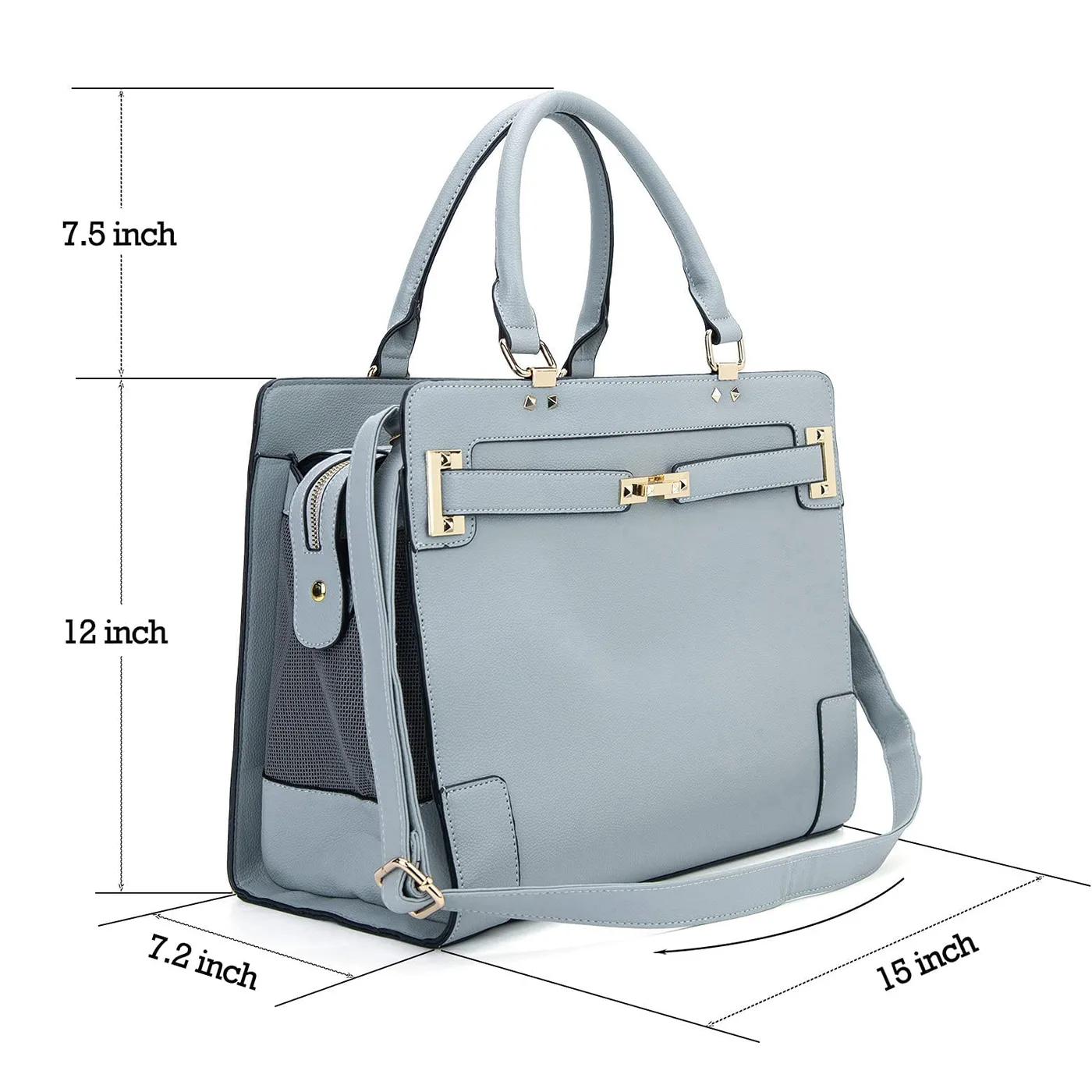
Printing a pattern onto a flat panel is straightforward; making that pattern read correctly on a three-dimensional assembled product is not. Panels meet at seams, at corners and at curves, and a pattern that is not placed deliberately will be visibly broken at every junction.
Placement starts with a marker plan that assigns the pattern repeat to each panel. Each panel is cut from a defined position in the repeat, so that the motif appears where intended, and the positions are held across every unit. That requires a placement marker rather than a standard nesting marker, at a cost of 80-220 USD per pattern and a 3-7% reduction in material utilisation.
Mirror matching applies where two panels meet symmetrically, as at a front panel and its counterpart. The pattern has to mirror across the seam, which means the repeat tile must be designed to mirror, or the two panels must be cut from mirrored positions. Designing the tile to mirror costs nothing at artwork stage and is impossible to fix later.
| Junction | Tolerance | Visible failure | Control | Utilisation cost | Added cost (USD) |
|---|---|---|---|---|---|
| Front to side panel seam | Plus or minus 3 mm | Broken motif at seam | Placement marker | 3-7% | 0.14-0.34 |
| Mirrored panel pair | Plus or minus 2 mm | Asymmetry across centre | Mirror-designed tile | 2-5% | 0.10-0.26 |
| Top to front, curved | Plus or minus 5 mm | Motif cut by curve | Artwork margin at curve | 1-3% | 0.06-0.18 |
| Zipper line through panel | Plus or minus 2 mm | Motif sliced | Artwork clearing the line | 1-2% | 0.05-0.14 |
| Base wrap, corner | Plus or minus 4 mm | Motif folded away | Corner allowance in tile | 2-4% | 0.09-0.22 |
| Strap and trim crossing | Plus or minus 3 mm | Motif obscured | Keep-out zone in artwork | 1-2% | 0.05-0.14 |
Keep-out zones are the cheapest control in the table and the one most often omitted. A motif placed where a strap crosses it, or where a zipper runs, is simply lost, and the artwork still cost the same. Defining keep-out zones at artwork stage costs nothing and preserves the design.
Scale is the second placement decision and it is driven by viewing distance. A motif sized for a product photographed at 1 m needs a repeat of 40-90 mm; the same motif at 15-25 mm reads as texture rather than as pattern and disappears at distance. For a discovery platform, where most imagery is viewed as a thumbnail first, the larger repeat is usually correct.
Stretch and grain matter on a curved panel. A knitted or a stretch-woven fabric distorts the pattern around a curve, and a woven with a stable weft does not. Where a pattern runs across a curved panel, the fabric should have under 4% stretch in the weft, or the motif will visibly deform.
Placement is a marker plan, a mirror-designed tile and defined keep-out zones, at 0.35-1.10 USD per unit and 3-7% of material utilisation.
Colour Fastness Targets for Decorated Panels
A decorated panel on a pet product is exposed to abrasion, light and cleaning, and the fastness specification has to reflect all three. The targets are expressed as grey-scale grades, and the gap between grade 3 and grade 4 is the difference between a product that looks tired after a season and one that does not.
Rubbing fastness is the axis that matters most, because a cat claws and kneads a surface and that abrasion is concentrated on the panel carrying the pattern. The target is grade 4 dry and grade 3-4 wet as a minimum, with grade 4-5 preferred where the panel is on an interior surface.
Light fastness matters because a carrier sits near a window or in a car. Grade 4 is the working target for an exterior panel and grade 3-4 is acceptable for an interior, since the interior sees far less light. Below grade 3-4 a pattern visibly fades within a season.
| Test | Exterior panel | Interior panel | Method reference | Cycles or hours | Test cost (USD) |
|---|---|---|---|---|---|
| Rubbing, dry | Grade 4 | Grade 4 | Crocking, published method | 10 cycles | 40-110 |
| Rubbing, wet | Grade 3-4 | Grade 3-4 | Crocking, published method | 10 cycles | 40-110 |
| Light | Grade 4 | Grade 3-4 | Xenon arc exposure | 20-40 hours | 120-320 |
| Wash | Grade 4 | Grade 4 | Domestic cycle at 30 degrees | 5-20 cycles | 90-260 |
| Perspiration | Grade 4 | Grade 4 | Acid and alkaline | Single | 50-140 |
| Abrasion | 15,000 cycles | 10,000 cycles | Abrasion, published method | To endpoint | 80-220 |
Abrasion testing is the one that correlates best with field performance and the one most often skipped. A decorated panel at 15,000 cycles on the exterior and 10,000 on the interior will hold its appearance through a normal product life; a panel rated only by rubbing fastness can pass that test and still abrade through in a few months.
The protective topcoat is the cheapest way to buy fastness. A coating of 20-40 g/m2 applied after printing improves rubbing by roughly one grade and abrasion resistance by 30-60%, at 0.20-0.55 USD. Across a decorated programme it is the highest-value single addition and it should be assumed rather than optional.
Colour matching across methods is the complication worth flagging. A brand colour reproduced in a printed panel, a dyed lining and an embroidered logo will differ, because each method has a different colour gamut. Where the three appear in one frame, the tolerance should be set at Delta-E 2.5 across methods rather than the Delta-E 1.5 used within a single method.
Fastness is three grades and one cycle count: rubbing 4, light 4 exterior, wash 4, and abrasion 15,000 cycles, with a protective topcoat buying most of it.
Seasonal Calendar: Working Back From the Pin Lead Time
Seasonal discovery content is created and saved ahead of the season, and the saving behaviour starts earlier than most production calendars assume. Working back from that is what puts product on the shelf when the traffic arrives.
The observed pattern is that saves for a seasonal term begin rising 10-16 weeks before the season and peak 2-6 weeks before it. For a product to be visible during the rise, it has to exist and be photographed 12-18 weeks before the season, which means it has to be delivered 14-20 weeks before, allowing time for content production.
Working back from delivery: 4-6 weeks of inbound and distribution, 26-38 days of sea freight, 35-50 days of production, 2-4 weeks of sampling, and 2-6 weeks of fabric and trim procurement. That is 20-29 weeks from brief to shelf, so the brief has to be issued 26-35 weeks before the season — roughly half a year.
| Stage | Before season (weeks) | Duration | Compressible to | Cost of compression | Risk if late |
|---|---|---|---|---|---|
| Brief and artwork | 30-35 | 2-4 weeks | 1-2 weeks | 150-400 USD | Rushed design |
| Fabric and trim procurement | 26-30 | 2-6 weeks | 0-1 week from bank | Bank capital | Delays everything |
| Sampling and approval | 22-26 | 2-4 weeks | 1 week | 150-320 USD per round | Late content |
| Bulk production | 15-22 | 35-50 days | 18-26 days | 1.80-4.20 per unit | Misses the rise |
| Inspection | 14-21 | 1-2 days | 1 day | 60-150 USD | Ships uninspected |
| Sea freight | 9-14 | 26-38 days | 4-9 days by air | 5.20-7.60 per unit | Misses the peak |
| Inbound and distribution | 5-9 | 2-6 weeks | 1 week | 0.40-1.20 per unit | Content delayed |
| Content production | 2-6 | 1-4 weeks | 3-5 days | 400-1,800 USD | Peaks with no imagery |
| Seasonal peak | 0 | n/a | n/a | n/a | n/a |
The stage most often underestimated is content production, which needs physical product in hand and typically takes 1-4 weeks including photography, editing and publishing. Product that arrives two weeks before the peak is too late to be photographed, and the imagery is what the channel runs on.
The second most often underestimated is procurement, because a custom printed fabric adds 7-14 days on top of the base fabric lead time. A printed programme therefore needs 9-20 weeks for procurement rather than 2-6, which pushes the brief back to 33-41 weeks before the season.
Air freight is the usual rescue and it works: cutting 26-38 days to 4-9 buys 17-34 days for 5.20-7.60 USD per unit. Against a seasonal product with a 6-10 week selling window, that is usually worth paying, and it should be built into the plan as a contingency rather than decided when the delay is already visible.
Issue the brief 26-35 weeks before the season, or 33-41 for a custom print, and hold air freight as a planned contingency.
Pattern Count Versus MOQ: The Proliferation Trade-Off
A discovery catalogue wants many patterns; every pattern carries a setup cost and a fabric minimum. The trade-off has an optimum, and it can be calculated rather than guessed.
Each additional pattern adds a setup cost of 60-4,200 USD depending on method and a fabric minimum of 100-2,000 m. Against a programme of 3,000 units, an extra pattern at digital print with a 150 m minimum consumes 150 m that would otherwise come from the shared pool, and adds 60-260 USD of setup amortised across its own run.
The benefit side is conversion. A catalogue with more variants matches more tastes, and observed conversion on a discovery-driven store rises with variant count up to a point and then flattens. The flattening happens around 8-12 variants for a single product family, beyond which additional variants add cost without adding sales.
| Patterns | Units each | Setup total (USD) | Setup per unit (USD) | Fabric surplus (m) | Utilisation | Conversion index |
|---|---|---|---|---|---|---|
| 3 | 1,000 | 180-780 | 0.06-0.26 | 0 | 88-91% | 100 |
| 5 | 600 | 300-1,300 | 0.10-0.43 | 0-90 | 86-90% | 112 |
| 8 | 375 | 480-2,080 | 0.16-0.69 | 40-180 | 84-88% | 124 |
| 10 | 300 | 600-2,600 | 0.20-0.87 | 90-260 | 82-87% | 128 |
| 12 | 250 | 720-3,120 | 0.24-1.04 | 140-340 | 80-86% | 130 |
| 15 | 200 | 900-3,900 | 0.30-1.30 | 220-480 | 78-84% | 131 |
| 20 | 150 | 1,200-5,200 | 0.40-1.73 | 350-720 | 74-81% | 131 |
The optimum is visible in the last two columns: conversion gains flatten after 10-12 patterns while setup cost and fabric surplus keep rising. Ten to twelve patterns at 250-300 units each is the efficient point for a 3,000-unit programme, and going beyond fifteen buys essentially nothing.
Utilisation falls with pattern count and that is a cost people miss. More patterns means smaller cutting runs per pattern, which means less efficient nesting, which is 4-10 percentage points of fabric between three patterns and twenty. On 3,000 units that is 60-180 m, or 180-540 USD.
The alternative to more patterns is more colourways of one pattern, which is cheaper because it shares the artwork and the placement marker. Two colourways of one pattern cost one setup plus one colour separation, against two full setups. Where breadth is wanted on a budget, colourway variation is the cheaper route and pattern variation is the more distinctive one.
Ten to twelve patterns is the efficient maximum for a 3,000-unit programme; beyond that, conversion flattens while setup, surplus and utilisation losses keep rising.
Re-Runs and Reorders on Evergreen Patterns
The long tail produces reorders of 150-500 units rather than 1,000-unit runs, and a re-run is a different manufacturing event from a first run. The differences are in artwork, in colour matching and in minimums.
Artwork is the first requirement and it is why archiving matters. A re-run needs the original separation, the repeat tile and the placement marker, and reproducing from those gives an identical product. Reproducing from a photograph or a physical sample gives a close approximation that will not match the units already in the market, which in a long-tail catalogue is visible because old and new units appear in the same search results.
Colour matching on a re-run is harder than on a first run, because the reference has aged. The control is the spectral data file from the original release, which does not fade, supported by a sealed swatch. Matching a re-run against a two-year-old physical sample that has been handled will drift by Delta-E 1.5-3.0.
| Order size | Reprint setup (USD) | Fabric minimum met | Colour match target | Unit cost (USD) | Viable |
|---|---|---|---|---|---|
| 150 units | 60-260 | Sometimes, 100-200 m | Delta-E 2.0 to file | 18.90-21.40 | Yes with digital |
| 250 units | 60-260 | Yes | Delta-E 2.0 to file | 17.20-19.60 | Yes |
| 400 units | 60-260 | Yes | Delta-E 1.5 to file | 15.80-18.10 | Yes |
| 600 units | 60-260 | Yes | Delta-E 1.5 to file | 14.90-17.20 | Yes |
| 1,000 units | 60-260 | Yes | Delta-E 1.5 to file | 13.90-16.10 | Yes |
| 150 units, yarn-dye | 900-4,200 | No, 800-2,000 m | Delta-E 2.0 | 28.40-34.60 | No |
The last row is the reason method choice determines catalogue shape. A yarn-dyed pattern simply cannot be re-run at 150 units: the setup and the minimum together push the unit cost to 28.40-34.60 USD, which no reorder economics support. A digital-printed pattern re-runs at 18.90-21.40 USD and is viable.
Timing a re-run is the second question and it is answered by the tail profile. With 30-45% of traffic arriving after week twelve and a 61-88 day sea pipeline, a re-run should be ordered when stock on hand plus in-transit falls to roughly 10-12 weeks of cover. Ordering later than that means the reorder lands after the second traffic peak.
Inventory risk on re-runs is low but not zero, and the seasonal argument helps again. A pattern that underperforms in its first season has a second chance eleven months later when saved content resurfaces, which is why a slow pattern should be held rather than cleared at the end of season one.
Re-run from archived artwork and a spectral colour file, use a method whose minimum supports 150 units, and reorder at 10-12 weeks of cover.
Cost Model for a Pattern-Led Programme
A pattern-led programme adds cost in four places: decoration setup, reduced cutting utilisation, placement control and inventory across more variants. Seeing all four is what makes the variant-count decision rational rather than intuitive.
Take a 3,000-unit programme in ten patterns at 300 units each, using digital print with a protective topcoat. Base product cost at 300 units is 17.60 USD. Decoration adds 0.60-1.80 for the print, 0.20-0.55 for the topcoat, and 0.35-1.10 for placement control. Setup amortised across the run adds 0.20-0.87. Reduced utilisation adds 0.18-0.54. Total before freight is 19.13-22.46 USD.
Inventory is the fourth cost and it is the one that grows with variant count. Ten patterns at 300 units each means ten inventory positions, and the slowest two or three will carry stock beyond the season. A carrying provision of 0.60-1.80 USD per unit across the programme covers it.
| Element | 3 patterns | 6 patterns | 10 patterns | 15 patterns |
|---|---|---|---|---|
| Base product | 13.55 | 15.40 | 17.60 | 19.61 |
| Decoration print | 0.60-1.80 | 0.60-1.80 | 0.60-1.80 | 0.60-1.80 |
| Protective topcoat | 0.20-0.55 | 0.20-0.55 | 0.20-0.55 | 0.20-0.55 |
| Placement control | 0.35-1.10 | 0.35-1.10 | 0.35-1.10 | 0.35-1.10 |
| Setup amortised | 0.06-0.26 | 0.12-0.52 | 0.20-0.87 | 0.30-1.30 |
| Utilisation loss | 0.06-0.18 | 0.12-0.36 | 0.18-0.54 | 0.27-0.81 |
| Inventory carrying provision | 0.20-0.60 | 0.40-1.10 | 0.60-1.80 | 0.90-2.60 |
| Freight and duty | 1.60-4.20 | 1.60-4.20 | 1.60-4.20 | 1.60-4.20 |
| Total landed | 16.62-22.24 | 18.79-25.03 | 21.33-28.46 | 23.83-31.97 |
| Retail at 55% margin | 36.93-49.42 | 41.76-55.62 | 47.40-63.24 | 52.96-71.04 |
The trade is legible in the bottom two rows: going from three patterns to ten adds 4.71-6.22 USD of landed cost and requires a retail price about 10.50-13.80 USD higher. Whether that is worth it depends on the conversion gain, and the conversion index from the earlier table says it is — 100 to 128 is a 28% improvement against a 28% price increase, which is roughly break-even on margin but strongly positive on absolute contribution because the volume rises.
Beyond ten patterns the arithmetic turns. Fifteen patterns costs 2.50-3.51 USD more per unit than ten and buys almost no conversion, which is the point at which the programme should add colourways of existing patterns rather than new ones.
The programme runs on standard terms with pattern minimums stated separately: MOQ 500 pieces per colourway or 300 at a stated coefficient, pattern fabric minimum of 100-200 m for digital print, prototypes in 6-10 working days, bulk production 35-50 days after sample approval, final random inspection to AQL 2.5, T/T 30/70 and FOB Xiamen. Our production team runs pattern-led programmes through the SGS-verified production base under ISO 9001 and BSCI coverage. Ten patterns on a 3,000-unit programme lands at 21.33-28.46 USD, and the point of diminishing returns sits just past twelve.
Order and quality terms
- MOQ 500 pieces per colourway; samples in 6-10 working days
- Bulk production 35-50 days after approval; AQL 2.5 inspection standard
- T/T 30/70 terms, FOB Xiamen, full document set per shipment
People Also Ask
Why does visual discovery favour breadth over novelty?
Discovery matches a specific taste rather than promoting a bestseller, and 30-45% of an image's traffic arrives after week twelve. Breadth with reorderable variants outperforms frequent novelty.
Which decoration method supports small reorders?
Digital print at 60-260 USD setup and a 100-200 m minimum, or embroidery at 60-140 USD with no fabric minimum. Yarn-dye needs 900-4,200 USD and 800-2,000 m and cannot re-run at 150 units.
What fastness grade should a decorated panel reach?
Rubbing grade 4 dry and 3-4 wet, light grade 4 on exteriors, wash grade 4, and abrasion to 15,000 cycles on exteriors. A protective topcoat of 20-40 g/m2 buys roughly one grade.
Why is pattern placement a separate problem from printing?
Panels meet at seams, corners and curves, so a pattern needs a placement marker, a mirror-designed tile and keep-out zones. Tolerance is 3 mm at a panel seam and 2 mm on mirrored pairs.
How far ahead should a seasonal programme be briefed?
26-35 weeks before the season, or 33-41 for a custom print. Sea freight is 26-38 days and production 35-50, and content needs product in hand 2-6 weeks before the peak.
How many patterns should a 3,000-unit programme run?
Ten to twelve. Conversion flattens after that while setup, fabric surplus and utilisation losses keep rising: 4-10 points of nesting efficiency separate three patterns from twenty.
Why archive artwork separations and colour data?
A re-run reproduced from a photograph or an aged sample drifts Delta-E 1.5-3.0 and will not match units already in the market. A spectral data file does not fade.
When should an evergreen pattern be reordered?
When stock on hand plus in-transit falls to 10-12 weeks of cover. The sea pipeline is 61-88 days and 30-45% of traffic arrives after week twelve.
Frequently Asked Questions
How does discovery traffic differ from a feed post?
A feed post concentrates 80-90% of traffic in the first 72 hours; a discovery image spreads across 20-40 weeks with 30-45% arriving after week twelve.
Why is a seasonal pattern not dead stock at season end?
Saved content resurfaces, so a pattern that peaks in one season will peak again roughly eleven months later. That justifies holding slow patterns into a second season rather than clearing them.
What is the constraint on sublimation printing?
It bonds into polyester and produces no white, so a sublimated panel is always on a light ground and any white in the artwork is the ground showing through.
Why coat fabric after printing rather than printing onto coated fabric?
A 20-40 g/m2 topcoat applied after printing improves rubbing fastness by about one grade and abrasion resistance by 30-60%, at 0.20-0.55 USD. Printing onto pre-coated fabric is cheaper and performs worse.
What repeat size suits a discovery thumbnail?
40-90 mm. The same motif at 15-25 mm reads as texture rather than pattern and disappears when the image is viewed small.
How much stretch can a patterned fabric have on a curved panel?
Under 4% in the weft. Above that the motif visibly deforms around the curve.
Why is a cross-method colour tolerance wider than a within-method one?
A printed panel, a dyed lining and an embroidered logo each have a different colour gamut, so the same brand colour reproduces differently. Delta-E 2.5 across methods against Delta-E 1.5 within one.
How long does custom printed fabric add to procurement?
7-14 days on top of the base fabric lead time, taking the procurement stage from 2-6 weeks to 9-20 and pushing the brief back to 33-41 weeks before the season.
What does a placement marker cost?
80-220 USD per pattern plus 3-7% of material utilisation, or 0.14-0.34 USD per unit. It is what keeps a motif from being visibly broken at every seam.
What is a keep-out zone in pattern artwork?
A defined area where no motif is placed because a strap crosses it or a zipper runs through it. Defining them at artwork stage costs nothing and preserves a design that would otherwise be obscured.
Why does cutting utilisation fall as pattern count rises?
More patterns means smaller cutting runs per pattern and less efficient nesting. Utilisation falls from 88-91% at three patterns to 74-81% at twenty.
Is colourway variation cheaper than pattern variation?
Yes. Two colourways of one pattern share the artwork and the placement marker, costing one setup plus one colour separation against two full setups.
What unit cost does a 150-unit re-run reach with digital print?
18.90-21.40 USD, against 28.40-34.60 for the same quantity in yarn-dye. That gap is why method choice determines whether a long-tail catalogue is re-runnable.
What carrying provision suits a ten-pattern programme?
0.60-1.80 USD per unit across the programme, covering the two or three slowest patterns that will carry stock beyond the season.
Talk to QUANZHOU JUNYUAN BAGS about a pet carrier program: MOQ 500 pieces per colourway, samples in 6-10 working days, bulk production in 35-50 days under AQL 2.5 inspection.
Get a free quote Request a sample