Cat Carrier Pet Youtuber: Channel Growth
A YouTube-led SKU stays in the catalogue for 24-36 months, so it needs a component last-time buy policy, cross-batch colour held within Delta-E 1.0 across years rather than lots, a frozen specification with change control, and a reorder point set at 6-9 weeks of cover. Reorders run at 500 pieces minimum.
An evergreen YouTube video keeps selling product long after it is published, which makes the manufacturing problem a lifecycle problem rather than a launch problem. A SKU that will be reordered for three years has to survive component discontinuation, dye-house recipe drift, fabric mill changes and annual re-testing, and each of those is a programme risk with a cost attached. This page sets out how a long-lived SKU is specified and managed: which components carry discontinuation risk and how to cover it, how colour reference standards are preserved across years, how reorder points and safety stock are calculated against a 35-50 day production cycle, and what a 36-month total cost of ownership actually looks like. Commercial terms follow the standard programme: MOQ 500 pieces per colourway, prototypes in 6-10 working days, bulk production 35-50 days after sample approval, final random inspection to AQL 2.5, T/T 30/70 and FOB Xiamen. The additions for a long-life SKU are in lifecycle management, not in the product itself.
A pet bag supplier running cat carrier orders at 500 pieces per colourway can consolidate several sizes into one cutting window and hold the dye lot across reorders.
Evergreen Content Means a 24-36 Month SKU Lifecycle
A long-form video behaves differently from any other content format: it accumulates views rather than spiking. A review published in year one can still be the top traffic source for a SKU in year three, which means the SKU has to exist in year three in a form that matches the video.
The practical consequence is a planning horizon of 24-36 months rather than one season. Within that horizon a programme will place somewhere between four and twelve reorders, each of 500-2,000 units, and each of which has to match the previous one. The matching requirement is the hard part, and it is where most long-running programmes fail.
The three things that break over a three-year horizon are component availability, colour reference and specification drift. Component availability breaks first and most often: a zipper model is discontinued, a fabric mill drops a colour, a foam grade is reformulated. Colour reference degrades second, because physical standards fade and dye houses re-scale recipes. Specification drift happens third, through accumulated small substitutions nobody logged.
| Year | Reorders | Typical order size | Annual volume | Primary risk | Mitigation cost (USD) |
|---|---|---|---|---|---|
| Year 1 | 2-4 | 1,000-2,000 | 3,000-6,000 | Launch quality, colour release | 600-1,400 |
| Year 2 | 3-5 | 500-1,200 | 2,500-5,000 | Component discontinuation | 400-1,800 |
| Year 3 | 2-4 | 500-900 | 1,500-3,000 | Colour drift, re-tooling | 700-2,600 |
| Beyond | Variable | 500 plus | Declining | Economic viability | Decision point |
Deciding when to retire a SKU is itself a manufacturing decision with numbers attached. A SKU becomes marginal when annual volume falls below roughly 1,500 units, because at that level fabric and trim minimums start to bind reorders, unit cost rises 8-15%, and the cost of maintaining the colour standard and annual re-test is no longer amortised across enough units.
A related decision is whether to refresh or to replace. A refresh — new colourway, updated trim, revised logo — reuses the pattern and the tooling and costs 600-2,200 USD in development. A replacement needs a new pattern and a full sampling cycle at 2,400-6,800 USD. Across a three-year horizon, refreshing twice is usually cheaper than replacing once.
The content side reinforces the manufacturing one. A video that still ranks in year three is an asset worth protecting, and the cheapest way to protect it is to keep the SKU it refers to in production and unchanged. Retiring a SKU that an evergreen video points to converts a traffic asset into a dead link.
An evergreen SKU is a 24-36 month commitment, and the three things that break it are components, colour and undocumented substitutions.
Component Lifecycle Management and Last-Time Buy Policy
Component discontinuation is the highest-probability disruption to a long-running programme, because a bag is an assembly of fifteen to forty purchased parts and any one of them can be withdrawn with little notice. Managing it is a documented exercise rather than a hopeful one.
The first step is a component risk register: every purchased part classified by availability horizon and substitutability. Standard items — commodity webbing, generic D-rings, standard coil zipper chain — carry low risk and can be substituted freely. Specialised items — a branded zipper, a custom moulded buckle, a specific coated fabric — carry high risk and need a plan.
The plan for a high-risk component is either a qualified alternative or a last-time buy. A qualified alternative is a second part tested and approved in parallel, so a substitution is a documentation exercise rather than a re-sample cycle. A last-time buy is a purchase of 12-36 months of forecast requirement against a discontinuation notice, which ties up capital but removes the risk entirely.
| Component | Availability horizon | Risk | Mitigation | Capital at risk (USD) | Lead time to qualify |
|---|---|---|---|---|---|
| Branded coil zipper, custom pull | 18-30 months | High | Last-time buy, 24 months | 1,800-4,600 | 4-8 weeks |
| Custom moulded buckle | Tool life 5-8 years | Low | Tool ownership, stored | 900-2,400 tool | None |
| Specific coated shell fabric | 12-24 months | High | Alternative mill qualified | 400-1,100 | 6-10 weeks |
| Foam grade | 24-48 months | Moderate | Density spec rather than brand | 0 | 2-4 weeks |
| Hook-and-loop tape | Continuous | Low | Commodity | 0 | None |
| Printed label and carton | Continuous | Low | Artwork held, reprint | 0 | 1-2 weeks |
| Custom patch, silicone | Tool life 4-6 years | Low | Mould stored and maintained | 180-450 tool | None |
Specifying by property rather than by brand is the cheapest mitigation available and it should be the default. A foam specified by density, compression set and thickness can be sourced from any qualified supplier; a foam specified by brand name cannot. The same applies to webbing, to hook-and-loop and to standard hardware. Reserve brand-specific calls for components where the brand is part of the product story.
Last-time buy decisions need a rule, because capital tied up in components is capital not spent on inventory. The working rule is to buy forward when three conditions hold: the component is single-sourced, the annual consumption exceeds 1,500 units, and the forward purchase is under 15% of annual programme value. That last condition is what stops a last-time buy from becoming the largest inventory position in the business.
Classify every component, specify by property wherever possible, and buy forward only when the part is single-sourced, high-volume and under 15% of programme value.
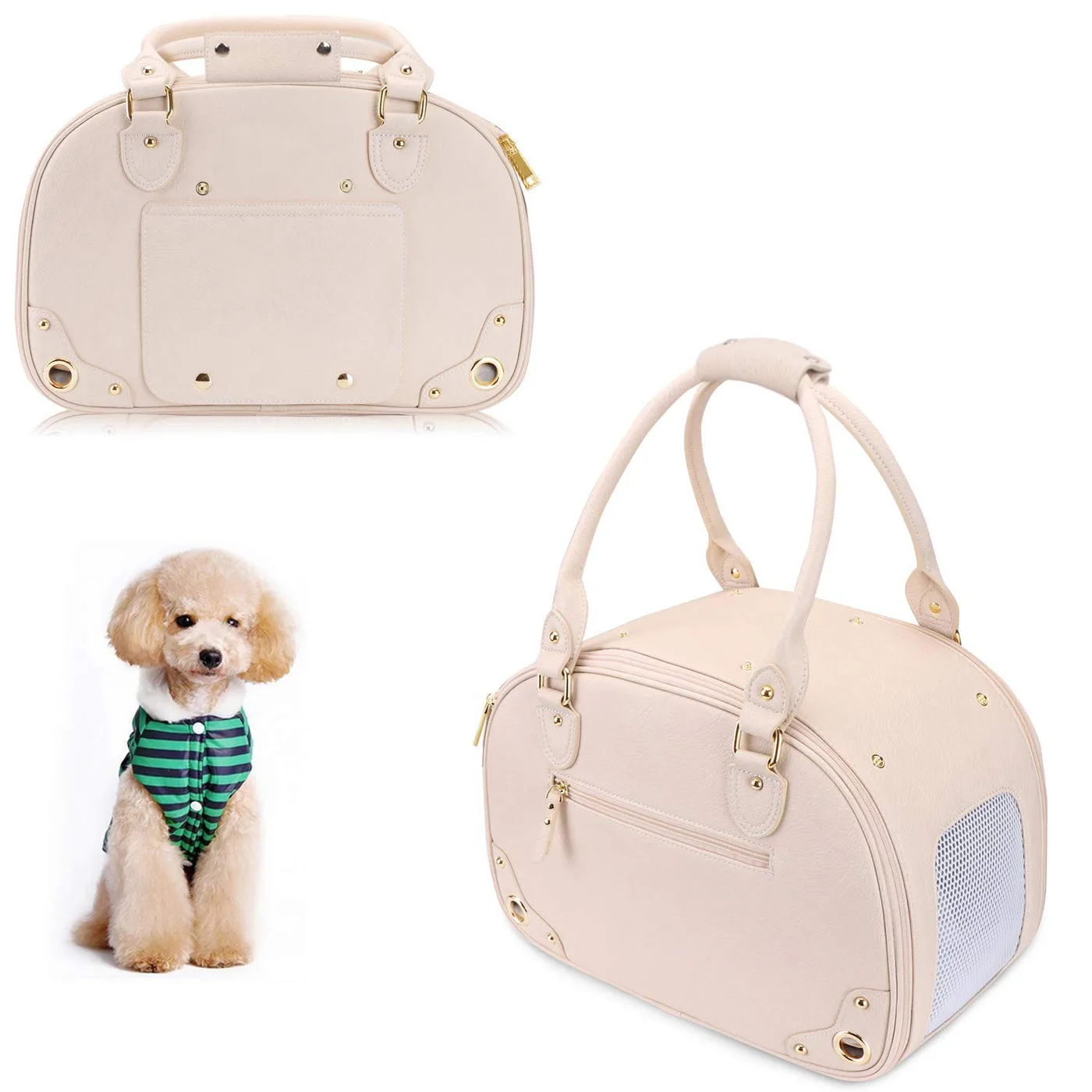
Cross-Batch Colour Consistency Across Years, Not Lots
Colour consistency within a production lot is a solved problem; colour consistency across three years is not. The reason is that the reference itself degrades, the dye house re-scales, and the substrate mill changes.
Physical reference standards fade. A fabric swatch stored in an office loses or gains colour at a measurable rate, typically Delta-E 0.5-1.5 per year under fluorescent lighting and more under daylight. Over three years that is enough to shift an entire programme. The control is a sealed, dark-stored primary standard that is never handled, plus a working standard that is replaced annually from the primary.
Instrumental standards are more robust and should back the physical ones. Recording the full spectral reflectance curve of the approved standard, with the numerical tolerance, allows a colour to be re-established from data years later even if every physical swatch has degraded. Adding a spectrophotometer file to the specification costs nothing and is the single best protection available.
| Reference type | Drift per year | Storage | Refresh cycle | Cost (USD) | Robustness |
|---|---|---|---|---|---|
| Working fabric swatch | Delta-E 0.5-1.5 | Office, handled | Replace annually | 0-40 | Poor |
| Sealed primary swatch | Delta-E 0.1-0.4 | Dark, sealed, unhandled | Verify annually | 20-60 | Good |
| Spectral data file | Zero | Digital archive | Never | 0 | Excellent |
| Instrumental tolerance band | Zero | Specification document | Never | 0 | Excellent |
| Production retained unit | Delta-E 0.3-0.8 | Dark store, 24 months | Per lot | 24-60 per lot | Good |
Tolerance for a long-life programme should be tighter than for a single launch, because errors accumulate rather than average out. The specification is Delta-E 1.0 lot-to-lot against the instrumental standard and Delta-E 1.5 against the sealed primary, with a hard reject at Delta-E 2.0. A single lot at Delta-E 2.0 against a single launch is invisible; three consecutive lots each drifting 2.0 in the same direction is a visible colour change by year three.
Substrate drift is the uncontrolled variable and it is worth a specific clause. The same dye recipe on a fabric from a different mill, or from the same mill a year later, reads differently because of filament cross-section and finish differences. The clause that controls it is a fabric release test: every new fabric lot is dyed and measured before bulk cutting, and a lot that misses is re-dyed rather than released with a note.
Every textile in the programme is declared against OEKO-TEX criteria on release, and retained units from each lot give a physical fallback when a colour question arises years later. Colour across years is held by an instrumental standard and a spectral file, not by a fabric swatch in a drawer.
Specification Freeze and Change Control on a Long-Lived SKU
A specification that lives for three years will be changed many times, and the danger is not the changes themselves but the undocumented ones. A long-lived SKU needs a formal freeze point and a change log, both of which are cheap and both of which are usually absent.
The freeze happens at pre-production sample approval. From that point the bill of materials, the pattern, the trim schedule and the construction sequence are fixed, and any change goes through the log. The log records the change, the reason, the date, the affected lots and — critically — whether a re-sample was required.
The re-sample trigger is the part that needs defining in advance, because it is the judgment call that decides whether a change is safe. The working rule: any change to a structural component, a safety-relevant component or a visible material requires a re-sample; any change to an invisible, non-structural commodity item with an equivalent specification does not.
| Change class | Example | Re-sample | Re-test | Customer notice | Cost (USD) | Timeline |
|---|---|---|---|---|---|---|
| Class A, structural | Base board thickness 3 to 4 mm | Yes | Yes | Yes | 320-780 | 4-7 weeks |
| Class A, safety | Zipper strength specification | Yes | Yes | Yes | 380-900 | 4-8 weeks |
| Class B, visible material | Lining colour or supplier | Yes | No | Yes | 150-420 | 2-4 weeks |
| Class C, invisible commodity | Thread supplier, same specification | No | No | No | 0-80 | None |
| Class C, packaging | Carton flute grade, same strength | No | No | No | 0-60 | None |
Pattern control is a separate discipline with its own failure mode. A pattern that is re-digitised, or a marker that is re-nested, changes panel dimensions by 1-4 mm, which across a three-year programme changes fit. The control is a controlled master pattern with revision numbering, and a rule that no cutting file is generated from anything other than the released revision.
Documentation has to follow the changes or the freeze is pointless. Every Class A and Class B change updates the specification sheet, and the sheet carries a revision number that matches the change log. A reviewer or a customer comparing a year-three unit against a year-one published specification should be able to read the revision history and understand every difference.
The quality system under which the change log operates is certified to ISO 9001, and test method references follow published practice at ASTM International. Freeze at pre-production approval, log every change with its class, and never generate a cutting file from an unreleased pattern revision.
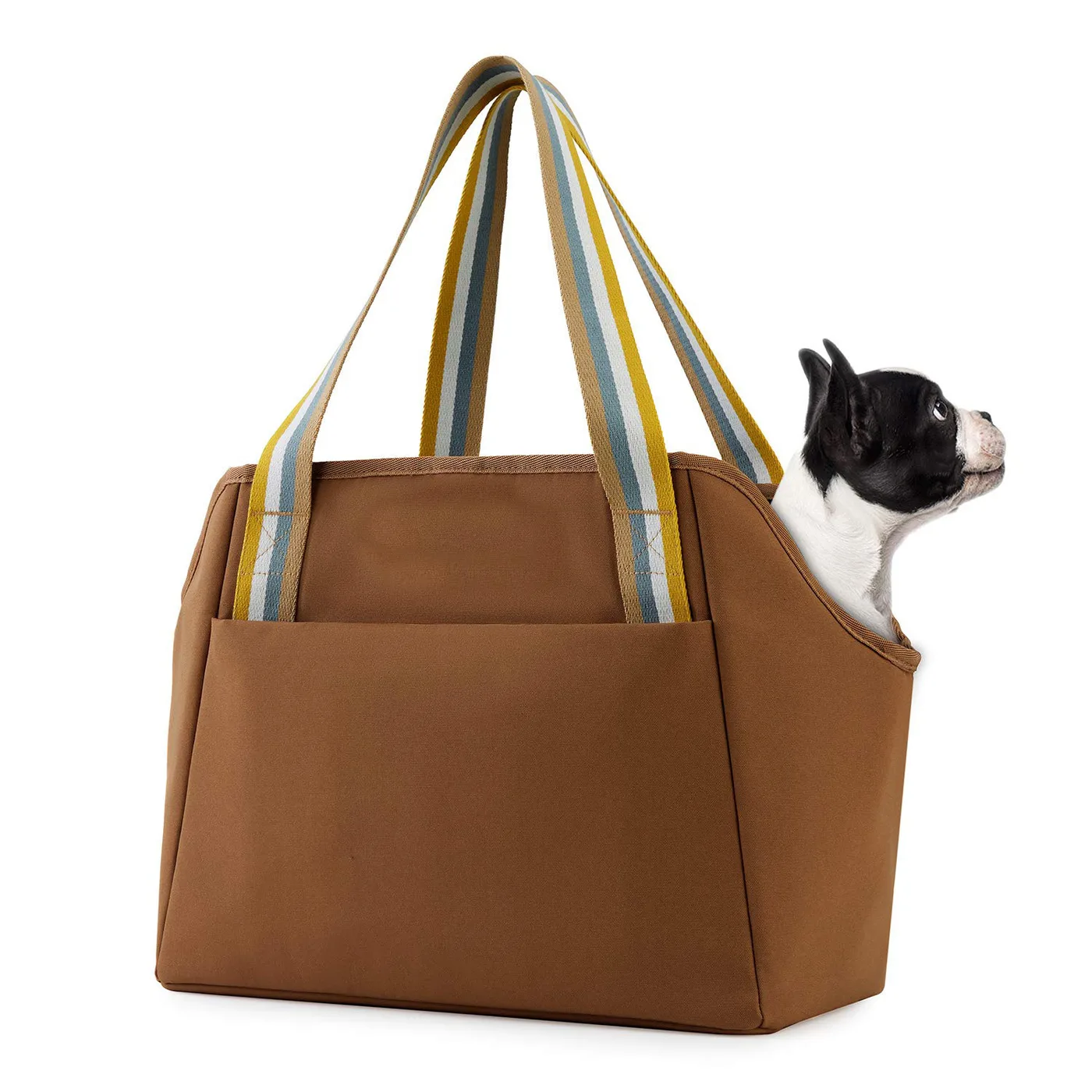
Reorder Economics: Safety Stock, Reorder Point and Carrying Cost
A reorder against a 35-50 day production cycle and a 26-38 day sea transit is a 61-88 day pipeline, and the reorder point has to be set against that number rather than against the production time alone. Most stockouts in this category come from setting the reorder point against production lead time and forgetting the vessel.
The arithmetic is straightforward. Weekly demand is measured over the last 8-12 weeks, multiplied by the total pipeline in weeks, and a safety stock added for demand variance. For a SKU selling 180 units a week with an 11-week pipeline, the pipeline cover is 1,980 units and a 30% safety allowance brings the reorder point to about 2,570 units.
Safety stock sizing depends on how variable demand is. A SKU driven by one evergreen video has relatively stable demand with a slow decay, and 20-30% cover is adequate. A SKU that gets periodic spikes when the video is re-shared needs 40-60%. Measuring the coefficient of variation of weekly demand over twelve weeks is the quickest way to choose.
| Weekly demand | Pipeline (weeks) | Pipeline cover | Variance | Safety stock | Reorder point | Order size |
|---|---|---|---|---|---|---|
| 120 units | 11 | 1,320 | Low, 20% | 264 | 1,584 | 1,500 |
| 180 units | 11 | 1,980 | Moderate, 30% | 594 | 2,574 | 2,000 |
| 180 units | 11 | 1,980 | High, 55% | 1,089 | 3,069 | 2,500 |
| 260 units | 11 | 2,860 | Moderate, 30% | 858 | 3,718 | 3,000 |
| 75 units | 11 | 825 | Low, 20% | 165 | 990 | 1,000 |
Order size interacts with the MOQ ladder in a way that favours larger, less frequent orders. At 500 pieces per colourway the unit cost index is 100; at 800 it is 92; at 1,200 it is 88. Against a carrying cost of roughly 18-26% of unit value per year, the saving from a larger order has to exceed the extra carrying cost, and it does so whenever the incremental units will sell within about 8-10 months.
Carrying cost is worth stating precisely, because it is the number most often guessed. It is capital cost at 8-14%, warehousing at 3-6% of value per year, insurance and handling at 1-3%, and obsolescence provision at 4-8% for a fashion-adjacent product. On a 17 USD unit that is 3.06-4.42 USD per unit per year, or 0.26-0.37 USD per month.
The practical reorder rule that follows: order to cover 4-6 months of demand, never order below 500 per colourway, and place the order when stock on hand plus stock in transit falls to the reorder point. The pipeline is 61-88 days, not 35-50, and a reorder point set against production time alone will stock out.
Freight Planning for Steady Demand: Sea Schedules and Buffer
Evergreen demand is the one demand profile that sea freight suits perfectly, because it is predictable and slow-moving. The planning question is not whether to use sea but how much buffer to hold against its variance.
Sea transit on the China to US west coast lane runs 26-38 days door to port with a standard deviation of 5-9 days; to northern Europe it runs 30-42 days with a similar spread. That variance, not the mean, is what sets the buffer. A planner who orders against the mean will stock out in roughly one cycle in six.
The buffer decision is economic. Holding an extra two weeks of cover costs 0.26-0.37 USD per unit per month on a 17 USD unit; a stockout on an evergreen SKU costs the lost margin on the units not sold plus the air freight to recover, typically 4-9 USD per unit affected. Two weeks of buffer is cheap against that.
| Mode | Transit | Variance | Cost per unit (USD) | Total (USD) | Buffer required | Stockout risk |
|---|---|---|---|---|---|---|
| Sea FCL, 20 ft | 26-38 days | Plus or minus 5-9 days | 0.75-1.60 | 1,125-2,400 | 2-3 weeks | Low |
| Sea LCL | 28-42 days | Plus or minus 7-12 days | 1.10-2.40 | 1,650-3,600 | 3-4 weeks | Moderate |
| Sea plus air top-up 300 | 26-38 plus 5-9 | Low | 2.30-3.70 blended | 3,450-5,550 | 1 week | Very low |
| Air, full 1,500 | 5-9 days | Plus or minus 1-3 days | 8-12 | 12,000-18,000 | None | None |
| Air, full, emergency | 3-5 days | Plus or minus 1 day | 12-22 | 18,000-33,000 | None | None |
The blended option in row three is worth understanding, because it is the correct answer more often than either pure mode. Shipping 1,200 by sea and holding a 300-unit air contingency costs 2.30-3.70 USD per unit blended against 0.75-1.60 for pure sea, and it removes most of the stockout risk without paying air rates on the whole order.
Full-container versus less-than-container is the second decision and it turns on volume. At 900-1,400 units per 20-foot container depending on compression and carton specification, an order above about 900 units usually fills or nearly fills a container and should go FCL; below about 500 units LCL is unavoidable and the per-unit cost rises 45-100%.
Seasonality is the last planning input. Booking space in the six weeks before peak season runs 15-40% above baseline rates and transit variance widens by 3-6 days. Placing an evergreen reorder to land outside those windows is free money for a SKU whose demand does not depend on the date.
Sea is right for evergreen demand; the decision that matters is buffer size, and two to three weeks of cover costs far less than one stockout.
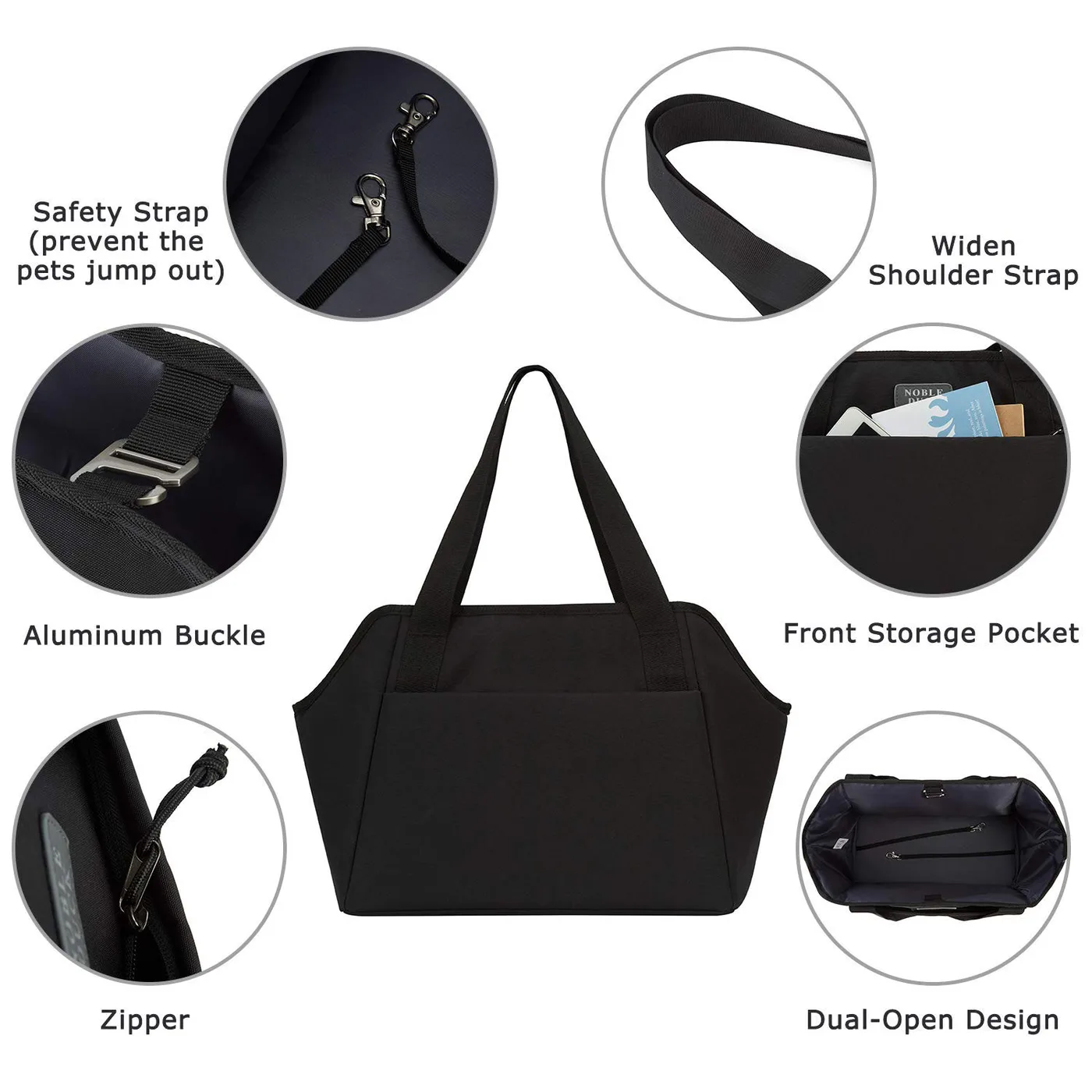
Annual Re-Test and Material Ageing on a Long-Running SKU
A SKU in production for three years needs periodic re-testing, because materials, suppliers and processes all move and because the original test data has a shelf life. Annual re-testing is the mechanism that catches slow drift before it becomes a failure.
The re-test programme has three parts. Component re-test checks the safety-relevant and durability-relevant items against the original specification: zipper cycle and pull strength, hardware corrosion and pull-off, webbing tensile and abrasion, seam strength. Material re-test checks the fabric for coating integrity, colour fastness and restricted substances. Product re-test repeats the assembled-product tests on a unit from current production.
The frequency should be risk-weighted rather than uniform. A commodity component with no change and no failures needs testing every 24 months; a changed or single-sourced component needs it every 12; and any component with a field failure needs it every 6 until two consecutive clean results.
| Test group | Items | Frequency | Typical cost (USD) | Failure rate observed | Action on fail |
|---|---|---|---|---|---|
| Zipper and closure | Cycle, pull strength, slider retention | 12 months | 180-420 | 4-8% | Re-specify, re-sample |
| Hardware | Corrosion, pull-off, finish | 12 months | 140-320 | 3-7% | Supplier change |
| Fabric and coating | Abrasion, colour fastness, coating adhesion | 12 months | 220-520 | 5-10% | Mill or coating change |
| Restricted substances | Per component declaration | 12-24 months | 90-260 | 1-3% | Material replacement |
| Assembled product | Load, seam strength, dimensional | 12 months | 260-640 | 2-5% | Process correction |
Material ageing is a separate question from re-testing and it applies specifically to stock held for long periods. Polyurethane coatings hydrolyse over time in humid storage, with a measurable loss of coating integrity after 24-36 months at above 70% relative humidity. Foam takes a compression set, and hook-and-loop loses peel strength. Any inventory held beyond 24 months should be re-tested before sale rather than assumed good.
Storage conditions matter more than age for most of the failure modes. A carton stored at 20-25 degrees and 45-60% relative humidity holds coatings and adhesives well; the same carton at 30-35 degrees and 75-85% relative humidity does not. Specifying storage conditions for held inventory is free and prevents the majority of age-related failures.
The re-test record is also a sales asset. A SKU with three consecutive years of clean annual re-test data supports a stronger published claim than one with a single test from launch, and the data costs 890-2,160 USD a year to generate.
Re-test annually on a risk-weighted schedule, and re-test any inventory held beyond 24 months before selling it.
Cost Model: 36-Month Total Cost of Ownership
Unit cost is the number everyone negotiates and the one that matters least over three years. A 36-month total cost model shows where the money actually goes on an evergreen SKU, and it is usually not where the purchase order suggests.
Take a programme at 1,800 units in year one, 3,600 in year two and 2,400 in year three, for 7,800 units total, at a baseline unit cost of 16.90 USD with the volume ladder applied. Product cost across the horizon is 128,000-136,000 USD. That is the number on the purchase orders and it is roughly 62-68% of the true total.
The remaining 32-38% is distributed across development and tooling amortised over the horizon, sampling across four to twelve reorders, annual re-testing, colour standard maintenance, component last-time buys, freight, duty and carrying cost on the safety stock the pipeline requires.
| Cost element | Total (USD) | Per unit (USD) | Share of total | Controllable |
|---|---|---|---|---|
| Product cost, ladder applied | 128,000-136,000 | 16.41-17.44 | 62-66% | Partly, by order size |
| Development and tooling | 3,200-6,800 | 0.41-0.87 | 1.5-3.3% | Yes, refresh over replace |
| Sampling across reorders | 1,800-4,200 | 0.23-0.54 | 0.9-2.0% | Yes, freeze discipline |
| Annual re-test, 3 years | 2,700-6,500 | 0.35-0.83 | 1.3-3.1% | Yes, risk weighting |
| Colour standard maintenance | 900-2,400 | 0.12-0.31 | 0.4-1.2% | Yes, instrumental standard |
| Component last-time buys | 1,800-4,600 | 0.23-0.59 | 0.9-2.2% | Yes, property specs |
| Freight, sea with 10% air | 9,400-21,600 | 1.21-2.77 | 4.5-10.5% | Yes, mode and buffer |
| Duty at 4-9% | 5,100-12,200 | 0.65-1.56 | 2.5-5.9% | No, classification |
| Carrying cost on safety stock | 6,200-14,800 | 0.79-1.90 | 3.0-7.2% | Yes, reorder discipline |
| Total 36-month | 159,100-209,100 | 20.40-26.81 | 100% | Roughly 30% controllable |
The two lines worth attacking are the two largest non-product ones. Freight at 1.21-2.77 USD per unit is controlled by mode selection and by avoiding emergency air, and the difference between a planned programme and an unplanned one is typically 0.90-1.60 USD per unit. Carrying cost at 0.79-1.90 USD per unit is controlled by reorder discipline and by setting the reorder point against the full pipeline.
The single largest controllable saving, though, is in the product line itself through order sizing. Moving from four reorders of 500 to two reorders of 1,200 moves the unit cost index from 100 to 88, which across 7,800 units is 14,000-19,000 USD — more than the entire re-test, colour and last-time-buy budget combined, and it costs only discipline.
The programme runs on standard terms throughout: MOQ 500 pieces per colourway, prototypes in 6-10 working days, bulk production 35-50 days after sample approval, final random inspection to AQL 2.5, T/T 30/70 and FOB Xiamen. Our production team maintains long-running programmes through the SGS-verified production base under ISO 9001 and BSCI coverage. Over three years, order sizing and freight discipline are worth more than any unit-price negotiation.
Why brands source here
- Pet carrier programs run since 2014; founding team in sewn goods since 2004
- SGS-verified production floor of 4,950 m² with 137 workers across 7 lines
- Monthly capacity of 200,000 units, audited to BSCI and ISO 9001
People Also Ask
How long should an evergreen cat carrier SKU stay in production?
24-36 months, after which annual volume typically falls below 1,500 units, fabric and trim minimums start to bind reorders and unit cost rises 8-15%.
What is a component last-time buy?
A forward purchase of 12-36 months of forecast requirement against a discontinuation notice. Use it when the part is single-sourced, annual use exceeds 1,500 units and the purchase is under 15% of programme value.
How is colour held consistent across three years?
With a sealed, dark-stored primary swatch verified annually and a spectral reflectance data file that does not degrade. Tolerance is Delta-E 1.0 lot-to-lot, with a hard reject at Delta-E 2.0.
When should a specification be frozen?
At pre-production sample approval. From that point every change is logged with a class, and any change to a structural, safety-relevant or visible item triggers a re-sample.
How do you calculate a reorder point for an imported SKU?
Weekly demand multiplied by the full 61-88 day pipeline in weeks, plus safety stock of 20-30% for stable demand and 40-60% for spiky demand.
Is sea or air right for an evergreen reorder?
Sea, because demand is predictable. The decision that matters is buffer: two to three weeks of cover costs 0.26-0.37 USD per unit per month against a stockout cost of 4-9 USD per unit.
How often should a long-running SKU be re-tested?
Every 12 months for changed or single-sourced components, every 24 months for stable commodity items, and every 6 months after a field failure until two consecutive clean results.
What is the largest controllable cost over three years?
Order sizing. Moving from four reorders of 500 to two of 1,200 drops the cost index from 100 to 88, saving 14,000-19,000 USD across 7,800 units.
Frequently Asked Questions
Why do physical colour swatches fail as long-term standards?
A handled swatch drifts Delta-E 0.5-1.5 per year under fluorescent lighting and more under daylight. Over three years that shifts an entire programme, which is why a sealed primary and a spectral data file are needed.
Why should components be specified by property rather than brand?
A foam specified by density and compression set can come from any qualified supplier; one specified by brand name cannot. Reserve brand-specific calls for parts where the brand is part of the product story.
What is a Class A change on a frozen specification?
A structural or safety-relevant change, such as base board thickness or zipper strength. It requires a re-sample and a re-test, customer notice, and costs 320-900 USD on a 4-8 week path.
Why should cutting files never come from an unreleased pattern revision?
Re-digitising a pattern or re-nesting a marker changes panel dimensions by 1-4 mm, which across a three-year programme changes fit. Only the released revision should generate cutting files.
What is the full pipeline for an imported reorder?
61-88 days: 35-50 days production plus 26-38 days sea transit. Setting the reorder point against production time alone is the most common cause of stockouts in this category.
How is carrying cost calculated per unit?
Capital at 8-14%, warehousing at 3-6%, insurance and handling at 1-3%, obsolescence at 4-8%. On a 17 USD unit that is 3.06-4.42 USD a year, or 0.26-0.37 USD a month.
When does a full container beat less-than-container load?
Above about 900 units, since a 20-foot container holds 900-1,400 carton-packed units depending on compression. Below about 500 units LCL is unavoidable and per-unit cost rises 45-100%.
How much does peak-season booking add to freight cost?
15-40% above baseline rates in the six weeks before peak, with transit variance widening by 3-6 days. An evergreen SKU should be scheduled to land outside those windows.
What happens to polyurethane coatings in long storage?
They hydrolyse, with measurable loss of coating integrity after 24-36 months above 70% relative humidity. Inventory held beyond 24 months should be re-tested before sale.
What storage conditions preserve held inventory?
20-25 degrees at 45-60% relative humidity. The same carton at 30-35 degrees and 75-85% humidity does not hold coatings, adhesives or hook-and-loop.
How much does an annual re-test programme cost?
890-2,160 USD a year across zipper, hardware, fabric, restricted substances and assembled product tests, or 0.35-0.83 USD per unit on a 7,800-unit horizon.
When should a SKU be refreshed rather than replaced?
Almost always. A refresh reusing the pattern and tooling costs 600-2,200 USD against 2,400-6,800 USD for a replacement with a new pattern and full sampling cycle.
What share of three-year cost is non-product?
32-38%. Freight is 4.5-10.5%, duty 2.5-5.9%, carrying cost 3.0-7.2%, and development, sampling, re-testing and last-time buys together another 5-10%.
Why is retiring a SKU risky when an evergreen video points to it?
The video is an asset that keeps generating traffic. Retiring the SKU it refers to converts that traffic into a dead link, which is why keeping a low-volume SKU alive is sometimes the right call.
Talk to QUANZHOU JUNYUAN BAGS about a pet carrier program: MOQ 500 pieces per colourway, samples in 6-10 working days, bulk production in 35-50 days under AQL 2.5 inspection.
Get a free quote Request a sample