Cat Carrier Locking Zipper: Prevent Accidents
A locking zipper on a cat carrier should be a #5 or #8 coil chain with an auto-lock slider holding 60-150 N without travel, a padlock eye of 5-6 mm or a keyed slider lock, and a crosswise chain strength above 350 N to ASTM D2061. Add a zip garage and a storm flap, because a lock protects the slider but not the chain.
A zipper is the only component on a cat carrier that is simultaneously a structural element, a safety device and a wear item, and it is the component most often specified by gauge alone. Gauge does not tell you whether the slider locks, whether the chain resists separation under a load pressing from inside, whether the pull will survive a thousand cycles, or whether the slider body will corrode in a humid market. Our production team specifies a locking zipper on eight numbers: chain type and gauge, crosswise strength, lateral separation strength, slider lock holding force, cycle life, corrosion class, pull-tab attachment strength, and the geometry of the garage and flap that protect it. Every one is testable at incoming inspection. Commercial terms follow the standard programme: MOQ 500 pieces per colourway, prototypes in 6-10 working days, bulk production 35-50 days after sample approval, final random inspection to AQL 2.5, T/T 30/70 and FOB Xiamen.
The economics of wholesale pet carriers move with carton cubage, so cat carrier programmes are quoted both by unit price and by filled container.
How Zippers Fail on a Pet Carrier: Five Mechanisms
Five failure mechanisms account for essentially every zipper-related incident on a cat carrier, and they are distinct enough that fixing one does not fix the others. Specifying against the wrong one is why a carrier can pass a pull test and still release an animal.
The first is chain separation under lateral load. A coil zip is closed by interlocking two helical elements, and a load pressing the chain apart from inside the carrier, applied perpendicular to the chain line, will separate the coils. A #5 polyester coil separates at 150-300 N and a #8 at 300-500 N without reinforcement. A cat pushing from inside applies 100-250 N sustained, so a #5 chain is marginal and a #8 is comfortable; a compression strap over the closure reduces the load on the chain by 30-50 % and closes the gap.
The second is slider travel. A non-locking slider moves under a load applied along the chain, and a cat working at a slider with a paw or a nose can move it 20-60 mm within seconds. A non-locking slider travels at 10-30 N of pull; an auto-lock slider, which brakes against the chain unless the pull tab is lifted, resists 60-150 N. This is the single cheapest fix in the whole category and the one most often omitted from a value-engineered spec.
The third is element or tape failure. The chain is sewn to a tape, and the tape is sewn to the shell. A tape seam at 6 stitches per inch pulls free at 80-150 N; at 8-10 stitches per inch with a 12-15 mm tape it reaches 180-280 N. Element breakage itself is rare on a quality coil chain and common on a cheap moulded chain, where a single broken tooth jams the slider permanently.
The fourth is pull-tab failure. The tab is attached to the slider body through a cast eye, and in a panic situation the tab is the part that gets yanked. A cast zinc-alloy eye fails at 60-120 N; a formed wire eye or a stamped stainless eye reaches 150-250 N. A broken tab does not open the carrier by itself, but it makes the closure impossible to operate, which in an emergency is its own hazard.
The fifth is corrosion. A zinc-alloy slider body in a humid, salty environment develops white corrosion products within 3-6 months, and a corroded slider seizes or releases unpredictably. The mitigation is a brass or stainless body with a nickel-free plating, or a moulded polymer body, and it is verified by a neutral salt spray test.
Which Failure Mechanism Dominates by Carrier Type
On a soft-sided carrier the dominant mechanism is chain separation, because the frame flexes and loads the closure line. On a hard-shell carrier it is slider travel and latch play, because the rigid door concentrates load at the slider. On a backpack carrier it is pull-tab failure, because the closure is operated far more often and in awkward positions.
Chain Specification: Type, Gauge and Material
Three chain families are used on carriers, and the choice determines the strength, the hand, the noise and the price. Gauge is expressed as a number that corresponds to the approximate width of the closed elements in millimetres: a #3 is roughly 3 mm wide closed, a #5 roughly 5 mm, a #8 roughly 8 mm.
A coil chain, also called a spiral or nylon coil although it is usually polyester, is a helical filament sewn onto a tape. It is flexible, quiet, and it runs smoothly around corners, which makes it the right choice for a soft carrier with a curved closure line. A #5 coil gives a crosswise strength of 250-400 N and a #8 gives 400-650 N. It is the default specification for a soft cat carrier.
A moulded chain, sometimes called Vislon or Delrin after the resin family, has discrete injection-moulded teeth crimped to the tape. It is stiffer and it gives a more premium, metal-like appearance at a lower cost than metal, with a crosswise strength of 300-500 N at #5. Its weakness is that a damaged tooth cannot be re-meshed, so a single impact can destroy the closure, and it is noisier.
A metal chain in brass, nickel-plated brass or aluminium gives the highest strength, 450-800 N at #5, and the most premium appearance. It is heavier, it is noisy, it conducts heat and cold, and it requires a plating specification to prevent tarnish. It is used on rigid and premium carriers and rarely on a soft one, because the weight and the noise work against the product.
| Chain type | Gauge | Crosswise strength | Lateral separation | Cycle life | Cost per carrier | Best application |
|---|---|---|---|---|---|---|
| Polyester coil | #3 | 150-250 N | 90-160 N | 800-1,500 | 0.35-0.60 USD | Accessory pockets |
| Polyester coil | #5 | 250-400 N | 150-300 N | 1,500-3,000 | 0.55-0.95 USD | Standard soft carrier door |
| Polyester coil | #8 | 400-650 N | 300-500 N | 2,000-4,000 | 1.10-1.80 USD | Large or escape-prone cats |
| Moulded resin | #5 | 300-500 N | 200-350 N | 1,200-2,500 | 0.70-1.20 USD | Rigid and structured designs |
| Metal, brass | #5 | 450-800 N | 350-600 N | 2,500-5,000 | 1.60-2.80 USD | Premium hard shell |
Two specification details matter beyond the table. The tape should be 12-15 mm wide and polyester rather than cotton, because a cotton tape absorbs water and rots. And the chain should be specified with a stop at both ends, with the bottom stop moulded rather than crimped, because a crimped stop works loose in 300-600 cycles.
Lock Mechanisms: Auto-Lock Sliders, Padlock Eyes and Keyed Locks
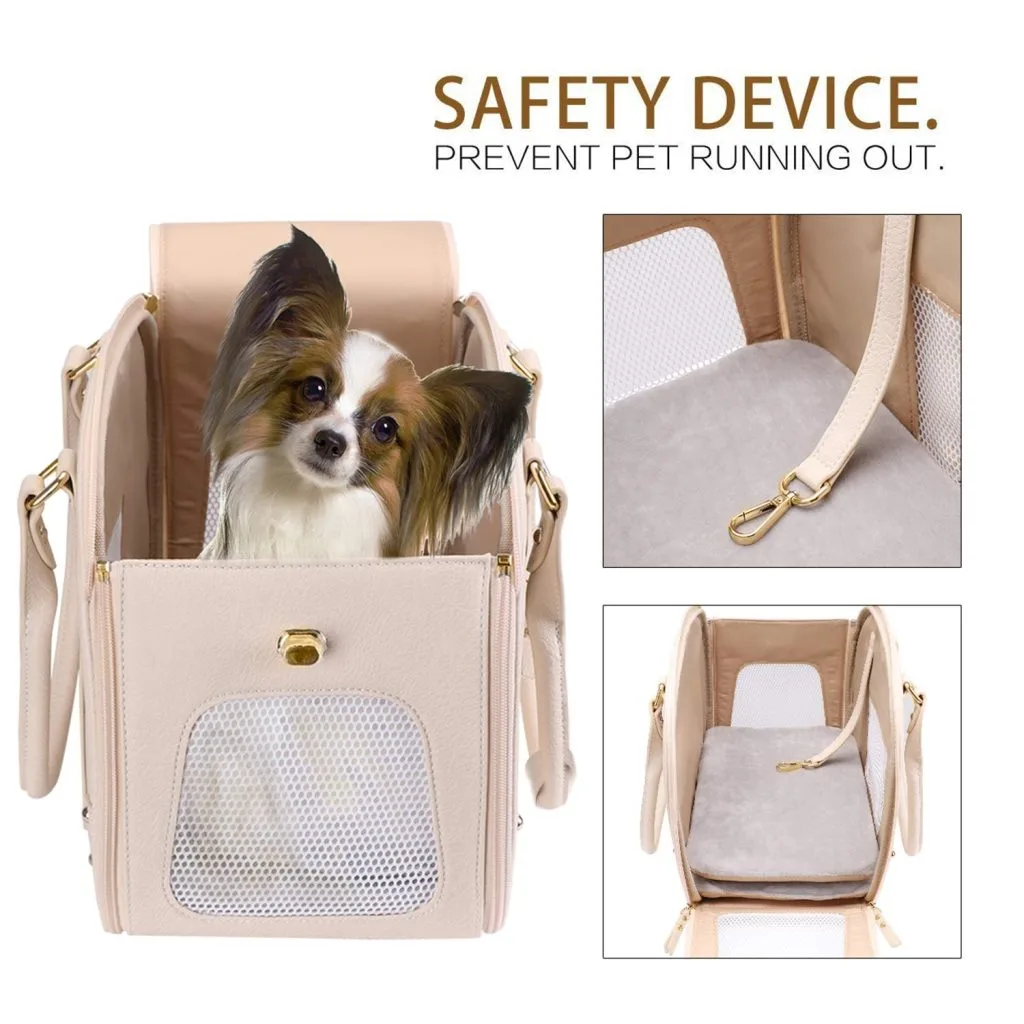
Locking means different things at different price points, and the specification should state which one is being supplied. Three mechanisms are in common use, and they protect against different threats.
An auto-lock slider is the baseline and the correct minimum for any pet carrier. Inside the slider body a spring-loaded prong engages between the coil elements when the pull tab is released, preventing the slider from travelling along the chain until the tab is lifted. It protects against a cat working the slider and against vibration-induced travel, and it costs 0.12-0.28 USD more than a non-locking slider. Its limitation is that it does not prevent the chain from separating under lateral load, which is the dominant soft-carrier failure, so it is always specified together with a compression strap or a storm flap.
A padlock eye takes two sliders with holes in their pull tabs, brought together at one end, and passes a small padlock shackle through both. It prevents a human from opening the carrier by hand and it holds the sliders positively, which also prevents travel. The specification details are the shackle diameter, 4-6 mm, and the padlock body mass. A padlock adds 0.45-1.20 USD depending on whether it is keyed, combination or a cable type, and it introduces a practical problem: a keyed padlock on a carrier means the owner must keep a key, and a lost key turns the product into a locked box.
A keyed or combination slider lock integrates the lock into the slider body itself, so there is no separate padlock to lose. It is the neatest solution and the most expensive at 1.60-3.20 USD per closure. Its weakness is that the mechanism is small and it is the least durable of the three in a dusty, hairy environment; cycle life before the mechanism becomes stiff is typically 800-1,500 operations against 2,000-4,000 for a plain slider.
Our production team recommends the auto-lock slider plus a storm flap as the standard specification, and a padlock eye as an option where the buyer specifically sells against theft or airline handling. The keyed slider lock is quoted when a buyer asks for it and is generally reserved for premium rigid designs where the closure is large enough to carry the mechanism without looking heavy.
Test Standards: What to Measure and What Pass Means
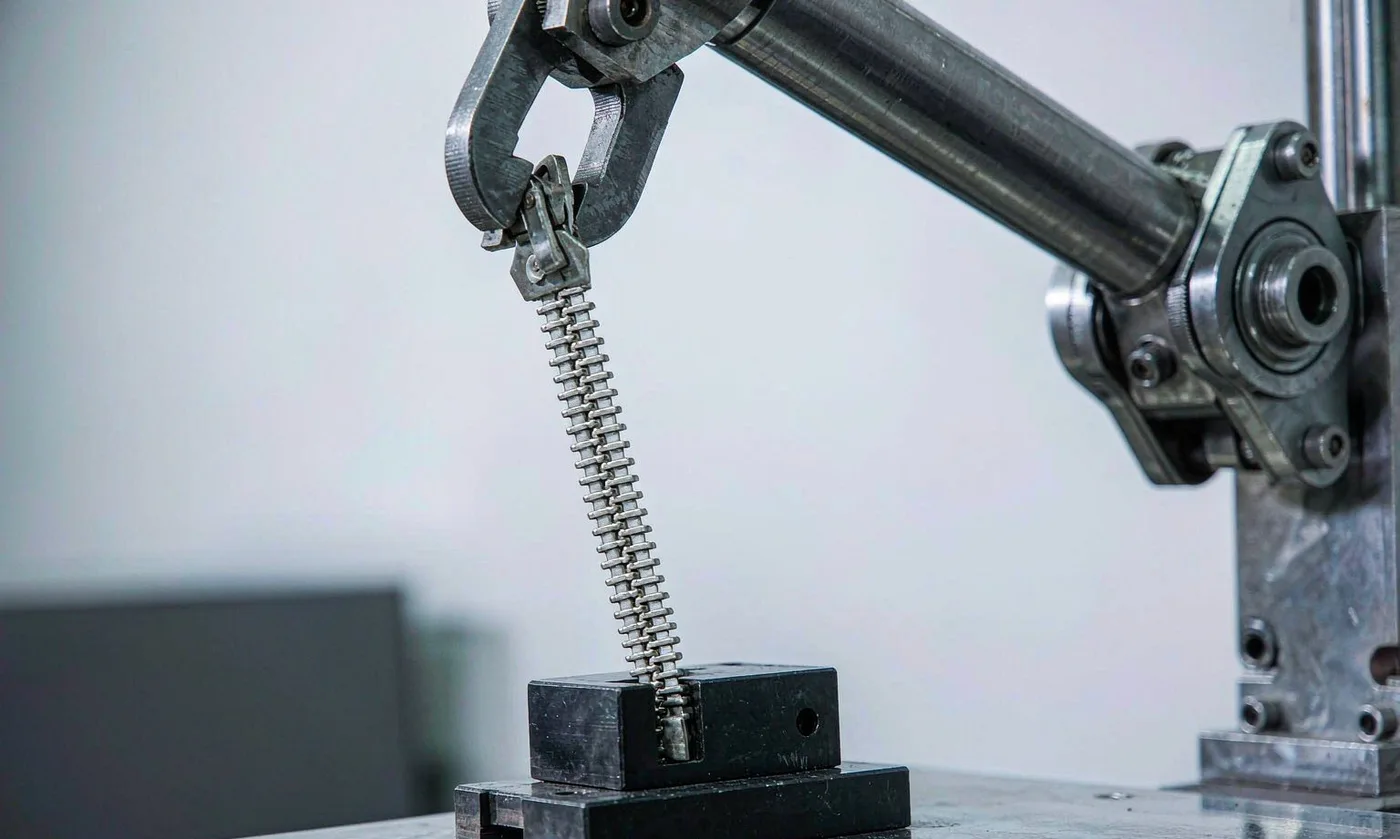
Zipper testing is standardised, which is useful because it means a buyer can specify a method rather than a supplier claim. The principal method for slide fastener strength is published by ASTM International and the current version is listed at astm.org; it covers crosswise strength, lateral separation, slider pull-off and element or tooth pull-off, each with a defined specimen and a defined jaw configuration.
Crosswise strength is the load applied across the closed chain, perpendicular to the chain line, pulling the two tapes apart. It is the number that describes a zip holding a loaded seam. Minimum for a carrier door is 300 N at #5 and 450 N at #8. Lateral separation is the load applied to split the closed elements apart by pulling one tape laterally while the chain is held; minimum 200 N at #5 and 350 N at #8. Slider pull-off measures the force needed to separate the slider body from the top of the chain; minimum 150 N. Element pull-off measures the force to pull a single element off the tape; minimum 60 N for a coil chain.
Cycle life is tested on a reciprocating rig at 20-40 cycles per minute with a defined load on the tapes, and it is the test that catches cheap chains. A quality #5 coil chain reaches 1,500-3,000 cycles before the slider shows measurable wear or the elements deform; a budget chain reaches 400-900. Because a carrier door is opened perhaps once per journey, 1,500 cycles is about four years of weekly use, which is a reasonable design target and one our production team holds for any closure on a product sold as durable.
Two tests specific to a locking mechanism complete the set. A lock holding test applies a gradually increasing load along the chain at the slider with the tab released, and records the force at which the slider travels; pass at 60 N minimum, target 100 N. And a lock endurance test cycles lock and unlock 500 times and re-measures, because a prong that weakens is a lock that will fail in service.
Corrosion is tested by neutral salt spray, the method being standardised as ISO 9227 and published by the International Organization for Standardization at iso.org, which fixes the solution concentration, the chamber temperature and the collection rate so that a 24-hour result from one laboratory is comparable with a 24-hour result from another. A standard specification is 24 hours for a plated brass body and 48 hours for a stainless or polymer body, with acceptance of no base metal corrosion and no functional impairment. A zinc-alloy body with a thin decorative plating typically shows white corrosion at 12-24 hours and seizes at 48, which is the empirical basis for excluding it from a humid-market specification.
Pet-Specific Risks: Hair Ingress, Chewing and Claw Working
A zipper in a cat carrier faces two challenges no garment zipper does: particulate contamination and deliberate manipulation. Both shorten service life and both are addressed by geometry as much as by material.
Hair ingress is the particulate problem. Cat hair is 20-60 μm in diameter and 20-60 mm long, and it works into the slider body where it wraps around the prong and the element path. A slider packed with hair requires 2-4 times the normal operating force within 3-6 months of daily use, and eventually it will not close fully. Three mitigations work. A covered chain, in which a fabric flap lies over the elements, keeps most hair out and costs 0.20-0.40 USD. A larger slider body with more internal clearance tolerates more hair before it binds, and it costs nothing to specify. And a chain with a smoother element profile, which is a property of the moulding quality rather than of the gauge, sheds hair rather than catching it.
Claw working is the manipulation problem. A cat does not understand a slider but it will repeatedly work at anything that moves, and a hanging pull tab is an irresistible target. The mitigations are a short pull tab, 25-40 mm rather than 60-80 mm, a tab that lies flat against the shell rather than hanging, and a zip garage that receives the tab so there is nothing protruding. Together these reduce the accessible target to almost nothing and cost 0.15-0.35 USD.
Chewing is the third risk and the one with a genuine hazard attached. A cat that chews a pull tab can break off a fragment and swallow it. The mitigation is a pull tab specified with a pull-off strength above 80 N and a minimum cross-section, so that it tears rather than snaps into a small piece, plus a tab material that is a single moulded form rather than an assembled one. Where a metal tab is used, it should be a single stamped form with no rivet that can release a separate part.
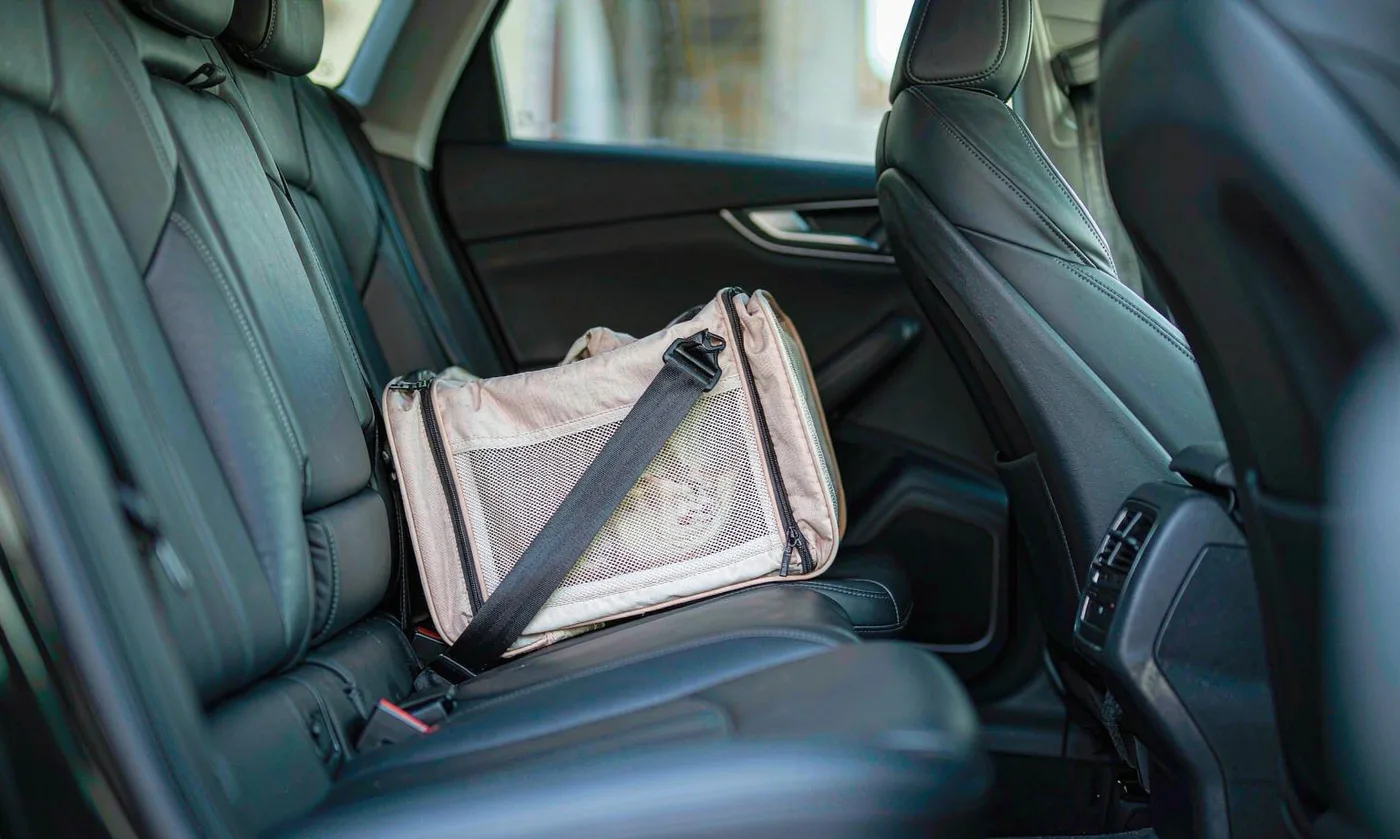
One more pet-specific load is worth recording because it changes the maintenance interval: vibration. A carrier strapped into a vehicle or stowed under an aircraft seat is subjected to continuous low-amplitude vibration at 5-60 Hz, and a non-locking slider under vibration will creep along the chain even without any deliberate manipulation. In a 90-minute road test on a rough surface we have measured 4-12 mm of unintended slider travel on a non-locking slider and zero on an auto-lock one. That is a further argument for the auto-lock slider being the minimum specification rather than an upgrade, and it is the reason our production team will not quote a non-locking closure on any product sold for car or air travel.
Finally, the closure should be inspectable. A covered chain and a garage both hide the very component the owner needs to check, so the design should allow the flap to be lifted for inspection, and the instruction sheet should tell the owner to clear hair from the slider every month. That single line of user guidance prevents most of the zipper complaints that reach a brand.
Integration: Garage, Storm Flap and Seam Engineering
A locking zipper is only as good as the assembly around it. Three integration items determine whether the closure performs as tested: the garage, the flap and the seam that attaches the chain to the shell.
The garage is a fabric pocket at the closed end of the chain that receives the slider and the pull tab. Its dimensions should be 25-35 mm long, 20-25 mm wide and 12-18 mm deep, with a bound opening that holds the tab but allows it to be retrieved with a fingertip. Too small and the tab cannot be parked; too large and the tab protrudes and becomes a claw target. It costs 0.15-0.35 USD and it is the item most often deleted during value engineering, which is a mistake because it also protects the slider from impact.
The storm flap covers the chain. Two geometries work. A single flap of 30-45 mm width folding over the chain line and held by hook-and-loop at 150-200 mm pitch is the cheaper option at 0.25-0.50 USD, and it reduces lateral separation load on the chain by 25-40 %. A double flap, with one leaf each side meeting over the chain, is the better solution at 0.45-0.85 USD because it sheds water as well and it cannot be pushed aside from inside.
The seam attaching the tape to the shell is the item that decides whether the strength numbers mean anything. A chain rated at 400 N sewn at 6 stitches per inch into a single fabric ply will tear out at 120-180 N, so the rating is irrelevant. The correct construction is a 12-15 mm polyester tape sewn at 8-10 stitches per inch into two plies, with a reinforcement tape of 20-25 mm on the reverse side where the closure is loaded, which brings the assembly to 250-350 N. Our production team tests the sewn assembly rather than the chain alone, because that is the number that protects the animal.
One geometric rule closes the section: never run a loaded closure around a tight corner. A coil chain negotiated around a radius below 25 mm wears the elements on the inside of the curve three to five times faster than on a straight run, and it is where cycle life failures start. Where geometry forces a corner, the pattern should turn the fabric rather than the chain.
Cost, MOQ and the Specification Line
The cost of a locking zipper package is modest and it scales predictably. At 500 pieces, moving from a non-locking #5 coil to an auto-lock #5 coil adds 0.12-0.28 USD. Moving from #5 to #8 adds 0.55-0.85 USD. A garage adds 0.15-0.35 USD, a storm flap 0.25-0.85 USD, a covered chain 0.20-0.40 USD, a tape reinforcement 0.08-0.18 USD, and a padlock eye with lock 0.45-1.20 USD. The full package, which is what our production team recommends for any carrier sold on a safety claim, lands at 1.05-2.65 USD over a basic closure.
MOQ is 500 pieces per colourway for the carrier. The zipper itself is sourced in bulk with a minimum of 500-1,000 pieces per gauge and colour, which is why a custom tape colour carries a surcharge of 0.08-0.20 USD below 1,000 pieces. A custom pull tab with a moulded logo needs a tool costing 250-600 USD and adds 12-18 days; it is worth it on a programme above 3,000 units and not worth it below.
Lead time: samples in 6-10 working days and bulk in 35-50 days after approval, with a custom pull tab adding the tooling window. Stock zippers in black and grey are available immediately; a branded or coloured tape adds 10-20 days.
The specification line that goes into a tech pack is one sentence long and it prevents most disputes: #8 polyester coil chain, 15 mm polyester tape, auto-lock slider with 100 N holding force minimum, moulded end stops, garage 30 × 22 × 15 mm, double storm flap, tape sewn at 9 stitches per inch through two plies with 25 mm reinforcement, assembly crosswise strength 400 N minimum verified on the sewn unit, neutral salt spray 24 hours with no functional impairment. Written that way, it cannot be quietly downgraded, and it can be verified at AQL 2.5 inspection with a spring balance and a gauge.
Order and quality terms
- MOQ 500 pieces per colourway; samples in 6-10 working days
- Bulk production 35-50 days after approval; AQL 2.5 inspection standard
- T/T 30/70 terms, FOB Xiamen, full document set per shipment
People Also Ask
What does a locking zipper actually lock?
The slider, not the chain. An auto-lock slider holds 60-150 N without travelling, which stops a cat working it open, but the coils can still separate under a lateral load, so it must be paired with a storm flap or compression strap.
What zipper gauge should a cat carrier use?
#5 for a standard door and #8 for a large or escape-prone cat. A #5 coil gives 250-400 N crosswise strength and #8 gives 400-650 N, against a sustained cat push of 100-250 N.
How is zipper strength tested?
By the slide fastener method published by ASTM International, covering crosswise strength, lateral separation, slider pull-off and element pull-off. Carrier minimums are 300 N crosswise at #5 and 200 N lateral separation.
How long should a carrier zipper last?
1,500-3,000 cycles for a quality #5 coil chain, which is about four years of weekly use. A budget chain reaches 400-900 cycles, and hair ingress can double the operating force within 3-6 months.
Is a padlock on a cat carrier a good idea?
Only where the buyer sells against theft or airline handling. It adds 0.45-1.20 USD and it introduces the problem that a lost key turns the product into a locked box.
Why does a zip slider get stiff after a few months?
Cat hair, 20-60 μm diameter and 20-60 mm long, wraps around the prong and element path inside the slider. A covered chain, a larger slider body and monthly clearing keep it operating.
Can a cat chew a zipper pull off?
Yes, which is why a pull tab is specified with a pull-off strength above 80 N and as a single moulded form rather than an assembly, so it tears rather than releasing a swallowable fragment.
Frequently Asked Questions
What is the difference between coil, moulded and metal chain?
Coil is a helical filament sewn to tape, flexible and quiet, at 250-400 N crosswise for #5. Moulded has discrete resin teeth crimped to tape, stiffer and more premium, at 300-500 N. Metal is strongest at 450-800 N but heavier and noisier.
Why does tape width matter?
A 12-15 mm polyester tape sewn at 8-10 stitches per inch reaches 180-280 N of seam strength. At 6 stitches per inch a tape pulls free at 80-150 N, so the chain rating becomes irrelevant.
Should the zip tape be polyester or cotton?
Polyester. Cotton tape absorbs water and rots, and in a carrier that is cleaned regularly the tape is repeatedly wetted.
What is a zip garage and how big should it be?
A fabric pocket at the closed end that receives the slider and tab, sized 25-35 mm long, 20-25 mm wide and 12-18 mm deep. It protects the slider from impact and removes the claw target.
What corrosion test should a slider pass?
Neutral salt spray for 24 hours on a plated brass body and 48 hours on stainless or polymer, with no base metal corrosion and no functional impairment. Zinc alloy typically shows white corrosion at 12-24 hours.
How much load does a storm flap remove from the zip?
A single flap reduces lateral separation load by 25-40 % and a double flap more, because it cannot be pushed aside from inside. It costs 0.25-0.85 USD.
Can a zipper run around a corner?
Not below a 25 mm radius. Elements on the inside of a tight curve wear three to five times faster, and that is where cycle-life failures begin. The pattern should turn the fabric instead.
What pull-off strength should a pull tab have?
150-250 N for the tab-to-slider eye, achieved with a formed wire or stamped stainless eye rather than a cast zinc-alloy eye, which fails at 60-120 N.
How much does a locking zipper package cost?
1.05-2.65 USD at 500 pieces for the full package of auto-lock slider, #8 chain, garage, double storm flap, covered chain and reinforced tape seam.
What is the MOQ for a custom pull tab?
500 pieces per colourway for the carrier, but a moulded logo tab needs a tool at 250-600 USD and adds 12-18 days, so it is worth it above about 3,000 units.
Do locking zippers work on a hard-shell carrier?
Yes, and there the dominant risk is slider travel rather than chain separation, because a rigid door concentrates load at the slider. A dual-action latch is added alongside.
How is zipper quality checked in production?
At AQL 2.5 with a spring balance for crosswise and holding force, a gauge for the garage dimensions, and a 20-cycle operation check on a sample from each carton, plus a visual check for hair-packed sliders.
Talk to QUANZHOU JUNYUAN BAGS about a pet carrier program: MOQ 500 pieces per colourway, samples in 6-10 working days, bulk production in 35-50 days under AQL 2.5 inspection.
Get a free quote Request a sample