Cat Carrier Warranty: Quality Guarantee
A workable B2B cat carrier warranty runs 12-24 months against manufacturing defect, excludes wear, misuse and chemical damage, is measured against a defect definition tied to AQL 2.5 and a defect rate target under 1.5% at twelve months, and is costed as a reserve of 0.8-3.4% of FOB value held against validated failure data.
A warranty is a quantified promise, and the quality of a warranty clause is measured by whether the two parties would agree on the outcome of a specific claim without arguing. That requires four things to be defined before the clause is written: what counts as a defect, when the clock starts, who pays for what, and how a claim is evidenced. This page builds each of them from production data rather than from legal boilerplate, because the numbers exist and using them removes most disputes. A defect rate measured at final random inspection to AQL 2.5 is not a warranty figure — it is a snapshot at despatch — so the warranty has to be tied to a field defect rate over time, with a defined boundary between a manufacturing defect and wear. Commercial terms follow the standard programme: MOQ 500 pieces per colourway, prototypes in 6-10 working days, bulk production 35-50 days after sample approval, final random inspection to AQL 2.5, T/T 30/70 and FOB Xiamen.
Most buyers ask a pet bag supplier the same opening question: can the cat carrier line be reordered in the original colour six months later? The answer depends on dye-lot control, not on goodwill.
What a Warranty Promises and What It Excludes
A warranty promises that a product will be free from manufacturing defect for a defined period under defined use. It does not promise that the product will never wear out, that it will survive misuse, or that it will suit an animal the buyer did not specify. Most warranty disputes arise because one of those three unpromised things was assumed.
Manufacturing defect is the promise, and it is narrower than many buyers expect. It covers a seam that fails below its specified strength, a zipper that fails below its cycle rating, hardware that breaks below its rated load, a coating that delaminates within its rated life, and a dimensional or assembly error that prevents intended use. Each of those is measurable against a specification, which is the point: a defect is a deviation from a written spec, not an opinion.
The standard exclusions are wear, misuse, chemical damage, modification and consequential loss. Wear covers abrasion of a fabric surface, loss of water repellency after its rated cycle count, pilling of a lining and the gradual loss of hook-and-loop engagement. Misuse covers overloading beyond the stated maximum pet weight, use as a vehicle restraint where that is excluded, and use as a permanent enclosure. Chemical damage covers cleaning with a solvent or a biocide outside the stated compatible range.
Consequential loss is the exclusion that matters most commercially and is most often omitted. A warranty that replaces a defective carrier does not cover the cost of a veterinary visit, a missed flight or a lost sale, and that belongs in the contract rather than in the warranty card.
The remedy is the part buyers negotiate and it should be graded rather than absolute. A first-order remedy of repair, then replacement, then credit — in that order and at the supplier's election for the first two — is standard and workable. An unqualified "replace or refund at the buyer's election" is expensive and, in practice, is priced back into the unit cost.
A warranty covers deviation from a written specification; without the specification behind it, a warranty clause is an argument waiting to happen.
Defining a Defect: AQL 2.5, DPPM and the Wear Boundary
AQL 2.5 is a sampling standard, not a quality level, and it is routinely misread as one. It defines how many minor and major defects permit a lot to pass at a given sample size; it says nothing about the field defect rate. A warranty needs the second number, and the two have to be related explicitly.
At a general inspection level II and an AQL of 2.5 for major defects, a lot of 500 units is sampled at 50 pieces with an accept of 3 and a reject of 4. That means a lot containing up to roughly 2.5% major defectives has a high probability of passing, and the buyer should expect some defectives to reach the field even from a passing lot. Stating this in the contract is what prevents the argument.
The field rate is measured differently, in defects per million or as a percentage of units returned within a window. Working targets for a mid-tier cat carrier programme: under 0.4% of units claimed at three months, under 1.5% at twelve months, and under 3.0% at twenty-four months. Those are achievable on a validated build and unachievable on an unvalidated one.
| Class | Example | AQL applied | Warranty treatment | Field target |
|---|---|---|---|---|
| Critical | Broken load-bearing seam, sharp edge | 0 | Replace, investigate lot | 0% |
| Major | Zipper fails below rating, coating delamination | 2.5 | Repair or replace | Under 1.5% at 12 months |
| Minor | Print misalignment, loose thread, scuff | 4.0 | Credit or allowance | Under 3.0% at 12 months |
| Wear | Abrasion, repellency loss, pilling | Not applicable | Excluded | Not measured |
| Misuse | Overload, solvent cleaning, modification | Not applicable | Excluded | Not measured |
| Transit damage | Crushed corner, torn board | Packing inspection | Freight claim | Under 0.3% |
The boundary between defect and wear is the single most contested line, and it is resolved by testing rather than by description. A coating that delaminates at 40 clean-down cycles when its specification says 300 is a defect. A coating that loses repellency at 320 cycles when its specification says 300 is wear. Both look the same to a customer; only a retained test report distinguishes them.
Evidence retention is what makes the boundary defensible. The programme should retain, per lot: the final inspection report, the material test reports, a retained reference sample, and the production record tying the lot to its material batches. Without those, a supplier cannot distinguish a lot-specific defect from a normal field failure, and the argument defaults to the buyer's version.
Quantifying wear in the specification is the cheapest way to prevent the dispute. Stating that abrasion resistance is rated to 15,000 cycles and water repellency to 25 launderings or 300 wipe-down cycles converts an opinion into a number. The methods used to establish those figures are published by ASTM International, and using a published method rather than an internal one is what makes the number defensible in a claim.
AQL 2.5 tells you what passed at despatch; a warranty needs the field rate at twelve months, and both should be written into the contract.
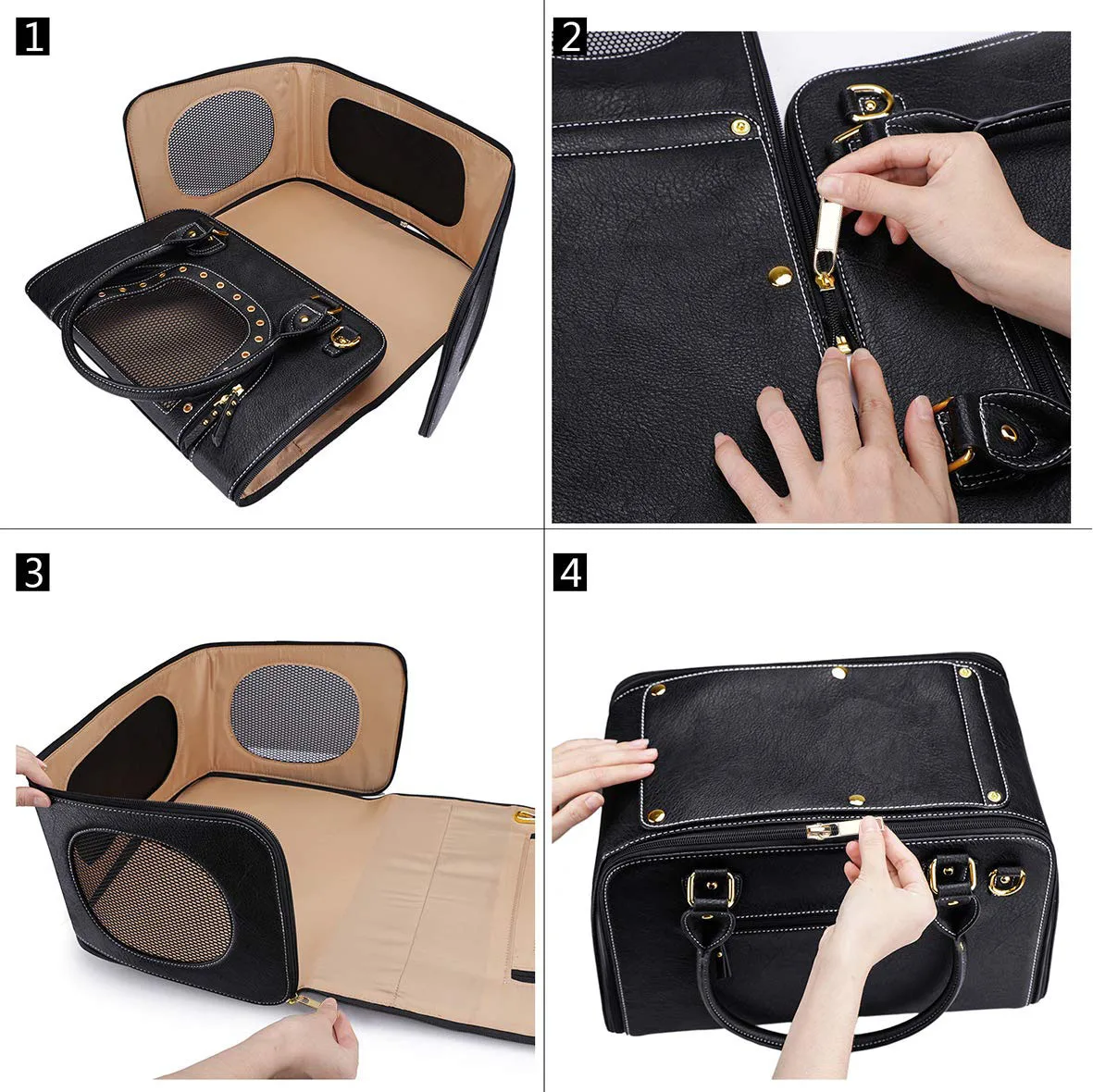
Warranty Period by Component and Tier
A single warranty period for the whole product is simple and technically wrong, because components have genuinely different service lives. A zipper rated to 3,000 cycles and a coating rated to 300 clean-down cycles do not fail on the same schedule, and a blanket 24-month promise means over-promising on the coating and under-promising on the structure.
Component-level periods are the workable answer. Structure — the shell, the load-bearing seams, the frame and the base — is the longest-lived part and comfortably carries 24-36 months. Closures carry 12-24 months, because a zipper's cycle rating is finite and its life depends on user behaviour. Coatings and surface finishes carry 12 months, because chemical and abrasion life is the shortest and most behaviour-dependent.
Tier matters as much as component. An entry build on 420D with a PU 20 g/m² coating cannot honestly carry the same promise as a 900D TPU build with a welded liner, and a programme that promises the same on both will pay for it on the entry product. The period should follow the specification, and the specification should be in the contract.
| Component | Entry months | Mid months | Premium months | Limiting test |
|---|---|---|---|---|
| Shell fabric, tear and seam | 12 | 24 | 36 | Seam strength, tear |
| Structural frame and base | 24 | 36 | 36 | Load and drop test |
| Zippers and sliders | 12 | 18 | 24 | 3,000 cycle test |
| Buckles and hardware | 12 | 24 | 24 | Rated load, 400-800 N |
| Coating and water resistance | 6 | 12 | 24 | Hydrostatic head, 300 cycles |
| Welded liner | 12 | 24 | 24 | Weld peel, water hold |
| Print and branding | 6 | 12 | 12 | Rub and light fastness |
Start date is the detail that causes more disputes than the period itself. For a B2B programme the options are despatch date, arrival date, or date of retail sale, and they differ by 35-60 days of transit plus anything from zero to twelve months of warehouse time. The fair and workable definition is despatch date plus 60 days of transit allowance, or the date of first retail sale where that can be evidenced.
Commencement for a replacement is the second detail worth stating. A replacement unit carries either the remainder of the original period or a fresh period from its despatch, and the two differ materially late in a warranty term. The remainder approach is standard and avoids an indefinitely extending obligation.
Extended warranties sold to consumers are a different instrument and should not be confused with a B2B guarantee. Where a brand offers a consumer extension, it is the brand's liability, it should be priced as an insurance product, and it should not be back-to-backed onto a supplier without that being agreed.
Component-level periods matched to the specification are honest and defensible; one blanket period for every tier over-promises on the coating and under-promises on the structure.
Failure Data: What Actually Breaks and When
Warranty cost is driven by a small number of failure modes, and they are not the ones most people expect. Fabric rarely fails; coatings, closures and bonded layers do. Knowing the distribution is what allows a reserve to be set rather than guessed.
Zipper failure is the largest single category, typically 28-42% of claims. It presents as a slider that no longer closes, a chain that separates, or teeth that jump under load. The causes are a slider below the cycle rating, hair or grit in the chain, and side loading from an overfilled carrier. A #8 reverse coil with an auto-lock slider rated to 3,000 cycles reduces this category sharply.
Seam and bond failure is the second category at 18-30% of claims. It presents at the handle attachment, at the webbing anchor points and at the base-to-wall join, and the cause is almost always an under-specified stitch density or a bond that was not tested at temperature. A handle attachment should be bar-tacked and pull-tested at 1.5 times the rated load.
| Failure mode | Share of claims | Median time months | Root cause | Design fix | Cost USD |
|---|---|---|---|---|---|
| Zipper or slider | 28-42% | 7-11 | Underrated slider, contamination | #8 reverse coil, auto-lock | 0.35-0.90 |
| Seam or handle attachment | 18-30% | 4-9 | Low stitch density, no bar tack | Bar tack, pull test 1.5x | 0.05-0.25 |
| Coating delamination | 10-18% | 9-16 | Hydrolysis, solvent cleaning | TPU over PU, state pH range | 0.60-1.80 |
| Hardware breakage | 8-15% | 5-12 | Acetyl below rated load | Specify 400-800 N, alloy option | 0.30-1.20 |
| Weld or liner leak | 6-12% | 6-14 | Weld parameter drift | Weld peel check per lot | 0.10-0.40 |
| Mesh tear, clawing | 5-11% | 3-8 | Uncoated polyester mesh | Vinyl-coated mesh, 320 g/m² | 0.40-1.10 |
| Print and label wear | 3-8% | 2-6 | No rub-resistant finish | Aqueous coating | 0.03-0.12 |
Bathtub behaviour applies and it shapes the reserve. Early failures, in the first 0-3 months, are manufacturing and should be near zero if the lot passed final inspection; the mid-life period from 4-18 months is dominated by component wear and user behaviour; and late failures beyond 24 months are material ageing. A reserve set against the mid-life hump rather than spread evenly matches the cash flow.
Chemical damage is the category most often misclassified as a defect, and it is worth a specific note. A coating exposed to a solvent or a high-pH biocide fails quickly and in a characteristic pattern — uniform softening rather than localised wear — and a customer photograph usually shows it. Training a claims team to recognise it recovers a meaningful share of no-fault claims.
The cheapest reliability investment is almost always the closure. Moving from a basic #5 coil to a #8 reverse coil with an auto-lock slider costs 0.35-0.90 USD and addresses 28-42% of claims, which no fabric upgrade of similar cost comes close to matching.
Closures and seams account for roughly half of all claims, and the closure upgrade is the highest-return reliability spend available on a carrier.
Claim Process: Evidence Packets and Turnaround
A claim process is an information pipeline, and its cost is dominated by the back-and-forth rather than by the replacement itself. Requiring a defined evidence packet at first contact makes most claims decidable without a second round, and decidability is the whole objective.
The minimum evidence packet is small: the lot or batch code from the sewn-in label, photographs of the failure including one wide shot and one close-up, a photograph of the whole product, the date of first use or purchase, and a short description of what happened. That is six items and it resolves most claims at first pass. Requiring the physical product at first contact adds 10-25 USD of freight and two to four weeks, and should be reserved for cases the photographs do not resolve.
Classification happens on receipt: defect, wear, misuse or transit. A single trained person should classify within 48 hours, because the classification determines everything downstream and an unclassified claim queue is where warranties fail reputationally. The target is 90% of claims classified within 48 hours and 95% resolved within 10 working days.
| Step | Owner | Target | Output | Escalation |
|---|---|---|---|---|
| Claim received, logged | Buyer support | 4 hours | Case number | None |
| Evidence packet requested | Buyer support | 24 hours | Six-item request | Chase at 7 days |
| Classification | Quality lead | 48 hours | Defect, wear, misuse, transit | Supplier at 72 hours |
| Remedy decision | Supplier and buyer | 5 working days | Repair, replace or credit | Account manager |
| Remedy executed | Supplier | 10 working days | Shipment or credit note | Programme review |
| Root cause and CAPA | Supplier quality | 20 working days | Corrective action record | Lot hold |
Batching is the cost control. Individual replacement shipments cost 12-40 USD each in freight and handling regardless of the value of the part, so the practical arrangement for a B2B programme is a quarterly settlement: claims are accumulated and settled as a credit against the next order, with physical replacement only where a customer is waiting. That removes most of the freight cost from the warranty.
Corrective action closes the loop and it is the step most often skipped. Every claim classified as a defect should trace to a lot, and any lot with three or more defect claims of the same mode should trigger a review of the retained reference sample and, where warranted, a hold on remaining stock.
Reporting cadence keeps the warranty honest. A monthly claim rate by SKU and by failure mode, against the targets in the contract, lets both parties see a drift before it becomes a dispute. ISO 9001 quality management practice, published through ISO, is the framework these records are kept under.
A six-item evidence packet and a 48-hour classification target converts a warranty from a correspondence exercise into a process.
Costing the Promise: Warranty Reserve by Tier
A warranty has a cost and it should be in the product's costing, not discovered in year two. The cost is a reserve: an amount per unit or a percentage of FOB value, set against expected claim rates and the cost of each remedy.
The reserve has three inputs. The expected claim rate, from the failure distribution; the cost per remedy, which is the replacement cost plus handling and freight; and the recovery rate, which is the share of claims classified as wear or misuse and therefore not paid. A mid-tier carrier with a 1.5% twelve-month claim rate, a replacement cost of 14 USD and a 35% no-fault share carries a reserve of about 0.14 USD per unit, or roughly 1.1% of FOB value.
The alternative remedy structure changes this materially. Where claims settle as a credit against the next order rather than as physical replacement, freight disappears and the cost per remedy drops from 20-46 USD to 8-18 USD, roughly halving the reserve. That is the single largest controllable warranty cost and it is a contract term rather than an engineering one.
| Tier | 12-month claim rate | Cost per remedy USD | Paid share | Reserve USD | Reserve % of FOB |
|---|---|---|---|---|---|
| Entry soft | 3.0-4.5% | 10-22 | 70% | 0.21-0.69 | 2.5-6.2% |
| Mid soft | 1.2-2.0% | 14-30 | 65% | 0.11-0.39 | 0.9-3.3% |
| Premium soft | 0.7-1.3% | 22-46 | 60% | 0.09-0.36 | 0.5-2.0% |
| Hard shell EVA | 1.0-1.8% | 18-38 | 65% | 0.12-0.44 | 0.8-2.9% |
| Credit-settled, any tier | Same | 8-18 | 65% | Halved | Halved |
A common error is to set the reserve on the whole order value rather than per unit. Because the remedy cost is per unit and the claim rate is per unit, the reserve scales with units, not with value: a 5% discount on a repeat order does not reduce the warranty exposure.
Reserve release is worth stating. A reserve held for 24 months and not consumed should be reviewed at month 30 and released or carried, and the review is a useful quality signal: a consistently under-consumed reserve may mean the specification was over-built for the price point.
The relationship between inspection spend and warranty cost is direct and worth quantifying. Adding a component-level test — a zipper cycle check or a weld peel check — costs 0.03-0.15 USD per unit and typically removes 10-30% of the defect claims in its category. Spending 0.10 USD to avoid 0.15 USD of claims is worth doing, and it is the reason validated programmes have lower warranty costs despite higher inspection spend.
A reserve of 0.8-3.4% of FOB value is the honest cost of a 12-24 month promise, and settling claims as credit rather than freight halves it.
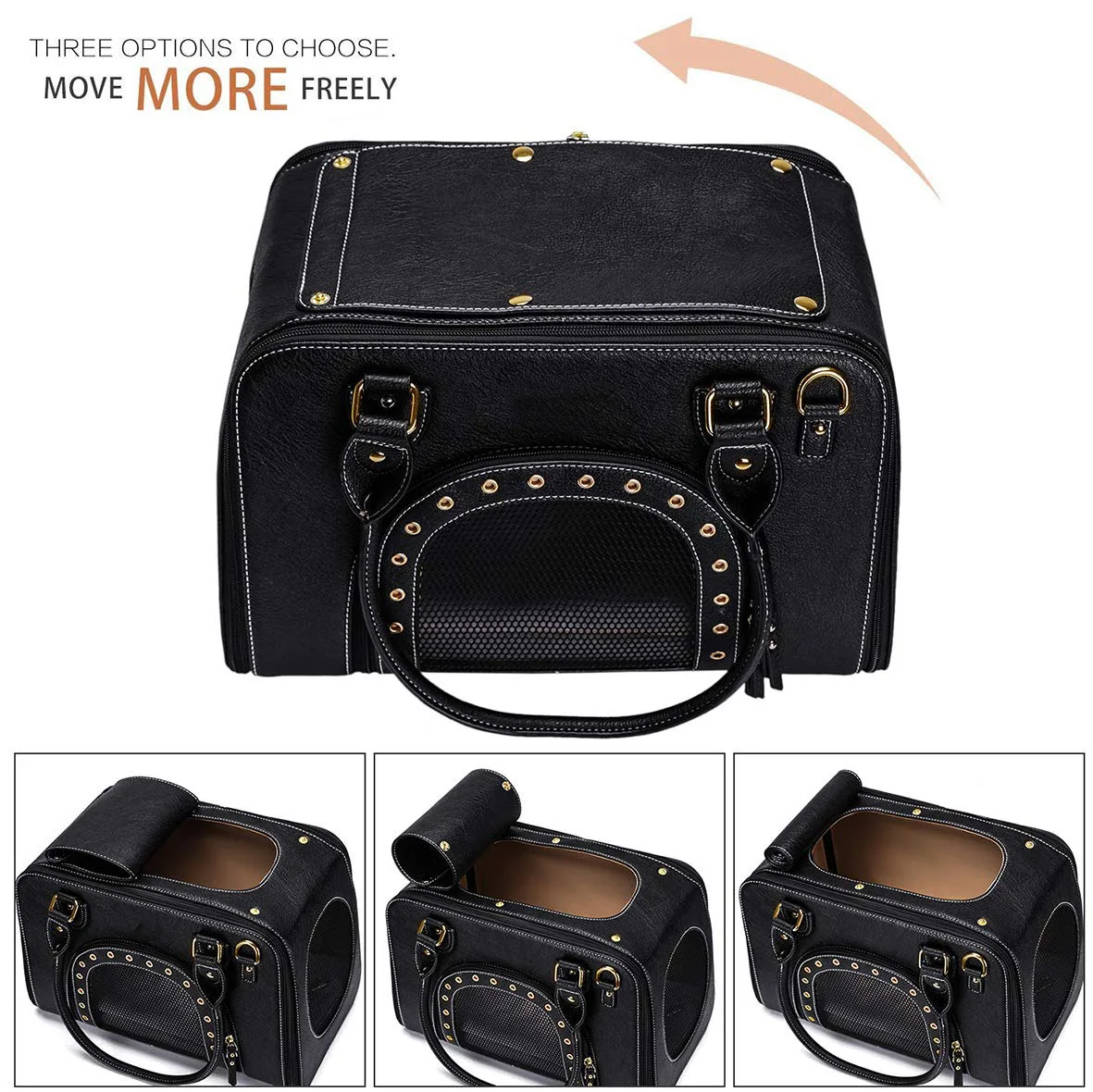
Spare Parts, Repairability and Service Documentation
A warranty is cheaper to honour if the product can be repaired, and most carrier failures are component-level rather than structural. A programme that can ship a replacement zipper slider, a buckle set or a liner avoids replacing an otherwise serviceable carrier.
The spare parts list should be defined at the design stage and it is short. Zipper sliders and, where the construction allows, complete zipper chains; buckle and adjuster sets; a replacement liner; a base board; and a strap set. Each is a stocked item with a part number, and the design decision that makes them available is avoiding proprietary geometry where a standard component will do.
Repairability is a design property with measurable inputs. A zipper with a sewn-in stop is replaceable only by unpicking the seam; one with a boxed bottom stop and a standard slider is replaceable in minutes. A liner retained by hook-and-loop is replaceable; one bonded in place is not. Those two decisions determine whether a warranty claim costs 2 USD or 20 USD.
| Part | Replaceable if | Tool needed | USD | Hold per 5,000 units |
|---|---|---|---|---|
| Zipper slider | Boxed stop, standard slider | None | 0.10-0.40 | 60-120 |
| Zipper chain, complete | Seam allows unpick | Seam ripper, machine | 0.55-1.60 | 20-40 |
| Buckle and adjuster set | Webbing not bar-tacked closed | None | 0.30-0.95 | 40-80 |
| Removable liner | Hook-and-loop retained | None | 1.80-3.60 | 25-50 |
| Base board | Sleeve retained, not bonded | None | 0.70-1.80 | 15-30 |
| Strap set | Buckled, not riveted | None | 0.60-1.90 | 20-40 |
Service documentation is what makes spares usable. A one-page exploded diagram with part numbers and a replacement sequence, supplied to the buyer's service team and included in the manual where space allows, converts a spare part from an inventory item into a repair. It costs 150-500 USD to produce once.
Holding quantity follows the failure distribution rather than intuition. Zipper sliders are the highest-volume spare by a wide margin because zipper failure is the largest claim category, and a holding of 60-120 per 5,000 units covers the mid-life hump without tying up much capital.
End-of-life supply is the commitment that should be stated and bounded. A reasonable undertaking is spares availability for the warranty period plus twenty-four months, which for a 24-month warranty is four years of parts support. That is achievable for standard components and impossible for custom tooling-dependent parts, which is another argument for standard components.
Designing for a 2 USD repair instead of a 20 USD replacement is the largest single lever on warranty cost, and it is decided before tooling.
Writing the Warranty Clause: What to Put in the Contract
A warranty clause is a short document that has to answer eleven questions, and a clause that answers nine of them will generate disputes on the two it omits. The list below is the set used in production programmes, in the order they should appear.
The first four define the promise: the period and its start date; the scope, as a list of covered components with their periods; the definition of defect, referencing the agreed specification; and the exclusions, listed explicitly rather than as a general phrase.
The next three define the mechanics: the remedy and its order, the claim process with its service levels, and the evidence required. These are where most boilerplate is silent.
The last four define the money: who pays freight and in which direction, how claims are settled — credit or physical replacement — the defect rate targets and the remedy if they are exceeded, and the governing law.
| Item | Recommended position | Common gap | Risk if omitted |
|---|---|---|---|
| Period and start | Despatch plus 60 days transit | Start date undefined | Dispute on every claim |
| Scope | Component list with periods | Blanket single period | Over-promise on coatings |
| Defect definition | Deviation from spec, spec referenced | Opinion-based | Unresolvable arguments |
| Exclusions | Wear, misuse, chemical, modification | General phrase only | Pays for misuse |
| Remedy and order | Repair, replace, credit | Refund at buyer election | Cost priced into unit |
| Claim process | Evidence packet, 48-hour triage | No process defined | Claims stall for months |
| Freight | Supplier pays outbound on defect | Silent | 12-40 USD per claim |
| Settlement | Quarterly credit | Per-claim shipment | Freight dominates cost |
| Defect rate target | Under 1.5% at 12 months | AQL only | No field accountability |
| Remedy on breach | CAPA plus lot hold | Silent | Recurring defect |
| Governing law | Stated venue and law | Silent | Unenforceable clause |
The defect rate target is the clause buyers most often leave out and it is the one that does the most work. Without a field rate, the supplier's obligation ends at a passing AQL inspection, and a buyer has no remedy for a product that fails at 4% in the field. With it, there is a defined trigger for corrective action.
The remedy on breach should be corrective rather than punitive, because punitive clauses are priced in and corrective ones prevent recurrence. A requirement to investigate, to issue a corrective action record within twenty working days and to hold affected stock is worth more than a penalty.
Safety-related defects sit outside the commercial warranty and are handled differently. A pattern of claims pointing to a hazard — a closure that opens under load, a sharp edge on hardware — engages consumer product safety obligations reported through CPSC in the US, and it should be escalated on the same day rather than settled as an ordinary claim.
Finally, the clause should be read against the manual and the specification. A manual promising a weight the specification does not test is an inconsistency a claimant will find.
Our production team supports warranty programmes with lot-level records, retained reference samples and component test reports through the SGS-verified production base under ISO 9001, with prototypes in 6-10 working days, bulk production 35-50 days after sample approval, final random inspection to AQL 2.5, T/T 30/70 and FOB Xiamen. A warranty clause that answers eleven questions is short; one that answers nine generates two years of disputes.
Order and quality terms
- MOQ 500 pieces per colourway; samples in 6-10 working days
- Bulk production 35-50 days after approval; AQL 2.5 inspection standard
- T/T 30/70 terms, FOB Xiamen, full document set per shipment
People Also Ask
What warranty period should a cat carrier carry?
12-24 months against manufacturing defect, set by component: structure 24-36 months, closures 12-24 months, coatings 6-24 months depending on tier. A blanket period over-promises on coatings.
Does AQL 2.5 guarantee a low defect rate?
No. AQL 2.5 is a sampling rule that lets a lot with roughly 2.5% major defectives pass at high probability. A warranty needs a separate field rate target, typically under 1.5% at twelve months.
What causes the most cat carrier warranty claims?
Zipper and slider failure at 28-42% of claims, then seam and handle attachment at 18-30%. Coating delamination is 10-18% and hardware breakage 8-15%.
How much should a warranty reserve be?
0.8-3.4% of FOB value for a mid-tier 12-24 month promise. Settling claims as credit against the next order rather than physical replacement roughly halves it.
What should a claim evidence packet contain?
Six items: the lot code, a wide photograph, a close-up of the failure, a photograph of the whole product, the date of first use, and a short description of what happened.
What is excluded from a carrier warranty?
Wear, misuse, chemical damage outside the stated compatible range, user modification and consequential loss. Each should be listed explicitly rather than as a general phrase.
How can warranty cost be reduced by design?
By making failures repairable: a boxed zipper stop and standard slider, a hook-and-loop retained liner and a sleeved base board turn a 20 USD replacement into a 2 USD repair.
When should the warranty clock start?
Despatch date plus 60 days of transit allowance, or the date of first retail sale where it can be evidenced. Undefined start dates are the most common dispute trigger.
Frequently Asked Questions
What is the difference between a defect and wear?
A defect is a deviation from a written specification; wear is consumption of a rated life. A coating delaminating at 40 cycles against a 300-cycle spec is a defect; the same at 320 cycles is wear.
How is a critical defect treated differently?
Critical defects — a broken load-bearing seam or a sharp edge — carry an AQL of 0, trigger replacement and a lot investigation. Major defects carry AQL 2.5 and minor 4.0.
Why is a coating claim often chemical damage?
Solvent or high-pH biocide exposure produces uniform softening rather than localised wear, and a customer photograph usually shows the pattern. Training a claims team to recognise it recovers a meaningful share of no-fault claims.
Should a replacement carry a fresh warranty period?
Standard practice is the remainder of the original period, which avoids an indefinitely extending obligation. A fresh period from despatch should be stated explicitly if that is what is intended.
What is bathtub behaviour in failure data?
Early failures from manufacturing in months 0-3, a mid-life hump from component wear at 4-18 months, and material ageing beyond 24 months. A reserve set against the hump matches the cash flow.
Why batch claims quarterly rather than ship per claim?
Individual replacement shipments cost 12-40 USD in freight and handling regardless of the part value. Quarterly credit settlement removes most of that cost from the warranty.
How many claims of the same mode should trigger a lot hold?
Three or more defect claims of the same failure mode on one lot. That should trigger a review of the retained reference sample and, where warranted, a hold on remaining stock.
What inspection additions reduce warranty cost?
Component-level tests: a zipper cycle check or a weld peel check costs 0.03-0.15 USD per unit and typically removes 10-30% of defect claims in its category.
How much does upgrading a zipper reduce claims?
Moving from a basic #5 coil to a #8 reverse coil with an auto-lock slider costs 0.35-0.90 USD and addresses the failure mode responsible for 28-42% of all claims.
What spare parts should a programme hold?
Zipper sliders, complete zipper chains, buckle and adjuster sets, a removable liner, a base board and a strap set. Sliders dominate: hold 60-120 per 5,000 units.
How long should spare parts be guaranteed?
The warranty period plus twenty-four months is a reasonable undertaking — four years of support for a 24-month warranty. It is achievable for standard components and not for tooling-dependent parts.
Why should the warranty be read against the manual?
Because inconsistencies between the warranty, the specification and the manual will be found by a claimant. A manual promising a weight the spec does not test is one such inconsistency.
Does a consumer extended warranty transfer to the supplier?
Not without agreement. A consumer extension is the brand's liability, priced as an insurance product, and should not be back-to-backed onto a supplier implicitly.
What is the highest-return reliability spend on a carrier?
The closure. It costs 0.35-0.90 USD and addresses the largest claim category; no fabric upgrade of similar cost comes close to matching the reduction.
Talk to QUANZHOU JUNYUAN BAGS about a pet carrier program: MOQ 500 pieces per colourway, samples in 6-10 working days, bulk production in 35-50 days under AQL 2.5 inspection.
Get a free quote Request a sample