Cat Carrier Shoulder Bag: Hands-Free Design
A cat shoulder bag hangs from one attachment axis, so its specification turns on rotation control rather than strength. Key figures are strap pad contact width 60-90 mm, adjuster slip resistance above 250 N, lateral sway below 20 degrees at rated load, and a practical animal limit of 6-8 kg before handler posture degrades.
Single-shoulder carry trades effort for rotation, and most of the engineering in this format is spent recovering what the human body gives up when a load hangs off one side. Loads modest enough to be trivial balanced on the shoulders become tiring very quickly suspended from one, and every animal inside adds movement on top. Eight sections follow: the mechanics of pendant carry, the three ways rotation is controlled and what each costs, strap and pad geometry against slip, why this format has a hard practical weight ceiling regardless of how strong the strap is, how the strap end attachments should meet the body, what internal structure survives asymmetric suspension, how materials interact with slip and wear, and the additions to the test protocol that make those numbers meaningful. Programme terms are unchanged: MOQ 500 pieces per colourway, prototypes in 6-10 working days, bulk production 35-50 days after golden sample approval, final random inspection at AQL 2.5, T/T 30/70 and FOB Xiamen.
Any dog carrier factory quoting cat carrier work should be able to show a current BSCI audit and an ISO 9001 certificate before a deposit is released.
The Mechanics of a Pendant Load
A bag hanging from one strap is a pendulum whose pivot is the shoulder, and once that picture is clear, every requirement in this format follows directly from it. The load swings forward and back with each step, rotates the torso slightly on each swing, and the handler unknowingly compensates by holding the opposite shoulder high.
Three consequences matter for design. First, effective load is higher than static weight because acceleration during walking adds to it, typically producing peak forces 1.3 to 1.6 times the static figure at a normal pace. Second, the pivot is soft tissue rather than a rigid anchor, so strap geometry determines where pressure lands and how quickly discomfort arrives. Third, the whole assembly rotates about the wearer's body rather than staying in plane, and controlling that rotation is a separate problem from carrying the weight.
Because the pivot sits on soft tissue, contact area is the governing variable rather than strap strength. A strap that could hold ten times the load will still be unusable if it concentrates that load onto a narrow band over the trapezius muscle, since the limiting factor is local pressure rather than material failure. This is why every successful design in this category either widens the pad substantially or moves to cross-body geometry.
Animal movement compounds it. A cat shifting position inside the bag changes the centre of mass by tens of millimetres, and because the bag hangs rather than being held against the body, that shift translates into a torque the handler feels immediately. Damping that movement at source through structure inside the bag is more effective than trying to absorb it in the strap.
Measurement of the dynamic component is straightforward and worth doing at development rather than assuming a multiplier. A load cell between strap and bag, sampled while a test subject walks a fixed course, produces a curve whose peaks can be read directly, and repeating across several handlers with different gait styles gives a distribution rather than a single number. Differences between handlers routinely exceed 20%, which is itself the reason defaulting to a factor rather than to a heavy-form conclusion matters.
Finally there is the asymmetry cost over time. Carrying four kilograms on one shoulder for twenty minutes produces measurable postural change in most people, and repeated daily exposure is exactly the pattern that generates complaints, product returns and neck problems wrongly attributed to something else.
Three Ways to Control Rotation, and What Each Costs
Rotation control has three solutions in production: friction at the shoulder pad, geometry change to cross-body, and a secondary stabiliser strap. Each is used, and each has a distinct cost and a distinct effect on how the product is worn. A fourth option, convertible routing, allows the handler to wear either configuration without buying a second product, but it needs reinforcement on both paths rather than one, which is why it sits above the single cross-body option.
Friction pads rely on increasing the coefficient between strap and shoulder so the bag cannot rotate freely. This is the cheapest method, achieved with a pad whose contact face is a high-friction coated textile or a moulded thermoplastic elastomer pattern, typically reaching coefficients above 0.7 against clothing where ordinary webbing reaches perhaps 0.3. It works well up to about 5 kg of animal and costs little. Beyond that it simply holds too well, and the handler tries to slide the bag and instead drags their own clothing.
Cross-body geometry is the most effective control. Bringing the strap diagonally across the torso to the opposite hip converts the single-shoulder pendant into a triangulated arrangement where the load is shared across the back and chest, effectively eliminating free rotation. The cost is strap length, roughly 400-600 mm more webbing plus additional adjustment hardware, an increment in the 1.20-3.00 USD range.
The stabiliser strap is the third route and the one most designs should use, particularly products intended to be reversible between shoulder and cross-body carry. A short webbing connection from the lower bag body to the shoulder strap prevents the bag swinging outward and away, while leaving it mobile enough to reposition. It costs 0.60-1.60 USD and is the cheapest reliable answer.
| Method | Unit increment | Effective ceiling | Trade-off |
|---|---|---|---|
| High-friction shoulder pad | 0.30-0.90 USD | About 5 kg animal | Too grippy at higher loads |
| Stabiliser strap to body | 0.60-1.60 USD | About 7 kg animal | Addition the user must connect |
| Full cross-body geometry | 1.20-3.00 USD | About 8 kg animal | Longer strap, slower to don |
| Convertible strap routing | 2.20-4.50 USD | Up to 8 kg animal | More hardware and instruction load |
Where cost pressure forbids all three primary methods, there is one free partial answer: moving the strap attachment points outward and downward so the bag hangs closer to the body reduces the rotation arm directly, cutting sway without adding a single component. It is the first adjustment worth making on any design that measures badly.
Most programmes combine two methods: a grippy pad for incidental short carries and a stabiliser or cross-body option for anything longer. Products relying on one alone tend to be compromised either in comfort or in cost.
Strap and Pad Geometry Against Slip
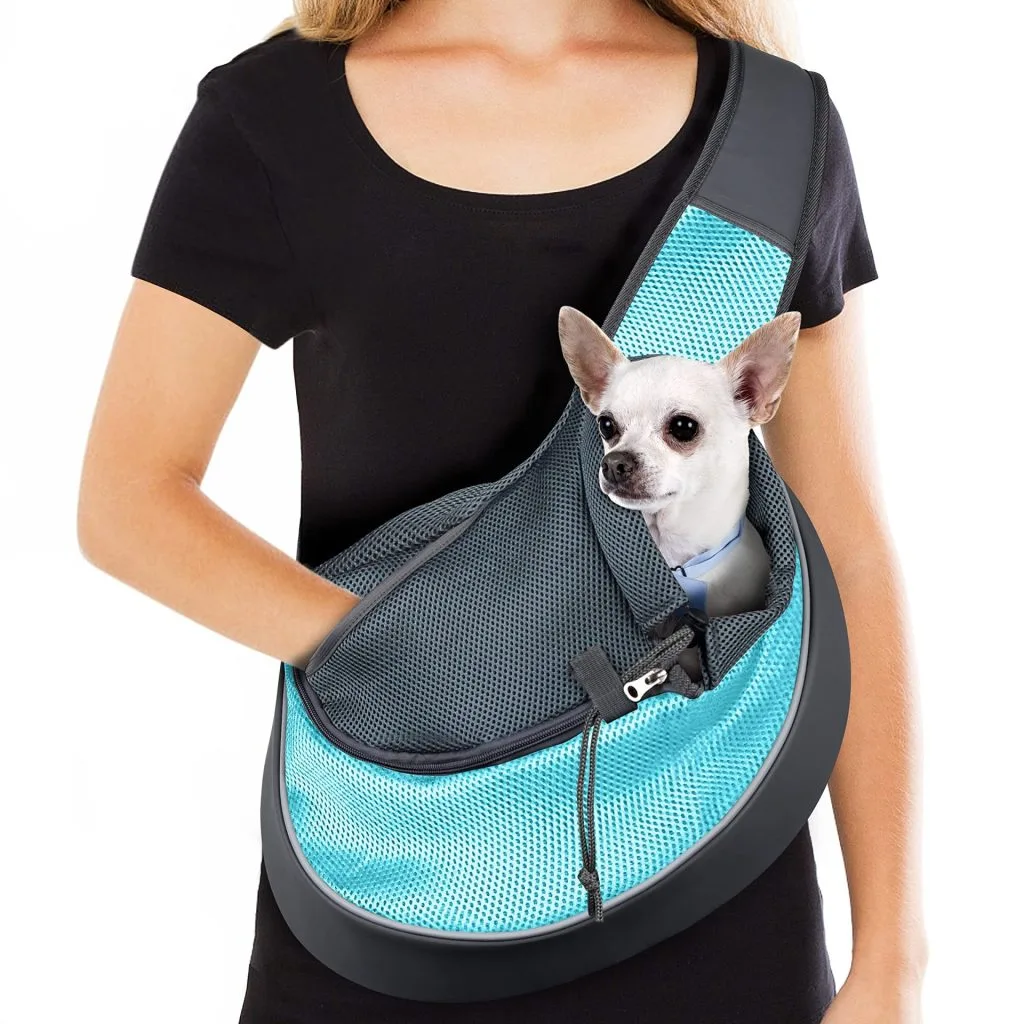
Apart from rotation, the recurring defect in this format is slip: either the strap slides off the shoulder or the webbing creeps through the adjuster under load. Both are geometric rather than material problems, and both are solved in specification rather than in sourcing.
Pad width sets whether the strap stays on the shoulder at all. A pad narrower than about 60 mm tends to sit in the hollow above the shoulder and then walk outward, since it lacks the footprint to stay centred under load variation. The working range is 60-90 mm of contact width, achieved either by a wide flat pad or by a shaped pad that wraps the shoulder slightly. Wider than roughly 110 mm begins to interfere with arm movement.
Pad curvature is the second variable and the one most often skipped. A flat pad on a curved shoulder contacts along a line rather than over a surface, so effective contact width is a fraction of nominal. A pad with 15-25 mm of formed curvature across its width converts nominal width into real width at a cost of nothing beyond tooling the pad mould.
Adjuster slip is the third variable and the most commonly returned defect. A standard webbing adjuster relies on friction through a bar, and under sustained load combined with vibration from walking, the effective grip falls well below what the same hardware holds in a static test. The controls are specifying adjuster geometry with adequate wrap angle, using webbing of appropriate thickness and stiffness so it does not flatten, and testing slip resistance under cyclic rather than static conditions at 250 N minimum.
Length adjustment range matters more here than in any other format because handlers of different heights need very different strap lengths for the same bag position. A range of 500-700 mm between minimum and maximum, with the adjuster placed where it does not contact the neck, ensures the product fits most people rather than the average one.
Why This Format Has a Hard Practical Weight Ceiling
Shoulder bags for cats are sold up to sizes the human body cannot comfortably carry, and this mismatch generates returns that no amount of stronger webbing fixes. The ceiling is physiological rather than structural, and stating it honestly in the specification is better for everyone.
The mechanism is trapezius loading. The muscle that supports a shoulder strap operates against the weight plus whatever the contralateral side must contribute to stabilise the spine, and sustained loading beyond roughly 15 to 20% of body mass on one side produces fatigue and muscle strain within twenty to thirty minutes. For an average adult that puts the ceiling at about 5-7 kg of total carried weight, of which the bag itself takes 0.8-1.4 kg.
Add the animal and the picture is clear. A 4-6 kg cat plus a 1.0-1.3 kg bag lands within the ceiling, which is why this format works well for the majority of the cat population - most domestic cats weigh between 3.5 and 6 kg. Above 6 kg of animal most handlers exceed comfortable single-shoulder loading, and above 8 kg the arrangement becomes genuinely unsuitable regardless of padding.
The correct response at the top of the range is not stronger hardware but a different format. Either the same visual family is executed as a convertible with two straps, or the product line stops below that weight and customers with large cats are directed elsewhere. Building a shoulder bag rated to 12 kg does nothing except invite a bad purchase.
There is a useful intermediate answer for programmes that do not want two full product lines. A shoulder bag supplied with a short secondary strap that converts it to a single diagonal arrangement costs very little, covers the larger-cat case when needed, and lets one product serve a wider weight range without pretending the primary configuration is suitable for everything.
This should be reflected in the documentation as well as in the design. A stated maximum animal weight tied to handler comfort rather than to structural capacity is unusual in this category, it is honest, and it tends to reduce returns because it steers large-cat owners into a format that suits them.
Attachment Geometry Where Strap Meets Body
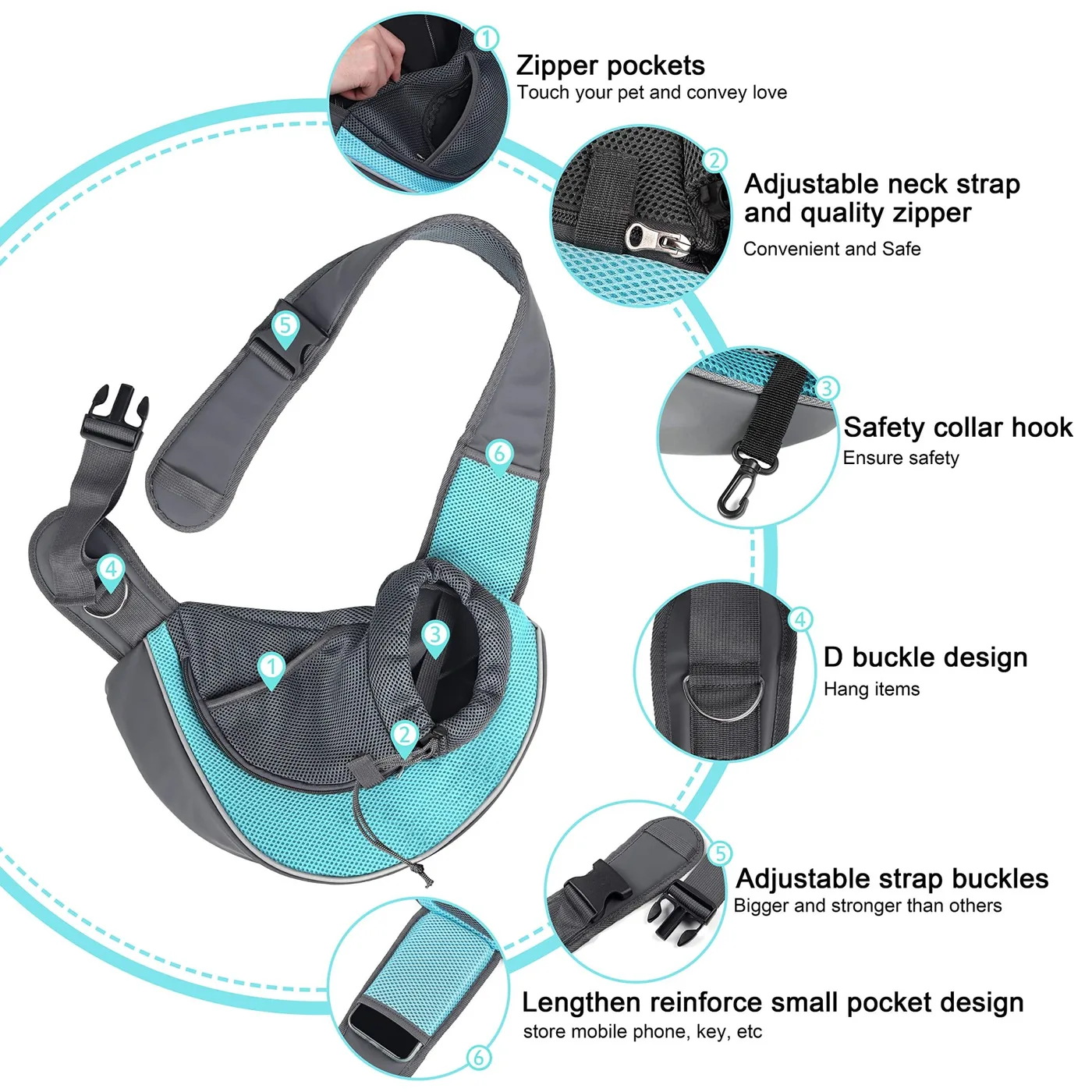
The transition from strap to bag body concentrates everything, and it is the second-most-failed detail in this format after the adjuster. Two decisions govern it: the angle at which the strap leaves the body, and how the load spreads once inside.
Exit angle first. If both strap ends attach along the top edge and rise vertically, the load pulls the two top corners toward each other, collapsing the opening and stressing the panel between them. If the strap ends instead sit at the sides, spaced apart, the load pulls outward against the reinforcement in a much more forgiving direction. Good designs set the attachment points near the vertical quarter-points of the body sides.
Spread inside the body is the second decision. Reality is that most production attaches webbing to a reinforcement patch sewn into the top edge, which concentrates load above the panel's strongest area. The better construction continues the webbing or its extension along the side panel for 150-250 mm before terminating, spreading the load over a larger section of seam and into the base structure.
Triangular reinforcement is a useful visual of the correct approach: ending the webbing extension with a V-bottom and the widest section of bar-tack at the base rather than at the top produces a load path that expands rather than concentrates. Reversing that geometry is a common error because it looks tidier.
Hardware at the transition deserves attention too. A metal triangular ring is the standard interface and its own rated load should be specified, typically well above the strap's working load, because it becomes the new weakest link once the strap is upgraded. Any swivelling joint must be tested for side-loading rather than only for straight-line pull, since it sees both.
Internal Structure Surviving Asymmetric Suspension
A bag that hangs from one corner of its top edge experiences loads its designer rarely draws, and internal structure has to be arranged for those cases rather than only for the upright one. Three elements matter.
The base still carries everything it would in any other format, but now off-centre. Because the animal sits where it likes and the bag hangs where the strap dictates, the two rarely coincide, producing persistent torsional load through the floor rather than simple bending. A base board with torsional stiffness - either thicker at 4-5 mm or moulded with a rib pattern - handles this where a flat panel of the same bending stiffness does not.
Side panels absorb the rest. When the bag hangs, the outer panel is in tension from the strap while the inner panel is compressed against the handler's body, and this combination tends to bow the inner panel inward onto the animal. An interlining in the inner panel, or a vertical stiffener running its height, holds the section.
The top edge is the third element and the one least often reinforced. Between the two strap attachment points it carries the entire load in tension, so if there is no dedicated webbing or reinforcing tape along it, the shell fabric itself is doing the work and will elongate visibly over weeks. A continuous webbing or tape run along the top edge, even quite light, is cheap insurance and makes a large difference to how long the product looks new.
One structural element deserves specific mention because it is routinely value-engineered out and then missed: a top board or stiffener. Even where the strap attaches correctly, a light stiffener carried around the top perimeter keeps the aperture in plane, prevents the mouth from deforming under asymmetric load, and holds the closure geometrically true so that it keeps working. It adds 0.40-1.10 USD and prevents one of the slow-failure modes that only show up after a season of use.
Interior dunnage completes it. Because animal movement translates directly into swing at this format, anything that settles the animal's position - a well-fitting mat, a defined corner, a modestly snug interior - reduces the forces the handler feels. Interior fit therefore serves ergonomics here as well as the animal.
Material Interactions: Slip, Wear and Coating Choices
Material selection for this format is governed less by the shell panel than by the strap assembly, because that is where movement, friction and wear concentrate. Four material decisions carry the result.
Webbing specification sets slip behaviour. Smooth polyester webbing is strong and cheap but slides through adjusters under vibration; a slightly coarser weave with higher inter-yarn friction holds better, and any elastication or soft finish should be avoided because it encourages creep. Specifying webbing thickness and stiffness explicitly, rather than only width and breaking load, directly controls adjuster performance.
Pad coatings decide whether the bag stays put or walks off the shoulder. A silicone-dotted or patterned surface on the contact face raises the coefficient substantially, and where this looks too technical for the brand position, a suede-backed or microfibre textile face reaches adequate values while looking conventional. Either way the coefficient should be specified and measured rather than judged by touch.
Edge finishing at the strap edges prevents the substrate or synthetic leather pad from fraying where it rubs against clothing. Turned edges, bound edges or moulded TPE pads all avoid this; a raw cut synthetic leather edge begins to shed its coating within weeks.
Shell materials get screened alongside. Coated surfaces in this format experience rubbing against the handler throughout wear rather than occasionally, so abrasion and colour transfer criteria should be set accordingly, and the textile inputs are typically evaluated against restricted-substance criteria published by OEKO-TEX. Species welfare framing for carried transport is cross-checked against guidance from the American Veterinary Medical Association.
Test Additions and Programme Notes
Four tests belong specifically to this format, added to the standard protocol rather than replacing anything in it.
The first is adjuster slip under cyclic load. Rather than a static pull, the strap is loaded to 250 N and cycled through small-amplitude movement for several hundred cycles to simulate walking, with acceptance of less than 3 mm of webbing creep. This single test catches most of the field complaints the format generates.
The second is sway measurement. Carried at rated load on a walking test form, lateral angular excursion is recorded with acceptance below 20 degrees, and this should be measured both with and without any stabiliser strap connected so that the contribution of that component is visible in the data rather than assumed.
The third is the asymmetric suspension test already implied above: the loaded bag is suspended from one strap end only, rather than both, for 60 seconds, with acceptance of no permanent deformation and no attachment damage. Real-world handling puts the product into this state constantly.
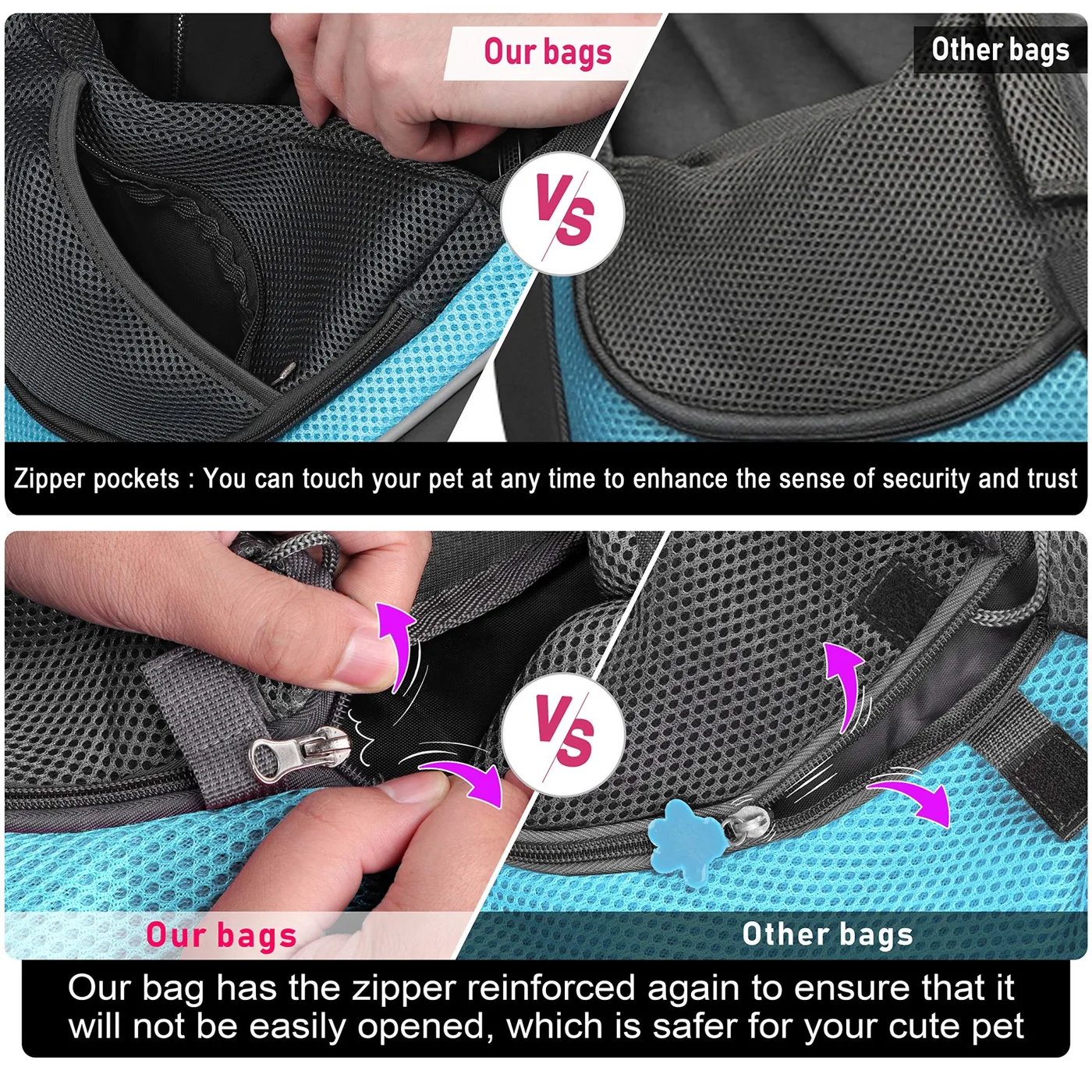
Closure behaviour changes under suspension and is worth testing rather than assuming. A bag hanging from one corner loads its closure out of plane, so a zipper that runs true when the unit is standing may bind or gap when it is being carried. Specifying an internal pry and push-out check in the suspended state, rather than only on the bench, is a short addition to the protocol that catches a genuine and frequently reported failure.
The fourth covers pad durability: repeated donning and removal against a standard abrading surface for several hundred cycles, followed by inspection for delamination, edge wear and loss of grip. Pads rarely fail structurally; they fail aesthetically and then functionally once the grip face wears smooth.
Programme economics sit slightly below the tote and above the sling families, landing around 14-24 USD FOB depending on strap construction and padding, with the convertible variant adding 2.20-4.50 USD. Closure is the usual term set: prototypes in 6-10 working days, bulk 35-50 days after approval, final random inspection at AQL 2.5 with adjuster slip added as a critical characteristic, T/T 30/70 and FOB Xiamen. Related reading includes the pieces on convertible strap systems and sling construction.
Why brands source here
- Pet carrier programs run since 2014; founding team in sewn goods since 2004
- SGS-verified production floor of 4,950 m² with 137 workers across 7 lines
- Monthly capacity of 200,000 units, audited to BSCI and ISO 9001
People Also Ask
Why do shoulder cat bags feel heavier than backpacks?
Because walking adds acceleration, producing peak forces 1.3 to 1.6 times static weight, and because the load rotates about a soft-tissue pivot instead of being held against the spine.
How much weight can a person comfortably carry on one shoulder?
Roughly 15-20% of body mass sustained for twenty to thirty minutes. With the bag taking 0.8-1.4 kg, that leaves about 4-6 kg of cat before most handlers exceed comfortable loading.
How do you stop a shoulder bag strap sliding off?
A pad of 60-90 mm contact width with 15-25 mm of formed curvature, plus a high-friction face above about 0.7 coefficient, or move to cross-body geometry entirely.
Why does webbing creep through adjusters?
Vibration from walking reduces effective grip below the static figure. Specify webbing thickness and stiffness, adequate wrap angle, and test at 250 N under cyclic rather than static conditions.
Where should shoulder strap attachments sit on the body?
Near the vertical quarter-points of the body sides, spaced apart, so the load pulls outward against reinforcement rather than collapsing the top opening inward.
What internal structure does a hanging bag need?
A torsionally stiff base of 4-5 mm or ribbed moulding, interlining or a vertical stiffener in the panel against the body, and a reinforcing tape along the whole top edge.
How much sway is acceptable for this format?
Below 20 degrees lateral excursion at rated load on a walking test form, measured with and without the stabiliser strap so its actual contribution is visible in the data.
Frequently Asked Questions
What is the cheapest effective rotation control?
A stabiliser strap from the lower body to the shoulder strap, at 0.60-1.60 USD. A friction pad alone holds about 5 kg and then becomes too grippy to reposition.
Why is cross-body geometry so much better?
It triangulates the load across the back and chest, converting a free-rotating pendant into a constrained arrangement, at the cost of 400-600 mm extra webbing and slower donning.
What pad width stops the strap walking off?
60-90 mm contact width. Below about 60 mm the pad sits in the hollow above the shoulder and migrates outward, while above roughly 110 mm it interferes with arm movement.
Why does a flat pad underperform?
It contacts a curved shoulder along a line rather than over an area, so effective contact width is a fraction of nominal. Formed curvature across the pad converts nominal width into real width.
What adjustment range should the strap have?
500-700 mm between minimum and maximum, with the adjuster placed clear of the neck, since handlers of different heights need very different lengths for the same bag position.
Should the stated rating reflect handler comfort or structure?
Handler comfort. A bag structurally rated to 12 kg still cannot be carried comfortably on one shoulder, so honest documentation steers large-cat owners to a suitable format instead.
How much do domestic cats actually weigh?
Most fall between 3.5 and 6 kg, which is why this format serves the bulk of the population well and only struggles at the upper end of the range.
What happens if webbing terminates at the top edge?
Load concentrates in one stitch line above the panel's strongest section, elongating the fabric and eventually tearing out, which is why the extension should run 150-250 mm down the side.
What is the V-bottom reinforcement approach?
Tapering the webbing extension so the widest bar-tack sits at the base and the narrow point at the top, producing a load path that expands downward rather than concentrating upward.
How should swivel hardware at the strap be tested?
Under side loading as well as straight-line pull, because a hanging bag loads the joint in both directions and the swivel becomes the weakest link once the strap itself is upgraded.
Why does the panel against the body need stiffening?
Suspension puts that panel into compression against the handler, bowing it inward onto the animal. An interlining or vertical stiffener holds the interior section open.
Why reinforce the top edge even lightly?
It carries the full load in tension between both strap points. Without a reinforcing tape the shell fabric does the work and elongates visibly within weeks of normal use.
What abrades fastest on this format?
The strap pad face and its edges. Once the grip face wears smooth the pad slips, so repeated donning cycles against a standard abrading surface should be part of validation.
What does a cat shoulder bag cost to produce?
14-24 USD FOB depending on strap construction and padding, with the convertible variant adding 2.20-4.50 USD, all at MOQ 500 pieces per colourway.
Talk to QUANZHOU JUNYUAN BAGS about a pet carrier program: MOQ 500 pieces per colourway, samples in 6-10 working days, bulk production in 35-50 days under AQL 2.5 inspection.
Get a free quote Request a sample