Dog Carrier Backpack for Ferrets: Compact Carrier
A ferret-capable compact carrier is governed by aperture control rather than by strength: the class runs 0.7-2.0 kg with a head that passes any gap above 25 mm, so every opening must sit under that figure or be mechanically locked, with chew-resistant panels below 200 mm, a hammock mount rated at 60 N, a designated latrine corner and a stated thermal ceiling of 26 °C.
This page sets out what changes when a soft carrier has to hold a mustelid. Ferrets are long, extremely flexible and persistently exploratory: they pass through any aperture their skull fits, they work at zippers and seams with claws and incisors, they dig methodically at corners, they sleep for most of the day in a suspended posture, and they have no functional sweat glands, which makes them more heat-sensitive than any dog in the range. Those behaviours convert into a specification that is mostly about geometry and closure integrity, with almost nothing carried over from a dog-derived tech pack beyond the shell. The two commercial realities are that the features are invisible at retail and that the failure mode is an escaped animal, which is a return with a reputational cost attached. Commercial terms follow the standard program: MOQ 500 pieces per colourway, prototypes in 6-10 working days, bulk production 35-50 days after sample approval, final random inspection to AQL 2.5, T/T 30/70 payment and FOB Xiamen loading.
As a pet carrier manufacturer handling dog carrier backpack programmes, our team quotes MOQ 500 pieces per colourway and returns a sewn sample in 6-10 working days.
Mass Class and the Head-Width Rule for Aperture Control
Ferret dimensions are deceptive. An animal of 0.7-2.0 kg with a body length of 350-500 mm sounds like a small dog, but the body is narrow — typically 60-90 mm at the widest point — and the ribcage and pelvis are both compressible. The practical consequence is the rule that governs every aperture decision in this product: if the head fits through, the animal follows.
Head width is therefore the controlling dimension. An adult ferret skull measures 28-38 mm at the widest point across the zygomatic arches, and a determined animal will compress its way through an opening as small as its skull. That sets the maximum safe aperture at 25 mm for any gap a ferret can reach, which is a markedly tighter figure than the range used for cats or small dogs and is the single most common reason a general small-pet carrier fails with this species.
Aperture control applies to gaps as well as to openings. The hazard is not the ventilation panel, which is obviously an opening and is engineered as one; it is the incidental gap — between a panel and a binding, at a corner where two panels meet, around a fastener, at the point where a strap enters the shell. Every one of those is a 5-25 mm slot in a production sample, and every one of them is an escape path.
Body length sets the interior in the other direction. A ferret stretches out to sleep and to travel, and a compartment shorter than the animal forces it into a curled posture that raises body temperature and stress. Interior length of 420-560 mm with a width of 220-300 mm and a height of 230-300 mm covers the class, giving a long, low compartment with a floor area of 0.10-0.16 m².
Centre of gravity follows from the low, long body and sits at roughly 20-25% of interior height when the animal is lying down, or up to 45% when it is standing on its hind legs, which ferrets do routinely to explore. The standing case is the one that matters for suspension, because it puts the mass high in a narrow compartment and produces a lateral oscillation during walking that a wider, lower compartment would not.
| Location | General small-pet limit | Ferret limit | Failure mode if exceeded | Verification |
|---|---|---|---|---|
| Ventilation panel | 6-12 mm mesh | Under 6 mm or rigid perforation | Chewed through, then exit | Beak and claw fixture, 60 N |
| Panel to binding gap | Not controlled | Under 3 mm | Skull entry, body follows | Go/no-go gauge, 25 mm |
| Corner junction | Not controlled | Under 3 mm | Digging opens the slot | Gauge after 200 dig cycles |
| Strap entry point | Not controlled | Under 3 mm with weld | Progressive widening | Gauge after load cycling |
| Primary closure | Single zipper | Two-stage, locked | Slider lifted, opening forced | Defeat test, 10 minutes |
| Latrine corner access | Removable tray | Fixed corner pocket | Pad displaced, soiling spread | Displacement test, 40 N |
The gauge that closes this section is a 25 mm cylinder, applied to every reachable gap on three production samples at release and at every lot inspection thereafter. If the cylinder passes, the animal passes; aperture discipline is the whole of ferret containment.
Escape Mechanics: Closure, Seam and Corner Engineering
A ferret escapes by working a weakness rather than by forcing a structure. The sequence is consistent across the species: locate a gap or a moving part, apply claw and incisors to it, widen it incrementally, and pass through. That sequence means the design response is not strength — the animal can apply perhaps 60-100 N at most — but the elimination of anything it can grip, lever or widen.
Closures are the first and most-exploited element. A standard coil zipper is defeated because the animal hooks a claw or an incisor under the slider and lifts, after which the coil opens under modest load. The specification is a two-stage closure: a rigid mechanical primary — a slide bolt with at least 6 mm of travel, a quarter-turn cam lock or a stainless spring hook — plus a textile secondary that covers it. Where a zipper is used anywhere in the primary path it must be a reverse-coil type with a covered garage at the head end, a locking slider with a positive detent, and a 70 N pull test on the closed state.
Seams are the second element. A ferret digs at a seam with the forelimbs while pulling at it with the incisors, and a sewn seam with a standard 10 mm allowance progressively opens under that combination. The specification for every seam inside the reachable envelope is a 15 mm allowance, a bonded or welded reinforcement over the stitch line, and no exposed thread loop anywhere, because a thread loop is both a grip point and the start of an unravelling.
Corners are the third and the most underestimated. Ferrets preferentially work the corners, backing into them and pushing, and a corner is where two seam lines meet and where tolerance accumulates. The response is a moulded or welded corner element rather than a sewn mitre: a radiused corner of R20-R30 formed in a single piece, with no seam terminating within 30 mm of the corner, and a bar-tack of at least 12 mm on any seam that must approach it.
Strap and webbing entry points complete the review. Anywhere a strap, a hanging loop or an internal tether passes through the shell, the opening is a gap that will be worked. Each such point is specified with a welded or moulded grommet, a clearance under 3 mm, and a 100 N pull test in the direction a ferret would apply load — which is outward and downward rather than along the strap axis.
Chew and Claw Resistance: Panel and Trim Specification
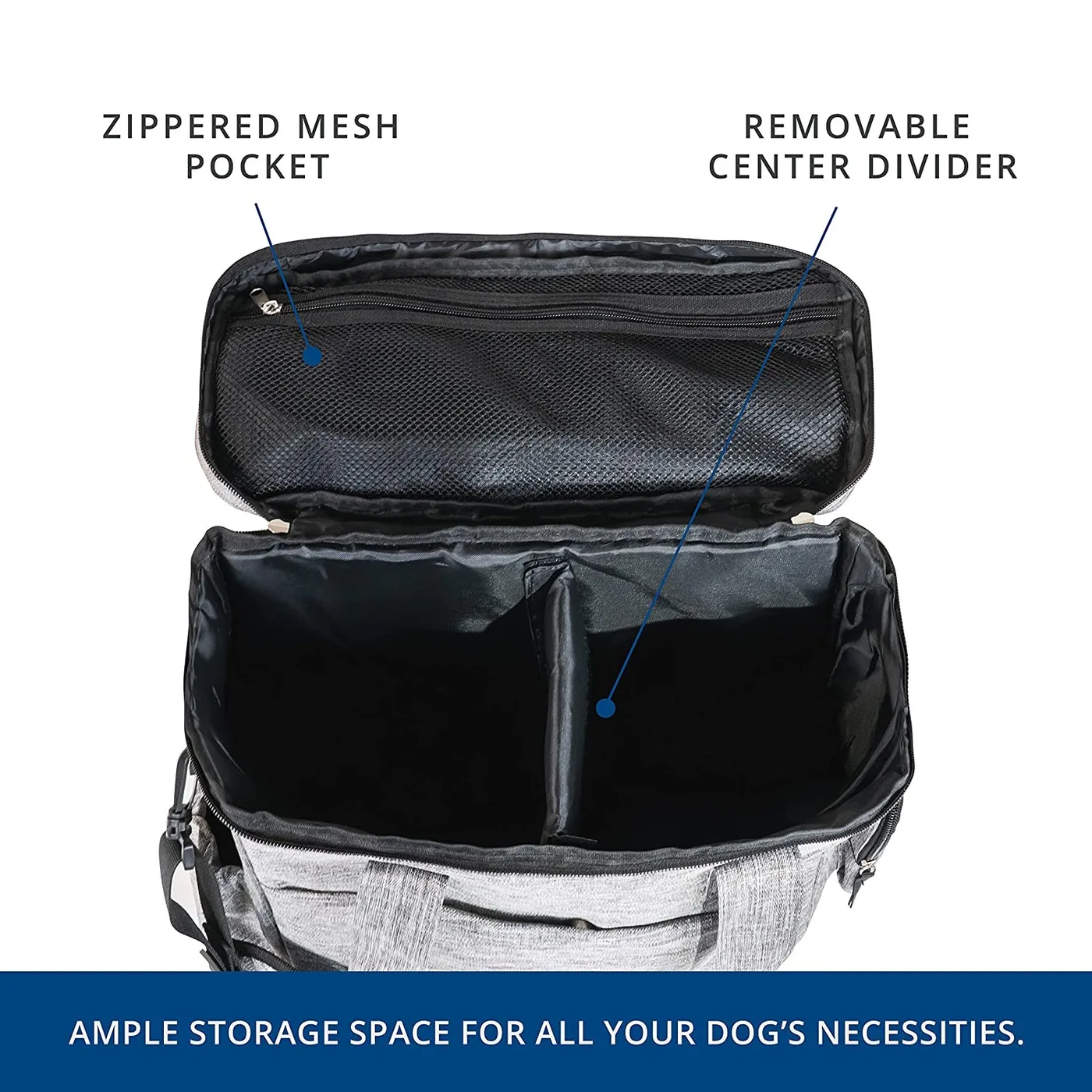
A ferret bites with a jaw that is short, heavily muscled for its size and equipped with prominent canines, and it uses the forelimbs with sharp, non-retractable claws at the same time. The combined action is pull-and-tear rather than the cut-and-sever action of a rabbit, so the material response differs: high tear strength and a bound surface matter more than pure cut resistance.
Panel selection follows from that. Coated woven polyester at 600D with a TPU coating of at least 30-40 g/m² dry solids is the working specification for the lower panels, with a ripstop grid so a tear that does start is arrested. Monofilament mesh at 400-480 g/m² is acceptable on ventilation faces but is the weakest element in the assembly and should be backed by a rigid perforated sheet wherever the animal can reach it directly.
Perforated sheet is the better answer for the lower 200 mm of the compartment, which is the reachable band for a standing animal. A 2.0-3.0 mm ABS or PC panel with 4-6 mm perforations on a 9-12 mm pitch gives 20-30% open area, cannot be torn, and wipes clean. The perforation pitch matters: at 9-12 mm there is enough material between holes that a canine cannot get purchase on an edge, whereas a larger pitch with the same hole size leaves a web the animal can break.
Reach height is the variable that keeps this affordable. A ferret standing on its hind legs reaches roughly 200-250 mm from the floor, and it can climb a vertical textile surface. Unlike a guinea pig, there is no unreachable zone, so the chew-resistant specification has to cover the full interior height on all four walls even though the actual contact is concentrated in the lower half.
Trim and hardware are the small elements that fail first. Every webbing end is hot-knife sealed and bar-tacked over 12 mm; every internal fastener is recessed under a welded washer or a cover; every detachable trim is pull-tested at 50 N and screened against a 31.7 mm gauge. Hook-and-loop used anywhere inside the compartment must be a moulded-hook type rather than a woven-loop type, because a woven loop is both a claw snag and a chew target.
Interior Layout: Hammock, Rest Volume and Latrine Corner
Ferrets sleep 14-18 hours a day and prefer to sleep suspended and enclosed rather than flat on a floor. That preference is not a comfort nicety in a transport product; it is the difference between an animal that settles within minutes and one that works at the closure for the duration of the journey. The interior layout therefore has to provide a suspended rest position rather than only a floor.
The hammock is the standard solution and it is a specified component, not an accessory. Construction is a bonded quilted panel of 300-450 g/m² with a hydrophobic backing and a bonded top layer that cannot be reduced to pieces, suspended at four corners by webbing or by moulded hooks. Corner attachment is rated at 60 N in any direction, and each attachment point is a welded or bar-tacked reinforcement rather than a stitch through a single layer, because the dynamic load when the animal launches itself into the hammock is several times its body weight.
Sag is the specification that gets missed. A hammock that sags more than 25-35 mm under a 2 kg load becomes a pocket, and a pocket both traps heat against the animal's body and creates a fold in which a limb can be caught. The specification is a suspension geometry with an unloaded sag of 10-15 mm and a loaded sag under 35 mm, achieved through panel tension rather than through an elastic element.
The latrine corner is the second layout element and it exploits a behaviour most designers do not know about. Ferrets preferentially defecate in a corner and will use the same corner repeatedly if one is available. Providing a designated corner with an absorbent pocket converts an unpredictable soiling pattern into a predictable one, which keeps the rest of the compartment clean and makes the product materially easier to sell.
The pocket is specified as a fixed, welded corner receptacle holding a needled non-woven pad of 200-350 g/m² with a hydrophobic backing and a measured capacity of 150-300 ml for the class. It must be fixed rather than loose — a loose pad is dragged, bunched and eventually eaten — retention-tested at 40 N, and shaped so that no gap between the pocket and the corner exceeds 3 mm.
Ventilation, Odour and Washability
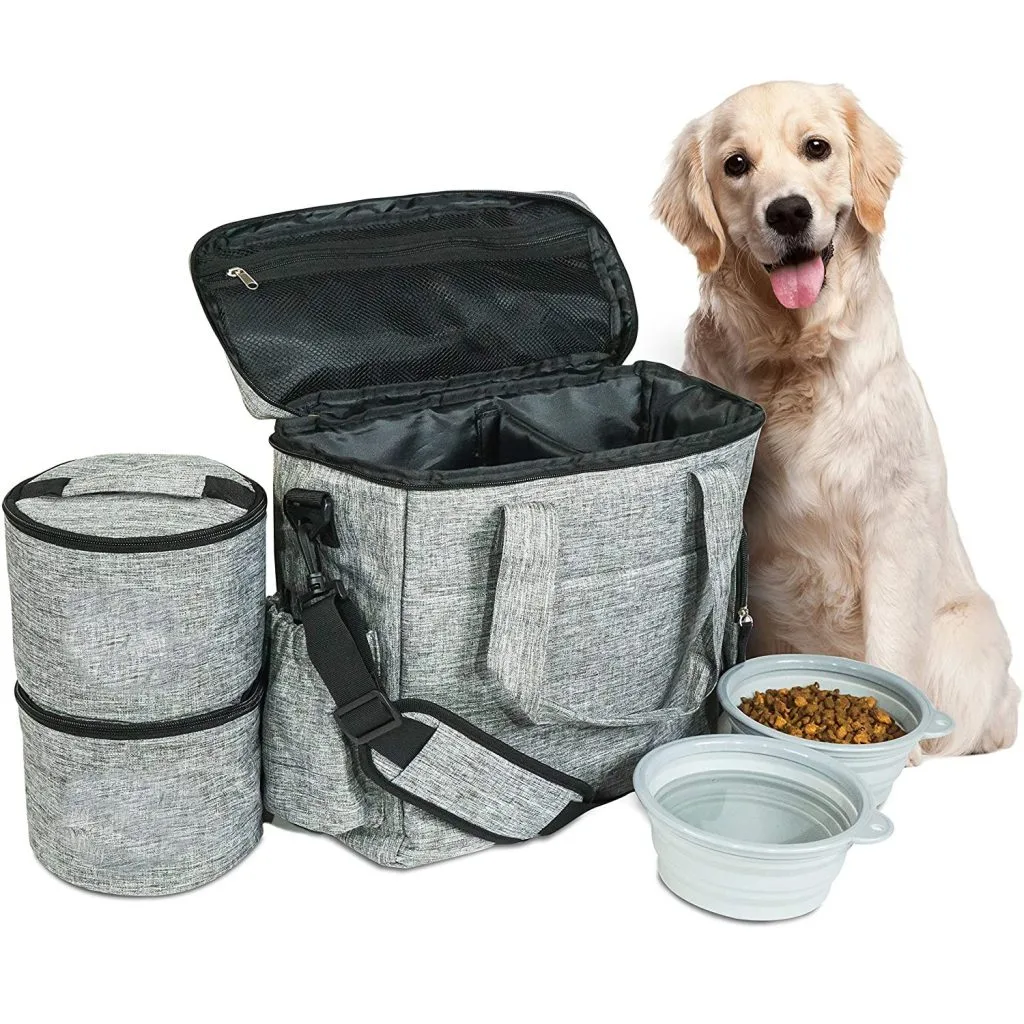
Ferrets have a high metabolic rate and a strong natural odour from sebaceous skin glands and from the anal scent glands, so the airflow requirement in a transport compartment is driven by two things at once: heat and metabolic gas exchange on one side, and odour concentration on the other. Both push the open area upward, and neither has a dog-side equivalent.
Open area of 24-34% suits the class, which is the highest figure in the small-mammal range and close to the bird figure. Intake goes low on the front and side faces and exhaust high at the rear, with the two areas within 20% of each other and the exhaust closable for cold-weather loading. Because the animal sleeps suspended, the airflow path has to cross the full compartment height rather than sweep along the floor, which argues for a low intake directly below the hammock position.
Odour management is the part with content specific to this species. Mustelid odour is carried by sebum and is absorbed into and retained by textile structures, particularly open-cell foam and loop-pile fabrics. The specification excludes open-cell foam anywhere in the interior, uses closed-cell or bonded constructions throughout, and applies a hydrophobic finish to the interior lining so sebum sits on the surface and can be wiped rather than absorbed.
Washability is a rated property rather than a claim. The interior lining, the hammock and the latrine pocket are all removable and machine-washable at 40 °C for at least fifty cycles, with acceptance of no dimensional change above 3%, no delamination, and no residual odour after 24 hours. Residual odour is assessed rather than measured, using a trained panel against a reference, because instrumental odour methods do not correlate well with what an owner notices.
Filtration is worth a short note in the opposite direction. Ferrets generate far less respirable dust than hay-eating species, so a filter layer is not required on the intake; adding one here restricts airflow without a benefit. The correct position is a coarse removable screen that keeps substrate and hair out of the exhaust, not a fine filter.
Thermal Limits: No Sweat Glands and Heat Stroke Above 26 °C
Ferrets have essentially no functional sweat glands and a dense coat with a thick underlayer, which leaves panting as their only meaningful heat-loss mechanism and panting as a poor one. Their thermoneutral zone is narrow and heat stress becomes a clinical risk above roughly 26 °C ambient, with heat stroke a realistic outcome above 30 °C in an enclosed compartment. This is the strictest thermal ceiling in the small-pet range apart from the guinea pig, and it applies even in temperate markets because a carrier in sun or in a parked vehicle reaches those temperatures quickly.
The thermal design is therefore a cooling problem with no warming requirement at all. Insulation is used only to slow external gain: a 4-6 mm closed-cell layer in the roof and upper panels, with the floor left deliberately conductive so the animal can dump heat through contact. Insulating the floor is a design error for this species and is worth an explicit prohibition in the tech pack, because it is the intuitive thing for a designer to do.
Reflective and light-coloured outer finishes are the cheapest control. A shell with a solar reflectance above 0.55 on the upper surfaces measurably reduces interior temperature against an identical dark shell, and it costs nothing once the colourway is decided. Where brand requirements dictate a dark colourway, a reflective pigment is the mitigation.
Phase-change cooling is the engineered option. A moulded pack of 250-500 g with a transition at 18-22 °C, held in a sleeve under the hammock rather than under the floor, holds the interior near the transition temperature for two to four hours. Siting under the hammock rather than under the floor is the correct choice here, because the animal spends most of the journey suspended and because the floor needs to remain conductive for contact cooling when it does lie down.
Stated limits belong on the product as they do for every heat-sensitive species in the range: a maximum ambient temperature, a maximum continuous occupancy time, and a plain warning about vehicles and direct sun. Handling and welfare framing for the species is commonly cross-checked against guidance published by the American Veterinary Medical Association, and conditioning practice for the thermal test follows methods published by ASTM International.
Suspension and Restraint Interface for a Long, Narrow Load
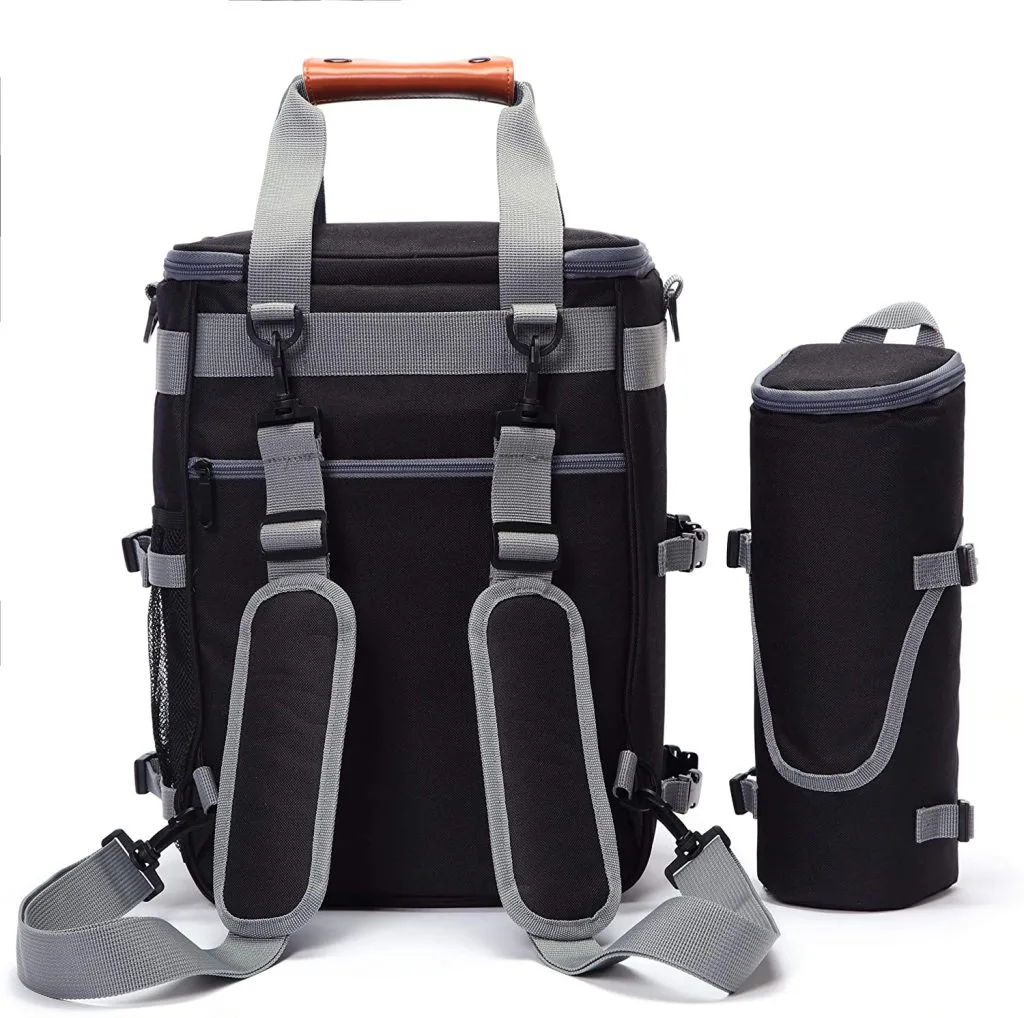
The ferret compartment is the most awkward load in the small-pet range to carry, and the reason is its proportion rather than its mass. A compartment of 420-560 mm by 220-300 mm by 230-300 mm is long and narrow, and the animal inside it moves along that length continuously. The result is a shifting load in a single axis, which produces the same fore-and-aft pitching on the wearer that an improperly packed rucksack produces, at roughly 2 kg rather than 15 kg.
Suspension geometry is the first control. The back panel attachment should span at least 60% of the compartment length rather than concentrating at two points, so that a shift in the animal's position produces a distributed change in load rather than a torque about a single anchor. Load-lifter strap angles above 20 degrees from horizontal are worth specifying here for the same reason they are on a technical pack: they pull the top of the compartment toward the wearer and reduce the pitch amplitude.
Damping matters more than stiffness at this mass. A stiff compartment transmits the animal's movement directly; a compartment with 8-12 mm of closed-cell foam between the shell and the back panel absorbs the low-frequency component of that movement without adding measurable bulk. The specification is a foam of 25-35 kg/m³ indentation load deflection in the contact zone rather than the 45-60 kg/m³ used for load-bearing padding elsewhere in the range.
Internal restraint is the second half of the interface. A tether anchor is specified for programmes selling into markets where the animal is harnessed in transit: a welded or bar-tacked webbing loop inside the compartment rated at 150 N, positioned on the roof centreline rather than on a wall so that a tethered animal cannot work against a seam, with a clearance under 3 mm where the webbing passes through the shell. The tether itself is a short-lead element of 150-250 mm, long enough to allow a change of posture and short enough to prevent the animal reaching the closure.
The restraint has to be a harness interface and never a collar interface. A ferret has a neck that is thicker than its skull and a trachea that is vulnerable to compression, so any restraint that loads the neck is a hazard, and the documentation should state that plainly. Where no tether is supplied, the anchor point is still worth specifying because it gives the harness market a compliant attachment without the customer improvising one through a ventilation aperture.
Test Protocol, Cost and Programme Notes
Ferret-capable release runs the small-pet protocol with four additions: an aperture gauge survey, an escape defeat test, a hammock suspension test and a wash-cycle test. Structural testing remains nominal at this mass; the protocol is dominated by geometry and by endurance of the closure and hammock.
The aperture survey uses a 25 mm cylinder applied to every reachable gap on three production samples, before and after conditioning. The escape defeat test is the distinctive one: a 10 minute observation with a trained animal or a mechanical analogue applying claw and incisor load to the closure, seams and corners, with acceptance of no opening, no seam progression and no gap widening beyond 2 mm. It is run on three samples and repeated at lot inspection on one.
Hammock testing applies 2 kg static for 60 seconds with loaded sag measured against a 35 mm limit, then 500 cycles of a 5 kg dynamic impulse to simulate the animal launching itself in, with acceptance of no attachment failure and no permanent elongation above 5 mm. The corner pocket is displacement-tested at 40 N and the latrine pad is capacity-tested with saline under head pressure against a 150 ml minimum.
Cost sits in the same band as the rabbit build. Perforated or chew-resistant lower panels run 0.90-2.20 USD, two-stage locking closure hardware adds 0.70-1.80 USD, the hammock assembly 1.10-2.60 USD, welded corner elements 0.50-1.20 USD, and the latrine pocket and pad 0.40-1.00 USD. Total increment over a small-dog carrier of the same size is 3.60-8.80 USD, landing the unit at 14-24 USD FOB, with the moulded panel version at the upper end until tooling is amortised.
Programme notes close the page. MOQ is 500 pieces per colourway, prototypes run 6-10 working days and bulk production 35-50 days after approval, with final random inspection to AQL 2.5 and the aperture gauge and closure defeat checks written into the defect list as critical defects rather than minor ones, because an escape is not a cosmetic failure. Retail presentation has to state the aperture and closure specification numerically, since neither is visible on a shelf. Textile components are screened against OEKO-TEX criteria throughout. A ferret product fails by geometry, so geometry is what the inspection has to measure.
Why brands source here
- Pet carrier programs run since 2014; founding team in sewn goods since 2004
- SGS-verified production floor of 4,950 m² with 137 workers across 7 lines
- Monthly capacity of 200,000 units, audited to BSCI and ISO 9001
People Also Ask
How small a gap can a ferret escape through?
Anything above 25 mm. The adult skull measures 28-38 mm across the zygomatic arches and the body is compressible, so the working rule is that if the head fits, the animal follows. Every reachable gap must sit under 3 mm or be a controlled opening.
Can a ferret open a zipper?
Yes. It hooks a claw or incisor under the slider and lifts, after which a coil zipper opens under modest load. Use a two-stage closure: a slide bolt, cam lock or stainless spring hook behind a covered textile layer.
What ventilation open area does a ferret need?
24-34%, the highest figure in the small-mammal range, driven by a high metabolic rate and by odour concentration. Intake low and below the hammock position, exhaust high and closable.
Why do ferrets need a hammock in a carrier?
They sleep 14-18 hours a day and prefer a suspended, enclosed position. Without one the animal works at the closure for the whole journey. Loaded sag must stay under 35 mm so it does not become a pocket.
At what temperature do ferrets suffer heat stress?
Around 26 °C ambient, with heat stroke realistic above 30 °C. Ferrets have essentially no functional sweat glands, so the design is a cooling problem with no warming requirement: insulating roof, conductive floor, reflective outer.
Do ferrets use a latrine corner?
Yes. They preferentially defecate in a corner and will reuse the same one. A fixed welded corner pocket holding a 150-300 ml pad makes soiling predictable and keeps the rest of the compartment clean.
Which panel material resists a ferret?
TPU-coated 600D with a ripstop grid at 30-40 g/m² dry solids, or a 2.0-3.0 mm perforated ABS or PC sheet with 4-6 mm holes on a 9-12 mm pitch. Ferrets pull and tear rather than cut, so tear strength and a bound surface matter most.
Frequently Asked Questions
What interior dimensions suit the ferret class?
420-560 mm long, 220-300 mm wide and 230-300 mm high, giving 0.10-0.16 m² of floor. Length is set by the stretched sleep posture; a compartment shorter than the animal forces a curl that raises body temperature.
Why is the maximum safe aperture 25 mm?
It is set by skull width, which measures 28-38 mm across the zygomatic arches, with a safety margin for a compressible ribcage. The 25 mm cylinder gauge is the release and lot-inspection control.
What seam specification resists digging?
A 15 mm allowance with bonded or welded reinforcement over the stitch line and no exposed thread loop anywhere, because a loop is both a grip point and the start of an unravelling. A ferret digs with the forelimbs while pulling with the incisors.
Why must corners be moulded rather than sewn?
Ferrets back into corners and push, and a corner is where two seam lines meet and tolerance accumulates. The specification is a radiused R20-R30 element formed in one piece with no seam terminating within 30 mm of it.
How is a strap entry point sealed?
With a welded or moulded grommet at a clearance under 3 mm, pull-tested at 100 N in the direction a ferret would load it, which is outward and downward rather than along the strap axis.
What hammock suspension load is required?
60 N at each corner in any direction, with the attachment welded or bar-tacked through reinforcement rather than stitched through a single layer. Dynamic load on entry is several times body weight.
Why is open-cell foam excluded from the interior?
Mustelid sebum absorbs into open-cell foam and loop-pile fabric and is retained through washing, producing permanent odour. Closed-cell or bonded constructions with a hydrophobic interior finish are specified instead.
How is washability validated?
Fifty machine cycles at 40 °C on the lining, hammock and latrine pocket, accepting dimensional change under 3%, no delamination and no residual odour after 24 hours, assessed by a trained panel against a reference.
Is a fine intake filter needed for ferrets?
No. Unlike hay-eating species they generate little respirable dust, so a fine filter restricts airflow without benefit. A coarse removable screen on the exhaust is the right control.
Where should the phase-change pack be sited?
Under the hammock rather than under the floor, because the animal spends most of the journey suspended and because the floor must stay conductive for contact cooling when it does lie down.
How is the escape defeat test run?
Ten minutes of observation with a trained animal or a mechanical analogue applying claw and incisor load to the closure, seams and corners, on three samples, accepting no opening and no gap widening beyond 2 mm.
How is the hammock tested?
2 kg static for 60 seconds against a 35 mm loaded sag limit, then 500 cycles of a 5 kg dynamic impulse, accepting no attachment failure and permanent elongation under 5 mm.
What does a ferret-capable build cost?
14-24 USD FOB, an increment of 3.60-8.80 USD over a small-dog carrier of the same size: panels 0.90-2.20 USD, closure 0.70-1.80 USD, hammock 1.10-2.60 USD, corners 0.50-1.20 USD and latrine 0.40-1.00 USD.
Why are aperture defects classed as critical?
Because the failure mode is an escaped animal, which is a return with a reputational cost rather than a cosmetic issue. The gauge check is written into the AQL 2.5 defect list at critical severity.
Talk to QUANZHOU JUNYUAN BAGS about a pet carrier program: MOQ 500 pieces per colourway, samples in 6-10 working days, bulk production in 35-50 days under AQL 2.5 inspection.
Get a free quote Request a sampleKeep reading
- Dog Carrier Backpack for Rabbits: Small Pet Carrier
- Dog Carrier Backpack for Guinea Pigs: Small Pet
- Dog Carrier Backpack for Cats: Dual Pet Use
- Dog Carrier Backpack Mesh: Airflow and Durability
- Dog Carrier Backpack for Small Dogs: Compact Design
- Dog Carrier Backpack Size Guide: Sizing Chart and Specifications