Dog Carrier Backpack for Labradors: Popular Breed
A Labrador-grade carrier is best engineered as the middle size of a three-grade platform rather than as a standalone product. The 25-36 kg band sets a 400-460 mm interior width and a 700-790 mm length; grades are scaled at 1.00, 0.88 and 1.12 on shared tooling, common parts are held at 78-84%, and board thickness steps 6, 8 and 10 mm across the grade set.
This page covers the platform engineering question that the highest-volume grade in the range creates. When one size carries most of the forecast, the correct approach is to design the grade set around it rather than to design three independent products, and that decision has consequences in tooling, marker yield, hardware commonality, capacity planning and defect data. The sections below set out the dimensional grading, the common-parts strategy, how load ratings scale across the grades, the floor specification by band, line configuration, and the quality and landed-cost economics of running a platform at volume. Commercial terms follow the standard programme: MOQ 500 pieces per colourway, prototypes in 6-10 working days, bulk production 35-50 days after sample approval, final random inspection to AQL 2.5, T/T 30/70 payment and FOB Xiamen loading. Capacity figures quoted here reflect our production team working across SGS-verified production base partner facilities with seven lines and 149 machines.
As a pet carrier manufacturer handling dog carrier backpack programmes, our team quotes MOQ 500 pieces per colourway and returns a sewn sample in 6-10 working days.
Volume Position: Why the Labrador Grade Sets the Platform
In most distributor ranges the mid-large grade carries 35-50% of unit volume, and the Labrador band is the reason. Labrador Retrievers are consistently among the most registered breeds in the United States, the United Kingdom and Australia, and their 25-36 kg mass band sits at the centre of the large-dog population. A product sized correctly for a Labrador will also serve Golden Retrievers, Labradoodles, standard Poodles, Boxers, most retriever crosses and a large share of the mixed-breed population.
That has a direct engineering consequence. The middle grade should be designed first, to its own geometry, and the smaller and larger grades should be derived from it by scaling. Designing from the small end upward produces a large grade with a floor that is too thin and a strap root that is too narrow; designing from the large end downward produces a small grade that is over-built, too heavy and too expensive. Designing from the middle and scaling both ways keeps each grade close to its own optimum.
The scaling factors are not uniform. Length and width scale at 0.88 and 1.12 for the small and large grades; height scales at 0.92 and 1.08, because standing height varies less than body length across the population; and chest depth scales at 0.90 and 1.10. Applying a single uniform factor to all three axes produces a large grade that is too tall and a small grade that is too shallow, and both are visibly wrong on the shelf.
Volume concentration also determines where tooling money goes. A moulded floor tray at 8,000-14,000 USD is justified for the middle grade at 4,000 units a year and is not justified for the small grade at 800 units. The correct decision is to tool the middle grade and use die-cut board in the outer two, which recovers most of the benefit for a fraction of the spend.
Forecast risk is the last reason the middle grade leads. If demand shifts, an oversized middle-grade run can be reworked into the large grade more easily than a small-grade run can be grown, because adding material is possible in some panels and removing it is not. Platform design therefore biases the small grade toward the middle in fabric allowances while keeping the large grade fully distinct.
The measurable target for a well-built platform is common parts of 78-84% by value across the three grades, with the remaining 16-22% concentrated in the floor board, the shell length panels and the webbing lengths. A grade set below 70% commonality is three products sharing a name, and it carries three products' worth of cost and risk.
Dimensional Grading: One Platform, Three Sizes, Shared Tooling
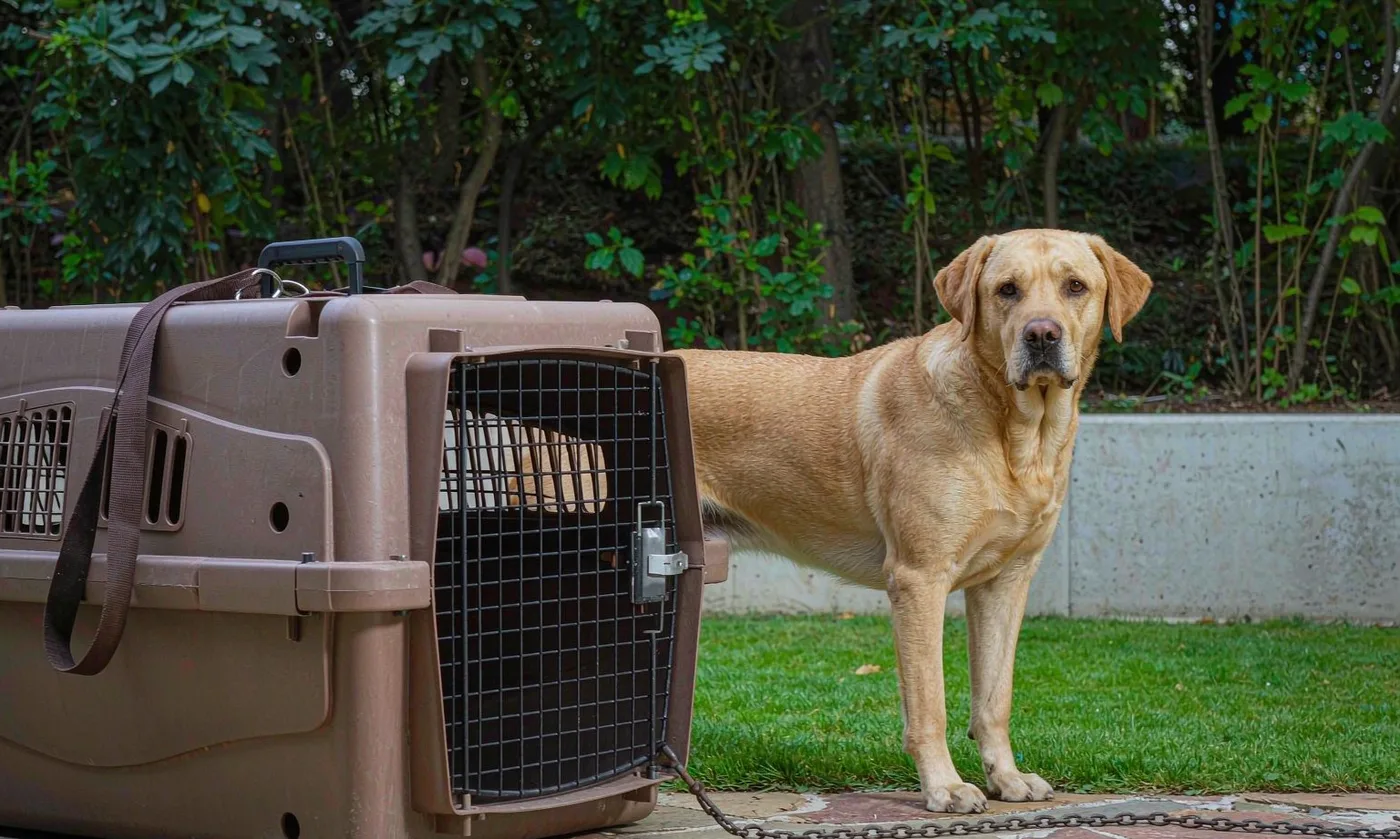
The grade set is defined from the middle grade outward. Middle-grade interior dimensions are 400-460 mm wide, 700-790 mm long and 540-620 mm high, derived from a Labrador body length of 620-700 mm, height at the shoulder of 540-620 mm, chest girth of 70-95 cm and chest depth of 260-310 mm. Small grade is 350-410 mm wide, 610-700 mm long and 490-570 mm high; large grade is 450-520 mm wide, 780-880 mm long and 580-660 mm high.
Those figures are interior clear dimensions and are not the cut dimensions. Cut dimensions add seam allowance, the board sleeve allowance and the fold allowance at the top edge, and they are what appear on the pattern. A common error in platform design is to scale the cut dimensions directly, which accumulates the fixed allowances into the scale factor and drifts the interior dimensions out of the intended band by 15-25 mm at the extremes.
Tooling commonality is achieved through the panel break points rather than through the panel shapes. If the side panel is broken into a lower panel and an upper mesh panel at a fixed height above the floor, the lower panel scales in one axis only and can be cut from a common die with a length change, and the upper panel scales in the same axis. The front and rear panels scale in two axes and need either two dies or a common die with a trim operation.
Board tooling is the expensive item and is where commonality is won or lost. A hollow-board blank can be die-cut to three lengths from one die with a stop block, so the board die is shared across the whole grade set for the cost of the stop block. A moulded tray cannot be shared at all: each grade needs its own tool at 8,000-14,000 USD, which is the single strongest argument for die-cut board in a three-grade platform.
Hardware is fully common across the grade set by policy, not by coincidence. Buckles, adjusters, D-rings, sliders and the tether clip are identical in all three grades, and the only hardware variable is webbing length. This is the single largest contributor to the 78-84% common-parts figure and it costs nothing, provided the decision is made before the tech pack is frozen.
Webbing is common by specification and variable by length, which matters for purchasing. Specifying one webbing item in three cut lengths keeps the buy at full-cone quantity and holds the price; specifying three different widths to save grams across the grades breaks the buy into three smaller lots and costs more than the grams are worth.
Common Parts Strategy: Cutting Markers, Hardware and Colourway Economics
Platform economics are decided at the cutting table more than anywhere else. Marker utilisation — the proportion of the fabric rectangle actually consumed by pattern pieces — runs 78-86% on a single-size marker for a product of this shape and 84-91% on a nested multi-size marker that mixes grades in one lay. On a platform with a dominant middle grade, running a mixed marker across two or three grades recovers 5-8 percentage points of fabric, which at a fabric cost of 4.80-7.20 USD per unit is worth 0.30-0.55 USD.
Nesting requires the grades to be cut in the same lay, which means the same fabric lot and the same colourway, and it imposes a planning constraint: grades must be ordered in compatible ratio. In practice that constraint is easy to meet because the middle grade dominates and the outer grades are ordered as top-up.
Board cutting has its own yield question. Hollow board is purchased in sheets, and a sheet that yields three middle-grade blanks may yield four small-grade blanks with a different nesting. Mixing grades in a board cutting programme lifts sheet yield from 72-80% to 82-88%, and because board is a thick, expensive, low-elasticity material, this is one of the larger recoverable savings in the platform.
| Parameter | Small grade | Middle grade | Large grade | Common |
|---|---|---|---|---|
| Declared mass (kg) | 14-22 | 25-36 | 38-48 | No |
| Interior length (mm) | 610-700 | 700-790 | 780-880 | No |
| Interior width (mm) | 350-410 | 400-460 | 450-520 | No |
| Interior height (mm) | 490-570 | 540-620 | 580-660 | No |
| Floor board (mm) | 6 | 8 | 10 | Shared die |
| Hardware set | Identical across all three grades | Yes | ||
| Webbing specification | One width, three cut lengths | Yes | ||
| Zipper specification | Number 10 coil, three tape lengths | Yes | ||
| Mesh and lining | One specification, graded widths | Yes | ||
Colourway economics are the second half of the common-parts question. Fabric is bought in lots and the minimum lot is set by the mill, typically 800-1,500 metres per colour. The 500-piece MOQ per colourway is calibrated so that a colourway consumes a full lot across the grade set; a colourway ordered in one grade only will fall below the lot minimum and carry a surcharge of 0.40-0.90 USD per unit.
Trim and packaging are fully common and are worth stating as a rule. One carton size across the grade set, with a void fill adjustment rather than a second carton, saves 0.20-0.45 USD per unit and removes an entire inventory item from the warehouse.
Load Scaling Across the Grade: What Changes and What Does Not
Load rating scales with declared mass, but not every component scales with it, and knowing which is which is the core of platform engineering. Working load is 1.5 times declared maximum, proof is three times and ultimate is 4.5 times, giving the middle grade 54 kg working, 108 kg proof and 162 kg ultimate against a declared 36 kg.
Webbing is the component that surprises people. Because the safety factors are already high, the same 38 mm shoulder webbing at 15-18 kN serves all three grades: even the large grade's ultimate of 216 kg, roughly 2.1 kN, is an order of magnitude below the webbing rating. Webbing width is therefore common across the platform and only the length changes. The same is true of hardware, which is why the common-parts figure can reach 84%.
The floor is the component that genuinely scales, and it scales with span rather than with mass. Small grade at a 610-700 mm span needs 6 mm board; middle grade at 700-790 mm needs 8 mm; large grade at 780-880 mm needs 10 mm. Deflection is the governing criterion at under 4 mm at working load, and because deflection scales with the cube of span, the board thickness has to move in steps rather than proportionally.
Seam specification scales in one respect only: the number of bar-tacks along the floor joint. Stitch density, thread and allowance stay constant across the platform, and the bar-tack interval tightens from 200 mm on the small grade to 150 mm on the middle and 120 mm on the large. This is a programmatic change on the sewing machine, not a different seam, which is exactly the kind of scaling a platform wants.
What does not scale at all is the closure. A number 10 coil with a 900 N lateral rating is specified across all three grades, because the closure load is set by the animal pushing against it, and that depends on the animal's determination far more than on its mass. Specifying a smaller zipper on the small grade is a false economy that shows up as warranty claims.
The declaring and labelling consequence is worth stating: each grade carries its own printed weight limit, and the label is part of the grade-specific tooling. A woven label with three variants costs 120-260 USD in total and is the only grade-specific trim in a well-built platform.
Floor and Board Specification by Grade Band
Board specification is the clearest example of engineering by band rather than by average. Three constructions are in play across the grade set and the choice is made per grade, per volume, not once for the platform.
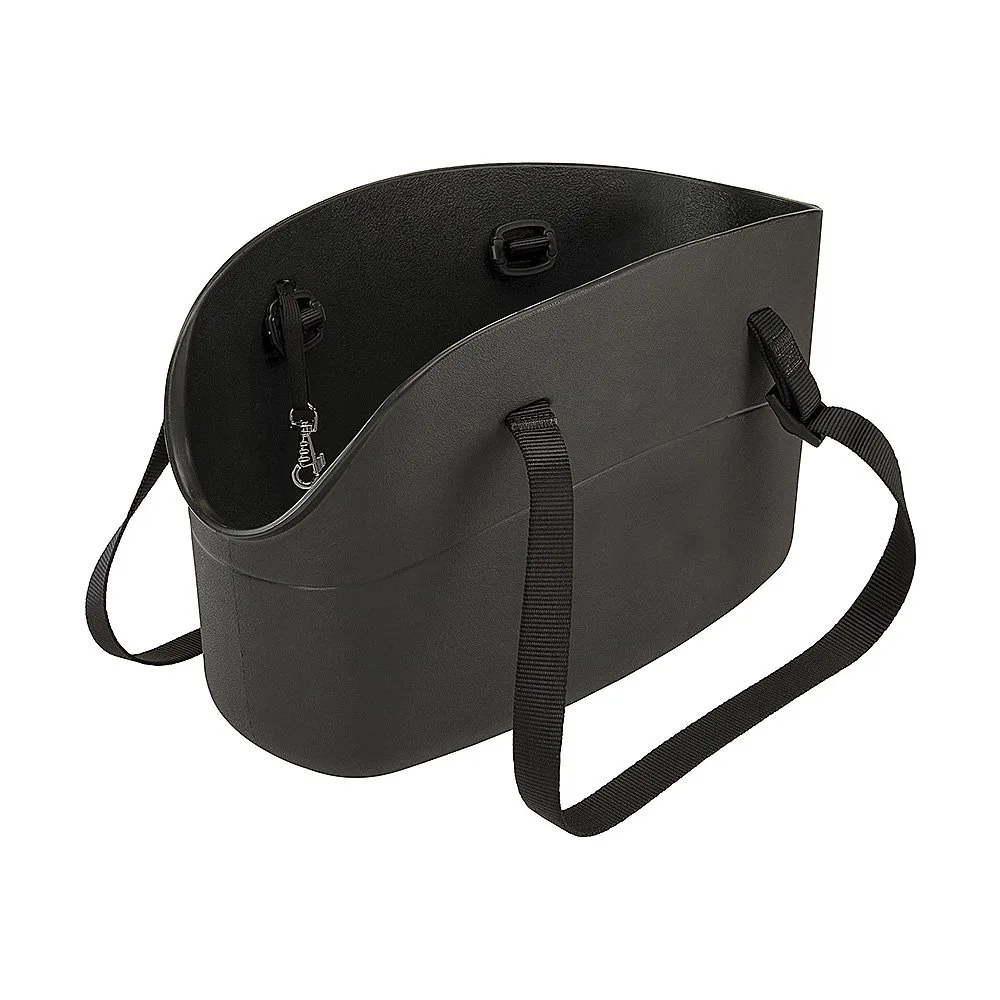
Die-cut polypropylene hollow-board is the default. It is cut from a shared die with a stop block, needs no tooling beyond the die at 400-900 USD, and reaches deflection compliance at 6, 8 and 10 mm for the three grades. Mass runs 380-460 g on the small grade, 620-780 g on the middle and 880-1,100 g on the large, and unit cost is 0.45-0.80, 0.70-1.25 and 1.05-1.75 USD respectively.
A moulded tray is justified on the middle grade above roughly 4,000 units a year. It saves 25-35% of board mass, adds liquid containment through its upstand and improves the floor-to-wall joint by providing a radiused corner as a moulded feature. Tooling is 8,000-14,000 USD with ten to fourteen weeks of lead time, and it is grade-specific, so a three-grade platform with trays in all three sizes is a 25,000-40,000 USD commitment that only a programme above 12,000 units a year should consider.
The perimeter frame enters at the large grade. Above roughly 780 mm of compartment length the soft shell's lack of bending stiffness becomes the governing problem, and a frame of 8-12 mm tube or rod adds 180-320 g and 3.20-7.80 USD. In a three-grade platform the frame is a large-grade-only feature, which keeps it out of the middle grade's cost while solving the large grade's real problem.
Claw point load is common across the platform at 250 N for the small grade, 300 N for the middle and 350 N for the large, tested with a 6 mm hemispherical indenter for 60 seconds. The mat above the board is common at 8-12 mm closed-cell foam with compression set under 10%, cut to three sizes, and it is specified with a welded or sealed perimeter so liquid does not reach the board sleeve.
One failure mode deserves specific attention in the middle grade because volume makes it visible: board sleeve shift. If the sleeve is sewn as a separate operation from the shell seam, the board moves 5-10 mm laterally under an angled load and rolls the seam. At 4,000 units a year that is a handful of returns; across a platform at 20,000 units it is a visible defect rate, and the fix — capturing the sleeve in the same stitch line — costs nothing.
Line Configuration, Takt and Capacity Allocation
Running a three-grade platform through a seven-line configuration is a sequencing problem rather than a capacity problem. The relevant numbers are the operation count, the takt time and the changeover cost between grades.
A carrier of this type runs 42-58 operations depending on how the floor and closure are built. At a takt of 4.5-6.0 minutes per unit, a line of 26-34 operators produces 320-460 units a day. Across seven lines that is 2,200-3,200 units a day and 48,000-70,000 a month, well inside the 200,000-piece monthly capacity ceiling, which leaves headroom for the platform to be run alongside other programmes.
Changeover between grades is the cost that platform design exists to minimise. Because hardware, thread, mesh, lining and webbing specification are common, a grade change is a change of cut parts, board thickness and webbing length only, and it is absorbed in 25-45 minutes against 2-3 hours for a genuine product change. That difference is why the 78-84% common-parts target is worth defending: it converts a full changeover into a part swap.
Sequencing follows the marker logic. Grades are cut in mixed lays and are therefore sewn in mixed batches, which means the line runs all three grades in a day rather than in blocks. This is slightly less efficient per unit than block running but it removes work-in-progress inventory between cutting and sewing, and it lets a reorder be fulfilled in any grade mix without a cutting campaign.
Capacity reservation matters for a dominant middle grade. If the middle grade carries 40% of a programme's 8,000 units a month, that is 3,200 units and roughly 1.2 lines of continuous capacity. Reserving capacity on that basis is standard practice for programmes above 5,000 units a month and is arranged at purchase order rather than at forecast, which is why the 35-50 day bulk window is quoted from sample approval rather than from enquiry.
The schedule risk specific to a platform is a single common part running short. Because hardware is shared, a buckle shortage stops all three grades rather than one, and the mitigation is a safety stock of common hardware at 15-20% of quarterly consumption held against the programme rather than against the order.
Quality Data: Defect Pareto and AQL Performance at Volume
Inspection to AQL 2.5 at general inspection level II is the standard, and on a platform running at volume the defect Pareto is remarkably stable. Across large-breed carrier programmes the top five defects by count are bar-tack omissions or misplacement, seam allowance variation outside tolerance, closure misalignment at the storm flap, board sleeve misalignment, and cosmetic coating marks from handling. Together they account for 68-76% of all defects found.
Bar-tack omissions lead the list and are the reason the inspection plan counts tacks against the tech pack at first-piece approval rather than relying on a finished-unit visual check. A missing bar-tack is invisible once the unit is turned and closed, and it is a structural defect rather than a cosmetic one. The control is a first-piece sign-off with a tick sheet, re-verified at every 200 units.
Seam allowance variation is second and is a cutting and operator issue. The tolerance is 15 mm plus or minus 2 mm, and outside that band the seam efficiency falls below the 70% acceptance figure. It is measured at three points per unit on the floor joint, which is the seam that matters, and it is recorded so that a drifting pattern can be corrected before it produces a batch.
Closure misalignment at the storm flap is a visual defect with a functional consequence: a misaligned flap leaves the coil exposed to hair ingress and defeats the load-spreading function the flap exists for. It is caught by a simple go/no-go gauge at the closing station rather than at final inspection.
| Defect | Share of defects | Class | Control point | Detection |
|---|---|---|---|---|
| Bar-tack omission or misplacement | 22-28% | Major | First-piece plus every 200 units | Tick sheet count |
| Seam allowance out of tolerance | 15-19% | Major | Sewing station, 3 points per unit | Gauge |
| Storm flap misalignment | 11-15% | Minor | Closing station | Go/no-go gauge |
| Board sleeve misalignment | 9-13% | Major | Floor assembly | Visual plus gauge |
| Coating marks from handling | 8-12% | Minor | Packing | Visual |
| Webbing length variance | 5-8% | Minor | Cutting | Measurement |
| Hardware finish defect | 3-6% | Minor | Incoming | Incoming inspection |
Grade-specific defect rates are worth tracking separately, because the large grade consistently shows a higher rate than the middle on floor-related defects and the small grade on fit-related ones. Recording by grade rather than by programme is what makes the difference visible, and it is the argument for a grade-coded inspection record rather than a single programme-level pass rate.
Third-party verification is available and is often requested at volume. Structural and chemical testing against recognised methods, referenced to standards published by ISO and ASTM International, is arranged on the same sample set used for internal validation so that the two data sets are comparable.
Landed Cost, Container Planning and Reorder Economics
Landed cost for the middle grade runs 22-34 USD FOB Xiamen before freight, with the floor assembly at 2.60-4.40 USD, panels and mesh at 5.20-7.80 USD, hardware and webbing at 4.20-7.20 USD, lining and mat at 2.80-5.00 USD and labour at 5.60-8.40 USD. Small grade lands 3.80-6.20 USD lower and large grade 5.60-9.40 USD higher, with most of the difference in the floor and the frame.
Container planning is grade-dependent and is where a mixed-grade order earns money. Flat-packed, the small grade occupies 0.058 cubic metres, the middle 0.070 and the large 0.093, and cartons hold three, two and one unit respectively. A 40-foot high-cube at 68 cubic metres takes 470-510 small-grade cartons, 400-430 middle-grade cartons or 560-600 large-grade cartons, and the large grade is volume-limited while the small grade is weight-limited. A mixed order ships more units than any single-grade order of the same nominal count, because the small grade fills the voids the large grade leaves.
Freight per unit follows: 1.10-1.80 USD on the small grade, 1.60-2.60 USD on the middle and 2.40-3.80 USD on the large for a 40-foot container load landed in Northern Europe or the United States west coast. Air freight is three to four times that and is only justified for the first 300-500 units of a launch.
Reorder economics are the point of the platform. Once tooling, patterns and markers exist, a reorder in any grade mix carries no development cost and can be produced inside the standard 35-50 day window, whereas a new grade or a new colourway restarts the fabric lot, the marker and the first-piece approval and adds 12-20 days.
The practical guidance for a buyer building a range is therefore to launch the middle grade at 500-1,000 pieces, add the small and large grades at the second reorder once the mix is known, and hold colourways at one until the grade mix stabilises. That sequence keeps fabric lots full, keeps markers efficient and keeps the working capital in the grade that actually sells.
Why brands source here
- Pet carrier programs run since 2014; founding team in sewn goods since 2004
- SGS-verified production floor of 4,950 m² with 137 workers across 7 lines
- Monthly capacity of 200,000 units, audited to BSCI and ISO 9001
People Also Ask
Why should the middle grade be designed first?
Designing up from the small grade gives a large grade with too thin a floor and too narrow a strap root; designing down from the large grade gives an over-built small grade. The middle grade keeps both close to their own optimum.
What scale factors are used across a three-grade platform?
Length and width at 0.88 and 1.12, height at 0.92 and 1.08 and chest depth at 0.90 and 1.10. A single uniform factor drifts interior dimensions 15-25 mm at the extremes.
How much commonality should a grade set reach?
78-84% by value, with the remainder in the floor board, length panels and webbing lengths. Below 70% the range is three products sharing a name and carries three products worth of cost.
Does webbing width change across grades?
No. Safety factors are already high, so 38 mm webbing at 15-18 kN serves all three grades and only the length changes, which is the largest single contributor to the common-parts figure.
When is a moulded floor tray justified?
On the middle grade above roughly 4,000 units a year. Tooling is 8,000-14,000 USD and is grade-specific, so trays across all three sizes need more than 12,000 units a year to pay back.
What is the most common defect at volume?
Bar-tack omission or misplacement at 22-28% of defects. It is invisible in a finished unit, so it is controlled by a first-piece tick sheet re-verified every 200 units.
Frequently Asked Questions
What interior dimensions define the Labrador grade?
400-460 mm wide, 700-790 mm long and 540-620 mm high, from a body length of 620-700 mm, shoulder height of 540-620 mm and chest girth of 70-95 cm.
What load ratings apply to the middle grade?
Declared 36 kg, working load 54 kg, proof 108 kg and ultimate 162 kg. Working load is 1.5 times declared maximum, proof three times and ultimate 4.5 times.
Why does board thickness step rather than scale?
Deflection scales with the cube of span, so the board moves in steps of 6, 8 and 10 mm across the three grades rather than proportionally with mass.
Is the closure the same across grades?
Yes. Closure load is set by the animal pushing against it, which depends on determination more than mass, so a number 10 coil at 900 N lateral is specified on all three grades.
How much fabric does marker nesting save?
A mixed multi-size marker lifts utilisation from 78-86% to 84-91%, worth 0.30-0.55 USD per unit at a fabric cost of 4.80-7.20 USD.
Why must grades be cut in the same lay for nesting?
Nesting requires the same fabric lot and the same colourway in one lay, which is why grades are ordered in a compatible ratio and why the middle grade dominates the marker.
What is the changeover time between grades?
25-45 minutes, because hardware, thread, mesh, lining and webbing specification are common and only cut parts, board thickness and webbing length change. A genuine product change is 2-3 hours.
How many operations and what takt time?
42-58 operations at 4.5-6.0 minutes takt, giving 320-460 units per line day on 26-34 operators, and 2,200-3,200 units a day across seven lines.
What safety stock is held on common hardware?
15-20% of quarterly consumption, held against the programme rather than the order, because a shared buckle shortage stops all three grades at once.
What seam tolerance is enforced?
15 mm plus or minus 2 mm, measured at three points per unit on the floor joint. Outside that band seam efficiency drops below the 70% acceptance figure.
How many units fit a 40-foot high-cube?
470-510 cartons of the small grade at three per carton, 400-430 of the middle at two per carton, or 560-600 of the large at one per carton. Mixed orders ship more units than any single-grade order.
What is the freight cost per unit by grade?
1.10-1.80 USD small, 1.60-2.60 USD middle and 2.40-3.80 USD large for a full container landed in Northern Europe or the United States west coast.
What launch sequence is recommended for a new range?
Middle grade at 500-1,000 pieces, add the outer grades at the second reorder once the mix is known, and hold colourways at one until the grade mix stabilises.
Talk to QUANZHOU JUNYUAN BAGS about a pet carrier program: MOQ 500 pieces per colourway, samples in 6-10 working days, bulk production in 35-50 days under AQL 2.5 inspection.
Get a free quote Request a sampleKeep reading
- Dog Carrier Backpack for Large Dogs: Design Considerations
- Dog Carrier Backpack for Golden Retrievers: Family Dog
- Dog Carrier Backpack for Labradoodles: Large Breed
- Dog Carrier Backpack Size: Sizing Chart and Specifications
- Dog Carrier Backpack Bottom: Reinforcement Options
- Dog Carrier Backpack Testing and Quality Assurance