Pet Carrier Nail Clipper: Grooming Kit
A bundled nail clipper kit clears destination screening when four numbers are locked before tooling: a blade hardened to HRC 52-58, a cutting edge ground at 22-30 degrees, a component MOQ of 500 pieces per SKU, and a closure torque of 0.6-1.2 Nm on every liquid item sharing the carton. Everything downstream follows from those four.
A grooming kit supplied alongside a pet carrier is a bill-of-materials exercise, not a single-part purchase. The kit behaves like eight SKUs with one outer carton, and the failure mode is nearly always the same: one component arrives late or fails screening and the assembled set misses its vessel. This page works through the sequence in engineering order. First the component split, showing what each part costs, what minimum it carries and where it is packed. Then the metallurgy of the blade itself, because hardness and edge angle decide both cut quality and edge life, and they are the two specifications most often left vague on a purchase order. Then the restricted-substance file for metal, plastic and coated parts, which is what a retailer's compliance desk asks for first. The middle sections cover same-carton pack-out with the host carrier, the labelling and claim language that differs by destination market, and batch coding with retained samples. The last section sets out how a brand reaches the MOQ across a mixture of components rather than buying deep into each. This is written strictly from the supply and compliance side: no therapeutic or health claim belongs on this category and none is made here. Terms are standard: MOQ 500 pieces per colourway per SKU, prototypes in 6-10 working days, bulk production 35-50 days after sample approval, final random inspection to AQL 2.5, T/T 30/70 and FOB Xiamen.
Wholesale pet carrier programmes for pet carrier accessory ranges run 35-50 days after sample approval, shipped FOB Xiamen under T/T 30/70 terms.
Component Split: Eight SKUs in One Outer Carton
A grooming kit sold as a companion to a pet carrier is quoted and scheduled as eight parts, not one. Each carries its own tooling, its own minimum and its own lead time, and the longest of those sets the delivery date for the assembled set. The first planning meeting should therefore be a date-matching exercise rather than a price negotiation.
The working kit we build most often carries four active tools, one textile pouch, two printed items and one secondary carton. The active tools are the nail clipper, an emery board, a round-tip scissor and a small cleaning brush. The pouch is typically 600D polyester with a 210D lining; the printed items are an instruction leaflet and a compliance leaflet; the secondary carton is a folding box rather than a rigid one, because rigid adds 3-6 litres per set of freight for a presentation that ships inside the carrier anyway.
Component sourcing splits three ways. Metal parts come from a hardware partner with its own heat-treatment cell. Textile parts run through the sewn-goods network. Printed items come from a carton printer working to the same artwork files as the host carrier's hangtag, which is how the set keeps one visual identity without a second design round.
| Component | Key specification | Unit cost (USD) | Component MOQ | Lead time (days) | Packed position |
|---|---|---|---|---|---|
| Nail clipper, stainless | 420J2 or 3Cr13, HRC 52-58 | 1.10-2.60 | 500 | 30-45 | Tray slot 1 |
| Emery board | 180/240 grit, 150 x 20 mm | 0.10-0.28 | 1,000 | 15-25 | Tray slot 2 |
| Round-tip scissor | Blunt tip radius 1.2-2.4 mm | 0.85-2.10 | 500 | 30-45 | Tray slot 3 |
| Cleaning brush | Nylon filament, PP handle | 0.30-0.85 | 1,000 | 20-32 | Tray slot 4 |
| Storage pouch, 600D | Two-compartment, zip closure | 0.95-2.40 | 500 | 25-40 | Outer wrap |
| Instruction leaflet | 105 x 148 mm, 128-157 g | 0.04-0.14 | 500 | 8-16 | Under tray |
| Compliance leaflet | Market-specific, folded | 0.03-0.11 | 500 | 8-16 | Under tray |
| Folding carton | 300-400 g board, printed | 0.22-0.70 | 500 | 10-20 | Secondary |
The spread in unit cost across that table is worth reading carefully. The clipper and the pouch together are 40-60% of the material cost, which means quoting effort spent on the emery board is effort misplaced, while a 0.15 USD saving on the pouch is worth more than a 0.05 USD saving on everything printed.
Lead-time spread matters more than cost spread. At 30-45 days for the metal parts against 8-16 days for print, scheduling the print first and the metal last delays the set by nothing; scheduling them together delays it by 30 days. Standard practice is to release all eight purchase orders on day one and let the short-lead items wait in a bonded area.
Treat the kit as eight dated lines: release every purchase order together, then hold the short-lead print in a buffer rather than waiting to release it.
Blade Steel, Hardness Target and Edge Angle
The clipper blade is the only part of the kit with a metallurgical specification, and it is the part most frequently underspecified. A purchase order that says only "stainless steel" will be filled with whatever off-cut is cheap that week, and two batches three months apart will not perform alike.
Two grades cover most of this market. Martensitic 420J2 gives 52-56 HRC after heat treatment with good corrosion resistance at the lowest cost. 3Cr13 reaches 54-58 HRC and holds an edge longer at a modest premium. Higher-carbon grades exist but they trade corrosion resistance for hardness, and a grooming tool is stored damp often enough that corrosion is the greater risk.
Hardness is verified on Rockwell scale C with three readings per lot, taken on the flat of the blade rather than on the bevel, which is too thin to give a valid indentation. Acceptance is the specified range with no reading outside it, plus a documented heat-treatment curve per lot number rather than per month.
Edge geometry is the second specification and it is where the range comes from. A convex ground edge at 22-26 degrees per side cuts cleanly and dulls faster; a flatter 26-30 degree edge lasts longer and needs more hand force. The lower number suits a small-animal clipper; the higher suits a large-breed tool.
| Grade | Hardness target (HRC) | Edge angle per side | Expected cuts before resharpen | Corrosion resistance | Cost index | Suits |
|---|---|---|---|---|---|---|
| 420J2 | 52-56 | 22-28 degrees | 2,000-6,000 | Good | 1.00 | Small breeds, Volume lines |
| 3Cr13 | 54-58 | 24-30 degrees | 4,000-11,000 | Moderate | 1.15-1.35 | All-round programmes |
| 4Cr13 | 56-60 | 26-32 degrees | 6,000-15,000 | Moderate | 1.30-1.60 | Large breeds |
| 5Cr15MoV | 57-61 | 26-32 degrees | 8,000-20,000 | Good | 1.55-2.10 | Premium kits |
| 420 with TiN coating | 52-56 plus coating | 22-28 degrees | 5,000-12,000 | Very good | 1.40-1.90 | Humid markets |
Heat treatment is the process variable that decides whether the specified number is actually achieved. Quench from 1,020-1,060 degrees Celsius, temper at 180-260 degrees for two hours, then a second temper where the specification calls for it. A lot quenched but tempered only once retains austenite and drifts 2-4 HRC over the following weeks, which is why a hardness reading taken at goods-in can differ from one taken at destination.
Corrosion verification is a salt spray determination rather than a claim we make for the product. A neutral salt spray exposure of 24-96 hours to ASTM method B117 gives a comparable lot-to-lot figure, and the result goes in the quality file as a measured number with no pass-fail marketing attached to it.
Passivation after grinding removes free iron from the surface and is the cheapest corrosion insurance available, at 0.02-0.08 USD per blade. It is standard on every metal part our production team puts into a kit that may sit in a humid warehouse for eleven months between seasons.
Specify grade, hardness range, temper cycle and edge angle separately, and require a heat-treatment curve per lot rather than per month.
Handle, Grip and the Mechanical Load Cases
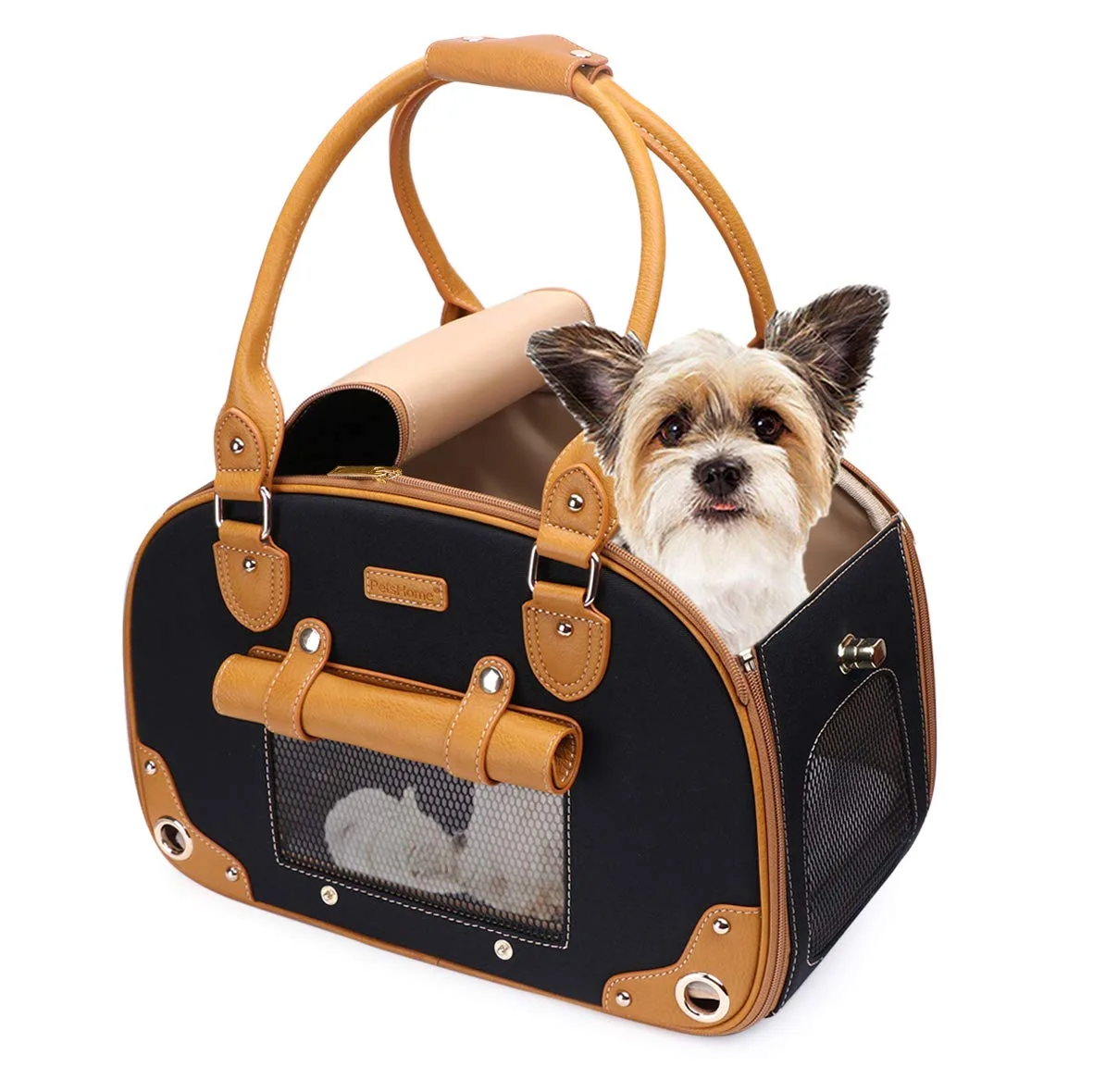
The non-metal parts of a grooming kit fail in ways that are entirely predictable and almost entirely testable. Almost every field complaint about this category traces to one of four load cases, and all four can be closed out before bulk.
Grip pull is the first. A thermoplastic-rubber overmould or an inserted grip sleeve is tested by pulling along the handle axis at 80-150 newtons for 10 seconds. Below 80 the sleeve walks off within weeks of normal use; above 150 the cost has been spent on a problem nobody has.
Spring cycle life is the second and it is specific to the clipper. The return spring sees the full operating cycle every use, and a mechanism that works at unit 1 must still work at unit 20,000. Testing to 15,000-30,000 compression cycles with no permanent set and no loss of return force above 12% is the working standard, verified on ten units per 10,000 produced.
Rivet and pivot retention is the third. The pivot pin carries the whole cutting load and it is held either by a rivet or by a rolled pin. A push-out test at 180-320 newtons and a head Torque-down check at 0.4-0.9 newton-metres catches the two failure modes: a pin driven too loose and a pin driven hard enough to crack the arm.
The fourth is the round-tip scissor tip. A tip radius specified as "blunt" on a drawing will arrive as anything from 0.4 to 3.0 millimetres unless the drawing states a number and go/no-go gauge is agreed. The working specification is 1.2-2.4 millimetres radius with a 100% visual check against the gauge.
| Component | Load case | Figure | Sample size | Failure mode caught | Cost per test (USD) |
|---|---|---|---|---|---|
| Handle grip | Axial pull, 10 s | 80-150 N | 5 per 5,000 | Sleeve migration | 15-45 |
| Clipper spring | Compression cycles | 15,000-30,000 | 10 per 10,000 | Permanent set | 60-180 |
| Pivot rivet | Push-out | 180-320 N | 8 per 10,000 | Pin ejection | 35-95 |
| Pivot rivet | Head torque | 0.4-0.9 Nm | 8 per 10,000 | Arm cracking | 25-70 |
| Scissor tip | Radius gauge | 1.2-2.4 mm | 100% visual | Sharp point | 0.01-0.04 |
| Pouch zip | Cycle test | 1,500-3,000 cycles | 3 per 5,000 | Slider failure | 30-85 |
| Pouch seam | Seam strength | 140-260 N | 5 per 5,000 | Seam burst | 20-60 |
| Carton closure | Drop and vibration | ISTA 1A or 2A | 1 carton per shipment | Set scatter | 180-620 |
Sampling across that table totals 380-1,180 USD per shipment and it is the single best-spent line in the whole programme, because it converts an argument about responsibility into a recorded measurement. Where a brand wants the figures in its own name rather than ours, the same tests are run at a third-party laboratory for 1.6-2.6 times the cost.
One practical note: metal fatigue data is only comparable when the test rig is the same. A spring cycled at 40 cycles per minute gives a different result from the same spring cycled at 200, so the cycle rate belongs in the specification alongside the count.
Put the four load cases into the purchase order with figures, count the sampling into the unit cost, and specify the test rate as well as the test count.
Restricted Substances Across Metal, Plastic and Coating
A kit containing metal, polymer, printed board and textile is four separate restricted-substance problems sharing one file. Reviewers do not accept one certificate for the assembled set, and correctly so: the risk sits in different places in each material class.
Metal carries the nickel and lead question. Nickel is restricted in items with prolonged skin contact under the European framework administered by ECHA, and a groomer holds a clipper handle for extended periods. Lead content in the metal alloy and in any plating or coating is separately assessed, and the declaration has to cover both.
Polymer parts carry plasticiser and flame-retardant screening. A TPE grip, a PP brush handle and any soft-touch coating are each screened against the candidate list, and a coating applied after moulding is screened separately from the substrate because the two can come from different suppliers.
Printed board and ink carry heavy metals and, historically, the phthalate question in inks and coatings. Screen-splitting again matters: board from one mill, ink from another, a laminate film from a third.
| Material class | Screen | Typical items | Lead time (days) | Cost (USD) | Renewal |
|---|---|---|---|---|---|
| Metal substrate | Alloy composition, Pb, Cd | Clipper, scissor | 5-12 | 90-260 | Per alloy batch |
| Metal plating or coating | Ni release, Pb, Cr VI | Plated blade, TiN coating | 6-15 | 110-320 | Annual |
| Polymer parts | Phthalates, PAH, SCCP | Grip, brush handle | 6-14 | 120-340 | Annual |
| Coatings and inks | Heavy metals, solvents | Printed board, logo | 5-12 | 85-240 | Per artwork |
| Textile pouch | Azo dyes, formaldehyde | 600D body, 210D lining | 7-16 | 130-380 | Per colour lot |
| California assessment | Proposition 65 list | Whole assembly | 8-18 | 150-460 | Annual or per change |
California is worth its own line because it operates differently from everything else on the table. The Proposition 65 list published by OEHHA shifts the burden onto the seller to either demonstrate the listed substance is below the safe-harbour level or carry a clear warning. Which route the brand takes is the brand's decision, and our production team supplies the concentration data rather than the wording.
Renewal cadence is where programmes quietly fall out of compliance. A test performed on launch stock has no legal relationship to a lot produced fourteen months later from a different coil of steel. The working rule is annual renewal plus immediate retest on any supplier change, alloy change, coating change or colour-lot change, whichever comes first.
Documentation structure matters as much as the tests themselves. A file with one test report per material dated within twelve months, cross-referenced to the component list in the table above, answers a retailer's questionnaire in one email. A folder of unlabelled PDFs costs two weeks of correspondence.
Screen by material class rather than by finished set, renew on change rather than on calendar alone, and keep the file indexed to the component list.
Same-Carton Pack-Out With the Host Carrier
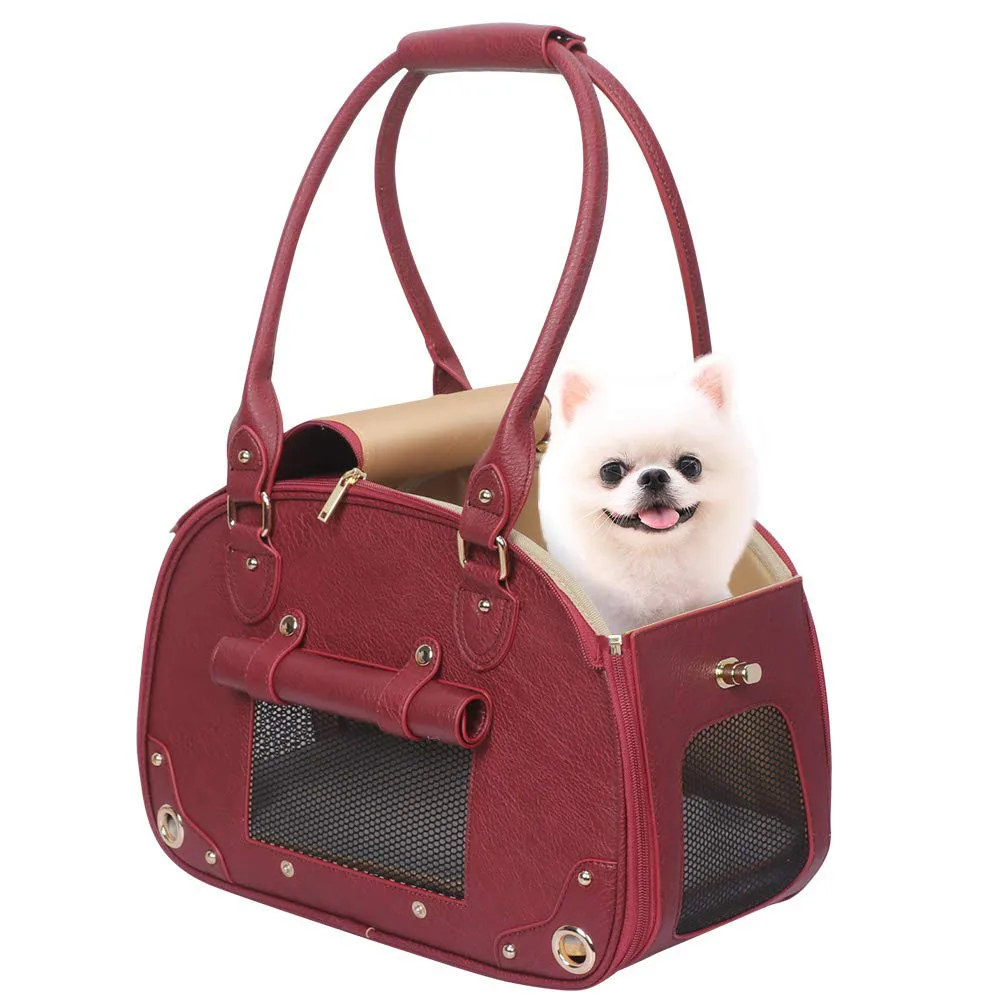
The commercial reason these kits exist is that they ship inside the same carton as the carrier. That changes the packing problem from "protect the kit" to "protect the kit and the carrier without adding freight", because the two have very different damage mechanisms.
A carrier is damaged by compression and abrasion. A metal tool kit is damaged by impact and, critically, it is what causes damage to the carrier: a hard steel body inside a soft bag abrades the lining at every contact point during a 26-38 day voyage. Interleaving is not optional.
The working pack-out places the kit into the carrier's interior pocket, wraps it in a 0.03-0.06 millimetre poly sleeve plus a corrugated sleeve, and orientates the tools so no sharp feature points at a lining panel. Where the carrier has no suitable pocket, the kit goes into a die-cut void in the base board.
Cube arithmetic comes next and it is favourable. A folding carton measuring 220 x 160 x 55 millimetres is 1.9 litres; packed into a carrier that already occupies 22-46 litres, it adds 4-9% of cube for a product that would cost 2.60-6.40 USD to ship on its own. This is the entire economic argument for the bundle format.
| Format | Cube per set (L) | Sets per 40 ft | Freight per set (USD) | Lining damage rate | Pack cost (USD) | Verdict |
|---|---|---|---|---|---|---|
| Kit loose in carrier | +1.6 | 1,480-2,150 | 3.20-6.90 | 6-18% | 0.02-0.07 | Reject |
| Poly sleeve plus corrugate | +1.9 | 1,430-2,080 | 3.30-7.10 | 0.6-2.4% | 0.10-0.28 | Standard |
| Die-cut void in base board | +1.5 | 1,500-2,180 | 3.15-6.80 | 0.2-1.0% | 0.18-0.44 | Premium |
| Shipped separately, own carton | +4.2 | 1,210-1,760 | 4.10-8.80 | 0% | 0.24-0.62 | Worst value |
| Kitted inline at DC | +0 | 1,620-2,340 | 2.90-6.20 | 0% | 0.85-2.20 labour | High-volume only |
The damage-rate column is the one to read. Shipping separately eliminates contact damage entirely and costs 0.80-1.70 USD more per set in freight, which is the right trade only above about 4% contact damage. Below that, packing together wins by a wide margin once the interleave is specified.
Weight distribution inside the container matters more than most plans allow for. Three thousand sets of steel tools is 640-1,150 kilograms, and concentrating that at one end of a container creates an axle-weight problem that costs 180-650 USD in repositioning fees at the destination terminal.
Inspection at goods-in covers the pack-out as well as the parts. A final random inspection to AQL 2.5 includes carton dimensions, set completeness, the presence of the interleave and the orientation of the tools, because these are defects a picker notices immediately and a consumer reads as carelessness.
Pack together with an interleave, specify the interleave on the packing instruction, and include pack-out checks in the AQL 2.5 inspection rather than assuming the customer will.
Labelling and Claim Language Across Destination Markets
A grooming tool is legally uninteresting in most markets, which is precisely why labelling errors go unnoticed until a shipment is stopped. The obligations are modest but they are specific, and they differ by destination.
Country of origin marking is the first. It must appear on the product where practicable and always on the outermost retail packaging, in the format the destination requires. A steel tool marked only with a moulded logo and no origin statement will be re-stickered at the port at 0.18-0.55 USD per unit plus a delay of 4-14 days.
Substance-related obligations follow the screening in the previous section. Where a California assessment against the Proposition 65 list concluded that a warning is the route, the warning text has defined format requirements including the word "WARNING" and specified pictogram dimensions, and it belongs on the retail pack.
The second obligation set is the one this category gets wrong: claim language. A product that cuts nails is described accurately as a nail trimmer or grooming tool. The moment copy describes diagnosing, treating, preventing or curing any condition, the article moves into a different regulatory class with an approval requirement attached. Our production team writes from measured test results only, and refers any health-adjacent wording on the leaflet or carton to the brand's own regulatory counsel.
| Market | Mandatory element | Placement | Language | Cost (USD) | Lead time (days) |
|---|---|---|---|---|---|
| United States | Origin, responsible party | Retail pack | English | 0.03-0.12 | 2-6 |
| California | Prop 65 assessment outcome | Retail pack | English | 0.02-0.10 | 3-8 |
| EU and EEA | Operator identifier, origin | Retail pack | Local language | 0.04-0.16 | 3-9 |
| United Kingdom | UK operator identifier | Retail pack | English | 0.04-0.15 | 3-8 |
| Japan | Importer name and address | Retail pack | Japanese | 0.05-0.19 | 4-11 |
| Australia and NZ | Supplier identifier | Retail pack | English | 0.03-0.13 | 3-8 |
Language versions are the schedule risk inside that table, not the print cost. A Japanese label needs a translation round of 3-7 days plus brand approval, and it has to be initiated at the same time as the artwork rather than after it.
Instruction leaflets are the second content item and the one most likely to be edited late. A four-page leaflet covering tool identification, intended use and storage costs 0.04-0.14 USD and takes 8-16 days, but a change requested after the plates are cut costs 60-220 USD and 5-10 days. Locking leaflet text before bulk release is worth insisting on.
Symbol vocabulary is worth standardising across the whole kit programme so that a change in one market does not force a reprint in another. A shared master artwork with market-specific swap panels reduces the per-market cost in the table above by 30-55%.
Mark origin on the pack not just the part, keep all claim language with the brand's counsel, and lock leaflet text before plate cutting.
Batch Coding, Traceability and Retained Samples
A grooming kit has no expiry date but it absolutely has a traceability obligation, and the two are frequently confused. Batch identity here exists to answer one question: if a defect appears at destination, which units are affected and where are the rest of them.
The coding scheme has to resolve to the heat-treatment lot for metal parts and to the colour lot for textile ones, because those are the two variables that actually change performance. A single eight-digit code masks ({YY}{MM}{line}{sequence}) is enough to resolve both when it is recorded against purchase orders at goods-in.
Placement is practical rather than regulatory. Carton inkjet, pouch label and a laser mark on the clipper arm cover the three places a returned unit might arrive without the others. A laser mark costs 0.01-0.04 USD and survives handling that removes a sticker.
Retained samples close the loop. Holding three sets from every production lot for 24-36 months, stored at ambient conditions with desiccant, gives a physical reference when a claim arrives eighteen months later. The cost is negligible: nine square metres of shelving for a year's lots.
| Record | Identifies | Retention | Storage form | Retrieval time | Cost per lot (USD) |
|---|---|---|---|---|---|
| Heat-treatment curve | Blade hardness history | 36 months | Digital plus print | Under 1 hour | 0-6 |
| Alloy certificate | Metal composition | 36 months | Digital | Under 1 hour | 0-4 |
| Polymer lot number | Grip and brush material | 36 months | Digital | 2-8 hours | 0-2 |
| Colour lot reference | Pouch fabric | 36 months | Digital plus swatch | Under 1 hour | 1-8 |
| Inspection report | AQL 2.5 result | 36 months | Digital | Under 1 hour | 0-3 |
| Restricted-substance report | Material screening | 36 months | Digital | Under 1 hour | 0-5 |
| Retained physical set | Everything | 24-36 months | Warehouse shelf | Under 24 hours | 4-14 |
Retrieval time in that table is the reason for keeping the file indexed rather than merely complete. A recall scenario is measured in hours, and a 24-hour retrieval window is the difference between a targeted withdrawal of 3,000 units and a precautionary withdrawal of 40,000.
First-expiry-first-out does not apply to a non-perishable kit, but first-in-first-out absolutely does, and it is violated constantly when a warehouse puts new stock in front. A scan-based putaway with location recording costs nothing additional once the batch code is machine-readable, which is another argument for laser marking rather than a hand-applied sticker.
Our production team records the lot identity of every component against the finished carton at packing, which means a query about any single carton resolves to the eight component batches inside it without opening anything.
Code to the heat-treatment and colour lots rather than to the carton alone, laser-mark the metal part, and hold three physical sets per lot for 24-36 months.
MOQ Architecture and Mixed-Bundle Economics
A MOQ of 500 pieces per SKU is straightforward when a brand wants one SKU. It becomes an interesting problem when the brand wants eight components in a bundle and does not want 4,000 units of anything. There are three ways through it, and the choice decides both unit cost and working capital.
The first is straight depth: 500 of each component, 500 assembled sets, no leftovers. This gives the lowest unit cost and the highest cash commitment, and it is right when the bundle is proven and reordering is likely.
The second is a shared minimum across a family. Where several components come from the same supplier cell — the metal tools being the usual case — agreeing a single family minimum rather than eight individual ones lets a brand order 500 clippers, 700 as part of a second bundle and 900 as spare-part stock against one negotiation.
The third is component carry-over. If the clipper is shared across three different bundles, it is ordered at 1,500 once rather than 500 three times, which typically moves unit cost 8-16% and removes two sets of tooling amortisation.
| Structure | Components ordered | Unit cost | Cash committed | Residual stock risk | Lead time | Suits |
|---|---|---|---|---|---|---|
| Straight depth per SKU | 500 each x 8 | 4.60-9.30 | 23,000-46,500 | Low | 35-50 days | Unproven bundle |
| Family minimum | Shared cell agreement | 4.25-8.60 | 21,250-43,000 | Low | 35-45 days | Single bundle |
| Carry-over component | 1,500 on one line | 3.90-7.90 | 19,500-39,500 | Moderate | 40-55 days | Multi-bundle range |
| Assortment mixed with nonmetal | Varied by class | 4.10-8.40 | 20,500-42,000 | Low | 35-50 days | Gift-channel bundle |
| Phased release | 500 then 1,500 | 4.85-9.70 | 11,000-24,000 first tranche | Very low | 35-50 plus 30-45 | Cash-constrained launch |
The phased row deserves attention for a first programme. Taking 500 sets first at a 5-9% cost penalty, then releasing the remainder against real sell-through data, costs less than carrying 2,000 unsold sets for a season and it produces better information.
Tooling is the other working-capital line and it is smaller than most buyers expect. A clipper forging die runs 1,200-4,600 USD, a pouch cutting die 180-620 USD, print plates 120-480 USD. Total tooling for a new kit is typically 1,600-6,200 USD, or 0.32-1.24 USD per unit at 5,000 sets, which is why tooling rarely justifies the deeper commitment on its own.
Programme mechanics are unchanged from a single-SKU order. Prototypes in 6-10 working days cover the assembled set including the pouch and print, not just the metal parts. Bulk production runs 35-50 days after sample approval, measured against the longest component rather than the average. Final random inspection follows AQL 2.5 with set completeness treated as a critical defect, since a missing emery board turns an eight-part kit into a seven-part one at the point of sale. Payment terms are T/T 30/70 with shipment FOB Xiamen. Output comes from the SGS-verified production base operating under ISO 9001 and BSCI coverage.
Where the bundle is unproven, take 500 sets first and pay the 5-9% penalty; where the clipper is shared across bundles, consolidate it at 1,500 and take the 8-16% saving.
Why brands source here
- Pet carrier programs run since 2014; founding team in sewn goods since 2004
- SGS-verified production floor of 4,950 m² with 137 workers across 7 lines
- Monthly capacity of 200,000 units, audited to BSCI and ISO 9001
People Also Ask
What goes into a bundled pet grooming kit?
Eight parts in the standard build: a stainless clipper, an emery board, a round-tip scissor, a cleaning brush, a 600D polyester pouch, two printed leaflets and a folding carton. Each carries its own minimum and lead time.
What hardness should a pet nail clipper blade be?
HRC 52-58 for most programmes. Martensitic 420J2 reaches 52-56 HRC; 3Cr13 reaches 54-58 and holds an edge longer at a 15-35% cost premium.
Why should the blade edge angle be specified?
A 22-26 degree edge per side cuts cleanly and dulls faster; 26-30 degrees lasts longer and needs more hand force. Stating a number prevents two lots from behaving differently.
How much does restricted-substance testing cost per kit programme?
585-1,800 USD across six material classes, with individual screens from 85-380 USD and lead times of 5-16 days. Renew on any supplier or material change, not on calendar alone.
Is it cheaper to ship the kit inside the carrier carton?
Yes, by 0.80-1.70 USD per set against a separate shipment, provided an interleave is specified. Without one, contact damage reaches 6-18% of units.
What MOQ should a first grooming-kit order use?
500 pieces per SKU gives the lowest unit cost. A phased release of 500 then the remainder costs 5-9% more but avoids carrying unsold stock through a season.
How long does the whole grooming-kit programme take?
Prototypes in 6-10 working days for the assembled set, then bulk production 35-50 days after sample approval, measured against the longest component rather than the average.
Frequently Asked Questions
Why is lead-time spread more important than cost spread?
Metal parts run 30-45 days against 8-16 days for print. Releasing all eight purchase orders on day one and buffering the short-lead items keeps the set on schedule; releasing them together adds 30 days.
What does the clause 'stainless steel' alone leave open?
Grade, hardness target, temper cycle and edge angle. Without all four numbers two lots three months apart will not perform alike, and the purchase order can be filled with whatever off-cut is cheapest that week.
Why take three hardness readings on the blade flat?
The bevel is too thin to give a valid Rockwell indentation. Readings on the flat, with no value outside the specified range, plus a heat-treatment curve per lot number, are what make the figure meaningful.
Why does a second temper matter?
A lot quenched but tempered once retains austenite and drifts 2-4 HRC over following weeks, which is why a reading at goods-in can differ from one taken at destination.
What does passivation cost and why include it?
0.02-0.08 USD per blade. It removes free iron from the ground surface and is the cheapest corrosion insurance for a tool stored in a humid warehouse between seasons.
How many compression cycles should a clipper spring survive?
15,000-30,000 with no permanent set and no more than 12% loss of return force, verified on ten units per 10,000 produced and with the cycle rate stated alongside the count.
Why specify a numeric radius on a round-tip scissor?
A drawing that says blunt will arrive anywhere from 0.4 to 3.0 millimetres. Specifying 1.2-2.4 millimetres with a go/no-go gauge gives a 100% checkable criterion.
How does California differ from other restricted-substance regimes here?
It shifts the burden to the seller: either demonstrate the listed substance is below the safe-harbour level or carry a defined warning. We supply the concentration data; the wording decision belongs to the brand.
Why keep traceability on a product with no expiry date?
Because the question is scope, not ageing. Codes resolving to the heat-treatment and colour lots let a defect resolve to 3,000 units instead of a precautionary withdrawal of 40,000.
Why laser-mark rather than label the metal part?
A laser mark costs 0.01-0.04 USD and survives the handling that removes a sticker, so a returned unit arriving without its carton is still identifiable.
What is a retained-samples programme worth?
Three sets per lot held 24-36 months costs 4-14 USD per lot and about nine square metres of shelving a year, and it gives a physical reference when a claim arrives eighteen months later.
How much does tooling cost for a new kit?
1,600-6,200 USD in total: a forging die at 1,200-4,600, a cutting die at 180-620 and print plates at 120-480. At 5,000 sets that is 0.32-1.24 USD per unit.
Why is set completeness treated as a critical defect?
A missing emery board turns an eight-part kit into a seven-part one at the point of sale. Completeness, interleave presence and tool orientation all sit inside the AQL 2.5 inspection scope.
What should our production partner handle versus the brand?
The supplier records measured results, component lot identity and test data. Claim language, market-specific warnings and anything health-adjacent on the pack belong to the brand's own regulatory counsel.
Talk to QUANZHOU JUNYUAN BAGS about a pet carrier program: MOQ 500 pieces per colourway, samples in 6-10 working days, bulk production in 35-50 days under AQL 2.5 inspection.
Get a free quote Request a sample