Dog Carrier Backpack Manufacturer: What to Look For
Look for four things in a dog carrier backpack manufacturer: a verifiable audit scope (BSCI plus ISO 9001), an in-house pattern room with CAD cutting, documented inline QC gates at cutting, sewing and packing, and third-party lab access with lot-traceable reports. Then test the commercial frame: MOQ 500 pieces per colourway, samples in 6-10 working days, bulk production 35-50 days, inspection to AQL 2.5. Anything vague on any of those four is a trading desk.
Executive Summary. Qualifying a manufacturer is a document and process exercise long before it is a price negotiation. This article sets out the eight checks our production team runs when taking on a new pet carrier programme, and it is written from the other side of the table: the questions a capable supplier answers in an hour, and the ones an intermediary cannot answer at all. The distinction matters because a dog carrier backpack is a load-bearing textile assembly, not a decorative item. It has a defined failure mode, a stitch specification, and a hardware load path, and the supplier must be able to talk about all three in numbers.
The QUANZHOU JUNYUAN BAGS production network operates to a fixed commercial frame: MOQ 500 pieces per colourway, samples in 6-10 working days from tech pack sign-off, bulk production 35-50 days after gold-seal approval, and final random inspection to AQL 2.5. We run 7 partner production lines with 149 machines and 137 people inside an SGS-verified production base of 4,950 m2, at 200,000 units per month, audited to BSCI and ISO 9001. Terms are T/T 30/70, FOB Xiamen. Use those figures as a benchmark: a supplier quoting dramatically lower MOQ with no tooling explanation, or dramatically shorter bulk time with no material booking, is describing a different and usually thinner operation.
A pet carrier manufacturer is judged on three numbers in this category - MOQ per colourway, sample turnaround and the AQL level applied at final inspection. Ours are 500 pieces, 6-10 working days and AQL 2.5.
Check One: Is There a Real Production Base Behind the Quote?
The first question is not about quality, it is about identity. Ask for the business licence, the audit report with its registration number, and the audit scope statement. An ISO 9001 certificate that reads "design and manufacture of bags" is not the same as one that reads "trading of bags and luggage", and the difference is printed on the certificate in plain language. BSCI reports carry a DBID number you can verify with the auditor, an audit date, and a validity window; a two-year-old report with no follow-up audit is a red flag rather than a credential.
Then ask for the machine list. A genuine cut-and-sew operation for pet carriers will hold a spread of equipment that maps to the process: an automatic spreading table, a straight-knife and a band-knife cutting machine, a CAD pattern plotter, single- and double-needle lockstitch machines, a bartack machine, a walking-foot machine for heavy assemblies, and a high-frequency welder if the programme uses welded seams. Ask how many of each. 149 machines across 7 lines is a mid-sized profile; a supplier quoting 20,000 units a month from a list of nine machines is not describing its own capacity.
- Request the business licence and confirm the registered scope includes manufacturing
- Request the ISO 9001 certificate and read the scope wording, not the logo
- Request the BSCI report with DBID, audit date and auditor name
- Request the equipment list by machine type and count
- Request a line allocation statement: how many lines run pet products per month
Our production team answers all five in a single document because they are the same five questions every serious brand asks. A supplier who deflects any of them to "later in the process" is telling you what you need to know now.
It is worth understanding why the identity question comes first rather than last. When a problem arises in bulk, the remedy available to you depends entirely on who controls the line. A production partner can re-cut panels, change a stitch specification, and re-run a gate within days. An intermediary can only relay the request and report back, which adds a week to every iteration and usually arrives without the technical detail needed to make a decision. The cost of that delay is not abstract: a two-week slip on a seasonal pet programme can mean missing the retail window entirely.
There is also a compliance dimension. Retailer-mandated social audits increasingly require visibility of every site in the supply chain, including subcontractors. If your supplier is silently subcontracting sewing to an unaudited workshop, your brand carries the exposure while the supplier carries none of the audit cost. Ask directly whether any part of the process is subcontracted, and require prior written approval for any subcontracting introduced after the order is placed.
Check Two: Engineering Capability Before Production Capability
Capacity without engineering produces samples that look right and fail load testing. The single most predictive question you can ask a manufacturer is how many pattern makers they employ and what CAD system they run. Pattern making is where a carrier's geometry is decided: where the base panel is split, how the corner radii are eased, where the strap root is placed relative to the load line. A supplier with no in-house pattern room is subcontracting the most consequential step of the build.
Ask to see how a tech pack is converted into a cutting file. A mature operation will return a marker plan with a yield percentage, a graded size set if your programme runs multiple sizes, and a written list of every specification line it cannot meet as written. That last item is the tell: a good supplier flags the conflicts, a weak one silently substitutes. Substitution between sample and bulk is the most common route to a failed AQL inspection and a disputed claim.
Engineering capability also shows up in how the supplier handles tolerances. A carrier with a moulded base board has a hard dimensional constraint: if the shell panel is cut 3 mm short, the board will not seat. Ask what dimensional tolerance they hold on cut panels and on finished assemblies. Our production team holds ±3 mm on cut panels and ±5 mm on finished soft goods, and records both on the inspection sheet so a dispute can be resolved against a number rather than an opinion.
Grading is the other engineering marker worth probing. If your programme runs more than one size, ask how the grade rules were derived. A carrier graded by scaling every dimension by a fixed percentage is wrong, because strap width, webbing length and base board thickness do not scale with the bag; they scale with load. A competent pattern room grades the shell panels by percentage and grades the load-path components in discrete steps, which is slower and correct.
Ask also about the sample iteration record. A disciplined operation logs every revision: what changed, why, and what the effect was on the marker yield and on the bill of materials. That log is the evidence that the design was developed rather than assembled from an existing tool. When a brand asks for a cost reduction later, the log is where the answer comes from.
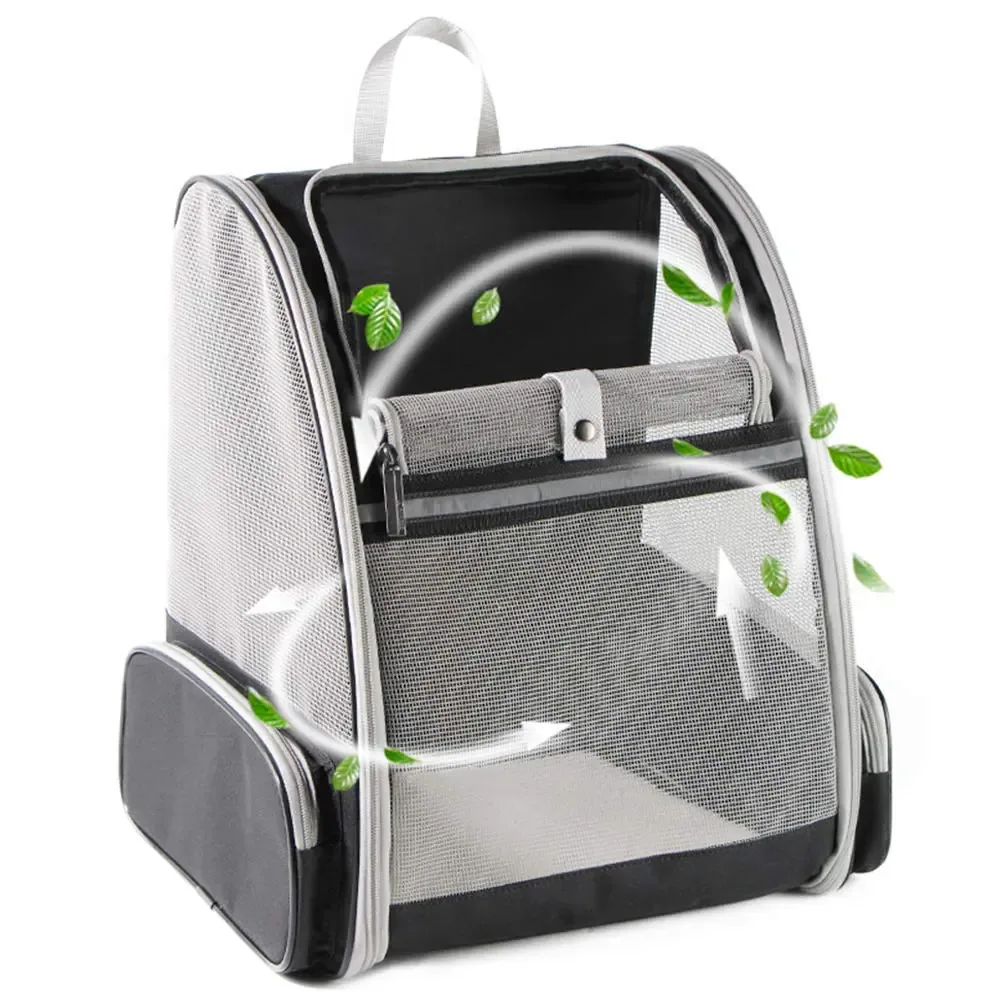
Check Three: Material Traceability and Mill Control
Fabric and hardware substitution is the largest single quality risk in sewn goods programmes. Ask who buys the fabric: the supplier or a subcontractor. Ask for the mill name, the lot number, and the test report that matches the lot. Ask what happens to a lot that fails incoming inspection. Then ask the question that separates a controlled operation from an opportunistic one: do you keep a retained bulk swatch, signed, for every shipment.
Our production team requires incoming material inspection on three parameters before a lot is released to cutting: finished GSM against the specified value with a ±5% tolerance, coating thickness measured on a gauge rather than estimated, and colour assessed under D65 lighting against the approved standard with a Delta E of 1.5 or less. Martindale abrasion and tear strength are verified against the mill report at the first lot of a programme and at every third lot thereafter. That regime costs roughly 0.4% of FOB and prevents the majority of downstream disputes.
Hardware traceability runs the same way but is more often skipped. Zinc alloy buckles from different die-casters vary in wall thickness and in plating adhesion, and a 24-hour salt-spray test separates them quickly. Specify the hardware supplier, the plating specification, and a pull-test acceptance figure at the load-path positions, and require the test report with the purchase order number on it.
The same discipline applies to the consumables that never appear on a specification: thread, binding tape, foam and interfacing. Thread in particular is invisible until it fails. A bonded polyester Tex 70 thread resists UV and holds its strength in wet conditions; a cheaper spun polyester at Tex 40 loses roughly 25% of its tensile strength after prolonged UV exposure and is the usual cause of seam splits on carriers stored in sunny retail windows. Ask what thread ticket number is used at structural seams and whether the supplier holds a thread test report.
Foam is the second invisible consumable. Shoulder strap foam specified only as "EVA" arrives across a density range from 25 to 90 kg/m3, and the difference is immediately obvious in use. Specify density and compression set, not just material family. A compression set requirement of less than 10% after 22 hours at 70 °C separates foam that recovers from foam that permanently flattens.
Check Four: Inline QC Architecture, Not Just Final Inspection
A final random inspection is a sampling exercise, and sampling cannot fix a systematic error. What actually controls quality is the gate structure: a check at spreading and cutting, a check at the first-off assembly, a patrol check during sewing, and a check at packing. Ask the supplier to describe each gate, who signs it, and what record is kept. If the answer is "we inspect before shipping", there is no gate structure.
| Gate | What is checked | Record | Frequency |
|---|---|---|---|
| Incoming material | GSM, coating, colour Delta E, hardware plating | Material inspection sheet | Every lot |
| Spreading and cutting | Panel dimensions, grain line, knife deviation, shade banding | Cutting QC card | Every lay, every 50 panels |
| First-off assembly | Fit against gold sample, stitch SPI, bartack placement | First-off approval card | Every line, every order |
| Inline patrol | Stitch defects, skipped stitches, binding width, mesh alignment | Patrol log with operator ID | Hourly per line |
| Metal detection | Needle fragments in filled assemblies | Metal detector log | 100% of units |
| Final random inspection | AQL 2.5 major / 4.0 minor / 0 critical | AQL report with photos | Per shipment |
The metal detection line deserves a note. Broken needles are a real risk in any sewn product that a pet will contact, and a needle-control policy with a logged detector pass on 100% of units is a requirement in most retail programmes rather than an option. Ask to see the needle issue-and-return log; a supplier who cannot produce one has no policy.
Finally, ask about defect classification. AQL 2.5 is meaningless until the defect list is written. Broken load-path stitching is critical. A 4 mm panel misalignment is major. A loose thread inside a pocket is minor. Agree the list before production starts, in writing, with the re-inspection cost allocation named.
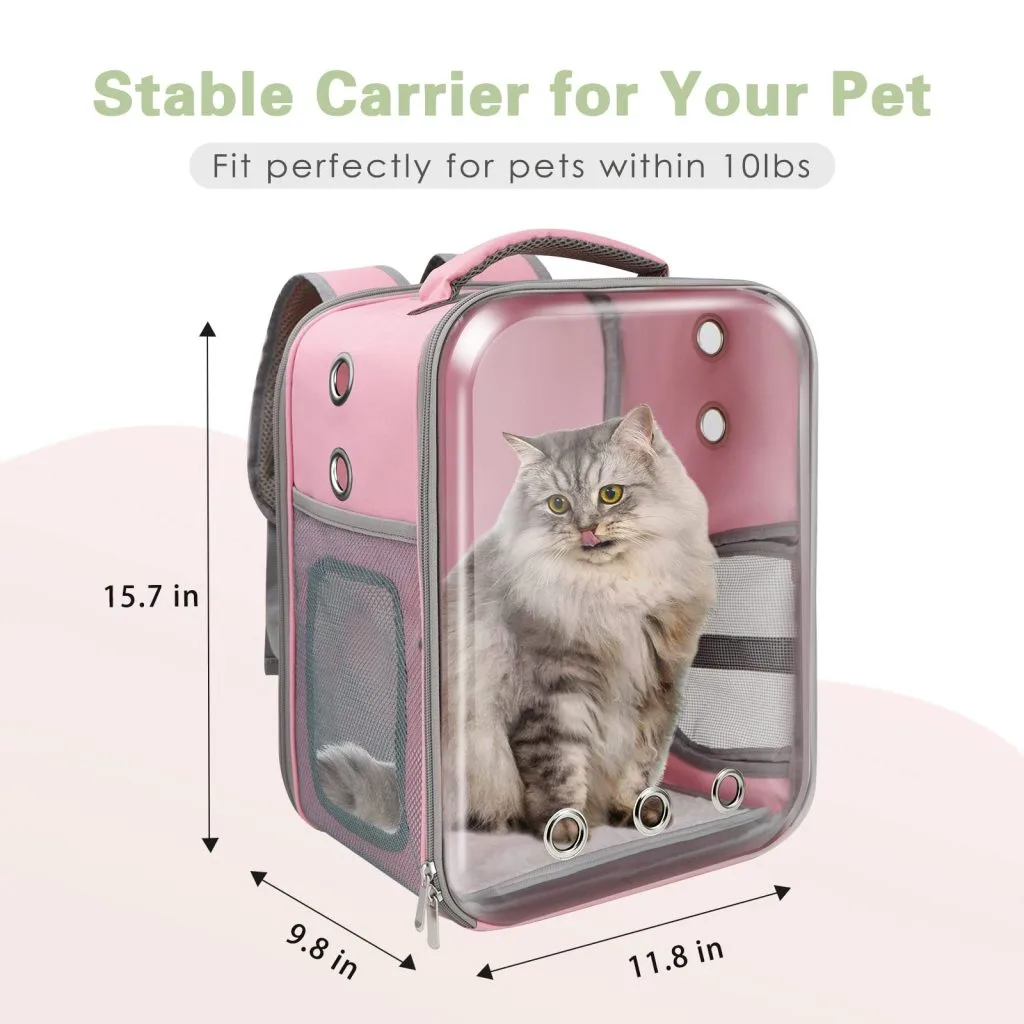
Check Five: Testing Access and Report Quality
Ask which laboratory the supplier uses and whether the reports carry an accreditation mark. A test report from an accredited third-party laboratory with a sample description, a test method reference, a date and a report number is evidence. A one-page "certificate" with a logo and no method reference is not. The standards that matter for this product class are published by ASTM International for mechanical and textile methods, and material restriction programmes are administered in the EU through ECHA.
Ask specifically about the tests that catch the failures this product actually experiences: strap and handle static load, seam strength at the strap root, zipper cycle life, colour fastness to rubbing and to light, abrasion on the base panel, and dimensional stability after washing for removable inserts. For a carrier marketed at 15 kg, a strap-root seam test to 1,200 N with no stitch rupture is a reasonable acceptance line, and it should be run on the finished assembly, not on a coupon.
Report quality is a proxy for process quality. Our production team keeps every test report indexed by programme and by lot so that a buyer question three years later can be answered from the archive rather than re-tested. Ask a supplier for a report from a programme shipped two years ago. If the archive exists, the system exists.
Ask one more specific question: what is tested on the finished assembly rather than on the component. Component testing is easy and misleading. A webbing strap may test to 900 daN in isolation while the assembly it is sewn into fails at 300 N because the bartack was placed 4 mm off the load line. The tests that predict field performance are assembly tests: strap-root pull, handle lift, base load, zipper cycle on the finished bag, and drop testing on the packed carton.
Where the product is marketed for a specific claim, the test must match the claim. A carrier described as airline approved should be checked against the live animal container requirements published by IATA rather than against a generic dimension table, because the ventilation and escape-resistance provisions are performance requirements and not simply measurements. A carrier described as washable needs a dimensional stability test after the stated number of wash cycles, not an assertion.
Check Six: Capacity and Line Allocation Honesty
Capacity claims are only meaningful against a product class. A line that runs school bags at 900 units a day may run a structured pet carrier at 260 units a day, because the carrier has more assemblies, more binding, and a base board insertion step that cannot be rushed. Ask for capacity stated in units per day for pet carriers specifically, and ask how many lines are actually allocated to your order.
Then stress-test the schedule. Material lead time governs the critical path, not sewing. A custom dyed 600D lot needs 18-25 days including lab dips; custom moulded hardware needs 20-30 days; a printed lining needs 12-18 days. If a supplier quotes 35 days bulk with custom materials and no material booking, the schedule is aspirational. Ask which materials are booked and when the purchase orders were issued; the answer should be specific enough to check.
Our production team runs 200,000 units per month across 7 lines, which means a 5,000-unit programme occupies a small enough slice that it will not lose line allocation to a larger order. That is the practical value of capacity: not bragging rights, but the assurance that your slot survives contact with someone else's bigger purchase order.
The second half of the capacity question is seasonality. Pet travel products have a pronounced seasonal curve in most Western markets, with bulk needing to land between late spring and midsummer. That means everyone books the same lines in the same eight weeks, and a supplier without a booking system will simply take orders until the schedule is impossible. Ask whether line slots are reserved against a deposit, and ask what happens to your slot if you slip your approval date by two weeks.
Ask about the contingency as well. Power curtailment, material delays and a failed inspection all consume schedule. A supplier with buffer capacity on a partner line can recover a week; a supplier running at 100% utilisation cannot recover anything. Our production team plans to 85-90% line utilisation precisely so that a disruption can be absorbed without moving the committed date, and that buffer is the most under-valued attribute in a supplier comparison.
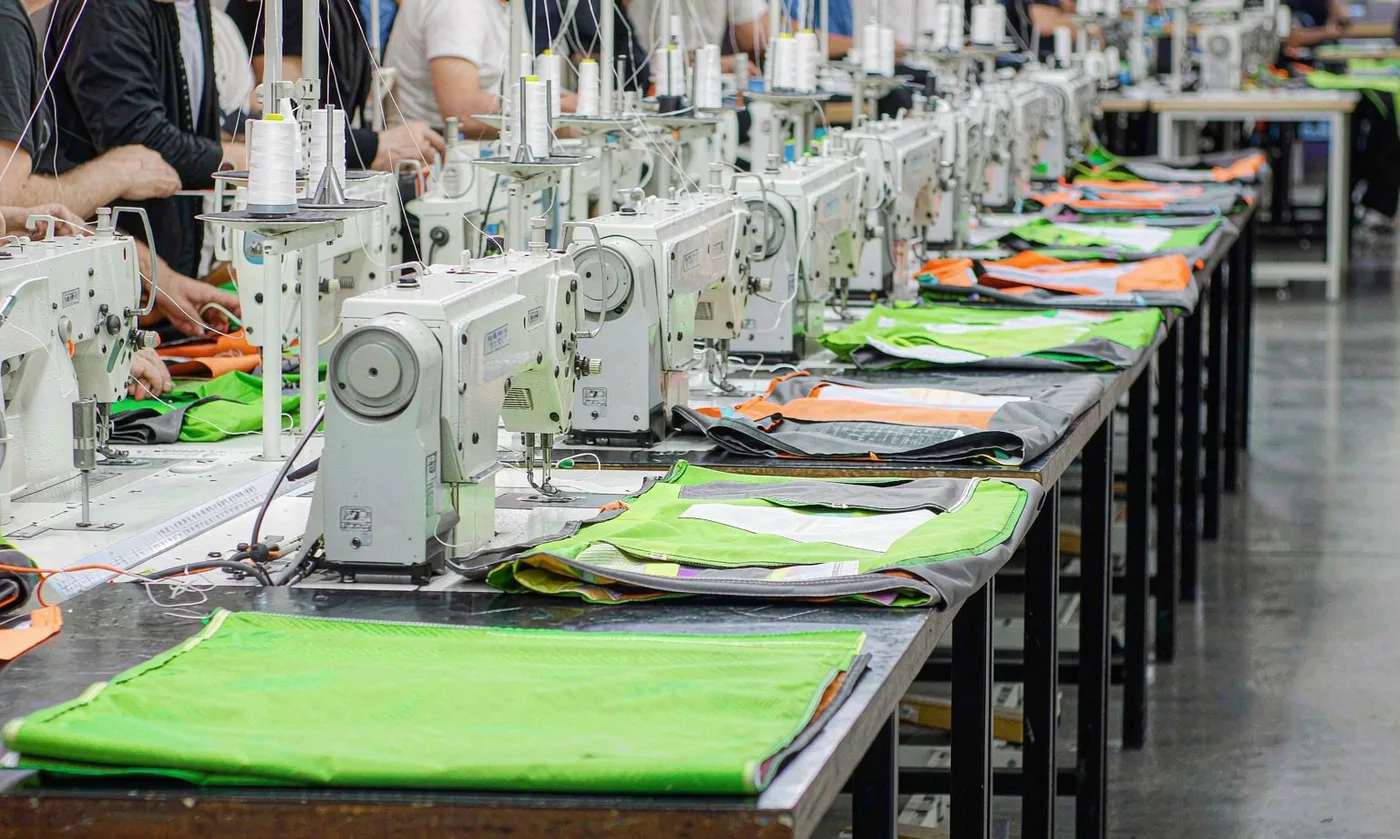
Check Seven: Commercial Terms That Reveal the Operation
Terms are diagnostic. MOQ 500 pieces per colourway is the working floor for a custom build because it is where fabric dye-lot minimums, custom woven labels and hardware orders become economical. A supplier quoting MOQ 100 for a fully custom build is either running stock fabric and stock hardware, which means the product is not custom, or is planning to absorb a loss and recover it later through substitution.
Sample lead time of 6-10 working days and bulk production of 35-50 days are the paired figures to check. Sampling faster than six working days usually means the pattern was borrowed from an existing tool rather than developed, which is fine if disclosed and a problem if not. Bulk faster than 35 days with custom materials means the materials were already in stock, which again is fine if disclosed.
- Payment: T/T 30/70 is standard, 30% deposit to book materials, 70% against bill of lading
- Incoterms: FOB Xiamen is the default; DDP is available through a nominated forwarder at 8-15% over landed cost
- Tooling: custom moulded hardware is $3,500-$9,000 and should be owned by the brand in writing
- Re-inspection: name who pays when a lot fails AQL the first time
- Price validity: raw material volatility means quotes should carry a validity window, typically 30 days
Be sceptical of a quote that is 25% below the field. In sewn goods there is no hidden productivity miracle; a gap that large is made up somewhere, and the somewhere is almost always GSM, coating thickness, or stitch density.
Check Eight: Documentation and Communication Discipline
The last check is behavioural and it predicts more than any certificate. Time the response to a technical question. A capable supplier answers a specification question within one working day, with a number, and flags the trade-off the question implies. An intermediary forwards the question and returns an answer two days later without a number, because it has to ask someone else.
Ask for a written production schedule with named milestones and dates, then hold the supplier to it. Ask for weekly build photographs during bulk with a date stamp. Ask for the packing list and the carton specification before the container is loaded, not after. Each of these is trivial to produce if the operation is real, and impossible to fabricate convincingly if it is not.
Our production team was built on pet carrier and pet bag programmes running since 2014, with the founding team in sewn goods since 2004, and that longevity shows up in exactly this discipline: the documents exist before they are requested. When you evaluate a supplier, weight that behaviour heavily. Certificates describe a system at a point in time; documentation discipline describes how the system behaves on an ordinary Tuesday.
Set the reporting cadence at the start of the programme and put it in the agreement: a schedule at order placement, a material booking confirmation within five working days of deposit, a first-off photograph at the start of bulk, weekly build status with unit counts, an AQL report before balance payment, and a packing list with carton marks before vessel booking. Each of these is a one-line email for a controlled operation and a negotiation for an uncontrolled one.
Then measure. Keep a simple scorecard across the first three orders: sample turnaround against quoted days, bulk completion against committed date, AQL result against the defect list, and document turnaround. A supplier that hits four out of four is worth more than a 4% price advantage from one that hits two, because the cost of a missed season dwarfs the saving.
Order and quality terms
- MOQ 500 pieces per colourway; samples in 6-10 working days
- Bulk production 35-50 days after approval; AQL 2.5 inspection standard
- T/T 30/70 terms, FOB Xiamen, full document set per shipment
People Also Ask
How do I verify a bag manufacturer's audit report?
Check the ISO 9001 scope wording for the word manufacture rather than trading, and verify the BSCI report by its DBID number, audit date and auditor name. Both should be current, with a follow-up audit recorded.
What machines should a pet carrier factory have?
A spreading table, straight-knife and band-knife cutters, a CAD pattern plotter, lockstitch and walking-foot sewing machines, a bartack machine, a high-frequency welder for welded seams, and a needle-detection station on 100% of units.
What is a normal MOQ for custom pet carriers?
500 pieces per colourway. Below that, fabric dye-lot minimums and custom hardware orders stop being economical and unit cost typically rises 18-35%.
How long should bulk production take?
35-50 days after gold-seal sample approval. The range is governed by material lead time, not sewing capacity: custom dyed fabric is 18-25 days and custom hardware is 20-30 days.
Why is AQL 2.5 used for bag inspection?
AQL 2.5 gives a workable balance for sewn goods: it rejects lots with systemic defects while tolerating the minor variation inherent to textile assembly. Critical defects are zero-tolerance at any AQL level.
Should I visit the manufacturer before ordering?
Yes for any programme above 5,000 units. A day on site verifies the machine list, the gate structure and the needle-control log, none of which can be fully verified by document.
What is the difference between OEM and ODM in pet carriers?
OEM means you supply the design and tech pack and the supplier builds to it. ODM means the supplier's existing tool and design are adapted with your branding, which cuts sampling time but limits differentiation.
Frequently Asked Questions
Is a BSCI audit the same as a quality audit?
No. BSCI covers social compliance: working hours, wages, health and safety, and management systems. It says nothing about stitch density or seam strength, which is why it must be paired with ISO 9001 and a written product test protocol.
What does an SGS-verified production base mean in practice?
It means an independent third party has physically verified the site, its floor area and its equipment against the supplier's claims. It is a verification of existence and scale, not a product certification.
How do I stop fabric substitution between sample and bulk?
Name the mill and lot in the tech pack, sign a retained bulk swatch at sample approval, and require an incoming material check on GSM, coating thickness and Delta E before any lot is released to cutting.
Who should own custom tooling?
The brand. Put it in the manufacturing agreement, mark the mould physically with your reference number, and state the conditions under which the mould may be used for other customers, which should be none.
What payment terms are normal for a first order?
T/T 30/70: 30% deposit to release material bookings and 70% against the bill of lading. An L/C at sight is possible for larger programmes but adds bank cost and document handling time on both sides.
How many units per day can a pet carrier line run?
A structured carrier with a base board, binding and multiple assemblies typically runs 240-320 units per line per day. Unstructured soft carriers run higher, around 450-600.
What should be in a written quality agreement?
The AQL level by defect class, the defect classification list with examples, the dimensional tolerance, the retained counter-sample procedure, the re-inspection cost allocation, and the corrective action timeline.
Can a manufacturer hold my design exclusively?
Yes, but exclusivity is a negotiated commercial term, not a default. It is normally granted against a volume commitment or an annual programme value, and should be written with a defined territory and period.
How do I check a test report is genuine?
Look for an accredited laboratory mark, a report number, a sample description that matches your product, a named test method, and a date. Call the laboratory to verify the report number if the programme value justifies it.
What causes most AQL failures in pet carriers?
Stitch defects at curved seams, panel misalignment from cutting deviation, and print or logo registration on curved panels. All three are controlled at the cutting and first-off gates rather than at final inspection.
Should I use a sourcing agent or work direct?
Direct works when you have a written tech pack and a test protocol, because there is no ambiguity to translate. An agent earns its fee when you are still defining the product and need someone on site to resolve specification conflicts in person.
What information should I send to get an accurate quote?
A dimensioned drawing with tolerances, a bill of materials with mill references, estimated order quantity per colourway, target market for compliance, packaging specification, and required delivery window.
Talk to QUANZHOU JUNYUAN BAGS about a pet carrier program: MOQ 500 pieces per colourway, samples in 6-10 working days, bulk production in 35-50 days under AQL 2.5 inspection.
Get a free quote Request a sampleKeep reading
- How to Choose the Right Dog Carrier Backpack for Your Brand
- Wholesale Dog Carrier Backpack: Sourcing Guide for Retailers
- Custom Dog Carrier Backpack: OEM Production Process
- Dog Carrier Backpack Testing: Quality Assurance
- BSCI Certified Dog Carrier Backpack Factory
- ISO 9001 Dog Carrier Backpack Manufacturing