White Label Dog Carrier Backpack: Setup Process
White label setup takes an existing platform SKU and applies a brand change set - woven label, hangtag, polybag print, colourway and packing spec - with no new tooling. The process runs six tracked steps: SKU selection, change-set definition, sample build in 6-10 working days, approval, procurement and bulk at 35-50 days under AQL 2.5. MOQ is 500 pieces per colourway and typical development cost is under 400 USD.
Executive Summary
White label is the fastest route to market for a pet carrier brand because the engineering is already paid for. The pattern exists, the dies exist, the trim set exists and the product has been through production before. What remains is selection and identity: choosing the platform SKU whose geometry, capacity and price band match the channel, then applying a change set that carries the brand without touching a mould.
The economics are straightforward. Development cost on a white label program is typically under 400 USD - loom setup, print plates and a hangtag print run - against 3,000-18,000 USD for private label moulded tooling. MOQ 500 pieces per colourway, samples are built in 6-10 working days, bulk production runs 35-50 days after approval, and final inspection follows AQL 2.5. The trade-off is differentiation: the platform is available to any buyer, so the brand identity has to live in the change set, the colour story and the packing, and the margin has to survive a competitor offering the same base product.
A pet carrier manufacturer is judged on three numbers in this category - MOQ per colourway, sample turnaround and the AQL level applied at final inspection. Ours are 500 pieces, 6-10 working days and AQL 2.5.
What White Label Covers and What It Does Not
White label means a finished product platform is adopted and rebranded. The engineering is complete before the brand arrives. The pattern has been graded, the dies are cut, the components have qualified suppliers with known lead times, and the product has a production history with a known defect profile. That history is the asset the brand is buying, and it is worth more than the discount it usually gets credit for.
What white label covers is the identity layer. Woven main label, care label content, hangtag and insert card, polybag print or sticker, carton marking, colourway selection from the mill's shade card, and the packing configuration. All of these are applied either during sewing or during packing, none of them requires a mould, and none of them changes the structural performance of the carrier.
What white label does not cover is structural change. Requesting a different interior dimension, a relocated ventilation panel, a different entry orientation or a modified base board turns the program into a private label development, because each of those requires a new marker, usually a new die, and a fresh round of sampling with load testing. These requests arrive frequently and they are almost always the point at which a white label timeline quietly becomes a private label timeline.
The commercial consequence is worth stating plainly: white label is a speed and capital decision, not a quality decision. A well-built platform product carries the same material spec, the same stitch construction and the same AQL 2.5 inspection as a private label build. The difference is who chose the geometry, and how many other brands have access to it.
SKU Selection: Reading a Manufacturing Catalogue as an Engineer
Selecting a platform SKU should be an engineering exercise rather than a browsing exercise. Four data points determine whether a platform will work in a given channel, and all four should be requested before a sample is ordered.
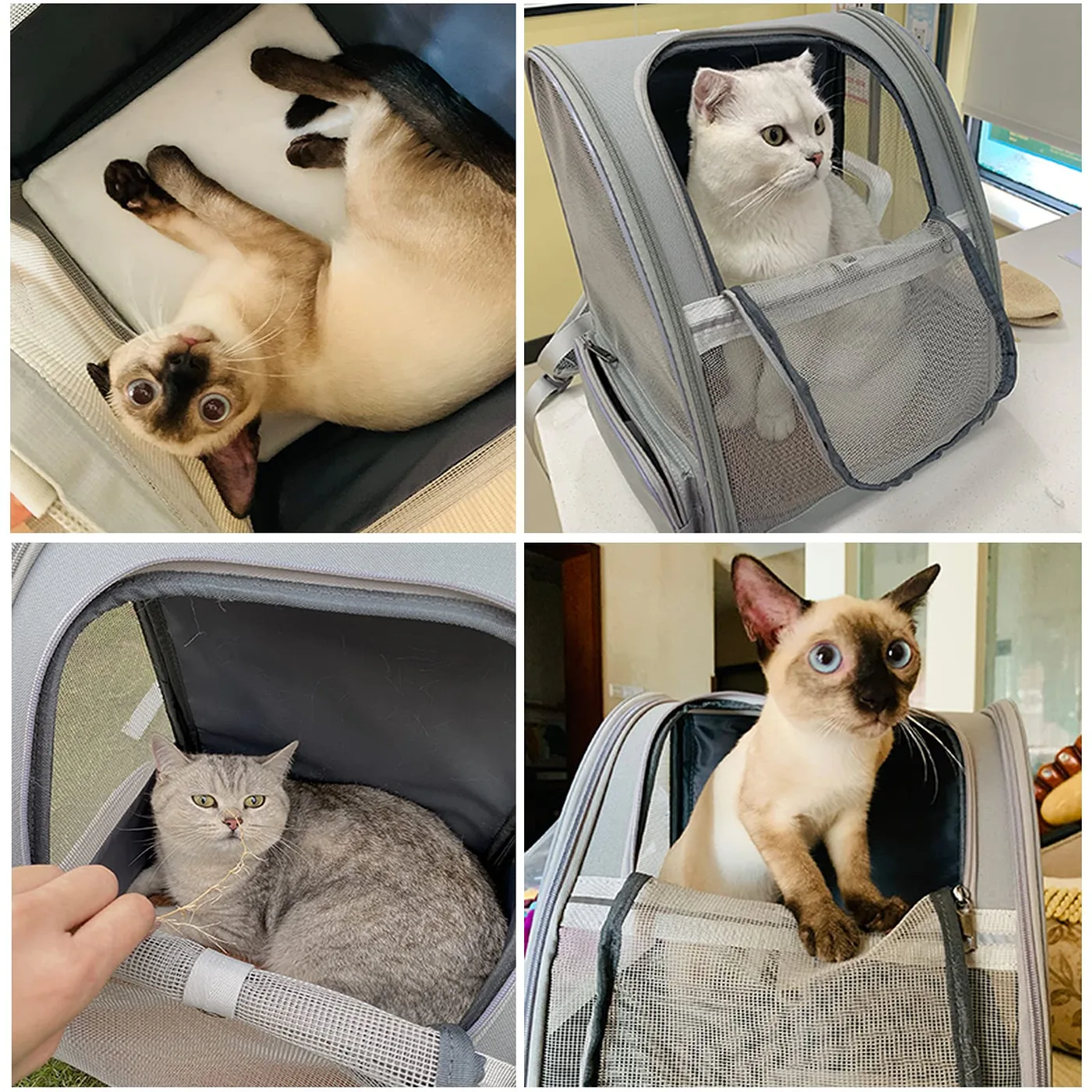
The first is interior floor geometry, not exterior dimension. Marketing dimensions quoted as length by width by height describe the outside of the product and frequently overstate usable space by 4-8 cm in each axis once foam, base board and shell curvature are accounted for. The number that determines whether a carrier suits a given animal is the flat interior floor area and the interior height at the centre of the panel. A platform with a 44 cm by 29 cm floor and 32 cm interior height fits a materially different animal from one with a 40 cm by 26 cm floor and 28 cm height, and the exterior dimensions of both may be advertised identically.
The second is the ventilation area ratio. The open area of the mesh panels as a percentage of total shell surface is the engineering parameter behind thermal comfort, and it should be calculated rather than eyeballed. A practical range for a soft-sided carrier is 18-28 percent of upper shell area in mesh, split across at least two faces so that airflow is not blocked when the carrier is set down against a surface.
The third is the load path specification. Which components carry the weight of the animal: the base board, the bottom panel seam, or the shoulder strap attachment. A base board in 4-6 mm PP hollow board or EVA sheet distributes load across the floor; a carrier without one puts the load into the bottom seam and the mesh. Ask what the base board material and thickness are, and whether the shell passes under it.
The fourth is the defect history. A platform that has run before has a known failure pattern, and a production team that has run it will know what it is. Asking directly which component generates the most rework is the single most informative question available in SKU selection, and it costs nothing.
The fifth is the packing and weight data, which buyers rarely request and which determines landed cost. Ask for the folded and assembled dimensions, the unit weight including packing, the carton quantity and the carton dimensions. From those four numbers a buyer can calculate units per container and per-unit freight allocation before placing an order, and that calculation frequently changes which platform is genuinely cheaper.
The Minimum Change Set: What Can Be Branded Without Tooling
The change set is the complete list of items that distinguish one brand's version of a platform from another's. Everything on this list is achievable without a mould, and everything on it has a cost and a lead time.
| Item | Tooling needed | Cost (USD) | Added lead time |
|---|---|---|---|
| Woven main label | Loom setup | 80-150 | 7-10 days |
| Care and content label | None, printed | 20-60 | 5-7 days |
| Hangtag and insert card | Print plate | 60-220 | 5-8 days |
| Polybag print or sticker | Plate or digital | 30-120 | 3-5 days |
| Stock colourway selection | None | 0 | 0 days |
| Custom dyed colourway | None, mill dye | 150-400 surcharge | 8-12 days |
| Screen printed logo on panel | Plate per colour | 25-60 per colour | 2-3 days |
| Heat transfer logo | Film setup | 40-90 | 2-3 days |
| Embroidered logo | Digitised tape | 30-70 | 2-4 days |
| Carton print for retail | Plate or digital | 150-500 | 6-10 days |
The change set should be written as a document and priced as a document, because the individual items are small and the total is not. A full set with a custom dyed colourway, woven label, printed hangtag, retail carton and embroidered logo reaches 500-1,400 USD of development cost and up to 12 days of added lead time if the items run sequentially rather than in parallel.
Parallel running is the schedule lever. Label loom setup, hangtag printing and carton printing are independent supply chains and can start the moment artwork is approved. Artwork approval is therefore the gate: a brand that arrives with vector files and Pantone references already finalised can have all three running inside the 6-10 working day sampling window, at which point the change set costs zero additional calendar time.
Setup Sequence: From Account to First Shipment
White label setup is six steps, and the sequence is fixed by dependency rather than by convention. Step one is platform selection against the four data points described above. Step two is change-set definition and pricing. Step three is sample build. Step four is approval. Step five is procurement and bulk production. Step six is inspection and shipment.
Step three is where most first programs lose time, and the reason is usually that the sample request is ambiguous. A sample order should state the platform code, the colourway, every item in the change set, and the packing configuration. A request that says send a sample of model X with our logo generates a second round, and each round costs a working day inside the 6-10 day window.
Step four should be a single decision covering product, artwork and packing. Splitting approval into three separate confirmations - product first, then labels, then cartons - is the most common cause of a white label program exceeding 50 days, because each confirmation restarts an independent supplier's queue.
Step five runs 35-50 days. Even though the platform is established, material procurement is not: a custom dyed colourway still needs 10-15 days at the mill, and custom trim still needs its own run. The saving from white label is in development, not in procurement, and brands that expect a shorter bulk window than a private label program are usually disappointed. The realistic expectation is the same 35-50 days, with 3-6 weeks removed from front-end development.
Step six closes with AQL 2.5 inspection and the document set. Because the platform is shared, the inspection checklist should include a line confirming that the correct brand-specific trim was applied, since a mixed-trim error is a realistic risk when several customers' versions of a platform run in the same period.
One further step belongs after shipment rather than before it, and it is the step most brands skip: the post-launch specification review. Within thirty days of the first delivery, the brand should have return data, size complaints and photography feedback in hand, and should convert that into a written change list for the second order. On a white label platform the changes available are modest - a different base board thickness, a revised care label, an additional mesh panel - but they are cheap and they compound. Brands that run this review typically cut size-related returns by a third between the first and second order.
Cost and Margin Arithmetic for White Label
White label margin is thinner per unit and faster to realisation, and the arithmetic has to be done on a landed basis rather than an ex-factory basis. Three items drive the result.
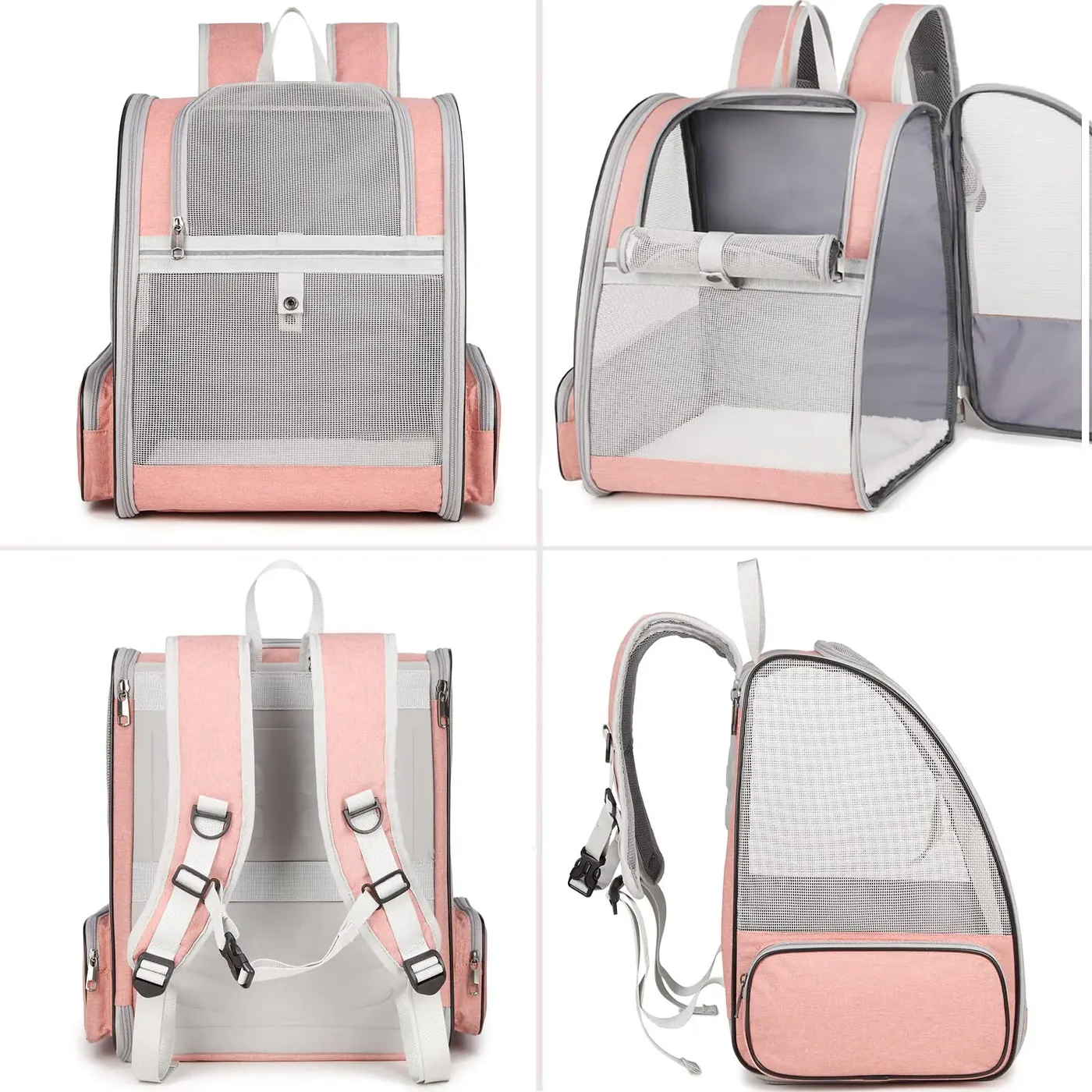
The first is landed cost per unit. Ex-factory price, freight allocation, duty and the change-set amortisation together determine the real cost. Freight allocation is the item most often underestimated: a soft carrier that ships folded at roughly 0.9 kg fills a 40-foot high-cube container at about 5,000-7,000 units, so per-unit ocean freight is small; the same product shipped assembled drops to 1,800-2,600 units per container and roughly triples the per-unit freight allocation. White label programs frequently inherit the platform's default packing, so checking whether the platform ships folded is a genuine margin question.
The second is the competitive reference price. Because the platform is not exclusive, at least one competitor can buy the same geometry. Retail buyers compare on price and on photography, and photography is where a white label brand can defend margin: better imagery, clearer size communication and a stronger colour story routinely support a 15-25 percent price premium over an identical product photographed badly.
The third is inventory risk. Lower development cost and lower MOQ mean a brand can test more SKUs with less capital. A 500-piece test across four colourways costs a fraction of a private label development and generates real sell-through data. That data is the asset that justifies the later private label investment, and it is the strongest argument for starting white label even for a brand that intends to develop its own tooling in season two.
Put together, the white label case is a speed-to-data case. The margin per unit is lower, but the cost of being wrong is far lower, and being wrong quickly is worth more than being right slowly in a category where size fit drives returns.
One more cost line deserves explicit attention because it is invisible until it is too late: the cost of a size return. A carrier returned because the animal did not fit costs the brand outbound freight, return freight, inspection labour and, frequently, a discounted resale or a write-off. That figure routinely lands between 18 and 35 USD per unit on a mid-priced carrier, which is larger than the entire per-unit development cost of a white label program. Spending the development budget on better size communication - an interior floor dimension printed on the hangtag, a weight band on the product page, a sizing insert card in the carton - is the highest-return use of money available in a first season.
Differentiation Risk: When Two Brands Land the Same Product
The risk in white label is not quality, it is collision. Two brands selecting the same platform and the same stock colourway can end up with products that are indistinguishable except for the label, and the resulting price competition erodes both margins.
Three defences are available and they stack. The first is colourway. Selecting a custom dyed shade from the mill's own card rather than a stock colour removes the most visually obvious collision at a surcharge of 150-400 USD and 8-12 days. It is the cheapest real differentiation available and it is the first recommendation for any white label program with a second season planned.
The second is the trim and hardware combination. A different zipper puller finish, a contrasting binding tape, or a different webbing weave changes the visual identity substantially while remaining within the platform's engineering. These are stock components, so there is no tooling cost and no structural requalification.
The third is the packing and channel presentation. A retail carton, an insert card with a sizing guide, and a branded polybag change how the product reads on the shelf even when the product itself is a shared platform. For e-commerce brands this is the dominant lever, because the consumer never sees the shelf.
The limitation should be acknowledged: none of these defences survives a side-by-side specification comparison by a sophisticated buyer. White label differentiation is a consumer-facing strategy, not a trade-secret strategy, and a brand whose competitive position depends on the trade believing the product is unique should invest in private label tooling instead.
Quality Consistency Across Repeat White Label Orders
A shared platform running for multiple customers creates a specific quality question: how does a brand know that season three matches season one. Three controls answer it.
The first is the retained reference sample. Both parties hold a sealed, counter-signed sample from the approved build, together with the approved lab dip. Every repeat order is checked against that physical reference, and any shade or construction drift is measured rather than argued.
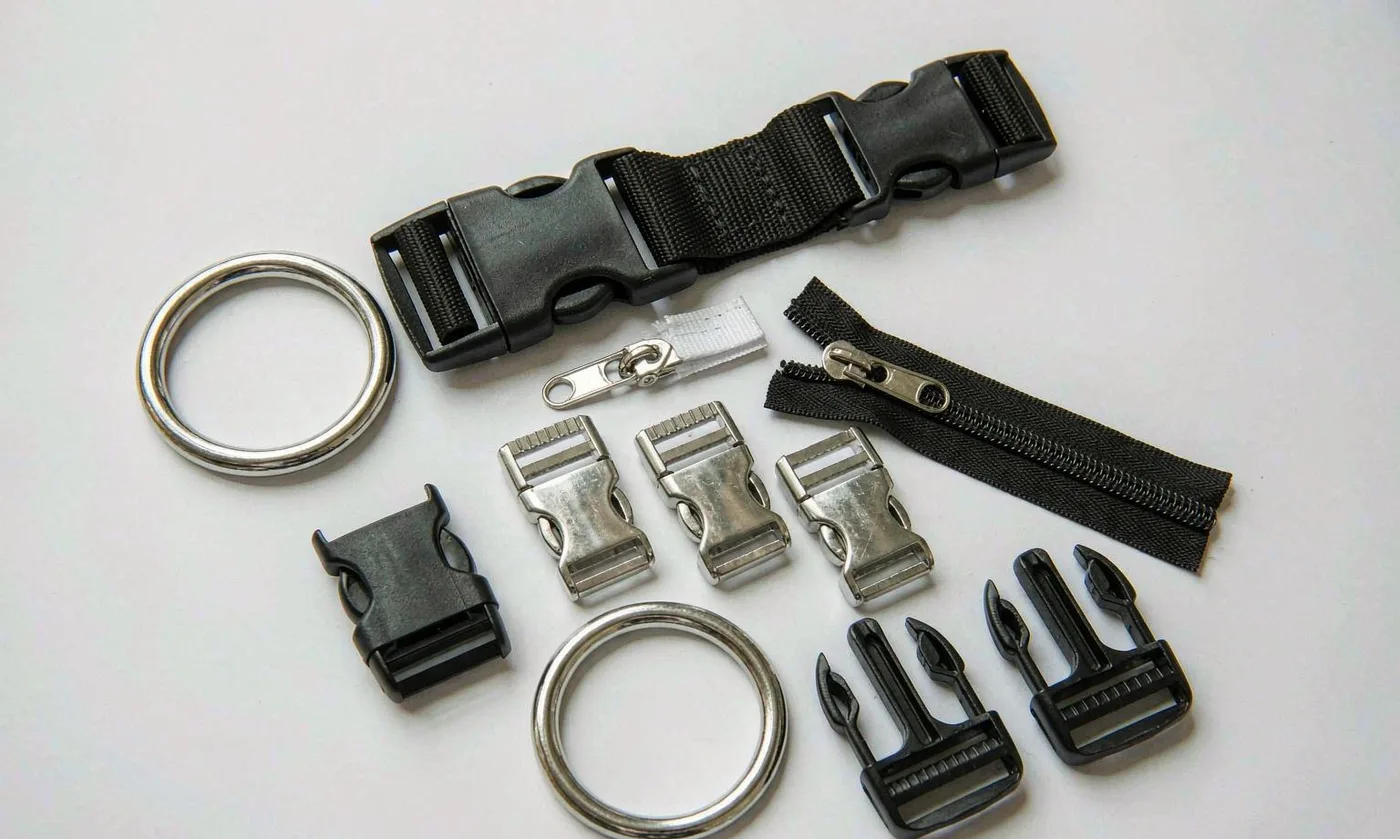
The second is the component-level bill of materials, fixed at approval and change-controlled afterwards. On a shared platform there is constant commercial pressure to substitute a component - a different zipper source, a cheaper foam density, an alternative mesh supplier - because the platform is cost-reviewed continuously. A change-control clause requiring written notice and a re-quote before any substitution is the standard protection, and it should be in the agreement from the first order.
The third is a periodic re-test. Material conformance should be re-verified at least annually against a recognised method set, and mechanical performance re-verified when a component substitution is proposed. Test methods published by ASTM International are the common reference for textile and hardware testing, and the quality management system governing the records should be aligned with ISO 9001. Textile chemical conformance is frequently certified against OEKO-TEX standards, which gives the brand a per-material certificate rather than a per-product one.
Without these three controls, a white label program drifts. The drift is rarely deliberate and rarely dramatic - a slightly lighter foam, a marginally thinner coating - but over three seasons it produces a product that no longer matches the reviews it earned in season one.
A fourth control is worth adding for brands with more than one platform in the range: a shared component library. Where the same zipper size, the same webbing and the same buckle set are specified across several platform SKUs, procurement consolidates, spare parts become interchangeable and testing cost per SKU falls. The saving is modest per unit but it reduces the number of distinct components that have to be qualified, which is where the real administrative cost sits.
When to Graduate from White Label to Private Label
The graduation decision is a numbers decision, and the trigger points are clear enough to be stated as rules of thumb.
Graduate when annual volume of a single platform exceeds roughly 4,000-6,000 units. At that volume, tooling amortisation for a single-cavity mould drops below 2 USD per unit, which is inside the noise of a carrier's cost structure, and the exclusivity becomes effectively free.
Graduate when the channel requires an exclusive product. Some retail buyers will not list a product that is available to a competitor under a different label, and they ask directly. When that question arrives and the answer is not clean, the brand has either lost the listing or misrepresented the position, and neither outcome is acceptable.
Graduate when the differentiation defence costs more than the tooling. If a brand is paying for custom dye lots, custom woven webbing and custom trim on every order and still losing price comparisons, the incremental cost of a moulded component is small relative to what is already being spent on identity.
Do not graduate when the product-market fit is unproven. Tooling capital committed before sell-through data exists is the most common avoidable loss in this category. The recommended path is white label for season one to generate the data, then private label on the SKU that demonstrably sells, with the geometry informed by actual return reasons rather than by assumption.
The transition itself has a practical shape that is worth planning for. A brand moving from a platform SKU to an exclusive design should keep the platform running for one overlapping season rather than switching cleanly, because the private label development will take longer than expected and the platform is the cash flow that funds it. The overlap costs inventory carrying on two SKUs for roughly one quarter and removes the risk of a stockout during development.
The specification for the exclusive design should be written from the platform's own data. If the platform's return data shows that customers bought too small a size, the exclusive version should re-grade the size range rather than repeat it. If the returns show strap discomfort at higher weights, the exclusive version should specify a wider strap with a higher foam density. This is the real payoff of starting white label: the private label specification is written from evidence instead of intuition, and the failure modes are known before the tooling is cut.
Order and quality terms
- MOQ 500 pieces per colourway; samples in 6-10 working days
- Bulk production 35-50 days after approval; AQL 2.5 inspection standard
- T/T 30/70 terms, FOB Xiamen, full document set per shipment
People Also Ask
What does white label mean in pet product manufacturing?
Adopting an existing, proven product platform and applying a brand identity layer - labels, hangtags, packing and colourway - without any new tooling or structural change.
How fast can a white label pet carrier reach market?
Roughly 7-9 weeks: 6-10 working days for sampling plus 35-50 days for bulk, assuming artwork is approved together with the sample. Bulk timing is the same as private label; the saving is in front-end development.
Is white label cheaper than private label?
Yes at the development stage - under 400 USD against 3,000-18,000 USD for moulded tooling - but not necessarily per unit, because the platform ships with whatever packing and component set it was designed around.
How do you avoid selling the same product as a competitor?
Use a custom dyed colourway, a distinct trim and hardware combination, and differentiated packing and photography. These defend consumer-facing identity but will not survive a side-by-side spec comparison.
What data should a brand request before choosing a platform SKU?
Interior floor area and centre height rather than exterior dimensions, the mesh open-area ratio, the load path and base board specification, and the known defect history of the platform.
Can white label products be tested to the same standards?
Yes. Mechanical and chemical testing follows the same methods and the same AQL 2.5 inspection standard. Testing is per build, so a new colourway or trim combination should be covered by the report.
Frequently Asked Questions
How long does white label setup take from first contact to shipment?
Sampling is 6-10 working days and bulk production is 35-50 days after approval, so roughly 7-9 weeks total if artwork is approved with the sample. Programs that approve artwork later add 5-10 days per independent supplier queue.
Is there a tooling cost for white label?
No moulded tooling. The change set uses loom setup at 80-150 USD, print plates at 25-60 USD per colour and a digitised embroidery tape at 30-70 USD, giving total development cost typically under 400 USD and often under 1,000 USD with a retail carton.
What is the MOQ for a white label carrier?
MOQ is 500 pieces per colourway, the same as any custom program. The floor is set by fabric dyeing and cutting economics rather than by sewing capacity.
Can the platform be changed in size or shape?
Not under white label. Changing interior dimensions, ventilation placement or base board specification requires a new marker and usually a new die, which converts the program to private label development with fresh sampling and load testing.
How many brands can use the same platform?
There is no contractual limit unless exclusivity is negotiated and paid for. The practical protection is a custom dyed colourway and a distinct trim combination rather than a legal restriction on the platform itself.
Does white label mean lower quality than private label?
No. Material specification, stitch construction and AQL 2.5 inspection are identical. White label differs in who selected the geometry and in how many buyers have access to it, not in how the product is made.
What should a sample request specify?
Platform code, colourway, every item in the change set, and the packing configuration. Ambiguous requests generate a second round and cost a working day inside the 6-10 day sampling window.
How is shade consistency maintained across repeat orders?
Through a retained, counter-signed reference sample and the original lab dip held by both parties. Repeat orders are measured against that physical reference rather than against a photograph.
Can components be substituted between seasons?
Only under a change-control clause requiring written notice and a re-quote. Without that clause, a shared platform will be continuously cost-reviewed and substitutions will occur without notice.
What is the cheapest real differentiation available?
A custom dyed colourway from the mill shade card, at 150-400 USD surcharge and 8-12 days. It removes the most visually obvious collision with another brand on the same platform.
When should a brand move to private label?
When a single platform exceeds roughly 4,000-6,000 units annually, when a retail buyer requires exclusivity, or when the ongoing cost of identity work exceeds the amortised cost of a mould.
Are test reports provided for a white label platform?
Material-level reports are normally available for an established platform, because the components have been tested before. The brand should still confirm that the reports cover the specific colourway and trim combination it is ordering.
Talk to QUANZHOU JUNYUAN BAGS about a pet carrier program: MOQ 500 pieces per colourway, samples in 6-10 working days, bulk production in 35-50 days under AQL 2.5 inspection.
Get a free quote Request a sample