Dog Carrier Backpack for Pomeranians: Tiny Dog
A Pomeranian carrier is specified by the gap between its rating and its volume: the class runs 1.9-3.5 kg with a stand-off double coat adding 50-80 mm to the envelope, giving a 4 kg structural rating against a 35-55 litre compartment, a stiffness-governed floor at 2.5 mm deflection, a harness-only restraint and 20-26% open area.
This page sets out the engineering behind a carrier for the smallest dog class in the range. The defining feature is a mismatch: the animal weighs under 3.5 kg but occupies the volume of a dog twice its mass, because a stand-off double coat does not compress under light contact. That produces a product with a very low structural rating and a large compartment, and the two halves of the specification pull in opposite directions — the structure wants to be minimal and the volume wants to be generous. Resolving that mismatch cleanly is the whole design problem, and the answer is stiffness-governed rather than strength-governed structure. Two clinical factors complete the picture: tracheal collapse is strongly over-represented in the breed, and a thick coat on a 2.5 kg frame creates a thermal load the compartment has to manage. Commercial terms follow the standard program: MOQ 500 pieces per colourway, prototypes in 6-10 working days, bulk production 35-50 days after sample approval, final random inspection to AQL 2.5, T/T 30/70 payment and FOB Xiamen loading.
A pet bag supplier running dog carrier backpack orders at 500 pieces per colourway can consolidate several sizes into one cutting window and hold the dye lot across reorders.
Mass Class and the Stand-Off Coat Envelope
Pomeranian dimensions sit at the bottom of the dog range. Adult mass runs 1.9-3.5 kg, height at the withers 180-300 mm, body length 280-400 mm and chest girth 330-450 mm. On mass alone that is comparable to a Chihuahua, and a designer working from a weight chart will produce a similar compartment. That is the first error available in this programme.
The breed carries a stand-off double coat: a dense, soft undercoat under a longer outer coat held away from the body by the undercoat's loft. It is the stiffest coat structure in the dog range in the sense that matters here — it resists compression under the light contact pressures inside a carrier, because the undercoat acts as a lofted spacer rather than as a compliant layer. Compression requires roughly 2-4 kPa, which is far more than the animal's own resting contact pressure.
The envelope therefore adds 50-80 mm to every dimension on a full-coat animal and 25-40 mm on one kept in a trimmed cut. Interior dimensions of 300-380 mm wide, 420-560 mm long and 300-380 mm high cover the full-coat case, giving 35-55 litres of internal volume. That is the volume of a 6-8 kg dog product carrying a 3 kg animal, and it is the central fact of the design.
Chest girth over the coat is the dimension that governs the aperture: 330-450 mm becomes 440-600 mm, and an entry sized to the body is a tunnel the animal resists. The minimum aperture is 260 mm, which is larger than the Chihuahua figure despite a similar body size, and larger than most designers expect from a 3 kg dog.
The coat also changes the fit rule. For most small dogs the specification is a snug fit with 20-40 mm of clearance, because a loose compartment lets the animal slide. For this breed a snug fit compresses the coat, which is uncomfortable, raises the thermal load by eliminating the insulating air layer the coat depends on, and makes the animal resist loading. The working clearance is 40-80 mm at the shoulder, measured over the coat.
| Breed class | Body mass | Structural rating | Internal volume | Litres per rated kg |
|---|---|---|---|---|
| Chihuahua | 1.5-3.0 kg | 4 kg | 8-14 L | 2.0-3.5 |
| Pomeranian | 1.9-3.5 kg | 4 kg | 35-55 L | 8.8-13.8 |
| Yorkshire Terrier | 1.5-3.2 kg | 4 kg | 10-18 L | 2.5-4.5 |
| Shih Tzu | 4.0-7.25 kg | 8 kg | 55-105 L | 6.9-13.1 |
| Pug | 6.3-8.1 kg | 12 kg | 45-70 L | 3.8-5.8 |
| French Bulldog | 8-13 kg | 16 kg | 60-90 L | 3.8-5.6 |
The Pomeranian row is the anomaly in the table and it drives every downstream decision. A 4 kg rating in a 45 litre compartment is a stiffness problem wearing the clothes of a size problem.
The Low-Rating, Large-Volume Structural Paradox
Structural rating follows the animal's mass with a margin, and at 3.5 kg the rating is 4 kg. The protocol load is 4x that figure, so 16 kg plus product mass, which is trivial for any shell in the range — well below the 52 kg a French Bulldog product carries and below even the 24 kg Dachshund miniature grade. Every strength-driven element could be minimal: a 2 mm board, 15 mm webbing, a #3 zipper, a single-layer seam.
Almost none of that is correct, because the large compartment introduces a stiffness problem that the low rating does not capture. A 420-560 mm span at a 4 kg rating deflects under its own shell weight and under handling loads long before it reaches its rated capacity, and a compartment that flexes when lifted by one corner does not hold its shape around the animal. The specification therefore separates into two: strength elements sized to 16 kg, and stiffness elements sized to the span.
The practical outcome is a floor specified by deflection rather than by load, a perimeter frame or hoop to hold the cross-section, and a shell fabric selected for dimensional stability rather than for tensile strength. A 300-420 g/m² coated woven with a stable weave is the right choice: it is far stronger than the rating requires but it is chosen because it does not stretch on the bias, which is what keeps the compartment from racking.
Weight is the second half of the paradox and it works in the product's favour. Because the rating is low, everything can be light, and a finished mass of 800-1,200 g is achievable even with a 45 litre compartment. That matters more here than anywhere else in the range: a 3 kg animal in a 1.5 kg carrier is a 50% overhead, while the same animal in a 900 g carrier is a 30% one, and the difference is the whole of the carrying experience.
Cost follows the same logic. The strength elements are the cheapest part of the bill of materials and the stiffness elements are the expensive part, so a product that looks structurally trivial on a weight chart carries a floor, frame and fabric specification closer to a mid-size product. Quoting this product from mass alone produces a quote that is wrong by 3-6 USD per unit.
Floor Specification at Minimum Load with Maximum Span
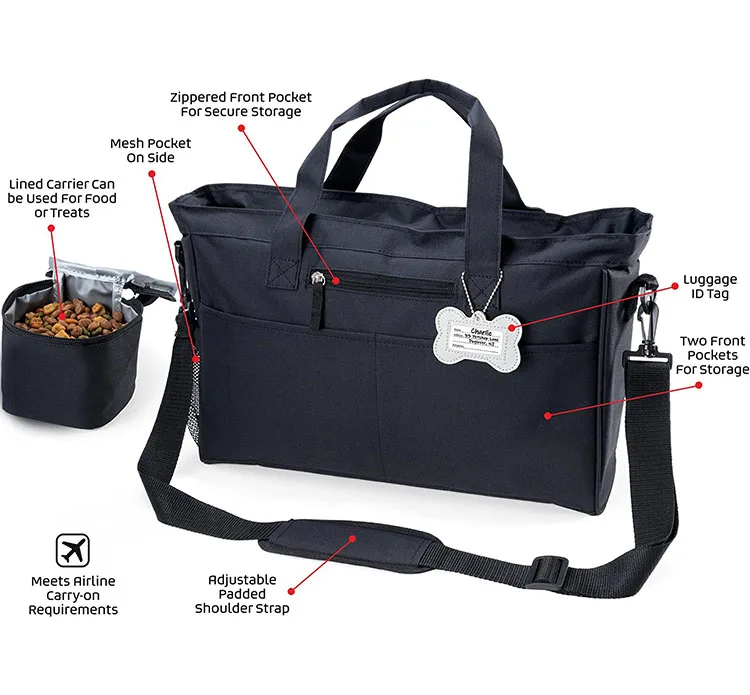
The floor is the clearest instance of the stiffness-governed rule. Under a 4 kg load, deflection is negligible for almost any board; but the span is 420-560 mm, the shell adds its own distributed load, and the animal's weight is applied at a point rather than distributed. The governing criterion is therefore deflection under combined load rather than strength under rated load.
Deflection under 2.5 mm at mid-span under a 6 kg test load — the rating plus a handling margin — is the specification. That requires a board of 3.0-4.5 mm, or a moulded tray with ribs of 8-14 mm depth on a 35-45 mm pitch, or a stiffener board in a sewn sleeve with a perimeter frame. All three reach the figure; the moulded tray is the stiffest per gram and the perimeter frame is the cheapest to tool.
Continuity matters more than thickness at this scale. A thin board with continuous perimeter support outperforms a thick board supported only at the corners, because corner support permits diagonal deflection and the resulting twist. The specification is a board captured in the base seam on all four sides, with a bar-tack of at least 12 mm at each corner and a corner radius of 25 mm or greater.
Flatness is specified as it is across the range, with a limit of 2 mm of contour across the width. For a small dog with a high incidence of patellar luxation, a contoured floor that holds the hind limbs in a fixed angle is a specific concern rather than a generic one, and it is worth an explicit prohibition in the tech pack alongside the snug-fit rule.
Traction and the mat complete the floor. A 3-5 mm closed-cell mat with a coefficient of friction above 0.55 and a fine texture that releases undercoat is the specification, captive rather than loose, and flat rather than sculpted. Stand-off coats slide on smooth surfaces more than short coats do, because the contact is coat-to-surface rather than skin-to-surface, and the effective friction is lower than a material test on a bare pad would suggest.
Thermal Behaviour: A Thick Coat on a 2.5 kg Frame
The thermal picture for this breed is unusual because it runs in both directions at once. A thick double coat on a 2.5 kg animal is a heavy insulating layer relative to the animal's heat production, which pushes the upper limit down; but a 2.5 kg animal has a poor surface-area-to-mass ratio, which pushes the lower limit up. The breed is therefore heat-sensitive in summer and cold-sensitive in winter, and the product has to work across both.
The upper limit governs the compartment design. With a stand-off coat providing most of the insulation the animal needs, the shell should not add to it: walls and floor are uninsulated, the outer finish is light-coloured with a solar reflectance above 0.55, and ventilation is generous. The stated maximum ambient for continuous occupancy is 24 °C, with active cooling required above 27 °C.
Ventilation of 20-26% open area suits the class, higher than a Chihuahua product despite a similar mass because the coat blocks airflow at the skin and because the compartment is much larger. Cross-flow is required and it is easier to achieve here than in a smaller compartment: intake low on the two side faces, exhaust high at the rear at 80% or more of intake area.
The plenum floor is the most effective passive measure and it is particularly well suited to this breed, because air admitted underneath passes through the thinner ventral coat and reaches the abdominal skin. A 15-25 mm plenum costs 0.55-1.30 USD and is the largest single thermal gain in the product.
The lower limit is handled by a removable element rather than by built-in insulation. A quilted liner or a drop-in insulated pad rated to hold a 10-15 °C differential is the correct answer, because it can be removed in summer and because built-in insulation would compromise the upper limit. It is the same strategy used across the range for breeds that sit on both sides of the thermal envelope, and it costs less than a reversible shell.
Airway, Tracheal Collapse and the Harness-Only Rule
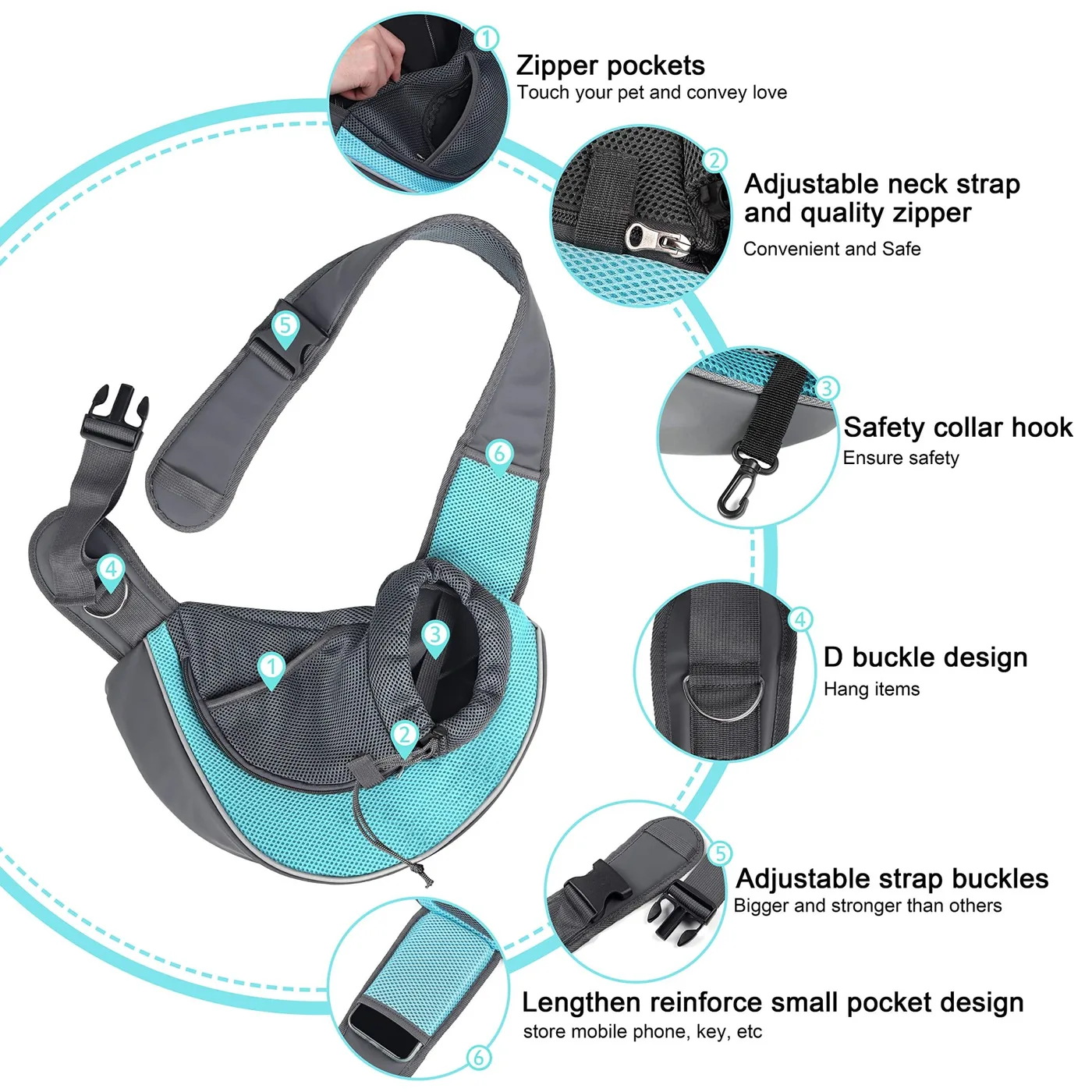
Tracheal collapse is strongly over-represented in this breed and it is the clinical constraint that governs restraint. The tracheal cartilage rings weaken progressively, the dorsal membrane sags, and the airway narrows under the negative pressure of inspiration. The condition is aggravated by anything that applies pressure to the neck or that raises respiratory effort, and it is irreversible once established.
The restraint rule is absolute and it is the same rule applied for the Chihuahua, for a more severe reason. The internal restraint is a chest-loading harness attached to a roof-centreline anchor rated at 120 N, with no neck-adjacent loop, no elastic aperture that can close on the neck, and a label statement prohibiting collar restraint. The anchor geometry should make a collar clip awkward by design.
Airway geometry is the second element. The neck-extended resting posture is required, with 40-80 mm of clearance above the crown — measured over the coat — and no forward obstruction within 150 mm of the muzzle. Unlike the brachycephalic breeds this is not driven by an elongated soft palate, but the requirement is the same because a flexed neck narrows the airway at any degree of tracheal weakness.
Air quality matters more in a small compartment than in a large one. Carbon dioxide and humidity rise faster per unit volume, and a small animal with a compromised airway is more sensitive to both. The ventilation figure of 20-26% is partly set by that, and the acceptance test is a carbon dioxide reading at head height against a 5,000 ppm ceiling rather than a temperature reading alone.
Irritant control completes the section. The interior lining is specified low-VOC with water-based adhesive throughout and a 72-hour cure before the shell closes, plus a headspace screen on the finished product. Textile components are screened against OEKO-TEX criteria as they are across the range, and welfare framing is cross-checked against guidance from the American Veterinary Medical Association.
Coat Shedding, Closure Ingress and Interior Surfaces
The breed sheds a dense undercoat seasonally and continuously to a lesser degree, and the shed hair is fine, short and highly mobile. It is the single largest maintenance issue in the product and it attacks the closure first, in the same way it does for the Shih Tzu but with a finer particle that penetrates further.
Closure selection is the primary control and the finer hair raises the bar: a reverse-coil zipper with a brush-finished slider and a covered garage is the minimum, and the garage needs a closer-fitting brush than the long-coat product uses because fine undercoat passes a coarse one. The slider channel must be flushable rather than bound into a narrow tunnel, and the closure is placed on a vertical face where the design allows so gravity does not feed it.
Interior surfaces are specified for hair release rather than for comfort. A closed or tight-weave face with no loop, no brushed or raised surface and no free binding edge above 2 mm releases hair when shaken; a loop-pile or brushed face retains it permanently and is disqualified. Corners are radiused at R30 or greater because packed hair in a square corner cannot be removed by shaking.
Snagging is a lower risk here than for a long-coated breed — the outer coat is shorter and the undercoat is fine — but it is not nil. Hook-and-loop is prohibited within the animal's reach for the same reason it is in the Shih Tzu product: it grips hair at the follicle and it is painful. The alternative functions are the same: a zipper with a covered garage for a pocket, a welded pocket or press-stud for a mat, and a channel-and-hem for a liner.
Maintenance validation closes the section with the same two figures used across the coated breeds: after a standardised shedding exposure, 200 closure cycles with an increase in pulling force under 20%, and at least 80% of accumulated hair released by shaking alone. Both are measurable and both correlate with what owners actually complain about.
Escape Geometry and Containment at Minimum Scale
A 2.5 kg animal with a stand-off coat can pass through an aperture that looks far too small for it, because the coat compresses in one direction even though it resists compression in another. The practical rule is that the animal fits any opening its skull passes, and the skull measures 70-100 mm across at the widest point for the class. Every reachable gap is therefore specified under 25 mm, or under 6 mm where a limb could enter.
Closure security is specified against an internal push rather than an external pull, as it is across the small-dog range. A rigid-framed top closure with two-point engagement resists a push; a centred zipper lifts under one. Where a zipper is used it is a reverse-coil type with a locking slider, a positive detent and a 70 N pull test on the closed state.
Ventilation apertures are the escape path most often missed. A mesh panel that is adequate in strength can still present an opening the animal works at with the muzzle and the forepaws, progressively enlarging it until the head passes. The specification for the class is a monofilament mesh of 300-420 g/m² with an aperture under 6 mm, or a rigid perforated panel with 3-5 mm perforations, bonded or welded at the perimeter rather than sewn with an exposed edge.
Height containment is the last item and it is breed-specific. The animal is light enough to be lifted by the movement of the compartment and active enough to climb a vertical textile surface if it can get purchase, so the compartment needs a top closure rather than an open top, and no interior element within 120 mm of the roof that provides a foothold.
Small-part and hardware controls follow the range standard: a 31.7 mm gauge on detachable elements, 50 N pull tests on trim, recessed fasteners under welded washers or covers, and a declared powder coat or stainless finish screened for heavy metals. At this scale the hardware is small enough that the gauge check is the binding constraint rather than the pull test.
Suspension and Wearer Interface for a Low-Mass, High-Volume Load
The carrying problem in this product is not mass, it is bulk. A 45 litre compartment holding a 3 kg animal presents a large frontal and lateral area with very little weight in it, and on the wearer that behaves like an empty pack: it catches wind, it swings, and it sits further off the back than a dense load of the same mass would. The familiar small-dog approach of scaling the harness down to the rating produces a product that feels unstable for reasons the load figure does not explain.
Stand-off distance is the first control. Because the compartment is deep rather than heavy, the pack's effective depth pushes the centre of mass away from the wearer's spine and increases the moment at the shoulders. The specification is a flat-back geometry with a maximum stand-off of 120-160 mm at the widest point, achieved by trimming compartment depth rather than by compressing the internal envelope, and a back panel contact area that spans at least 60% of the compartment height.
Compression straps are the second control and they are more useful here than on any other product in the range. Two or three horizontal compression straps pull the empty volume toward the wearer and reduce both the stand-off and the swing, without touching the animal because they act on the shell rather than on the compartment. At 0.40-1.00 USD they are the cheapest stability measure available and they should be standard rather than optional.
Harness geometry is sized to the product rather than to the animal. Shoulder straps are 20-25 mm with a foam core of 40-55 kg/m³, which is ample for the 4-5 kg carried mass, and the sternum strap is positioned so it does not cross the wearer's throat when the compartment is deep. A hip belt is unnecessary below 5 kg of total carried mass and adds weight to a product whose selling point is being light.
Swing damping is the last item and it is a shell stiffness question again. A compartment that racks independently of the harness produces a lateral oscillation at walking frequency, and the control is the perimeter frame already specified for cross-section retention. That is the third function the frame serves, after floor support and shape retention, and it is the argument that settles the stiffness-versus-strength argument in the product's favour.
Test Protocol, Cost and Programme Notes
Release testing for the class adds four checks to the standard dog protocol: a stiffness-driven floor deflection test, a cross-section retention test, an escape aperture survey and a coat-envelope fit check. The structural protocol runs at 4x the 4 kg rating, so 16 kg plus product mass, which is the lightest structural test in the dog range and almost never the limiting one.
The floor deflection test applies 6 kg at mid-span with the floor supported at its edges, accepting under 2.5 mm, and it is repeated at -10 °C and at 50 °C. The cross-section retention test applies 60 N lateral and 40 N vertical simultaneously, accepting a reduction of no more than 10 mm in either dimension — a low absolute load, because the requirement is dimensional rather than structural.
The escape aperture survey uses a 25 mm cylinder on every reachable gap across three production samples, before and after 200 closure cycles, with no gap in the 6-25 mm band. The coat-envelope fit check uses a gauge block sized to the body plus 50-80 mm of simulated coat, passed through the entry aperture and seated in the compartment with no compression at any contact point.
Cost is driven by stiffness and surface quality rather than by strength. The moulded tray or stiffened board runs 1.20-2.80 USD, the perimeter frame 0.90-2.20 USD, the stable-weave shell 0.80-1.80 USD, the plenum floor 0.55-1.30 USD, and the hair-resistant closure and interior package 0.90-2.00 USD. Total increment over a generic small-dog carrier is 4.35-10.10 USD, landing the unit at 13-24 USD FOB, which is higher than the mass alone would suggest.
Programme notes close the page. MOQ is 500 pieces per colourway, prototypes run 6-10 working days and bulk production 35-50 days after approval, with final random inspection to AQL 2.5 and the aperture survey and deflection check written into the defect list. The quotation guidance is worth repeating: this product is quoted from span and volume, not from mass, and a supplier working from a weight chart will under-specify the floor and the frame. Method references follow conditioning practice published by ASTM International.
Why brands source here
- Pet carrier programs run since 2014; founding team in sewn goods since 2004
- SGS-verified production floor of 4,950 m² with 137 workers across 7 lines
- Monthly capacity of 200,000 units, audited to BSCI and ISO 9001
People Also Ask
Why is a Pomeranian carrier so large for a 3 kg dog?
A stand-off double coat resists compression at 2-4 kPa, well above the animal's resting contact pressure, adding 50-80 mm to every dimension. That gives 35-55 litres against a 4 kg rating, or 8.8-13.8 litres per rated kg.
How is the floor specified when the load is only 3 kg?
By stiffness rather than strength: deflection under 2.5 mm at mid-span under a 6 kg test load, requiring a 3.0-4.5 mm board or a tray with 8-14 mm ribs. The 420-560 mm span governs, not the 4 kg rating.
Why is more clearance allowed than for other small dogs?
A snug fit compresses the coat, which is uncomfortable, eliminates the insulating air layer the coat depends on and makes the animal resist loading. The working clearance is 40-80 mm at the shoulder, measured over the coat.
Can a collar be used to restrain a Pomeranian in a carrier?
No. Tracheal collapse is strongly over-represented in the breed and is irreversible once established. The restraint is a chest-loading harness on a roof-centreline anchor rated at 120 N, with the label stating the prohibition.
How much ventilation does a Pomeranian need?
20-26% open area in cross-flow, higher than a Chihuahua product despite similar mass because the coat blocks airflow at the skin. Acceptance is a carbon dioxide reading at head height under 5,000 ppm.
How small a gap can a Pomeranian escape through?
Any the skull passes, at 70-100 mm across for the class. Every reachable gap is specified under 25 mm, or under 6 mm where a limb could enter, verified with a 25 mm cylinder gauge.
Why is hook-and-loop prohibited inside?
It grips hair at the follicle and is painful, and the breed sheds a fine undercoat continuously. Use a zipper with a covered garage, a welded pocket or a press-stud instead.
Frequently Asked Questions
What are the body dimensions of the class?
1.9-3.5 kg, 180-300 mm at the withers, 280-400 mm body length and 330-450 mm chest girth. Over the coat the girth becomes 440-600 mm, and the minimum entry aperture is 260 mm.
Why is the minimum aperture larger than for a Chihuahua?
Because the over-coat chest girth reaches 440-600 mm against a similar body size. An entry sized to the body is a tunnel the animal resists, and compression of the coat at the aperture is uncomfortable.
Why can the strength elements be minimal but not the stiffness elements?
The 16 kg protocol load is trivial for any shell, but a 420-560 mm span flexes under its own weight and under handling long before reaching rated capacity. A compartment that racks does not hold its shape around the animal.
What target finished weight is achievable?
800-1,200 g even with a 45 litre compartment, because the low rating allows light everything. It matters more here than elsewhere: a 3 kg animal in a 900 g carrier is a 30% overhead against 50% in a 1.5 kg one.
Why is a contoured floor prohibited?
Patellar luxation has a high incidence in the breed, and a contoured floor that holds the hind limbs at a fixed angle is a specific concern rather than a generic one. The limit is 2 mm of contour across the width.
Why is friction specified higher than a material test suggests?
Contact is coat-to-surface rather than skin-to-surface, and a stand-off coat slides more readily on a smooth face. The specification is a 3-5 mm closed-cell mat above 0.55 coefficient of friction with a texture that releases undercoat.
How is the winter case handled?
With a removable quilted liner or drop-in insulated pad rated to hold a 10-15 °C differential, removed in summer. Built-in insulation would compromise the upper limit, which governs the compartment design.
Why is the plenum floor well suited to this breed?
Air admitted underneath passes through the thinner ventral coat and reaches the abdominal skin, where convective and evaporative loss is greatest. At 0.55-1.30 USD it is the largest single thermal gain in the product.
What mesh specification resists a small dog working at it?
Monofilament of 300-420 g/m² with an aperture under 6 mm, or a rigid perforated panel with 3-5 mm holes, bonded or welded at the perimeter rather than sewn with an exposed edge that can be levered open.
Why is a top closure required rather than an open top?
The animal is light enough to be lifted by the compartment's movement and active enough to climb a vertical textile surface. No interior element within 120 mm of the roof may provide a foothold.
What are the maintenance acceptance figures?
After a standardised shedding exposure, 200 closure cycles with pulling-force increase under 20%, and at least 80% of accumulated hair released by shaking alone.
What is the cross-section retention requirement?
A reduction of no more than 10 mm in either dimension under 60 N lateral and 40 N vertical applied simultaneously. The load is low because the requirement is dimensional rather than structural.
What does a Pomeranian build cost?
13-24 USD FOB, an increment of 4.35-10.10 USD: tray or stiffened board 1.20-2.80 USD, frame 0.90-2.20 USD, stable-weave shell 0.80-1.80 USD, plenum 0.55-1.30 USD, closure and interior 0.90-2.00 USD.
Why must the product be quoted from span rather than mass?
A supplier working from a weight chart will under-specify the floor and the frame, producing a compartment that racks and a floor that sags. The quote is wrong by 3-6 USD per unit if mass is the only input.
Talk to QUANZHOU JUNYUAN BAGS about a pet carrier program: MOQ 500 pieces per colourway, samples in 6-10 working days, bulk production in 35-50 days under AQL 2.5 inspection.
Get a free quote Request a sampleKeep reading
- Dog Carrier Backpack for Chihuahuas: Breed-Specific
- Dog Carrier Backpack for Yorkies: Teacup Breed
- Dog Carrier Backpack for Shih Tzus: Small Breed
- Dog Carrier Backpack for Small Dogs: Compact Design
- Lightweight Dog Carrier Backpack: Material Selection Guide
- Dog Carrier Backpack Size Guide: Sizing Chart and Specifications