Dog Carrier Backpack for Shelties: Herding Breed
A Sheltie-capable carrier serves a 6-12 kg double-coated frame with a 430-520 mm back length, giving an interior of 300-360 mm wide by 560-660 mm long by 420-480 mm high. The governing specifications are clog resistance and hair-ingress control: ventilation apertures of 4-6 mm that resist undercoat bridging, a covered coil closure with a brush-out channel, and a seasonal coat allowance of 30-50 mm on width and height.
This page treats the Sheltie as a seasonal-coat problem. The breed carries a dense double coat with a heavy undercoat that is shed in volume twice a year and continuously in between, and that behaviour drives two specifications that have no equivalent in a single-coated class: ventilation has to resist clogging from free undercoat rather than from retained hair, and the closure has to tolerate hair ingress without jamming. Coat volume also varies enough between seasons to change the animal's effective dimensions, which means the interior has to carry a seasonal allowance rather than a fixed clearance. Structure and thermal behaviour follow the double coat rather than the mass. Commercial terms follow the standard program: MOQ 500 pieces per colourway, prototypes in 6-10 working days, bulk production 35-50 days after sample approval, final random inspection to AQL 2.5, T/T 30/70 payment and FOB Xiamen loading.
Private label pet bags and dog carrier backpack lines share one packaging standard here, so a mixed order does not add handling cost or a second carton size.
Sheltie Body Parameters and the Seasonal Coat Variable
The Shetland Sheepdog is a small-to-mid herding breed built light and coated heavy. Frame measurements run 6-12 kg in body mass, 430-520 mm in back length, 220-280 mm in chest depth, 180-230 mm in chest width, 280-360 mm in neck girth and 330-410 mm in height at the withers. The neck girth figure is inflated by the ruff, which is the first indication that the coat changes the measurements rather than merely covering them.
The coat is the variable that separates this class from every single-coated breed. A full double coat consists of a long, harsh outer coat of 60-100 mm and a dense, soft undercoat of 25-45 mm, and the undercoat's volume changes materially across the year. During a seasonal blow the animal sheds the undercoat in quantity over two to four weeks, and the standing coat volume falls by a measurable amount once it is out.
That variation has to appear in the dimension chain. A specification derived from a dog in full coat will be tight on the same animal mid-blow, and a specification derived mid-blow will be loose in winter. The working resolution is a fixed interior with a seasonal allowance: width and height derived from the full-coat measurements, with the clearance rule carrying an extra 30-50 mm that is simply empty space in summer.
| Measurement | Full coat | Mid-blow | Interior output |
|---|---|---|---|
| Back length | 430-520 mm | 430-520 mm | Length 560-660 mm |
| Chest width | 180-230 mm | 175-220 mm | Width 300-360 mm |
| Withers height | 330-410 mm | 325-400 mm | Height 420-480 mm |
| Coat depth over trunk | 35-55 mm | 15-25 mm | +30-50 mm allowance |
| Neck girth with ruff | 280-360 mm | 270-340 mm | Aperture 330-420 mm |
The aperture figure deserves particular attention, because the ruff is the widest part of the animal in full coat and it is the part that catches on a tight opening. An aperture of 330-420 mm clears the ruff; an aperture sized to the neck alone does not, and a dog that has to be pushed through an opening will refuse the carrier thereafter.
Mass is the least useful number in this chain. A 9 kg Sheltie occupies more volume than a 14 kg short-coated breed of the same back length, and a carrier sized by weight will be too small in winter and acceptable in summer. Size the Sheltie on back length plus a seasonal coat allowance; weight will mis-size the class in one direction or the other.
Undercoat Shedding: Clogging and Hair Ingress
The undercoat is the defining engineering problem. Unlike a low-shedding Doodle coat, which retains hair and transfers it slowly, a Sheltie undercoat releases freely and in volume: during a seasonal blow a single journey can deposit several grams of fine, soft fibre into the compartment. That fibre travels, and it travels into the two places that cannot tolerate it — the ventilation apertures and the zipper coil.
Clogging is the airflow problem. Free undercoat fibre is soft, short and cohesive, and it bridges apertures readily, particularly where there is any moisture. A fine mesh at 1.5-2.5 mm clogs fastest; a 4-6 mm monofilament aperture resists bridging because the fibre has to span a wider gap, and a perforated panel with 5-6 mm holes performs best of all because the hole edge is smooth and stiff.
The specification is therefore written around aperture size rather than open-area percentage, with a clog-resistance test as the acceptance gate. Nominal open area of 28-34% is the starting point and the requirement is that effective open area stays above 20% after a defined fibre-loading cycle. That is a different test from the Doodle decay test, because the fibre is free rather than retained and it arrives in a single large dose rather than progressively.
| Panel | Aperture | Effective open area after load | Cleanability |
|---|---|---|---|
| Fine monofilament mesh | 1.5-2.5 mm | 11-16% | Poor, fibre bridges |
| Standard monofilament mesh | 3-4 mm | 18-23% | Moderate |
| Wide monofilament mesh | 4-6 mm | 24-28% | Good, brush release |
| Perforated sheet | 5-6 mm | 23-26% | Excellent, wipe release |
Hair ingress into the closure is the second problem and the one that generates field complaints. Undercoat fibre works into the zipper coil and packs around the slider, raising the operating force and eventually jamming it. A covered coil with a 6-8 mm garage, a slider with an enclosed rather than open pull, and a brush-out channel along the zipper run are the three controls, and they are cheap.
Lining selection supports both. A smooth-faced, hydrophobic, anti-static lining releases fibre rather than holding it electrostatically, and a lining that can be removed and shaken out or laundered converts a maintenance problem into a routine one. Undercoat is free fibre arriving in volume, and the controls are aperture size, a covered closure and a release-finish lining.
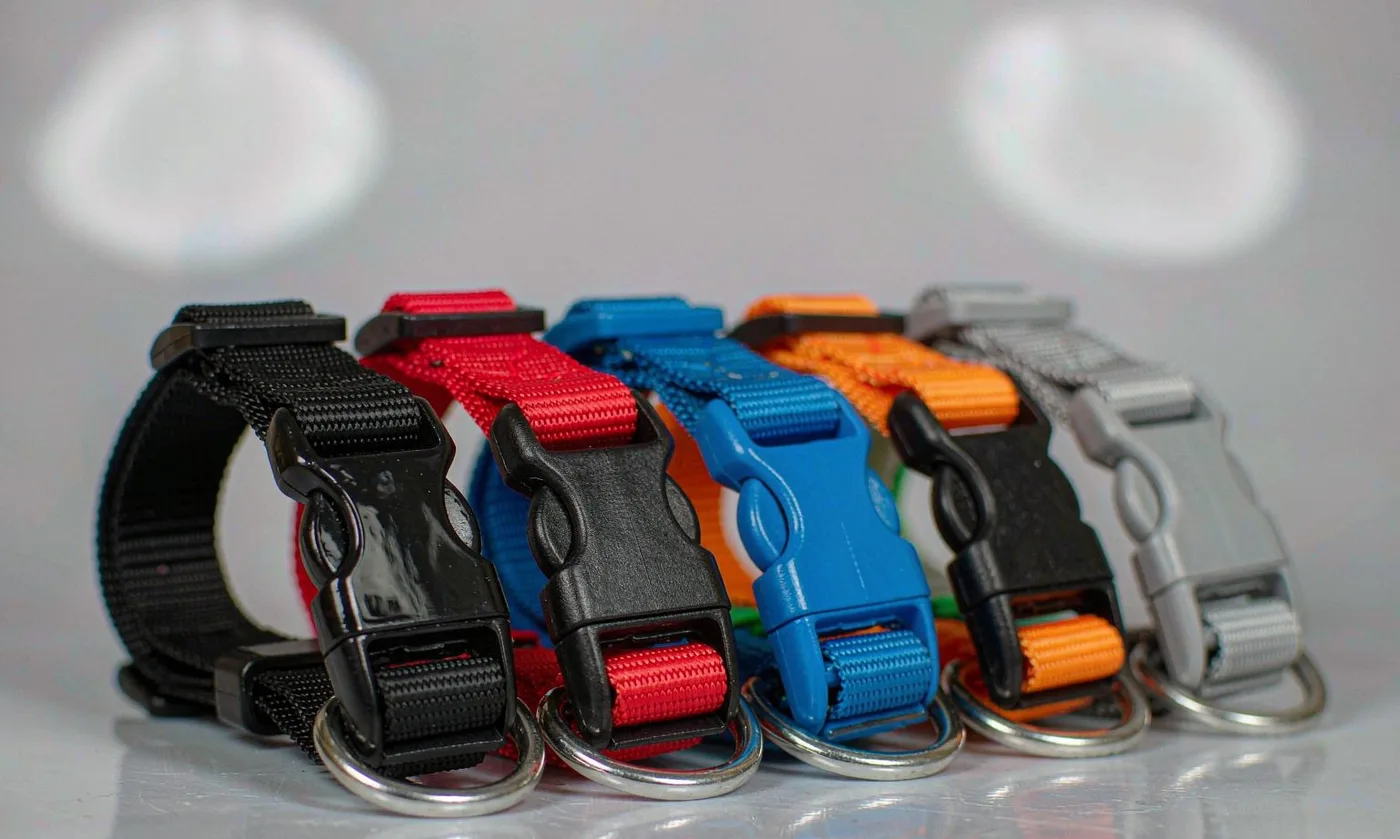
Closure and Hardware Specification Against Contamination
A closure specified for a heavy-shedding breed is a different component from one specified for strength alone. The strength requirement is unchanged, but contamination resistance becomes a co-equal criterion and it changes the component selection.
Zipper type is the first decision. A covered-coil construction, in which the tape folds over the coil so the coil is not exposed on the interior face, resists ingress far better than an exposed coil. Slider selection follows: an enclosed pull with no open loop gives the fibre nothing to pack into, and a locking slider prevents the gradual creep open that a fibre-packed slider otherwise produces.
Garage geometry does the rest. A 6-8 mm covered channel over the full zipper run, with the slider parking inside a closed box at the end of travel, keeps the mechanism out of the fibre stream entirely. The garage itself has to be cleanable — a channel that traps fibre and cannot be flushed is a maintenance liability rather than a control.
Alternative closures are worth considering for the compartment opening at this class. A cam buckle or a hook-and-loop-plus-clip arrangement eliminates the coil problem altogether, at the cost of a slower opening action and a less premium feel. Where the design allows it, a hybrid — a short zipper run with a clip taking the restraint load — reduces the contaminated length by 60-70%.
Hardware elsewhere in the product is affected in the same way. Buckle springs pack with fibre and stiffen; hook-and-loop accumulates it and loses holding force; and any exposed adjustment slider on webbing becomes stiff. The specification is to enclose adjustment hardware where possible, to specify hook-and-loop only where it can be cleaned, and to include a fibre-ingress cycle in the hardware endurance test.
Endurance testing for hardware has to be run contaminated rather than clean, which is a change most programmes miss. A buckle cycled 5,000 times in a clean state passes and tells nothing; the same buckle cycled with fibre introduced at intervals of 500 operations shows the stiffness rise and the eventual failure. The specification therefore sets the contamination interval as part of the test method rather than leaving it to the lab.
Cleaning access closes the specification. The closure run, the garage and the panel perimeters should be reachable with a brush or a vacuum nozzle without disassembly, and the care label should say so. Contamination resistance is a component-selection criterion at this breed and belongs in the hardware specification, not in the care instructions.
Thermal Load in a Dense Double Coat
A full double coat is an insulating layer of 35-55 mm over the trunk, with a still-air fraction that gives it a thermal resistance far above any single-coated breed's. The animal is well protected against cold and poorly protected against heat, and the carrier's ventilation is the only variable available to the designer.
The consequence is an asymmetric specification. In cool conditions the breed needs very little from the carrier beyond draught protection, and an insulating roof of 4-6 mm plus a closable exhaust is sufficient. In warm conditions the coat traps the animal's own heat and the carrier has to remove it, which pushes the open-area requirement to the top of the class range at 28-34%.
Airflow path matters more than total area at this class for a specific reason: the coat itself is the resistance layer, and air has to move through the coat rather than only past it. A cross-flow arrangement with intake low at the side and exhaust high at the rear creates a pressure differential across the animal, which drives air through the coat; a single-face arrangement moves air around it and achieves far less.
Evaporative capacity is the binding mechanism, as it is for other coated classes, and it binds sooner here. Panting is the animal's only effective cooling route, the compartment saturates, and the criterion is a relative humidity under 68% at the head position after 45 minutes alongside a temperature rise under 4 °C above ambient.
Solar gain is the input most easily removed. A dark outer in sun adds 50-90 W to a compartment of this size; a light outer with a reflectance above 0.5 removes about half of it, and a shade flap over the aperture costs 0.40-0.90 USD and removes most of the direct component. For programmes selling into warm climates the light outer is not optional. Transport welfare framing is commonly cross-checked against guidance from the American Veterinary Medical Association, and air movement rules are published by IATA.
Structure and Load Distribution for a Light Frame
At 6-12 kg the structural requirement is modest, and the interesting part of the specification is not strength but the interaction between a long, light frame and a compartment that is sized for the coat rather than for the body. The interior is larger than the mass implies, which makes the shell comparatively large and the structure comparatively light — a combination that produces shape-retention problems.
Deflection is the governing criterion and is set by the length rather than the mass. At a 560-660 mm span the target is 3 mm at a 14 kg rated load, which a 4.0 mm board with two longitudinal ribs or a moulded tray with 12 mm ribs achieves comfortably. A single flat 4.0 mm board deflects 5-7 mm over the same span, which is why the rib or tray is specified despite the modest load.
Shape retention is the real issue. A shell with a large interior and a light floor collapses inward at the top edge under strap tension, and because the interior is tall relative to the animal, the collapse is more visible and more consequential than it would be in a compact carrier. A perimeter hoop of 5-6 mm plus two side battens retains 92-96% of stated interior height under load against 70-80% unframed, for 0.80-1.60 USD.
Dynamic behaviour follows from the light mass and the large volume. A 9 kg animal in a large compartment has room to move, and its shifting produces transient loads of 1.5-2x static at unpredictable positions. The floor's rib pitch is set at 45-50 mm so that no realistic load position falls between supports, and the base seam carries a 20 mm allowance with bar-tacks at 12 mm intervals.
Wearer-side load is light at this class and the harness specification is correspondingly modest: 38 mm shoulder webbing with 8-10 mm padding, a hip belt of 60-80 mm with a light stiffener, and a sternum strap. Contact pressure limits remain under 30 kPa at the shoulder. The structure is easy at this mass and the difficulty is shape retention in a compartment sized for coat volume rather than for body volume.
Material and Lining Specification
Material selection at this class is governed by the coat's interaction with surfaces rather than by load. Abrasion from a 9 kg animal is modest; fibre transfer, electrostatic retention and cleanability are not.
Shell fabric is a 600D or 900D coated polyester at 220-300 g/m², with a coating weight of 35-50 g/m² of dry solids on TPU or a PVC-free polyolefin. The coating does more than waterproof: it produces a smooth, low-surface-energy face that releases fibre rather than holding it, and it is the reason a coated shell is specified even where waterproofing is not a selling point.
Lining is the component that carries the specification. A smooth-faced 420-600D with a hydrophobic and anti-static finish, bonded rather than quilted, with no raised texture and no exposed loop. Surface resistivity below 10^11 ohms per square measurably reduces electrostatic retention of fine undercoat fibre, which is the mechanism behind the familiar complaint that hair will not come out of a lining.
Ventilation panels use a wide-aperture monofilament at 320-400 g/m² or a perforated panel with 5-6 mm holes, per the clogging table above. Panel perimeters are bound and, where a panel meets the closure run, welded or bonded rather than stitched so there is no seam loop to collect fibre.
The removable mat closes the material package: a quilted needled fabric of 300-450 g/m² with a hydrophobic backing, clipped rather than sewn in, and launderable. Removability is not a convenience at this breed — it is the only practical way to remove accumulated undercoat from the product.
Seam and trim specification follows the same logic as the lining. Interior seams are bound rather than overlocked, webbing ends are hot-knife sealed, and any decorative trim inside the compartment is eliminated, because each of those is a fibre trap. Where a seam must run through the compartment, it is oriented vertically rather than horizontally so that fibre falls past it rather than settling along it.
Screening and documentation are standard. Textile components are screened against OEKO-TEX criteria, and test methods follow practice published by ASTM International.
Test Protocol for Sheltie-Class Release
Release testing runs the mid-size protocol at a 14 kg rated load with three coat-specific additions: a fibre-clogging test, a hair-ingress cycle on the closure, and a seasonal-fit check at both coat states. The additions are cheap and fixture-light, which makes the class straightforward to qualify.
The clogging test is the core addition. A defined mass of undercoat-simulant fibre — soft, short, cohesive, at a stated grammage — is introduced into the compartment with the panels in place and a low-velocity airflow applied for 60 minutes. Effective open area is then measured on a flow rig at a fixed pressure differential, with acceptance above 20%. A wash or brush release above 90% of applied fibre is checked afterwards.
The ingress cycle addresses the closure. Five grams of the same simulant is introduced, the closure is operated 200 times, and the operating force is measured before and after. Acceptance is a force increase under 20% and no jamming. The same cycle is run on buckles and adjustment hardware with an acceptance of no functional change.
The seasonal-fit check is dimensional rather than mechanical. A fit gauge representing the full-coat silhouette — frame dimensions plus 35-55 mm of coat depth — must enter and lie within the interior with clearance at every point, and the mid-blow gauge must not be so loose that the animal can rotate into a corner. Clearance is recorded at five points.
Structural testing is standard: 56 kg static proof for 60 seconds with deflection under 3 mm, 10,000 cycles at 21 kg at 0.5 Hz, strap attachment at 5x carried mass, and drop testing at 400 mm at four orientations with a 12 kg ballast. Quality system requirements are held to ISO 9001, and every report records measured values rather than pass or fail.
Cost, MOQ and Programme Notes
A Sheltie-class build sits in the middle of the range on cost. The wide-aperture or perforated panel specification adds 0.80-1.60 USD, the covered-coil closure with a garage and brush-out channel adds 1.20-2.40 USD, the anti-static release lining adds 0.70-1.40 USD, the framed shell adds 0.80-1.60 USD, and the removable launderable mat adds 0.60-1.20 USD. Total unit cost lands at 18-30 USD FOB.
Tooling is light. No moulded parts are required unless a ribbed tray is specified, and a die-cut board with bonded rails meets the deflection target at this load for 1.00-2.00 USD of unit cost with no tooling. That makes the class accessible to a first programme and makes the sampling risk low.
MOQ is 500 pieces per colourway as usual, and the commercial argument for this class is maintenance rather than fit. A buyer comparing two carriers of similar size will not see the difference in aperture geometry or in lining resistivity, but will discover it in the first seasonal blow. Packaging and copy should therefore lead with the measurable claims: effective open area after fibre loading, closure ingress cycles and a launderable interior.
Range planning deserves a closing note. The clog-resistant panel specification and the contamination-resistant closure developed for this class transfer directly to other heavy-shedding double-coated breeds, and the same two controls support the herding-breed group generally. Developing the coated-breed platform once and deriving the breed SKUs from it recovers the engineering across several titles rather than one.
Schedule and commercial terms are unchanged: prototypes in 6-10 working days once the panel and closure decisions are frozen, bulk production 35-50 days after approval, final random inspection to AQL 2.5 with clogging and ingress checks added to the defect list, T/T 30/70 and FOB Xiamen. The Sheltie class is a fibre-management problem, and the two controls that solve it are aperture geometry and a covered closure.
Order and quality terms
- MOQ 500 pieces per colourway; samples in 6-10 working days
- Bulk production 35-50 days after approval; AQL 2.5 inspection standard
- T/T 30/70 terms, FOB Xiamen, full document set per shipment
People Also Ask
What interior size suits a Sheltie?
300-360 mm wide by 560-660 mm long by 420-480 mm high, from a 430-520 mm back length plus a 30-50 mm seasonal coat allowance on width and height.
Why does Sheltie undercoat clog carrier mesh?
The undercoat sheds freely and in volume as soft, short, cohesive fibre that bridges apertures readily. Fine 1.5-2.5 mm mesh drops to 11-16% effective open area; 4-6 mm apertures hold 24-28%.
How do you stop hair jamming the zipper?
A covered coil construction, an enclosed slider pull with no open loop, and a 6-8 mm garage over the full run with a brush-out channel. Where possible a clip takes the restraint load off the zipper.
How much ventilation does a double-coated breed need?
28-34% open area in cross-flow, with intake low at the side and exhaust high at the rear so air is driven through the coat rather than around it.
Why is the lining specified with an anti-static finish?
Fine undercoat fibre is held electrostatically as much as mechanically. A surface resistivity below 10^11 ohms per square measurably improves release and is the fix for hair that will not come out.
Does coat season change the carrier size needed?
Yes. Full coat adds 35-55 mm of depth over the trunk against 15-25 mm mid-blow, which is why the interior carries a 30-50 mm allowance that is simply empty space in summer.
Frequently Asked Questions
What rated load suits the Sheltie class?
14 kg against a 6-12 kg animal, with a 56 kg static proof, deflection under 3 mm at a 560-660 mm span, and 10,000 fatigue cycles at 21 kg.
Why is neck girth with the ruff the governing aperture dimension?
The ruff is the widest part of the animal in full coat at 280-360 mm. An aperture sized to the neck alone at 330-420 mm or less catches the ruff and the dog will refuse the carrier afterwards.
What deflection target applies at this span?
3 mm at rated load, needing a 4.0 mm board with two longitudinal ribs or a moulded tray with 12 mm ribs. A flat 4.0 mm board deflects 5-7 mm over the same span.
Why is shape retention a bigger issue here than at other masses?
The interior is sized for coat volume rather than for body volume, so it is tall relative to a light animal and the collapse is more visible. A perimeter hoop and two battens retain 92-96% of stated height against 70-80% unframed.
What rib pitch is used on the floor?
45-50 mm, set so that no realistic load position falls between supports. A light animal in a large compartment shifts unpredictably, producing transients of 1.5-2x static.
How is the clogging test run?
A defined mass of undercoat-simulant fibre is introduced with a low-velocity airflow for 60 minutes, then effective open area is measured on a flow rig at a fixed pressure differential. Acceptance is above 20%.
What is the closure ingress acceptance criterion?
Five grams of simulant, 200 closure operations, and an operating force increase under 20% with no jamming. Buckles and adjustment hardware run the same cycle with an acceptance of no functional change.
How is the seasonal fit checked?
A fit gauge representing the full-coat silhouette must enter and lie within the interior with clearance at all points, and the mid-blow gauge must not be loose enough for the animal to rotate into a corner.
Why is a coated shell specified even where waterproofing is not a selling point?
The coating produces a smooth, low-surface-energy face that releases fibre. A coating weight of 35-50 g/m² of dry solids on TPU or a PVC-free polyolefin is specified for release as much as for water.
What mat specification is used?
Quilted needled fabric of 300-450 g/m² with a hydrophobic backing, clipped rather than sewn in and launderable. Removability is the only practical way to clear accumulated undercoat.
How much does solar gain add at this size?
50-90 W for a dark shell in sun. A light outer with reflectance above 0.5 removes about half, and a shade flap over the aperture costs 0.40-0.90 USD and removes most of the direct component.
What humidity limit applies?
Under 68% relative humidity at the head position after 45 minutes alongside a temperature rise under 4 °C above ambient, because panting stops working once the compartment saturates.
Can tooling be avoided at this class?
Yes. A die-cut board with bonded rails meets the deflection target at this load for 1.00-2.00 USD of unit cost with no tooling, which makes the class a good first programme.
What is the expected FOB unit cost?
18-30 USD, with panels at 0.80-1.60, the closure package at 1.20-2.40, the release lining at 0.70-1.40, the frame at 0.80-1.60 and the removable mat at 0.60-1.20 USD.
Talk to QUANZHOU JUNYUAN BAGS about a pet carrier program: MOQ 500 pieces per colourway, samples in 6-10 working days, bulk production in 35-50 days under AQL 2.5 inspection.
Get a free quote Request a sample