Best Dog Carrier Backpack Materials: A Complete Comparison
The best material set for a dog carrier backpack is a 600D polyester shell at 210-240 gsm with a 0.30 mm PU coating, a 210 gsm air-mesh ventilation panel, 8 mm PE board with a 25 mm perimeter band, and Tex 70 bonded polyester thread at 8-10 SPI. Move to 900D above 15 kg rated mass. Programmes run at MOQ 500 pieces per colourway, samples in 6-10 working days, bulk in 35-50 days.
Executive Summary. Material selection decides roughly 70% of the cost and nearly all of the perceived quality of a dog carrier backpack, and it is the part of the specification most often written loosely. This comparison covers every material layer in the build: shell fabric, coating, lining, ventilation mesh, padding foam, structural board, webbing, hardware and zipper. For each layer we give the numbers that should appear in a tech pack, the working range, and the cost consequence of moving within it.
Commercial frame: MOQ 500 pieces per colourway, samples in 6-10 working days, bulk production 35-50 days after gold seal, inspection to AQL 2.5. The QUANZHOU JUNYUAN BAGS production network runs 7 partner production lines with 149 machines and 137 people across an SGS-verified production base of 4,950 m2, producing 200,000 units per month under BSCI and ISO 9001 systems. Terms are T/T 30/70, FOB Xiamen. Every material recommendation below is qualified against availability at those volumes, because a specification that cannot be sourced at 500 units per colourway is not a specification.
Audit records from a dog carrier factory remain the fastest way to separate a real dog carrier backpack production base from a trading office with a photo catalogue.
How to Read a Material Specification
A fabric line in a bill of materials is only a specification if it contains four independent numbers. Denier describes the linear mass density of the yarn, not the strength of the cloth. GSM describes the finished mass of the fabric including coating, which is what you actually pay for. Weave describes how the yarns are interlaced and therefore how the cloth resists tear and abrasion. Coating describes the polymer applied to the back face, which governs water resistance, hand feel and chemical compliance.
Two fabrics can both be labelled 600D and differ by 30% in mass and by a factor of three in abrasion life. The first is a plain-weave 600D with a 0.35 mm PU backing at 235 gsm; the second is an air-textured 600D with a 0.18 mm backing at 180 gsm. Both pass a casual inspection, and only one survives a season of claws. This is why our production team specifies GSM with a tolerance and coating thickness in millimetres on every fabric line, and why incoming inspection measures both before a lot is released to cutting.
The same four-number discipline applies to the non-fabric layers. Foam needs a density and a compression set, not a material family. Board needs a thickness and a flexural behaviour, not a trade name. Hardware needs a plating specification and a salt-spray hour count, not a colour. Loose specification is the mechanism by which a good sample becomes a poor bulk shipment.
A fifth number belongs on every fabric line for any programme that will be reordered: the mill and the lot reference. Fabric varies between production runs from the same mill, and naming both turns a future colour or hand-feel dispute into a checkable fact rather than a disagreement. Our production team records the mill and lot on the incoming inspection sheet and on the retained swatch, which is how a programme rerun three years later still matches the original.
Finally, specify the test that proves each number. Tear strength is meaningless without the method and the conditioning; abrasion is meaningless without the load and the endpoint; colour fastness is meaningless without the grade scale. Point each material line at a published method and an acceptance figure and the specification becomes enforceable rather than aspirational.
Shell Fabrics: Polyester, Nylon, Canvas and rPET
Four fibre families are in scope for a pet carrier shell. Polyester dominates because it holds colour well, resists UV better than nylon, and costs less at equivalent denier. Nylon 6.6 has higher tensile and tear strength per unit mass and a softer hand, but it costs 25-45% more and it absorbs moisture, which changes its dimensions in humid conditions. Cotton canvas is a niche choice: excellent abrasion and a natural hand, but heavy, slow-drying, and prone to mildew if it is packed damp. Recycled polyester made from post-consumer bottle flake has reached parity with virgin polyester on most mechanical properties and is now a mainstream choice where the brand carries a sustainability claim.
| Shell | Typical GSM | Tear (warp) | Abrasion | UV | Water uptake | Relative cost |
|---|---|---|---|---|---|---|
| 300D polyester | 150-170 | 25-35 N | 10,000 cycles | Good | <1% | 0.75x |
| 600D polyester | 210-240 | 40-55 N | 20,000 cycles | Good | <1% | 1.00x |
| 900D polyester | 280-330 | 60-80 N | 35,000 cycles | Good | <1% | 1.45x |
| 420D nylon 6.6 | 180-210 | 50-65 N | 25,000 cycles | Fair | 3-4% | 1.35x |
| 500D nylon 6.6 | 230-270 | 65-85 N | 30,000 cycles | Fair | 3-4% | 1.70x |
| 600D rPET | 215-250 | 38-50 N | 18,000 cycles | Good | <1% | 1.10x |
| 12 oz cotton canvas | 340-400 | 30-40 N | 15,000 cycles | Fair | 8-12% | 1.55x |
The working recommendation is straightforward: 600D polyester for the 3-15 kg bands and 900D polyester or 500D nylon above 15 kg. Below 300D the shell claws through. Above 900D the cloth becomes too stiff to ease around tight corner radii without puckering, and the added mass works against the lightweight claims most brands want to make.
There is a second constraint on the upper end that is easy to miss: sewing. A 900D shell with a heavy coating is difficult to feed through a standard lockstitch machine at the tight corner radii a carrier requires, and it will produce puckering and skipped stitches at those corners unless the machine is set up with a walking foot and the needle size is increased. Our production team flags this at sampling because the fix is a process change, not a material change, and it affects the achievable daily output.
Fibre choice also interacts with print method. Sublimation printing bonds to polyester and to rPET but not to nylon or to cotton without a transfer coating, so a brand planning a photographic print on a nylon shell needs to change either the fibre or the print method. That decision has a 12-18 day lead time consequence and should be made before the mill is booked.
Coatings and Finishes: PU, PVC, TPU and DWR
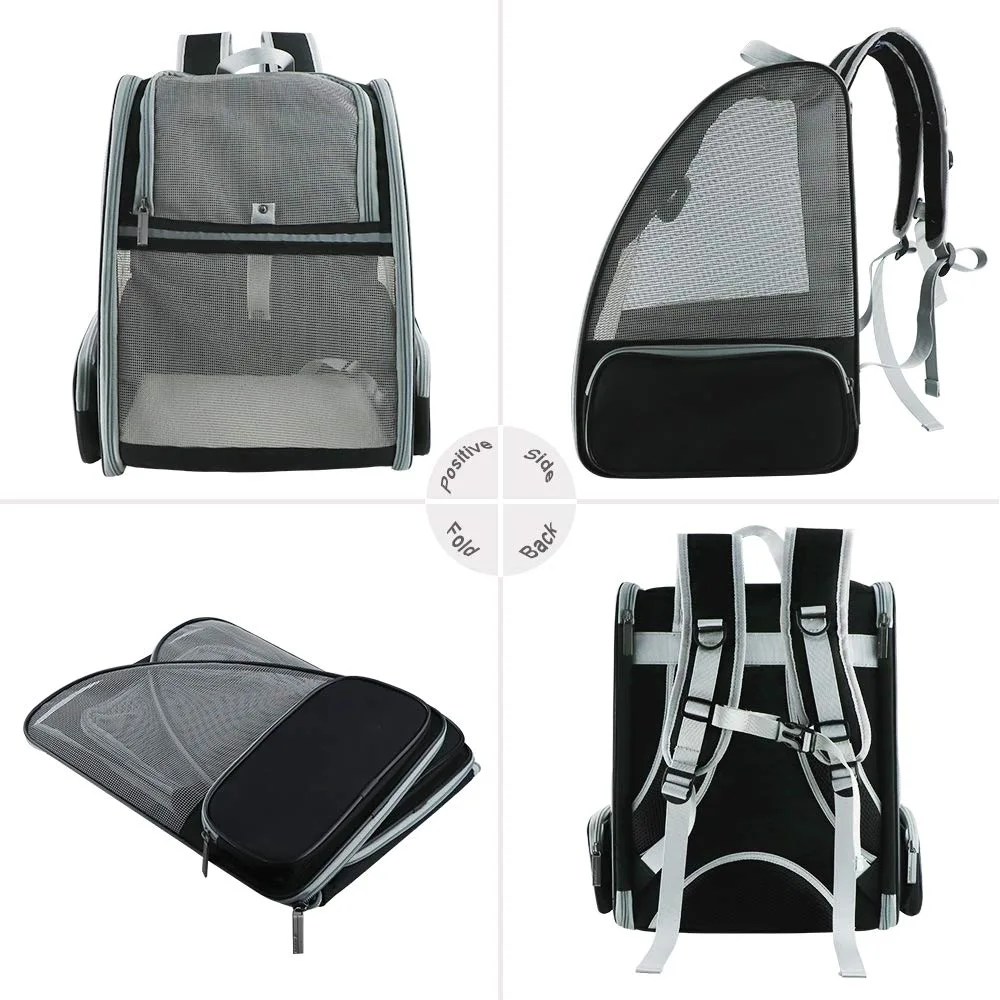
The coating does more work than the base cloth when it comes to water resistance, cleanability and chemical compliance. Polyurethane coating at 0.20-0.40 mm is the default: it is flexible, it bonds well to polyester, and it is chemically the easiest of the three to bring into compliance. PVC coating gives better abrasion resistance and a higher hydrostatic head at equal thickness, but it is heavier, it stiffens in cold weather, and it brings plasticiser scrutiny under REACH. TPU lamination is the premium option: excellent abrasion, excellent hydrolytic stability, and the best flex life of the three, at roughly 1.8-2.4x the cost of PU.
Finish thickness should be specified in millimetres and verified with a gauge. A 0.30 mm PU coating delivers a hydrostatic head in the 800-1,200 mm range, which is shower resistance rather than waterproofing. True waterproofing of the lower shell comes from construction: taped or welded seams, a coated base panel, and a sealed board channel. Brands that buy a heavier coating to avoid welded seams end up with a stiffer, more expensive product that still leaks at the needle line.
A durable water-repellent finish on the face is worth specifying separately. It is a fluorocarbon-free or C6 topcoat that makes water bead and roll, it keeps the shell looking clean, and it costs cents per unit. It also degrades: expect meaningful loss after 20-30 washes or roughly a season of outdoor use, so it should be presented as a maintenance feature rather than a permanent property. Sustainability claims on finishes and contact textiles are commonly verified against OEKO-TEX Standard 100, and restricted substance obligations in the EU are administered through ECHA.
Lining and Contact Surfaces
The lining is the layer the animal actually touches, and it is the layer most often value-engineered into something inappropriate. The requirement is a balance of four properties: it must resist liquid long enough for a spill to be dealt with, it must clean without degrading, it must not abrade against claws, and it must not trap heat against the animal.
The practical choice is a 210D or 420D polyester lining with a light PU or TPU backing at 90-130 gsm. The backing is what makes the lining wipeable; an unbacked lining absorbs and stains. For programmes where washability is a marketing claim, a TPU-laminated 420D at 150 gsm survives repeated machine washing without delaminating, where a PU-backed 210D may begin to craze after 20-30 cycles.
Colour matters more than it appears to. A dark lining hides soiling between washes but absorbs radiant heat; a light lining reflects heat and shows every mark. For a carrier that will be used outdoors, our production team recommends a mid-tone lining with a removable, washable insert, which resolves the conflict by making the visible surface replaceable. Specify the insert as a separate line item with its own GSM and backing, because "removable cushion" without numbers reliably arrives as 150 gsm unbacked padding.
Ventilation Mesh: Airflow Against Claw Resistance
Mesh selection is a direct trade between open area and durability. Standard polyester tricot mesh at 60-80 gsm has excellent airflow and almost no claw resistance; it snags on the first outing. Air mesh at 180-260 gsm, a warp-knitted structure with a stable aperture, resists claws and holds its shape, at roughly 30% less airflow at equal open area. Three-dimensional spacer mesh at 250-320 gsm with a 3-5 mm loft offers both: air moves through the loft rather than only through the apertures, and the structure cushions as well as ventilates.
Aperture geometry matters alongside mass. A hexagonal or a fine square aperture resists a claw hooking into it better than a large diamond aperture of the same open area, because the claw cannot find purchase. Our production team specifies mesh by mass, aperture shape and open-area percentage together, and places the heavier mesh in the lower claw zone with a lighter mesh above the claw line where the animal cannot reach.
There is a structural consideration too. Mesh has stretch, and a mesh panel set into a structural side wall reduces the panel's resistance to the sideways abuse load. If the mesh panel occupies more than roughly 35% of a side wall, the surrounding shell has to be reinforced or the wall will deform under a launching dog. That is a specification line, not a styling note.
Open area itself should be stated as a measured percentage rather than as an impression. Two meshes that look equally open to the eye can differ by 15 percentage points, and that difference is worth 2-4 °C of internal air temperature in still conditions. Our production team specifies open area with a tolerance and verifies it on the first lot by weighing a known area against the base polymer density, which is a fast and repeatable check that does not require a laboratory.
Finally, consider the mesh edge. A raw cut edge on a polyester mesh will fray under clawing; a bound or a welded edge will not. On any mesh panel within reach of the animal, specify a bound edge on the claw line. It adds one operation and it removes the most common warranty claim in this product class.
Padding Foam: Density, Compression Set and Recovery
Foam is specified by density and by compression set, and both numbers are usually missing from tech packs. Shoulder strap foam should be EVA or PU at 45-60 kg/m3 with a compression set below 10% after 22 hours at 70 °C. Below 35 kg/m3 the foam bottoms out under a 12 kg load within an hour of walking; above 80 kg/m3 it becomes boardy and uncomfortable at the same thickness.
Back panel foam should be lower density and thicker: 30-45 kg/m3 at 10-15 mm, with a spacer mesh face so it can actually move air. A closed-cell foam back panel at 12 mm traps heat against the wearer's back, and that is the most common comfort complaint in this product class. Where the carrier is marketed for warm climates, a 3D spacer mesh back panel with no foam at all outperforms a padded panel, at lower cost.
The base insert foam is a different requirement again: it needs recovery after sustained compression, because the animal's mass sits on it continuously. Specify 25-35 kg/m3 polyurethane at 4-6 mm with a recovery requirement of 70% thickness after 72 hours under 2 kPa. Without that line, the insert arrives as low-density padding that permanently flattens in the first month and takes the perceived quality of the whole product down with it.
Structural Boards: EVA, PE and Honeycomb Polypropylene
The base board carries the entire load and it is the single highest-leverage material decision in the build. Three options cover the range. EVA sheet at 5-8 mm is cheap and light but creeps under sustained load; a 5 mm EVA board under a 12 kg point load will take a permanent set within weeks. PE board at 5-10 mm is the value-engineering sweet spot: good stiffness, good moisture resistance, low cost, and adequate for the 3-15 kg bands when paired with a perimeter band. Honeycomb polypropylene at 8-12 mm with a 600-900 gsm skin is the premium answer: the best stiffness-to-weight ratio in the range, excellent moisture resistance, and flat under load, at roughly 2.2-2.6x the cost of PE at equivalent thickness.
| Board | Thickness | Weight | Suits | Relative cost | Creep risk |
|---|---|---|---|---|---|
| EVA sheet | 5-8 mm | Low | 3-8 kg | 1.00x | High |
| PE board | 5-10 mm | Medium | 3-15 kg | 1.35x | Moderate |
| Honeycomb PP | 8-12 mm | Low | 8-25 kg | 2.90x | Low |
| PP corrugated | 4-6 mm | Low | 3-8 kg, budget | 0.85x | High |
| Moulded PP frame | Perimeter only | Medium | 15-25 kg | 3.40x + tooling | Very low |
The board should always be paired with a perimeter reinforcement. A folded shell flap with a 25 mm internal webbing band sewn into the base seam turns the perimeter from a hinge into a beam for under $0.20 in material, and it roughly doubles the load at which the base starts to dish. Upgrading the board without upgrading the perimeter wastes most of the upgrade.
Webbing, Hardware and Zippers
Webbing carries the load, so it is specified by width, material and breaking strength. Polyester webbing holds its width under load, resists UV, and does not absorb much moisture; it is the default. Nylon webbing has a softer hand and better abrasion resistance but stretches 8-12% at working load, which changes the fit of a carrier during a long walk. For the 8-15 kg band, 32 mm polyester at a minimum breaking strength of 900 daN is the practical floor; 25 mm suits the 3-8 kg band and 38 mm is required above 15 kg.
Hardware splits by position. Acetal (POM) buckles are correct for 25-32 mm adjustment positions where the load is moderate: they are light, quiet and corrosion-proof. Load-path hardware above 32 mm should be zinc alloy die-cast or aluminium, with a plating specified and a 24-48 hour salt-spray acceptance. Iron hardware is cheap and strong but it rusts, and rust staining on a light shell is a visible defect that no inspection regime reliably catches before shipment.
Zippers are the component customers touch most and complain about most. A #5 coil suits accessory pockets; the main pet entry needs a #8 coil, and where the entry runs around a corner it should be a reverse coil with a water-resistant tape. Specify the cycle life at 5,000 open-close operations and the slider type, because a branded slider with a moulded pull is the difference between a zipper that feels considered and one that feels like an afterthought. Test methods for hardware and zipper durability are published by ASTM International, and any claim that will appear on retail packaging in the US should be screened against CPSC guidance before artwork is approved.
Mapping Material Sets to Price Tiers and Markets
Material choices only make sense as a set. A 900D shell with a 5 mm EVA board is an incoherent specification: the shell will outlast the base by years. Three coherent sets cover the market, and each is internally consistent in the sense that no component is dramatically over- or under-specified relative to the others.
- Entry set ($7-$11 FOB): 300D-600D polyester at 180 gsm, PU 0.20 mm, 210D unbacked lining, 5 mm EVA board, 25 mm polyester webbing, acetal hardware, #5 zippers. Suits the 3-8 kg band and a price-led retail channel.
- Core set ($11-$17 FOB): 600D polyester at 230 gsm, PU 0.30 mm, 210D PU-backed lining, 8 mm PE board with a perimeter band, 32 mm webbing, zinc alloy at load points, #8 zippers, 210 gsm air mesh. Suits the 8-15 kg band and is the right default for most programmes.
- Premium set ($18-$26 FOB): 900D polyester or 500D nylon at 300 gsm, TPU lamination, TPU-backed 420D lining, 10 mm honeycomb PP, 38 mm webbing, alloy hardware with 48 h salt spray, #8 reverse-coil water-resistant zippers, 3D spacer mesh back panel. Suits the 15-25 kg band and a technical or outdoor channel.
Market modifies the set. A programme for a humid climate should upgrade the coating and specify welded lower seams before it upgrades the denier. A programme for a market with strong recycled-content expectations should specify rPET with a transaction certificate in the brand's name, which is a documentation cost rather than a material cost. A programme for a retailer with strict chemical requirements should lock the coating and ink system first, because that choice constrains everything else.
The last variable is volume. A 500-unit first buy cannot justify a custom dyed lot or a custom extrusion, so the entry into any material tier should use stock colourways and stock hardware, with customisation concentrated in the trim package: woven labels, printed lining, branded zipper pulls and retail packaging. Once the programme reaches 2,000 units per colourway, custom dye lots and moulded hardware become economical and the material set can move up without a unit cost penalty.
Our production team builds all three sets routinely at MOQ 500 pieces per colourway, and the material availability behind them is the reason the 6-10 working day sampling window and the 35-50 day bulk window hold. Exotic materials are the main cause of both windows stretching: a mill that needs 25 days to dye a lot will add 25 days to your schedule regardless of how fast the line runs.
Order and quality terms
- MOQ 500 pieces per colourway; samples in 6-10 working days
- Bulk production 35-50 days after approval; AQL 2.5 inspection standard
- T/T 30/70 terms, FOB Xiamen, full document set per shipment
People Also Ask
What is the best fabric for a dog carrier backpack?
600D polyester at 210-240 gsm with a 0.30 mm PU coating. It balances tear strength, abrasion life, UV resistance and weight for the 3-15 kg bands and it is available at MOQ volumes without custom mill lead time.
Is nylon better than polyester for pet carriers?
Nylon has higher tear strength per gram and a softer hand, but it costs 25-45% more, absorbs 3-4% moisture and has poorer UV resistance. It is worth the premium only above 15 kg rated mass.
What denier should a pet carrier use?
300D is the floor for claw resistance, 600D is the default for most programmes, and 900D suits carriers rated above 15 kg. Denier alone is not a specification without GSM, weave and coating thickness.
What foam density is used in carrier straps?
45-60 kg/m3 EVA or PU with a compression set below 10% after 22 hours at 70 C. Below 35 kg/m3 the foam bottoms out under a 12 kg load within an hour.
Which base board is best?
8 mm PE board with a perimeter reinforcement band for the 3-15 kg bands, and 10 mm honeycomb polypropylene above 15 kg. EVA creeps under sustained load and should be limited to small, lightweight units.
Are recycled materials strong enough for pet carriers?
Yes. 600D rPET at 215-250 gsm performs within 5-10% of virgin polyester on tear and abrasion, and it is the mainstream choice where a brand carries an on-pack recycled claim supported by a transaction certificate.
What zipper size does a pet carrier need?
#8 coil for the main pet entry and #5 for accessory pockets. Specify 5,000 open-close cycles and a branded slider with a moulded pull, because the entry zipper is operated one-handed while holding an animal.
Frequently Asked Questions
What is the difference between PU, PVC and TPU coating?
PU is flexible, bonds well and is the easiest to bring into chemical compliance. PVC gives higher water resistance and abrasion but is heavier, stiffens in cold and attracts plasticiser scrutiny. TPU has the best abrasion and flex life at roughly twice the cost of PU.
How thick should the coating be?
0.20-0.30 mm for general use and 0.35-0.40 mm where shower resistance is a claim. A 0.30 mm PU coating gives a hydrostatic head of roughly 800-1,200 mm, which is shower resistant rather than waterproof.
Does a heavier coating make the carrier waterproof?
No. Water enters through needle perforations at the seam line, not through the cloth. Waterproofing requires welded or taped seams, a coated base panel and a sealed board channel.
What GSM should the lining be?
90-130 gsm for a standard 210D-420D lining with a PU backing, and around 150 gsm for a TPU-laminated lining where machine washability is claimed. The backing, not the mass, is what makes it wipeable.
Which mesh resists dog claws?
Air mesh at 180-260 gsm or 3D spacer mesh at 250-320 gsm. Standard tricot mesh at 60-80 gsm snags on the first outing regardless of how it is set.
Should the back panel be padded?
For cool climates, yes: 30-45 kg/m3 foam at 10-15 mm with a spacer mesh face. For warm climates a 3D spacer mesh panel with no foam moves air better and costs less.
Is honeycomb polypropylene worth the cost?
Above 15 kg rated mass, yes. It has the best stiffness-to-weight ratio in the range and holds flat under sustained point loads where PE board will slowly dish.
What hardware material should I avoid?
Unplated iron. It is cheap and strong but it rusts, and rust staining on a light-coloured shell is a visible defect that normally appears after the goods have shipped.
How do I specify hardware corrosion resistance?
Name the plating system and the salt-spray acceptance hours, typically 24 hours for general hardware and 48 hours for load-path hardware and for products sold in coastal markets.
Can I mix material tiers within one product?
Yes, and it is usually correct. Use premium materials at the load path, the base and the zipper, and entry-tier materials at decorative panels and internal pockets where no load is carried.
What causes coating delamination?
Hydrolysis of the polymer under heat and humidity, usually accelerated by storage in a sealed container at high temperature. TPU laminates resist it far better than PU coatings.
How do I verify the materials actually used in bulk?
Require an incoming material inspection record on GSM, coating thickness and colour Delta E for every lot, plus a retained signed swatch matched against the approved standard under D65 lighting.
Talk to QUANZHOU JUNYUAN BAGS about a pet carrier program: MOQ 500 pieces per colourway, samples in 6-10 working days, bulk production in 35-50 days under AQL 2.5 inspection.
Get a free quote Request a sampleKeep reading
- How to Choose the Right Dog Carrier Backpack for Your Brand
- Dog Carrier Backpack Manufacturer: What to Look For
- Dog Carrier Backpack Material: 600D vs 900D Oxford
- Dog Carrier Backpack Padding: Foam Density Guide
- Dog Carrier Backpack Hardware: Zinc Alloy vs Iron
- REACH Compliant Dog Carrier Backpack Materials