Pet Carrier Birthday Bandana: Celebration
A celebration bandana is engineered around four numbers: a numeral cap height of 38-70 millimetres on a 240-420 millimetre panel, a stroke width of 6-13 millimetres, a wash rating of 30-60 cycles, and one blank substrate carrying 12-20 age and message SKUs. Two colours read at three metres; four do not.
A birthday bandana looks like a trivial make until the SKU count arrives. One design, one blank, and fifteen numerals is fifteen stock-keeping units with fifteen forecasts, and the whole commercial case rests on the blank being common and only the decoration varying. This page works through it in manufacturing order: how large a numeral has to be to read at celebration-photo distance, which decoration method survives the wash and the wearer, what the substrate and hem have to do on an item that is worn for two hours and then laundered, and how a fifteen-SKU age programme is actually scheduled on one blank. It then covers the dye and metal compliance that applies to a printed textile accessory, the packaging that turns a flat triangle into a gift, and the economics of a reusable platform across seasons. Commercial terms are standard: MOQ 500 pieces per colourway, prototypes in 6-10 working days, bulk production 35-50 days after sample approval, final random inspection to AQL 2.5, T/T 30/70 and FOB Xiamen.
Wholesale pet carrier buyers usually consolidate to fill one container; for pet carrier accessory assortments our production team mixes sizes and colourways inside a single 500-piece minimum.
Legibility at Bandana Scale: Numeral and Letter Geometry
The failure mode of a celebration bandana is not that the print fails; it is that the number cannot be read in the photograph the product exists to be photographed in. Legibility is a geometry problem and it is settled before any artwork is opened.
The governing dimension is cap height — the height of the numeral from baseline to top. On a bandana worn at the throat and photographed from 1.5-3 metres, a cap height below 30 millimetres stops reading as a number and starts reading as a mark. The working range is 38-70 millimetres, which occupies 16-28% of the height of a standard 240-420 millimetre triangle and leaves room for a name or message line beneath.
Stroke width is the second variable and it interacts with the substrate. A stroke of 6-13 millimetres holds on a woven polyester; on a knit with a loop structure that spreads ink, the same stroke closes up at the corners and a 4 or an 8 loses its counters. The rule is a stroke-to-cap ratio of 0.16-0.22 for a numeral and 0.12-0.18 for a lower-case letter.
| Panel size (mm) | Usable print field (mm) | Numeral cap height (mm) | Stroke width (mm) | Second line cap (mm) | Reads clearly from (m) | Max characters, line 2 |
|---|---|---|---|---|---|---|
| 240 x 240 x 340 | 120 x 90 | 38-46 | 6-8 | 14-18 | 1.2-1.8 | 10-14 |
| 300 x 300 x 424 | 170 x 120 | 46-56 | 8-10 | 16-22 | 1.8-2.6 | 14-20 |
| 360 x 360 x 509 | 210 x 150 | 54-64 | 9-12 | 18-26 | 2.4-3.4 | 18-26 |
| 420 x 420 x 594 | 250 x 180 | 60-70 | 11-13 | 22-30 | 3.0-4.2 | 22-32 |
| 480 x 480 x 679 | 290 x 210 | 66-78 | 12-14 | 24-34 | 3.6-4.8 | 26-38 |
Contrast is the third variable and it is where most celebration artwork fails. A pastel numeral on a pastel ground measures a contrast ratio of 1.3-1.9:1 and disappears in a photograph; the same artwork with a dark numeral on a light ground measures 6-12:1 and reads at the full distance. The working specification is a minimum contrast ratio of 4.5:1 between numeral and ground.
Colour count is the fourth. Each additional colour in the numeral adds registration risk on a small panel and reduces the contrast budget, and a two-colour treatment with an outline or a drop shadow outperforms a four-colour gradient at this scale. Two colours plus the ground is the specification that reads best and prints most reliably.
The outline is the detail that rescues a low-contrast design. A 2-4 millimetre outline in a contrasting shade around the numeral raises the effective contrast ratio by 2.5-5.0 points and costs nothing in printing, and it is the standard fix where brand colours cannot be changed.
Specify a cap height of 38-70 millimetres, a stroke-to-cap ratio of 0.16-0.22, a minimum contrast ratio of 4.5:1, and two colours plus the ground with a 2-4 millimetre outline.
Decoration Method: Sublimation, Transfer, Screen and Embroidery
Four methods decorate a bandana and they differ in hand feel, colour count, wash life and the minimum quantity at which they become economic. The method is chosen from the intended life of the item, which for a celebration piece is short but not single-use.
Sublimation dyes the polyester fibre itself rather than sitting on top of it, which gives an unlimited colour count, no hand feel at all, and the longest wash life in the group at 50-80 cycles. It requires a polyester substrate at 65% or more of the fibre content and it does not work on cotton.
Direct-to-film transfer lays a printed film onto the surface with a heat-activated adhesive. It works on cotton, polyester and blends, gives unlimited colour, and carries a hand feel of 40-120 micrometres that is noticeable on a light ground. Wash life is 30-60 cycles and the failure mode is edge lift after repeated laundering.
Screen printing is the high-volume answer for a one- to four-colour design: a per-colour screen at 25-85 USD, unlimited units after that, and the lowest unit cost in the group. The trade is a setup cost that only makes sense above roughly 800-1,500 units per colour and no photographic capability.
| Method | Substrate | Colour count | Hand feel (um) | Wash life (cycles) | Setup (USD) | Unit cost (USD) | Economic from |
|---|---|---|---|---|---|---|---|
| Sublimation | Polyester 65%+ | Unlimited | 0 | 50-80 | 0-60 | 0.35-1.10 | 1 unit |
| DTF transfer | Any | Unlimited | 40-120 | 30-60 | 0-40 | 0.45-1.45 | 1 unit |
| Heat transfer vinyl | Any, flat | 1-4 | 70-160 | 25-50 | 0-30 | 0.55-1.85 | 1 unit |
| Screen, plastisol | Any | 1-6 | 80-220 | 40-70 | 25-85 per colour | 0.18-0.70 | 800-1,500 units |
| Screen, water base | Cotton, blends | 1-6 | 5-30 | 35-60 | 25-85 per colour | 0.22-0.85 | 800-1,500 units |
| Digital direct | Cotton 60%+ | Unlimited | 10-40 | 25-45 | 0-50 | 0.75-2.30 | 1 unit |
| Embroidery | Any stable | 6-15 | 300-900 | 80-150 | 15-65 digitising | 0.60-2.40 | 300-800 units |
Embroidery deserves a note because it is the method buyers ask for and the one that most often fails on this item. An embroidered numeral on a 180 gram substrate pulls the panel into a curve, the backing shows through on a light ground, and the stitch count for a 50 millimetre numeral is 900-2,400 stitches at 60-240 seconds of machine time. It is right for a premium gift programme and wrong for a volume one.
Registration tolerance is the manufacturing detail that separates a clean run from a rejected one. On a triangle the artwork has to be positioned within plus or minus 2-4 millimetres of the specified field, and a jig or a registration mark on the blank is what holds it. Without a jig, placement variance across 500 pieces reaches 6-14 millimetres.
Drying and curing is the step that determines wash life more than the ink does. A plastisol cure at 150-165 degrees Celsius for 45-90 seconds, or a transfer press at 150-170 for 10-20 seconds at 2.5-4.0 bar, are the windows; under-cure costs 40-70% of the wash life.
Sublimation on a polyester ground for volume and wash life; DTF where a cotton hand is required; screen above 800-1,500 units per colour; embroidery only for a premium gift tier.
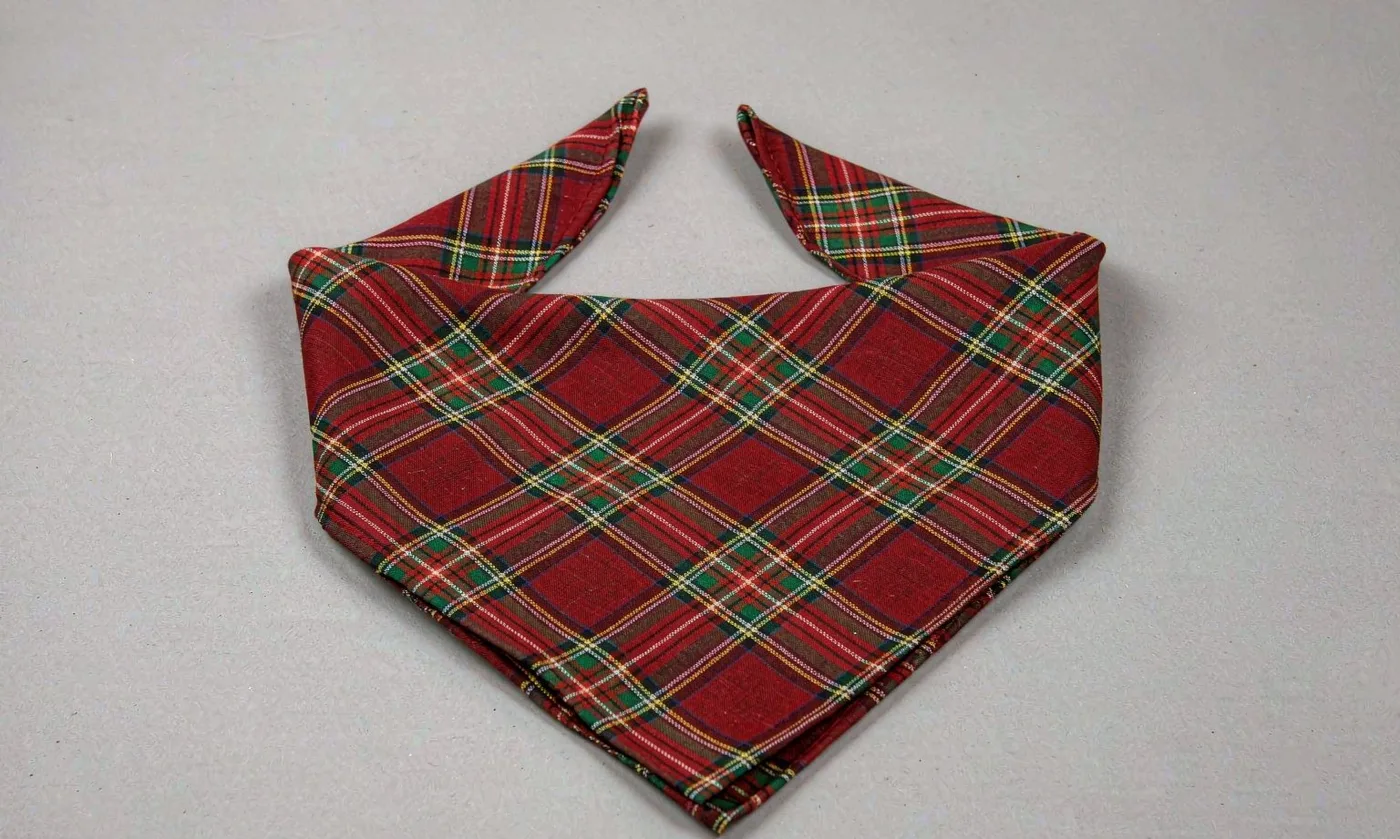
Colourfastness: What 30-60 Wash Cycles Actually Requires
A celebration bandana is bought for one afternoon and then it enters a normal laundry cycle, which means the printed panel has to survive what any other textile accessory survives. Specifying the fastness ratings is what makes that verifiable rather than hopeful.
Four fastness properties matter and they are tested separately. Wash fastness to ISO 105-C06 measures colour change and staining onto adjacent fabric; rubbing fastness to ISO 105-X12 measures dry and wet crocking; light fastness to ISO 105-B02 measures fading under xenon exposure; and perspiration fastness to ISO 105-E04 measures change under acid and alkaline sweat. Each is rated 1-5.
The specification for a celebration item is not the same as for a daily-wear item, and over-specifying costs money. A rating of 4 on wash and rubbing and 3-4 on light is appropriate; requiring 5 across the board pushes the ink and substrate cost up 18-40% for a benefit nobody sees.
| Test | Standard | Sublimation | DTF transfer | Plastisol screen | Embroidery thread | Specify | Failure mode below spec |
|---|---|---|---|---|---|---|---|
| Wash, colour change | ISO 105-C06 | 4-5 | 4 | 4-5 | 4-5 | 4 min | Fading, dull numerals |
| Wash, staining | ISO 105-C06 | 4-5 | 3-4 | 4-5 | 4-5 | 3-4 min | Bleed onto ground |
| Rubbing, dry | ISO 105-X12 | 4-5 | 4 | 3-4 | 4-5 | 4 min | Dusting, transfer |
| Rubbing, wet | ISO 105-X12 | 4-5 | 3-4 | 3-4 | 4 | 3 min | Transfer when damp |
| Light, xenon | ISO 105-B02 | 4-6 | 3-5 | 4-6 | 4-6 | 3-4 min | Outdoor fading |
| Perspiration, acid/alkali | ISO 105-E04 | 4-5 | 4 | 4-5 | 4 | 3-4 min | Shift at the neck |
Crocking is the property that generates the most consumer complaints and it is entirely a function of cure. An under-cured plastisol prints at a dry rub of 2-3 and rubs off onto hands and furniture; the same ink fully cured prints at 4-5. The check is a post-cure rub test on the first 20 pieces of every run.
Staining onto the ground is the failure that is invisible until it is washed. A red numeral bleeding into a white ground at rating 3 produces a pink halo after the first wash, and it is not recoverable. The control is a wash test on the actual substrate and ink combination, run before the bulk is committed rather than after.
Test reports should be requested by method and substrate combination, not by method alone. A sublimation ink rated 4-5 on a 100% polyester knit is not the same result on a 65/35 blend, and a report that does not name the substrate is not evidence for the item being bought.
Specify ISO 105-C06 wash at 4 minimum, X12 dry rub at 4 minimum, B02 light at 3-4 minimum, and require the report to name both the ink and the substrate.
Substrate, Weight and Hem Construction
The blank is the item that is common across every SKU, so its specification carries more weight than any single decoration decision. Get the substrate right once and fifteen SKUs follow; get it wrong and fifteen SKUs inherit the problem.
Weight is the first decision. A bandana at 90-130 grams per square metre drapes and photographs well on a small animal; the same item at 160-220 stands away from the body and reads as stiff. The working range for a celebration triangle is 110-170 grams, with the lighter end for a cat or toy breed and the heavier end for a large dog.
Fibre content follows from the decoration method. Sublimation needs 65% polyester or more, which points at a 100% polyester woven at 130-160 grams or a poly-cotton at 65/35. A cotton hand requires DTF or screen, which points at a 100% cotton woven at 120-150 grams.
The hem is where a cheap bandana and a serviceable one separate. A raw cut edge on a woven frays 3-8 millimetres in the first wash and 10-20 millimetres by the fifth; a rolled hem, an overlock, or a bias binding holds the edge indefinitely. The cost difference is 0.08-0.35 USD per unit and it is the best value spend on the item.
| Substrate | Weight (gsm) | Fibre | Hem method | Edge fray at wash 5 (mm) | Shrinkage (%) | Cost (USD) | Suits |
|---|---|---|---|---|---|---|---|
| Polyester woven, plain | 110-140 | 100% PES | Overlock 3-thread | 0-2 | 1-2 | 0.55-1.20 | Sublimation, volume |
| Polyester woven, twill | 140-170 | 100% PES | Rolled hem | 0-1 | 1-2 | 0.70-1.55 | Sublimation, premium |
| Poly-cotton 65/35 | 120-155 | 65/35 | Bias binding | 0-2 | 2-4 | 0.65-1.45 | Sublimation with cotton hand |
| Cotton woven, plain | 120-150 | 100% CO | Rolled hem | 0-2 | 3-7 | 0.75-1.70 | DTF or screen |
| Cotton woven, printed ground | 130-165 | 100% CO | Overlock 4-thread | 0-1 | 3-7 | 0.95-2.10 | Pre-printed pattern plus numeral |
| Nonwoven, spunbond | 60-90 | PP | Heat cut | 0 | 0-1 | 0.18-0.45 | True single-use only |
Shrinkage is the dimension that decides whether a printed field stays centred. A cotton substrate at 3-7% shrinkage moves a 250 millimetre panel by 8-18 millimetres, which is more than the 2-4 millimetre registration tolerance. Pre-shrinking the blank before decoration, or specifying polyester at 1-2%, is the fix.
Dimensional stability of the print field also depends on the cut. A triangle cut on the bias stretches along the diagonal by 4-12% under its own weight; a triangle cut on the straight grain does not. Cutting on grain and accepting a slightly different drape removes a variable that is otherwise impossible to control in decoration.
The neck opening is the one functional dimension. A finished opening of 180-260 millimetres for a toy breed and 320-520 millimetres for a large dog, with a tolerance of plus or minus 8 millimetres, is the range that fits without adjustment hardware.
Specify 110-170 grams on grain, an overlocked or rolled hem, a pre-shrunk or polyester blank, and a neck opening of 180-520 millimetres by size with a plus or minus 8 millimetre tolerance.
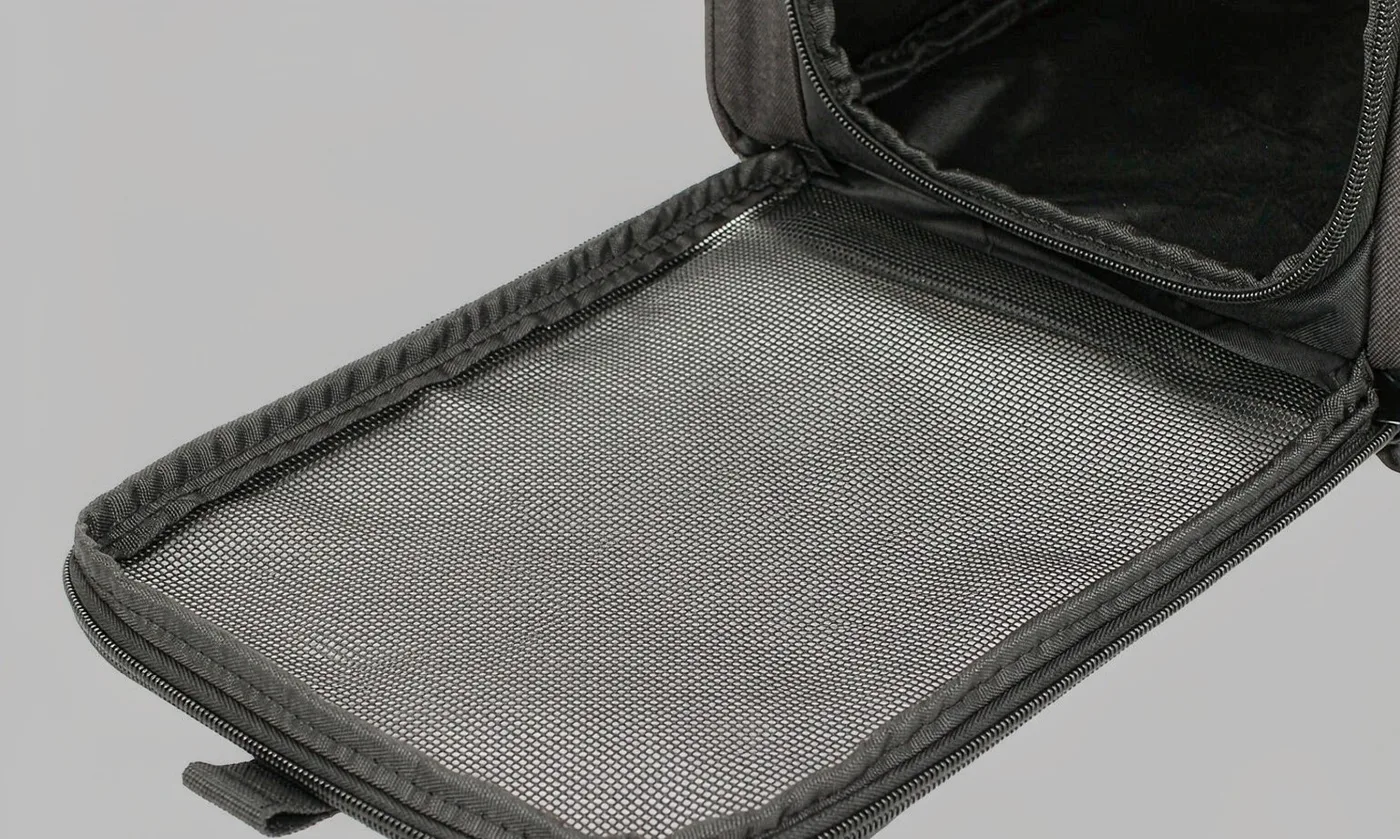
SKU Architecture: One Blank, Fifteen Numerals
The commercial structure of a celebration programme is a single blank carrying an age range, and the whole manufacturing plan follows from keeping the blank common. The question is how the numerals are distributed and when the split has to be committed.
Age ranges run 1-10 for most programmes and 1-15 for premium ones. The demand curve is not flat: ages 1-4 carry 55-72% of volume because photographic celebration is concentrated in the first years, and ages 11-15 carry 4-9%. Committing an even split across fifteen numerals leaves the top end unsold.
The working answer is a two-tier split. The base programme commits 60-75% of volume across ages 1-5 with the remainder spread across 6-10, and ages 11-15 are produced only against a confirmed order or as a made-to-order extension.
| Age band | Share of volume | Suggested commitment | Reorder probability | Holding risk | Production approach |
|---|---|---|---|---|---|
| 1st birthday | 22-34% | Full, first run | High | Low | Standing order |
| 2nd-3rd | 26-40% | Full, first run | High | Low | Standing order |
| 4th-5th | 14-24% | 75-90% | Moderate | Low-moderate | Standing order |
| 6th-8th | 9-18% | 50-70% | Low-moderate | Moderate | Second run |
| 9th-10th | 4-10% | 30-50% | Low | High | Made to order |
| 11th-15th | 2-7% | 0% | Very low | Very high | Made to order only |
| Message, no numeral | 8-16% | Full | High | Low | Standing order |
The blank commitment is what makes the structure work. Blanks are cut and hemmed in a single run ahead of decoration, which takes 12-22 days, and decoration is then scheduled in batches of 200-800 pieces as the numerals are confirmed. This decouples the long-lead item from the volatile one.
Batch size in decoration is the economic constraint. A sublimation press run has a changeover of 8-25 minutes for artwork and jig setup, so a batch below roughly 150-250 pieces carries a setup cost of 0.12-0.40 USD per unit that is avoidable at higher volume. Grouping numerals into batches of 250-600 is the working rule.
Variable data is the alternative where the split cannot be forecast. Printing the numeral on demand with a digital method removes the forecast entirely at a unit cost premium of 0.30-1.10 USD, and it is the right answer for the 6-15 tail even when the 1-5 head is produced conventionally.
Reorder behaviour in this category is unusually good. A celebration item sold to a customer who has one animal is bought again in twelve months at the next numeral, and a programme that holds the blank in stock can turn a reorder in 8-18 days rather than 35-50.
Commit 60-75% across ages 1-5, run the blank ahead of decoration, batch numerals at 250-600 pieces, and produce the 11-15 tail to order.
Dye, Metal and Chemical Compliance for a Printed Accessory
A printed textile accessory entering the United States and the European Union carries a chemical compliance obligation that has nothing to do with the celebration occasion, and it attaches to the inks, the substrate and any metal hardware on the item.
In the United States the applicable framework is the Consumer Product Safety Improvement Act, administered by the Consumer Product Safety Commission, which sets limits on lead in substrates and coatings and on certain phthalates in plasticised materials. A printed bandana is a textile and the practical exposure is in the ink film and in any PVC-based transfer.
In the European Union, REACH restricts substances of very high concern in articles, and the restriction list is maintained by ECHA. For printed textiles the relevant controls are azo dyes that cleave to listed aromatic amines, nickel release from metal components, and the general SVHC declaration obligation at 0.1% weight by weight.
Certification to a textile standard is the efficient answer to all of the above. OEKO-TEX Standard 100, documented by OEKO-TEX, tests the finished article against a limit catalogue rather than testing inputs separately, and it is recognised by most retailers without further question.
| Item | Framework | Limit or requirement | Applies to | Test cost (USD) | Validity | Risk if untested |
|---|---|---|---|---|---|---|
| Total lead in substrate | CPSIA | 100 ppm | Fabric, coating | 60-180 | Per production year | Recall, listing removal |
| Phthalates | CPSIA / REACH | 0.1% by weight | Plastisol, PVC transfer | 90-260 | Per formulation | Recall |
| Azo dyes, cleavable amines | REACH Annex XVII | 30 mg/kg each | All dyed textile | 70-210 | Per dye lot | Market withdrawal |
| Nickel release | REACH | 0.5 ug/cm2/week | Metal eyelets, snaps | 80-220 | Per component | Market withdrawal |
| Formaldehyde | OEKO-TEX / REACH | 16-300 mg/kg by class | Resin-finished fabric | 60-160 | Per finish | Retailer rejection |
| Prop 65 warning | California | Warning if listed substance above safe harbour | All components | 0-150 | Per formulation | Private action |
| OEKO-TEX Standard 100 | Voluntary | Class I or II limit catalogue | Whole article | 350-1,300 | 12 months | Lost retail listings |
The phthalate question is specific to plastisol and to cheap transfer films. A PVC-based film at 0.1% or more of a listed phthalate is non-compliant, and the substitute is a phthalate-free plastisol or a polyurethane transfer at a cost premium of 0.06-0.28 USD per unit. Specifying it at the start is cheaper than reformulating after a failed test.
California Proposition 65 adds a documentation obligation rather than a substance ban, administered through the state's safe harbour levels published by the Office of Environmental Health Hazard Assessment. Where a listed substance is present below the safe harbour no warning is needed; above it, the warning is the compliance route and the reformulation is the commercial one.
Test reports should be held at component level and at article level. A substrate report plus an ink report plus a hardware report is the evidence set; an article-level OEKO-TEX certificate is the shortcut that replaces all three and is the recommended route for a programme of this size.
Require an article-level OEKO-TEX certificate covering substrate, ink and hardware, and confirm phthalate-free plastisol where a PVC transfer is specified.
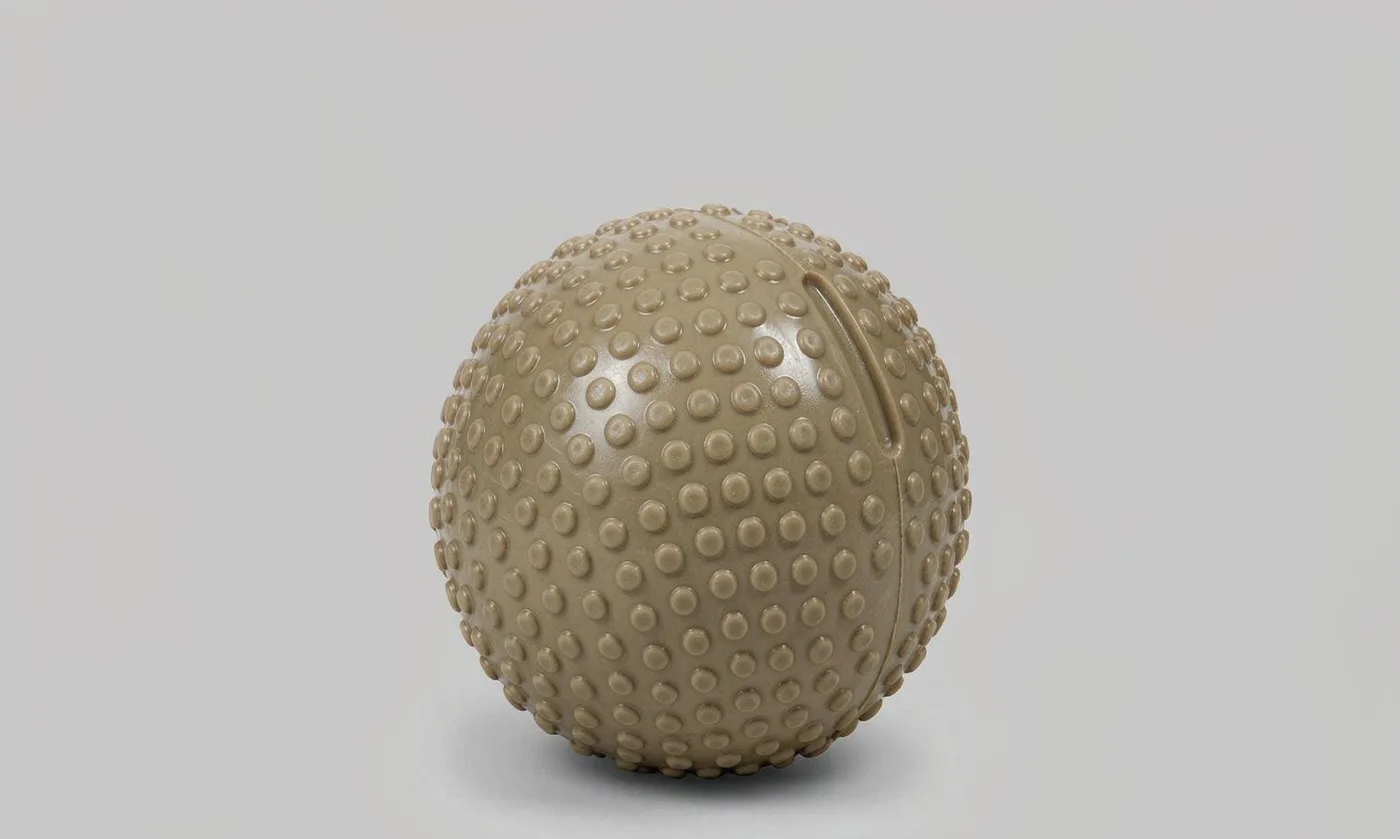
Packaging, Kitting and the Gift Presentation
A celebration bandana is bought as a gift far more often than as a utility item, and the packaging is doing more commercial work per cent than on any other accessory in the range. The flat triangle also happens to be the easiest item in the catalogue to pack efficiently.
Flat packing is the obvious answer. A folded bandana at 150 x 200 x 8 millimetres occupies 240 cubic centimetres against 900-1,600 for a folded garment, which is a carton cube reduction of 70-85% and a freight saving that appears directly in the landed cost.
Presentation formats run from a polybag with a header card at 0.12-0.35 USD to a rigid gift box at 0.85-2.60. The mid option — a folding carton with a window at 0.35-0.90 — is where most celebration programmes land, because it protects the fold and carries the artwork without the cube of a rigid box.
| Format | Unit cost (USD) | Packed size (mm) | Units per export carton | Cube per unit (cm3) | Damage rate | Suits |
|---|---|---|---|---|---|---|
| Polybag plus header card | 0.12-0.35 | 150 x 220 x 10 | 300-500 | 330-420 | 1.5-4% | Volume retail |
| Folding carton, no window | 0.28-0.70 | 160 x 210 x 16 | 180-320 | 540-780 | 0.6-2% | Standard gift |
| Folding carton with window | 0.35-0.90 | 160 x 210 x 18 | 160-290 | 600-860 | 0.5-1.8% | Premium gift |
| Rigid gift box | 0.85-2.60 | 180 x 240 x 30 | 60-120 | 1,300-2,200 | 0.2-0.9% | Luxury tier |
| Hanging blister pack | 0.45-1.25 | 170 x 260 x 22 | 100-200 | 970-1,400 | 0.4-1.4% | Peg retail |
| Multi-pack of 3 | 0.55-1.40 | 190 x 240 x 40 | 80-150 | 1,800-2,900 | 0.5-1.6% | Gift set, value |
Kitting is where a celebration programme recovers margin. A bandana alone has a low ticket; a bandana with a matching card, a small keepsake tag and a photo prop at a kitting cost of 0.40-1.60 USD lifts the set price by 4-12 USD and uses exactly the same warehouse operation.
Barcoding and retail labelling should be settled at the same time as the artwork. A single EAN per age numeral is fifteen barcodes on one product family, and the alternative — a single EAN with the age in the description — is rejected by most scanning retailers. Budget for the full set.
Carton marking and the packing list should carry the age split explicitly. A carton of mixed numerals arriving at a distribution centre without a per-numeral count creates a receiving problem that costs more than the labelling does.
The programme runs on standard terms: MOQ 500 pieces per colourway, prototypes in 6-10 working days for a new design and 3-6 days for a confirmation sample on an approved blank, bulk production 35-50 days after sample approval, final random inspection to AQL 2.5 including colourfastness and dimensional checks, T/T 30/70 and FOB Xiamen. Our production team runs decoration through the ISO 9001 and BSCI-audited SGS-verified production base, with 4,950 square metres, 137 staff and seven lines. Keep the blank common, decorate in batches of 250-600, and the fifteen-SKU programme runs on one production plan.
Production capability
- SGS-verified production space of 4,950 m², 149 machines, 7 assembly lines
- Pet carrier and pet bag output since 2014 from a 137-person team
- 200,000 units shipped monthly under BSCI and ISO 9001 systems
People Also Ask
How large should a birthday number be on a bandana?
A cap height of 38-70 millimetres on a 240-420 millimetre panel, with a stroke width of 6-13 millimetres. Below 30 millimetres the number stops reading as a number in a photograph.
What is the most durable print method for a pet bandana?
Sublimation on a polyester ground, at 50-80 wash cycles and zero hand feel. DTF transfer reaches 30-60 cycles and works on cotton; screen reaches 40-70 above 800-1,500 units.
Why does a printed bandana fade or rub off?
Usually under-cure. A plastisol cured below 150 degrees Celsius for 45-90 seconds loses 40-70% of its wash life and drops a dry rub rating from 4-5 to 2-3.
How many age SKUs should a birthday programme carry?
Ten numerals covers 86-96% of demand. Ages 1-4 carry 55-72% of volume; ages 11-15 should be made to order at 2-7% of demand.
What compliance testing does a printed pet bandana need?
CPSIA lead at 100 ppm and phthalates at 0.1%, REACH azo dyes and nickel release, plus an OEKO-TEX Standard 100 article certificate at 350-1,300 USD.
Should a celebration bandana be hemmed or heat cut?
Hemmed. A raw or heat-cut woven edge frays 3-8 millimetres in the first wash and 10-20 millimetres by the fifth. An overlock or rolled hem costs 0.08-0.35 USD.
Frequently Asked Questions
What is the minimum contrast ratio for a readable numeral?
4.5:1 between the numeral and the ground. A pastel-on-pastel design measures 1.3-1.9:1 and disappears at photograph distance; a dark numeral on a light ground measures 6-12:1.
Does sublimation work on a cotton bandana?
No. Sublimation requires 65% polyester or more because it dyes the fibre rather than sitting on it. A cotton ground needs DTF transfer or screen printing instead.
How much does an outline improve legibility?
A 2-4 millimetre contrasting outline raises the effective contrast ratio by 2.5-5.0 points. It costs nothing in printing and is the standard fix where brand colours cannot change.
What stroke-to-cap ratio should the typeface use?
0.16-0.22 for a numeral and 0.12-0.18 for a lower-case letter. On a knit that spreads ink, a thinner stroke closes the counters of a 4 or an 8.
Why do most celebration programmes use two colours?
A third and fourth colour add registration risk on a small panel and consume the contrast budget. Two colours plus the ground reads best and prints most reliably.
How much placement variance occurs without a jig?
6-14 millimetres across a 500-piece run, against a tolerance of plus or minus 2-4 millimetres. A jig or a registration mark on the blank is what holds placement.
Is embroidery suitable for a birthday bandana?
Only for a premium tier. A 50 millimetre numeral is 900-2,400 stitches at 60-240 seconds of machine time, and the backing pulls a 180 gram panel into a curve.
What colourfastness ratings should be specified?
ISO 105-C06 wash at 4 minimum, ISO 105-X12 dry rub at 4, ISO 105-B02 light at 3-4, and ISO 105-E04 perspiration at 3-4. Requiring 5 across the board raises cost 18-40%.
How much does a cotton blank shrink and why does it matter?
3-7%, which moves a 250 millimetre print field by 8-18 millimetres — more than the registration tolerance. Pre-shrink the blank or specify polyester at 1-2%.
Should the triangle be cut on grain or on the bias?
On grain. A bias cut stretches 4-12% along the diagonal under its own weight, which makes the print field impossible to hold in registration.
What is the phthalate risk in this product?
It sits in plastisol inks and PVC transfer films at 0.1% or more of a listed phthalate. The substitute is a phthalate-free plastisol or polyurethane film at 0.06-0.28 USD premium.
How should the age split be committed?
60-75% of volume across ages 1-5, 50-70% for 6-8, 30-50% for 9-10, and nothing for 11-15. Cut and hem the blank ahead of decoration in one run.
What decoration batch size is economic?
250-600 pieces. Below roughly 150-250 pieces the 8-25 minute changeover costs 0.12-0.40 USD per unit, which is avoidable at higher volume.
How does packaging affect landed cost?
A folded bandana packs at 240 cubic centimetres against 900-1,600 for a folded garment, a 70-85% cube reduction. A folding carton with a window at 0.35-0.90 USD is the usual gift format.
Talk to QUANZHOU JUNYUAN BAGS about a pet carrier program: MOQ 500 pieces per colourway, samples in 6-10 working days, bulk production in 35-50 days under AQL 2.5 inspection.
Get a free quote Request a sample