Pet Carrier Collapsible Bowl: Space Saving
A 65% packed-volume reduction is realistic for a collapsible pet carrier bowl using 45-70 Shore A platinum-cured silicone, a rigid PP rim and two or three controlled bellows. Specify at least 5,000 collapse cycles, less than 2 millimetres of rim ovality, complete drainage, and no leakage or layer cracking after dishwasher and cold-fold conditioning.
A collapsible bowl saves space by moving strain into thin annular hinges, which makes material formulation and fold geometry more important than nominal capacity. A reliable program separates rigid functions from flexible ones: the rim preserves the drinking opening, the base transfers load and the silicone bellows absorb movement at defined radii. Development should quantify open capacity, collapsed height, snap-through force, fold stability, hot and cold cycle life, cleanability and wet-floor friction. Food-contact documentation must cover the exact silicone cure, pigment and post-cure, plus any PP insert, overmould tie layer or printing. Designers should avoid deep reverse folds that trap food and should use visible drainage around every rigid-soft interface. Packaging can exploit the collapsed shape, but compression must not leave permanent set or transfer colour between nested units. Commercial terms are MOQ 500 pieces per colourway, samples in 6-10 working days, bulk production 35-50 days after approval, and final random inspection to AQL 2.5. T/T 30/70 and FOB Xiamen apply. This framework treats space saving as a measured relationship among capacity, folded volume, cycle life, hygiene, stability and carton efficiency rather than as a single photograph of a flattened bowl.
In a private label pet carrier brief for pet carrier accessory, the artwork file and the label compliance text are the two items that most often delay a first shipment.
Silicone Grade, Cure System and Food-Contact Migration
Silicone should be specified by supplier grade, cure chemistry, hardness, pigment and post-cure schedule. The phrase food-grade silicone does not identify any of those variables. Platinum-cured material is common for repeated food contact because it can offer low odour and controlled extractables, but the finished coloured article still needs documentation and testing for its intended food, temperature and duration.
Hardness affects folding and standing. Shore A 45-55 gives easy collapse but may buckle when filled; 55-65 balances hand force and wall stability for many 500-900 millilitre bowls; 65-70 suits a thin large bowl but raises snap-through force. Hardness tolerance should normally be controlled within about five points per approved formulation and checked after post-cure.
| Use | Capacity | Silicone hardness | Bellows | Open height | Collapsed height | Reduction |
|---|---|---|---|---|---|---|
| Cat travel dish | 350-500 mL | 45-55 A | 2 | 45-55 mm | 16-22 mm | 55-68% |
| Toy dog bowl | 500-700 mL | 50-60 A | 2-3 | 55-70 mm | 18-25 mm | 60-72% |
| Small dog bowl | 700-1,000 mL | 55-65 A | 3 | 70-90 mm | 20-28 mm | 65-75% |
| Medium dog bowl | 1,000-1,500 mL | 60-70 A | 3 | 85-110 mm | 24-34 mm | 65-80% |
Post-cure drives odour and volatile control. Time and temperature should come from the compound supplier and be recorded per batch; an abbreviated cure used to gain capacity can change smell, compression set and migration. Finished-part conditioning before packing must also be defined so warm silicone does not remain compressed in a sealed carton.
Migration conditions follow the intended food and cleaning temperature. Dry kibble, water and fatty wet food may not share the same laboratory sequence. Chemical review can use substance resources from ECHA and California information from OEHHA as inputs to a destination-market matrix.
A collapsible bowl is qualified by its exact cured and coloured silicone formulation under intended use, not by a generic silicone certificate.
Bellows Geometry and Controlled Snap-Through Force
Each bellows is a flexure with a neutral position, a snap-through point and a local strain concentration. The fold should invert deliberately under hand pressure but remain open under food or water load. Conical walls and alternating hinge radii create predictable motion; random thin rings produce buckling and an uneven rim.
A useful two- or three-stage design uses hinge thickness of 0.8-1.4 millimetres, flexible wall zones of 1.2-2.0 and stable lands of 2.0-3.0. Inside fold radii should normally exceed 1.5 millimetres and increase with hardness. Sharp roots create surface whitening and cracks after repeated cold folding.
Opening and collapse force should be measured at the rim through the full stroke. Compact bowls may target 20-45 newtons to deploy and 25-55 to collapse; larger units can use 35-70. Force that is too low causes an accidental collapse under muzzle load, while excessive force makes the product difficult to use one-handed during travel.
Stage sequencing matters. The lowest bellows should not invert unexpectedly while the upper remains open because the bowl then tilts and spills. Geometry should cause the rings to move in a defined order, and production inspection can use a force-displacement curve or a simpler limit fixture at the key snap points.
Capacity must be checked in every intended open position. If a three-stage design is marketed at two usable heights, both require a stable configuration, fill line and side-load test. Half-deployed positions not intended for use should either lock clearly or be excluded in instructions. Well-designed bellows move through repeatable snap points with controlled force and do not rely on a user reshaping a buckled wall.
Rigid Rim and Base Rings for Shape Retention
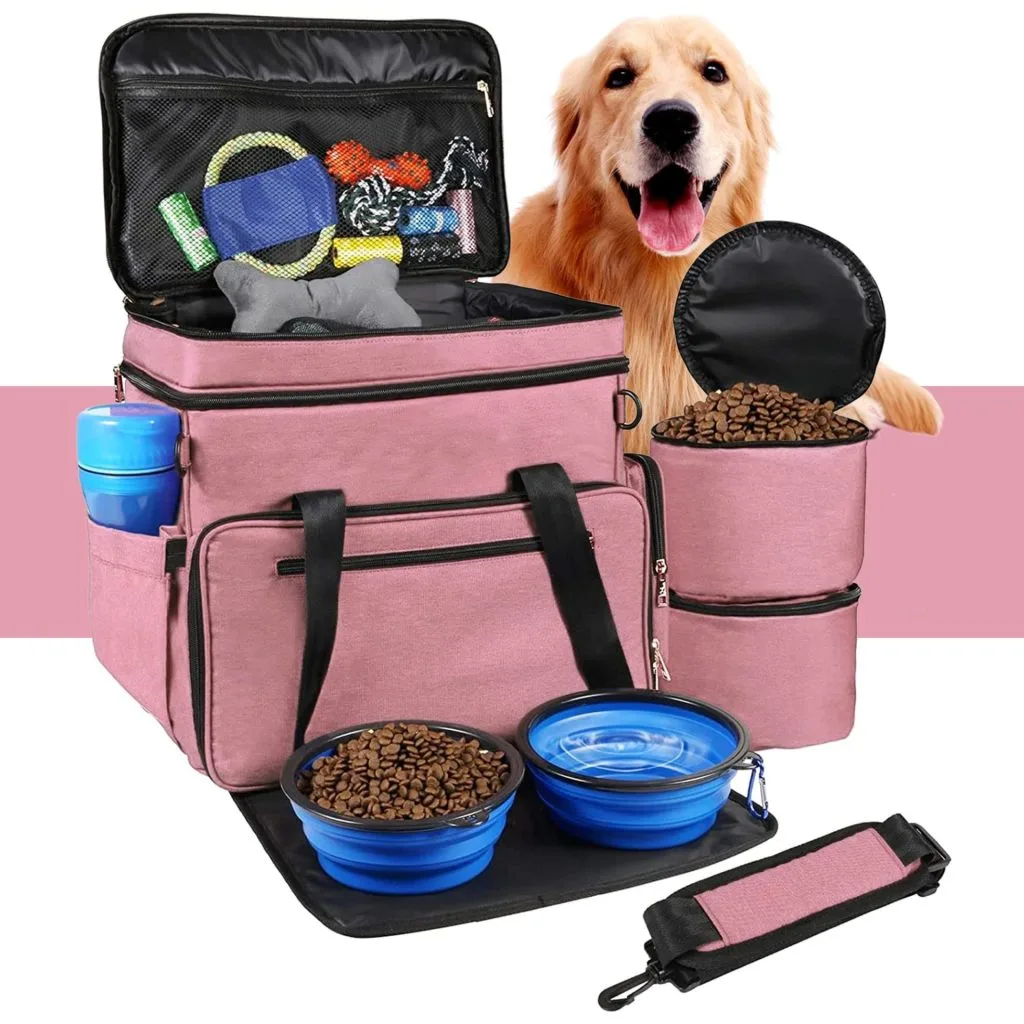
The flexible wall should not carry the functions that demand dimensional stability. A rigid PP rim holds the opening round, supports a carabiner tab and gives the user a firm grip. A rigid or semi-rigid base keeps the food surface level and spreads load into the anti-slip contact. Hybrid construction allows softer silicone without a floppy product.
Rim ovality affects capacity, stacking and comfort. A practical tolerance is less than 2 millimetres across perpendicular diameters for bowls below 180 millimetres, measured both open and after warm packed storage. The rim section can use a closed box or downward flange rather than simply becoming thicker, reducing resin and cycle time.
The silicone-to-PP connection may be mechanical capture, overmould or a separately assembled lock. Through-holes and undercuts create a mechanical key that remains secure even if chemical adhesion is weak. The tie geometry should be outside the food trap zone and open to inspection. A decorative cover over the joint can hide incomplete fill and retained water.
Base stiffness is verified under the full rated water load plus a central 20-newton force. Deflection should remain low enough that the fill line and anti-slip ring stay engaged, commonly below 3 millimetres. A shallow dome or radial ribs give more stiffness than a solid thick disc and reduce sink around the interface.
Rigid parts need their own material and colour control. PP grade, masterbatch and recycled-content status are named, and any printing near the rim enters the contact review. Assign roundness and attachment to a rigid rim, flatness and load transfer to a rigid base, and folding strain only to the silicone bellows.
Five-Thousand-Cycle Fatigue at Hot and Cold Conditions
Fold life is the defining durability measure. A new sample may look perfect while a hinge begins cracking after hundreds of reversals. A baseline program cycles the bowl through full collapse and deployment at least 5,000 times, with dimensional, force and leak checks at 500, 1,000, 2,500 and 5,000.
Temperature changes failure mode. Cold silicone requires more force and reveals sharp-root cracking; warm silicone relaxes and may lose its stable open state. Split samples can be conditioned near 5 degrees Celsius and 45 degrees before cycling or subjected to alternating blocks. The validated range should match labelled use rather than claim every climate.
Cycle equipment must press the intended rim zones and allow each stage to snap naturally. A flat platen that crushes the entire bowl can create an unrealistic load path. Force-displacement data reveal gradual changes in snap points, while cameras or magnified inspection identify whitening, cuts and delamination around tie features.
Acceptance includes no through crack, no food-path delamination, leakage below the buyer limit, rim ovality below 2 millimetres and opening force remaining within the approved band. A small cosmetic crease may be acceptable if it does not grow, trap soil or change stability; the limit sample should show the boundary.
Dishwasher and detergent ageing should be combined with mechanical life because clean heat and chemistry accelerate fatigue differently from dry cycling. At least one sequence alternates wash blocks with fold blocks. A 5,000-cycle claim is meaningful only when force, leakage, ovality and hinge condition are checked throughout hot, cold and washed ageing.
Leak Paths at Overmould and Assembly Interfaces
A one-piece silicone body has no seam, but a hybrid collapsible bowl introduces interfaces at the rim and base. Leakage can travel through an incomplete overmould key, along a contaminated bond, through a pierced accessory tab or between separately assembled layers. Testing only the central membrane misses the most likely paths.
Overmould tooling should vent the end of every flow path and prevent air pockets around mechanical keys. Short-shot trials reveal fill balance, and sectioned first pieces show whether silicone wraps the PP undercut completely. Release agents on the insert must be controlled because they can prevent both adhesion and food-contact cleanliness.
A static fill test holds water at the maximum line for 24 hours on absorbent indicator paper. A second test applies gentle side distortion and repeated collapse while wet, then repeats the hold. Mass loss, visible droplets and moisture under the base insert are recorded separately. Coloured water can help locate a capillary path without making a performance claim.
If the bowl includes a drain plug or removable insert, its seal compression and assembly orientation need go/no-go gauges. User-removable plugs should remain captive and use geometry that cannot be installed upside down. A plug intended only for manufacturing should not be accessible after assembly.
Failures should be traced by cavity, insert lot, silicone lot and moulding time. Adding sealant after moulding creates an uncontrolled food-contact substance and is not a suitable routine repair. The hybrid bowl passes leak qualification only when its rim keys, base keys, accessory penetrations and wet folding all remain dry for the defined hold.
Anti-Slip Base and Carrier Attachment Tab
Collapsible bowls are light, so they move readily on a carrier liner when nearly empty. The anti-slip system can be an integrated silicone foot, a different-hardness overmoulded ring or a textured rigid base. Surface texture alone rarely creates adequate wet grip; contact area and compound friction must be measured.
A perimeter band 6-12 millimetres wide distributes load and damps noise. Drain breaks stop water collecting beneath it, but too many gaps reduce friction. Useful starting targets are a static coefficient above 0.60 dry and 0.42 wet on the nominated carrier floor, with movement not beginning below a 10-15 newton side pull at half fill.
The attachment tab is for storage or secondary retention, not for suspending a full open bowl unless validated. A tab carrying a carabiner should resist at least 150-250 newtons without tearing from the rim, and the hole needs a generous radius. The clip should sit outside the animal zone during feeding so it cannot contact the muzzle.
Integrated silicone feet age with the whole body; separate TPR rings introduce a bond and formulation. Run wet friction again after 100 wash cycles, 10,000 short slides and warm humidity. Inspect for tack, powdering, pigment transfer and edge lift. Different colours can require separate confirmation because filler and pigment alter friction.
A tether point attached to the carrier must not force the bowl to tilt or prevent complete removal for cleaning. Specify the base by measured friction and the hanging tab by tensile proof, because a storage loop is not automatically a load-bearing feeding mount.
Cleanability of Reverse Folds and Drying Position
The reverse side of a bellows opens when the bowl collapses and closes when it is deployed. Food and wash water can enter that moving crease, especially where the radius is sharp. Every fold must therefore be accessible in at least one position and should have a broad, smooth surface without texture or decorative lettering.
A cleanability protocol soils the open bowl with a visible protein-and-fat mixture, manipulates it through two complete fold cycles to move soil into creases, allows a controlled dry time and then uses the labelled washing method. White-light and ultraviolet inspection checks both open and collapsed positions. The sequence is repeated five times.
Drainage is evaluated after washing. The bowl should stand in a defined inverted or partly collapsed position that opens every fold and lets water run away. A rigid ring may need small drain notches at the lowest point. Instructions should illustrate this drying posture; telling users to air dry is insufficient if the product geometry traps a closed annulus.
Odour evaluation follows wash and warm closed storage. Incomplete silicone post-cure, retained food or trapped detergent can all create smell, and the investigation should distinguish them. A standardized panel can compare production samples with an approved control after 24 hours in a sealed container.
Dishwasher claims identify top-rack position, temperature and detergent, then verify capacity, fold force, leakage and surface condition after 100 cycles. A collapsible bowl is cleanable only when every reverse fold can be visibly inspected, washed and held open during complete drying.
Collapsed Packing, Nesting and Recovery After Storage
The product's main advantage should appear in freight data. Open product volume is compared with collapsed retail and master-carton volume using the same external measurement method. A 65-80% height reduction can translate to a 45-70% carton-cube saving after rims, clips, sleeves and unused void are included.
Collapsed bowls can nest, but direct silicone-to-silicone compression may block together or transfer pigment. Thin paper separators and positive rim stops control contact with little volume. Mixed-colour packs require rub and transfer testing under warm humidity. A dark ring marking a pale food surface is unacceptable even if it washes away.
Long storage can create compression set. Packaged samples should be conditioned under the expected carton load at elevated temperature, then opened and measured after 10 minutes, one hour and 24 hours. Acceptance covers rim ovality, open height, base flatness, capacity and snap force. Recovery time should be stated if it is not immediate.
Clips and accessory tabs must be oriented into protected recesses so they do not dent the neighbouring bowl. Master-carton gross mass, stacking direction and maximum layers should be marked. Carton compression should transfer through rigid rims rather than flexible walls.
Distribution sequences may reference methods available from ASTM International, with exact severity written into the buyer protocol.
Carton optimization should be evaluated with a simple volume ledger rather than one headline percentage. Record the external volume of a single open bowl, the collapsed retail pack, one fully loaded master carton and the palletized shipment. Dividing pallet cube by sellable units exposes wasted channels, overhanging cartons and protective inserts that cancel the apparent benefit of collapse. Procurement teams can then compare a paper band, slim carton and reusable pouch on the same basis.
Recovery acceptance also needs a visible time limit. A bowl that reaches nominal height after 24 hours may be acceptable for warehouse replenishment but unsuitable for direct-to-consumer use. Programs can set an immediate target such as at least 95% of open height within ten minutes and full dimensional tolerance within one hour. The test records ambient temperature and whether the bowl was manually flexed, because users should not have to heat or reshape it.
Packaging materials must not add odour to silicone. Printed inks, recycled board and adhesives are screened by sealing the packed product at warm temperature, then comparing smell and surface transfer with an unpacked control. This separates compound odour from packaging contamination and prevents a correct food-contact bowl reaching the customer with an avoidable warehouse smell.
Measure space saving at the final packed-carton level and verify full dimensional recovery after warm compression, because collapsed height alone overstates logistics benefit.
Tool Approval, Quality Control and Commercial Release
Tool approval begins with cavity-by-cavity parts in nominated materials. Inspect rim and base dimensions, every hinge thickness, fold radii, overmould keys, unit mass and parting-line flash. Functional checks add deployment force, sequence, capacity, side stability, leakage, friction and attachment-tab strength. First pieces after maintenance repeat the critical set.
Process windows should record silicone batch, catalyst ratio where applicable, mould temperature, cure time, post-cure batch and insert preparation. For PP components, resin lot, masterbatch, moisture condition and moulding settings are retained. A weight trend can detect incomplete fill before it becomes a visible hole in a hinge.
Final random inspection at AQL 2.5 covers general workmanship, dimensions, function, marking and packaging. Food-path cracks, sharp flash, through leakage and wrong food-contact material require separately agreed critical treatment. Quality records can follow the process approach summarized by ISO 9001, while product values remain in the signed drawing and control plan.
MOQ 500 pieces per colourway supports controlled pigment and cure lots. Samples in 6-10 working days are made after capacity and fold force are frozen; bulk production 35-50 days starts after written approval. T/T 30/70 and FOB Xiamen accompany inspection and packing clauses.
The SGS-verified production base retains cavity samples and cycle records, while our production team coordinates carrier fit and carton validation.
A control chart for hinge thickness, finished mass and snap force is more useful than isolated pass marks. These variables move before visible cracks appear, so a trend toward a thinner hinge or lower deployment force can stop a run while all sampled pieces still look acceptable. Measurements should be separated by cavity and shift; combining them can hide one drifting cavity behind seven stable ones.
The shipment release also reconciles silicone compound quantity with finished good count and controlled scrap. Unexpected yield may indicate that regrind, mixed colour or unrecorded substitute material entered the process. Food-contact silicone scrap should not be returned to production unless the approved formulation and process explicitly permit it. Lot identity must remain legible through post-cure, assembly and packing.
Complaint readiness is planned before every shipment and reviewed again before any repeat order. Retain one sealed retail unit and one unpacked component set from the first, middle and last production windows, together with dimensional and force records. If a field bowl loses shape, the team can compare compression history, compound lot and hinge trend instead of starting with a generic replacement response. Corrective action then identifies whether the cause is formulation, cure, tool wear, pack load or use outside the stated range.
Bulk release requires a traceable material, stable snap-through, 5,000-cycle durability, leak-free interfaces, clean reverse folds and measured pack recovery in the same approved construction.
Production capability
- SGS-verified production space of 4,950 m², 149 machines, 7 assembly lines
- Pet carrier and pet bag output since 2014 from a 137-person team
- 200,000 units shipped monthly under BSCI and ISO 9001 systems
People Also Ask
How much space can a collapsible pet bowl save?
A 65-80% collapsed-height reduction commonly becomes a 45-70% master-carton cube saving after rims, clips, sleeves and void are counted.
What silicone hardness works for a collapsible bowl?
Shore A 55-65 balances fold force and filled-wall stability for many 500-900 mL products; smaller bowls may use 45-55 and larger ones 60-70.
How many fold cycles should a travel bowl survive?
Use at least 5,000 full collapse-and-deployment cycles, with force, leakage, ovality and hinge checks at intermediate intervals and after wash ageing.
Why add a rigid rim to a silicone bowl?
The PP rim holds the opening round, provides a firm grip and carries an attachment tab while the softer bellows absorb folding strain.
How are collapsible bowl seams checked for leaks?
Run a 24-hour static fill on indicator paper, distort and fold the wet bowl, then repeat while examining every overmould key and penetration.
Can collapsible bowls go in a dishwasher?
Only when a defined top-rack temperature and detergent have been validated through repeated cycles with follow-up checks for force, capacity, leakage and surface condition.
Frequently Asked Questions
Why is food-grade silicone an incomplete specification?
It does not identify supplier grade, platinum or peroxide cure, pigment, hardness, post-cure or the migration conditions represented.
What controls accidental collapse while filled?
Defined bellows geometry, stable lands and a measured snap-through force keep the open state above normal muzzle and side loads.
Why are sharp fold roots a problem?
They concentrate strain and produce whitening or cracking, especially during cold folding. Inside radii should generally exceed 1.5 mm.
How round should the rigid rim remain?
For bowls under 180 mm diameter, less than 2 mm ovality is a useful target after opening and warm packed storage.
Is adhesive required between silicone and PP?
Not necessarily. Through-holes and undercuts can provide mechanical capture, reducing dependence on chemical adhesion while requiring complete mould fill.
Why combine dishwasher and fold ageing?
Heat and detergent change silicone and interfaces differently from dry cycling, so alternating both exposes failures a single test can miss.
Can the carabiner tab hold a filled bowl?
Only if specifically validated. Most tabs are for storage or secondary retention and should be proof-tested around 150-250 N.
How is wet grip measured?
Pull the bowl across the nominated carrier floor at a defined load and speed, targeting above 0.42 static friction and 10-15 N movement resistance.
Why inspect the bowl in both open and collapsed positions?
Reverse folds conceal different surfaces in each state. Soil and cracks can be invisible unless the bellows are manipulated during inspection.
What causes colour transfer in nested bowls?
Warm compression, direct silicone contact and pigment formulation can transfer a dark mark to a pale surface, requiring separators or formulation adjustment.
How is storage recovery measured?
After warm compressed conditioning, record rim ovality, open height, base flatness, capacity and snap force at 10 minutes, one hour and 24 hours.
Which collapsible-bowl defects are critical?
Food-path cracks, sharp flash, through leakage and wrong food-contact material need tighter acceptance than ordinary cosmetic AQL defects.
Talk to QUANZHOU JUNYUAN BAGS about a pet carrier program: MOQ 500 pieces per colourway, samples in 6-10 working days, bulk production in 35-50 days under AQL 2.5 inspection.
Get a free quote Request a sample