Pet Carrier Flea Comb: Pest Control
A fine-tooth companion comb is specified on four numbers: a tooth pitch of 0.20-0.35 millimetres, a wire diameter of 0.45-0.70 millimetres, a tooth edge deburred to a radius not below 0.05 millimetres, and an MOQ of 500 pieces per variant. Everything else about it is a mechanical grooming specification rather than anything else.
This item attracts more regulatory misunderstanding per gramme than anything else in the accessory range, and the misunderstanding comes entirely from naming. The product is a finely-pitched grooming implement that captures material by physical means. It is not, and must not be presented as, an agent that kills, repels, controls or prevents anything, because that presentation moves it into an entirely different legal class in every major market, requiring registration that this kind of product does not hold. Understanding that boundary is the first specification, not the last check. This page therefore opens with it and then moves to the physical engineering, which is where most of the value actually sits: tooth geometry and why pitch and wire diameter interact, material selection and plating, deburring and surface finish with its verification methods, handle construction and retention testing, then restricted-substance screening across metal, plating and handle. It then covers same-carton shipping with the sheath design that protects both products, and closes with variant strategy and minimum structure. No claim of performance against any organism appears here, and any such wording on pack or listing belongs exclusively to the brand's regulatory counsel. Terms: MOQ 500 pieces per variant, prototypes in 6-10 working days, bulk production 35-50 days after sample approval, final random inspection to AQL 2.5, T/T 30/70, FOB Xiamen.
Pet carrier OEM builds to your drawing, while pet carrier ODM adapts an existing pet carrier accessory platform and removes the tooling cost. Both start from the same tech pack.
The Presentation Boundary: Implement Versus Agent
Two products can be physically identical and sit in entirely different legal classes, and the thing that separates them is what the seller says rather than what the object does. That principle has appeared throughout this range and nowhere does it bite harder than here.
In the United States, an article whose stated or implied purpose is destroying, repelling or mitigating a pest falls within pesticide regulation, and that territory has its own registration pathway and its own approved-list requirements. A grooming implement described only by what it physically does does not enter that territory.
The European position runs along parallel lines through the biocidal product framework, where a presentation claiming action against harmful organisms attracts obligations that a purely mechanical article does not carry. Same physical object, same words, different outcome.
The distinction is not evasive wordplay, it is a description of mechanism. This product captures and removes by physical geometry. It contains no active substance, delivers nothing, and leaves nothing behind. Saying so accurately is both true and sufficient.
| Pattern | Example type | Mechanism implied | Classification effect | Position | Reviewer |
|---|---|---|---|---|---|
| Dimensional description | Pitch, teeth count, length | None, physical | None | Acceptable | Supply side |
| Material declaration | Stainless grade, handle material | None, physical | None | Acceptable | Supply side |
| Physical capture language | Catches and removes | Mechanical | None | Acceptable | Brand counsel |
| Organism name plus action | Destruction of anything | Chemical or biological | Regulated class | Do not print | Brand counsel |
| Outcome or protection words | Prevention framing | Agent-based | Regulated class | Do not print | Brand counsel |
| Quantified performance | Percentage or rate | Claim requiring data | Substantiation | Hold | Brand counsel |
Notice that the third row — "catches and removes" — is comfortably acceptable and commercially adequate. Programmes rarely need to reach for anything beyond the third row to sell this item, which is why the boundary costs so little in practice.
The trap is rarely the pack. It is usually the retail listing title, where someone with a keyword brief and no category file writes something nobody else reviews. Listing copy belongs in the same review matrix as artwork.
What our production team supplies into that review is measurement: pitch in millimetres, teeth per inch, wire diameter, tip radius, material declarations, plating specification and hardness figures. Those support any physical description and none support a claim about an organism.
The working rule is the same one used across this whole range and it deserves repeating because it is unfashionable: any line that cannot be traced to a measurement we supplied, or to counsel approval, does not go to print.
Describe the implement physically, keep the listing copy in the same review as the pack, and trace every line to a measurement or to sign-off.
Tooth Geometry: Pitch, Wire and the Ratio Between Them
The engineering of this product is entirely in the tooth geometry, and the governing insight is that pitch and wire diameter cannot be specified independently because they interact to determine everything else.
Pitch is the centre-to-centre spacing and it is what determines what gets captured. Working range is 0.20-0.35 millimetres; below 0.20 the comb becomes slow and uncomfortable in use, above 0.35 it stops being fine enough for the purpose.
Wire diameter is the thickness of the material between teeth. It determines strength and it consumes the pitch: within a fixed pitch, thicker wire means narrower gaps. This is why specifying "0.25 millimetre pitch" alone is meaningless without the wire figure.
The governing derived quantity is therefore aperture, which is pitch minus wire diameter. For a 0.28 pitch and a 0.55 wire, aperture is 0.28 less 0.55 divided across the pair — the practical result being that nobody should specify a comb without stating all three numbers or the drawing will be interpreted.
| Pitch (mm) | Wire (mm) | Teeth per 25 mm | Lateral stiffness | Capture size floor | Suits |
|---|---|---|---|---|---|
| 0.20 | 0.40-0.45 | 125 | Low | Very fine | Short coat, fine fur |
| 0.25 | 0.45-0.52 | 100 | Moderate | Fine | Standard program |
| 0.28 | 0.50-0.58 | 89 | Moderate | Fine | Standard program |
| 0.32 | 0.55-0.64 | 78 | Good | Medium | Medium coat |
| 0.35 | 0.60-0.70 | 71 | Good | Medium | Dense undercoat |
| 0.45 and above | 0.70-0.90 | 55 and below | High | Coarse | Detangling, not fine comb |
Lateral stiffness in that table governs how the comb survives use. Below about 0.45 millimetres of wire at these pitches, teeth bend sideways under load and stay bent, which is the defect most visible in a returned unit.
Teeth per unit length is the figure that belongs on a specification rather than total teeth count, because it is scalable across handle widths and it is independently checkable. Counting total teeth invites a supplier to adjust width instead of pitch.
Tooth length, typically 12-25 millimetres, balances reach against stiffness. Longer teeth reach further through coat but bend more easily, and above about 22 millimetres the tip velocity under load becomes enough to feel unpleasant in use.
Root radius matters more than anyone expects. Where the tooth meets the spine, a sharp internal corner becomes a stress concentrator and teeth break there rather than anywhere else. Specifying a minimum root radius of 0.15-0.30 millimetres costs nothing at drawing stage and prevents it.
Verification is by optical measurement rather than by feel: ten teeth per sample at 20-40x magnification measuring pitch, wire and aperture, at 25-70 USD per lot. Anything that cannot be measured optically cannot be argued about later.
Specify pitch, wire diameter and teeth per unit length together, add a minimum root radius, and verify all of it optically.
Material and Construction: Steel, Plating and Handle Options
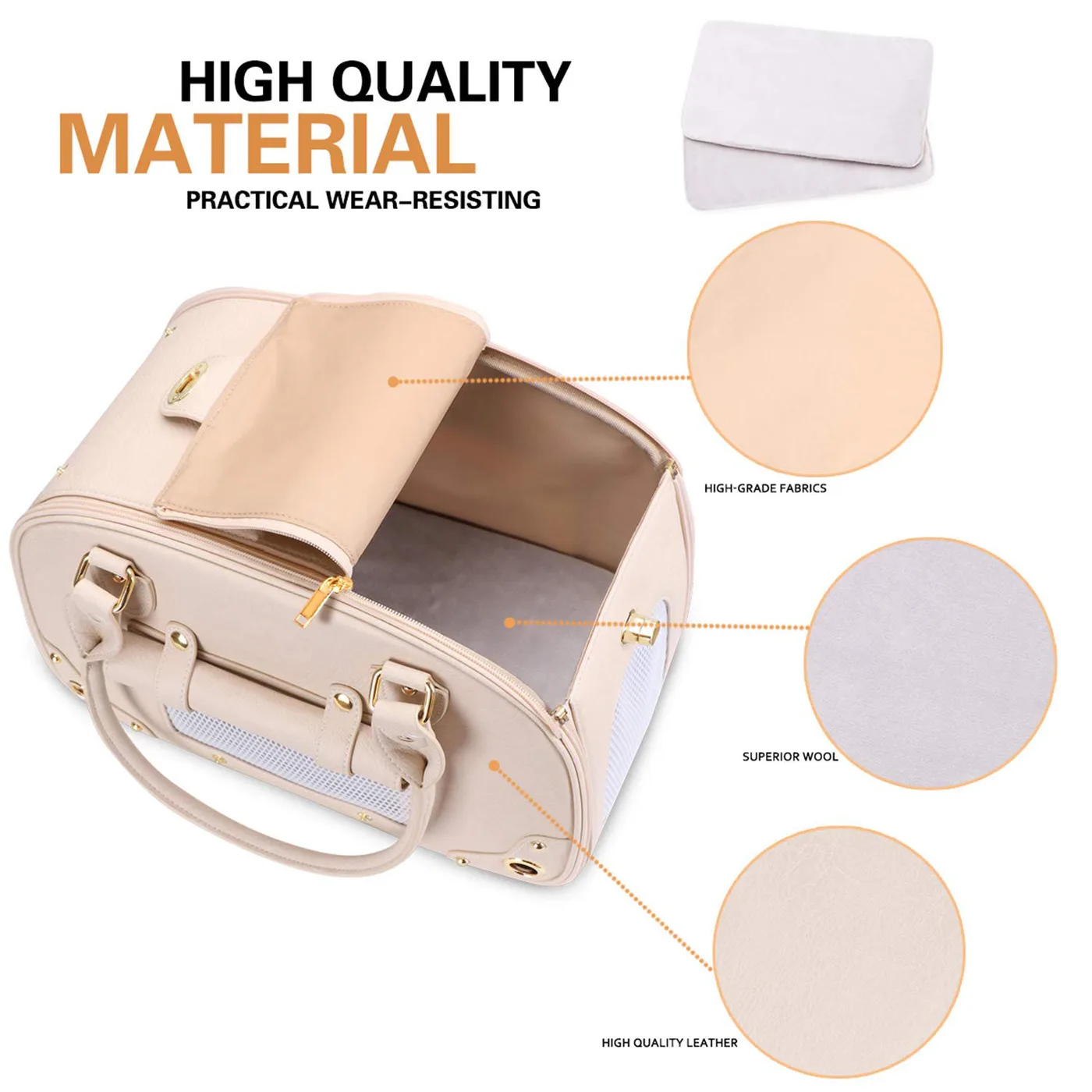
Material choice for this item divides into the comb head, which carries the engineering, and the handle, which carries almost everything else including nearly all of the compliance surface area.
The head is normally stainless steel in fine-comb applications because it needs corrosion resistance and dimensional stability at 0.05 millimetre tolerances. AISI 420 and 430 are the common choices, with 420 hardening to HRC 40-50 after tempering and giving better edge retention.
Carbon steel appears at lower price points and it should generally be rejected here: at these wire diameters, corrosion pitting destroys the geometry long before visible rust appears, and it cannot be rescued by plating alone.
Plating choices then follow. Nickel-chromium gives a bright finish and good corrosion behaviour but introduces the nickel release question already discussed elsewhere in this range. Titanium nitride gives a dark premium finish at 1.35-1.75 times plain cost with very good wear resistance.
| Material and finish | Hardness | Corrosion behaviour | Tolerance stability | Cost index | Suits |
|---|---|---|---|---|---|
| AISI 430, plain | Annealed, soft | Good | Good | 1.00 | Volume programs |
| AISI 420, hardened | HRC 40-50 | Good | Very good | 1.15-1.35 | Premium comb |
| AISI 430, nickel-chromium | Soft, hard coating | Very good | Good | 1.25-1.55 | Bright retail finish |
| AISI 420, titanium nitride | HRC 40-50 plus coating | Very good | Very good | 1.35-1.75 | Premium kit |
| Carbon steel, plated | HRC 45-55 | Poor once breached | Poor long term | 0.80-1.00 | Not recommended |
| Stainless plus polymer insert | n/a | Good | Good | 1.05-1.30 | Two-material head |
Handles offer more variety and more risk. Injection-moulded polypropylene is cheapest and fully traceable. Thermoplastic elastomer overmould gives grip and introduces plasticiser screening. Bamboo and wood are attractive and introduce their own obligations around origin documentation and treatment residues.
Composite construction then creates the joint question. A steel head inserted into a polymer handle is held either mechanically or by an interference fit or by adhesive, and each has a pull-out figure worth specifying: 80-200 newtons for mechanical, 60-160 for interference, 90-240 for bonded.
Sustainable material claims deserve the same discipline as everything else. A handle described as responsibly sourced requires chain-of-custody documentation from the material supplier, usually costing 180-620 USD and 10-25 days, and no certifying organisation's logo may appear on our production without its licence.
Typical unit cost bands for the assembled item run 0.85-2.60 USD for polymer-handled construction and 1.60-4.40 USD for a premium handle material, before presentation.
Harden the head to HRC 40-50 in stainless, treat any handle material as its own screening line, and specify a pull-out figure for the head-to-handle joint.
Deburring and Surface Finish: The Defect Nobody Prices
A fine comb is made by a process that leaves sharp edges. Every tooth has burrs from cutting, every spine has corners from forming, and the difference between a usable product and an unusable one is almost entirely what happens afterwards.
The relevant specification is an edge radius rather than the absence of burrs, because "no burrs" is unarguable whereas a minimum radius is measurable. The working figure is not below 0.05 millimetres on every working edge.
Three finishing methods reach it. Tumbling in ceramic media is cheapest at 0.03-0.12 USD and works well on simple profiles. Electropolishing removes material electrochemically, reaches internal corners tumbling cannot, and costs 0.08-0.26 USD. Hand finishing is most controllable and least consistent, at 0.14-0.42 USD.
Verification combines three checks rather than one, because each catches something the others miss: optical inspection at 30-60x, a tactile drag assessment against a standard, and a quantitative profile where the programme justifies it.
| Finish | Edge radius reached (mm) | Cost per unit (USD) | Consistency | Internal corners | Recommended for |
|---|---|---|---|---|---|
| As formed, no finishing | 0.005-0.02 | 0 | n/a | Unfinished | Never acceptable |
| Ceramic tumbling | 0.04-0.12 | 0.03-0.12 | Good | Partial | Volume programs |
| Electropolishing | 0.05-0.15 | 0.08-0.26 | Very good | Reached | Premium comb |
| Tumbling plus electropolish | 0.08-0.20 | 0.11-0.38 | Very good | Reached | Best available |
| Hand finishing | 0.05-0.25 | 0.14-0.42 | Variable | Reached | Small batches |
| Bead blast plus tumble | 0.03-0.10 | 0.06-0.19 | Good | Partial | Matte appearance |
Total finishing plus verification cost runs 0.05-0.45 USD per unit, and it is the single specification most often omitted from a first quotation with consequences nobody expects until samples arrive.
Sample evaluation is where this should be settled, and three questions settle it: run a fingertip along each side at controlled pressure, draw a single layer of fine fabric through the teeth five times, and inspect five teeth per sample at magnification. Any drag or fibre lift is a rejection.
Corrosion verification then follows via neutral salt spray exposure against ASTM method B117 for 24-96 hours, giving a comparable lot-to-lot figure rather than anything that should appear on a pack.
Passivation after finishing is worth adding for the same reason it was worth adding elsewhere in this range: 0.02-0.07 USD removes free iron from freshly worked surfaces and it is the cheapest corrosion insurance available.
Specify a minimum edge radius rather than the absence of burrs, verify optically and tactilely, and add passivation after any abrasive finishing.
Handle Retention, Drop and the Load Cases That Matter
The failure modes for this item are few and completely predictable, which means they can all be closed out cheaply before bulk. Four load cases cover essentially everything observed in the field.
Head pull-out is the first and most consequential. A head leaving a handle is a complete product failure and it is specified as before: 80-200 newtons for mechanically retained designs, sampled at eight per 10,000.
Handle impact is second, and it is where cold conditioning is essential for the same reason discussed elsewhere in this range. A polymer handle below 5 degrees Celsius loses impact strength; five drops from 1.2 metres on concrete across five orientations after four hours of cold soak is the working test.
Tooth set is third and it is specific to this geometry. Ten consecutive passes against a standard load, then re-measure pitch at five positions. Permanent deformation above 4% of original pitch is a rejection, and it is what separates a comb that lasts from one that opens up.
Tip robustness is fourth: a lateral load of 5-15 newtons at the tip for ten seconds with no permanent deviation above 3%.
| Load case | Figure | Condition | Sample | Failure caught | Cost (USD) |
|---|---|---|---|---|---|
| Head pull-out | 80-200 N | Ambient | 8 per 10,000 | Head separation | 30-85 |
| Handle impact | 1.2 m concrete, 5 faces | 4 h at 0 C | 5 per 5,000 | Brittle fracture | 25-70 |
| Tooth set | Below 4% pitch change | Ten passes, standard load | 5 per 5,000 | Opening out | 35-95 |
| Tip robustness | 5-15 N lateral, 10 s | Ambient | 5 per 5,000 | Bent teeth | 25-70 |
| Edge radius | Not below 0.05 mm | Optical 30-60x | 5 teeth per 5,000 | Burrs | 25-70 |
| Salt spray exposure | 24-96 h | ASTM B117 | 3 per 10,000 | Plating failure | 60-190 |
| Packaged transit | Vibration plus drop | Full shipping case | 1 per shipment | Case damage | 90-260 |
Total test cost runs 290-840 USD per shipment, which at 10,000 units is under 0.09 USD per piece. Every one of those cases is also cheaply caught, which is the real argument for running them all.
The cold-conditioned row deserves repeating because it is the one that gets cut. A comb shipped in an unheated container through a northern winter is more fragile on arrival than it was on leaving, and the difference is measurable.
Packaged transit testing catches something unit testing cannot: combs rubbing against each other in a case until chrome plating at contact points wears through. A divider or an individual sleeve prevents it for 0.02-0.09 USD.
Our production team runs the full schedule on the first three lots of any new comb and moves to a reduced plan once thirty consecutive lots pass cleanly, with every result recorded rather than merely accepted.
Run all seven cases rather than a subset, condition the impact test cold, and sleeve combs individually before they share a case.
Restricted Substances Across Metal, Plating and Handle
This product has three screening families in a very small object, and because each is small, each is easy to overlook. The filing for fine particulate and chemical obligations is exactly the same as for a larger item.
The head carries alloy composition obligations plus anything contributed by plating. A nickel-chromium finish raises the nickel release question separately from the substrate, and it must be screened as its own surface rather than being assumed covered by an alloy certificate.
The handle carries everything any polymer part carries, and the screening here depends entirely on what the handle is made of. Polypropylene is low-risk; an elastomer overmould raises plasticiser screening; bamboo introduces treatment residue and origin questions.
Any applied decoration then adds a family of its own: pad-print ink, laser marking residue where applicable, and any applied coating on a wooden surface.
| Family | Checks | Lead time (days) | Cost (USD) | Renewal trigger | Risk |
|---|---|---|---|---|---|
| Metal substrate | Alloy composition, Pb, Cd | 5-12 | 90-260 | Alloy batch | Moderate |
| Plating surface | Nickel release, Cr VI | 6-15 | 110-320 | Plater change | High |
| Coating such as TiN | Composition, adhesion | 6-15 | 120-340 | Coater change | Moderate |
| Polymer handle | Phthalates, PAH, SCCP | 6-14 | 120-340 | Resin change | Moderate |
| Elastomer overmould | Migratable plasticisers | 6-14 | 110-320 | Resin change | High |
| Natural material handle | Treatment residues | 8-20 | 140-420 | Supplier change | High |
| California assessment | Listed substance data | 8-18 | 150-460 | Annual | Market-specific |
Purchased together these cost 840-2,460 USD; purchased reactively, roughly a third more and always arriving after they were needed. One combined purchase at programme start is the correct default.
European obligations run through the regime administered by ECHA. The California disclosure mechanism operates against the list maintained by OEHHA, and the decision to warn rather than to demonstrate falls to whoever sells into that market, not to us.
Natural-material handles deserve one further note. A bamboo or wood component treated against biological attack during its own manufacture can carry residues that appear nowhere on the drawing, and the only reliable control is a supplier declaration plus a screen rather than a visual check.
Renewal on change rather than on calendar then applies for the usual reason: a plater changing for cost reasons is far more common than a plater volunteering that information, and the plating row is the highest-risk line in the table.
The file itself should be indexed by component rather than by material. This product has three materials in one object, and material-indexed filing is how one part gets tested twice while another is missed entirely.
Screen plating as its own surface, treat any natural-material handle as high-risk, and index the file by component rather than by material.
Sheath Design and Same-Carton Shipping
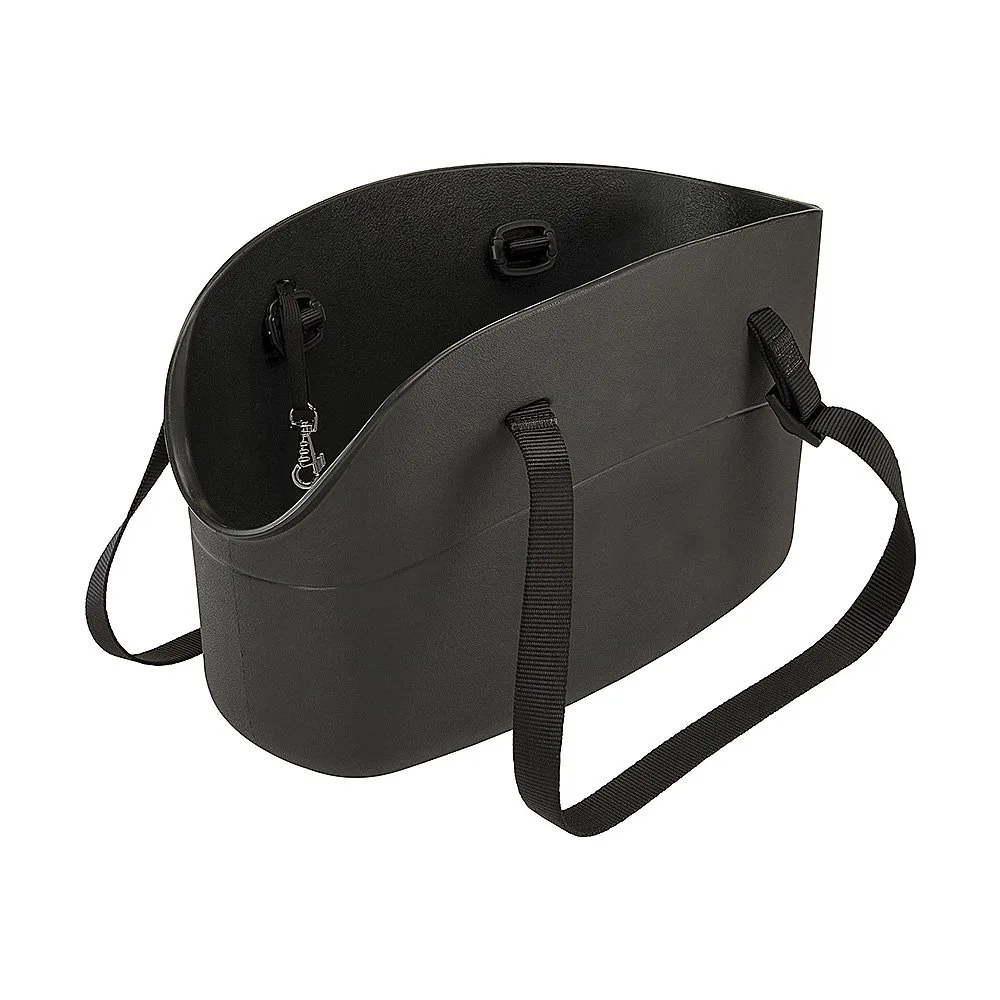
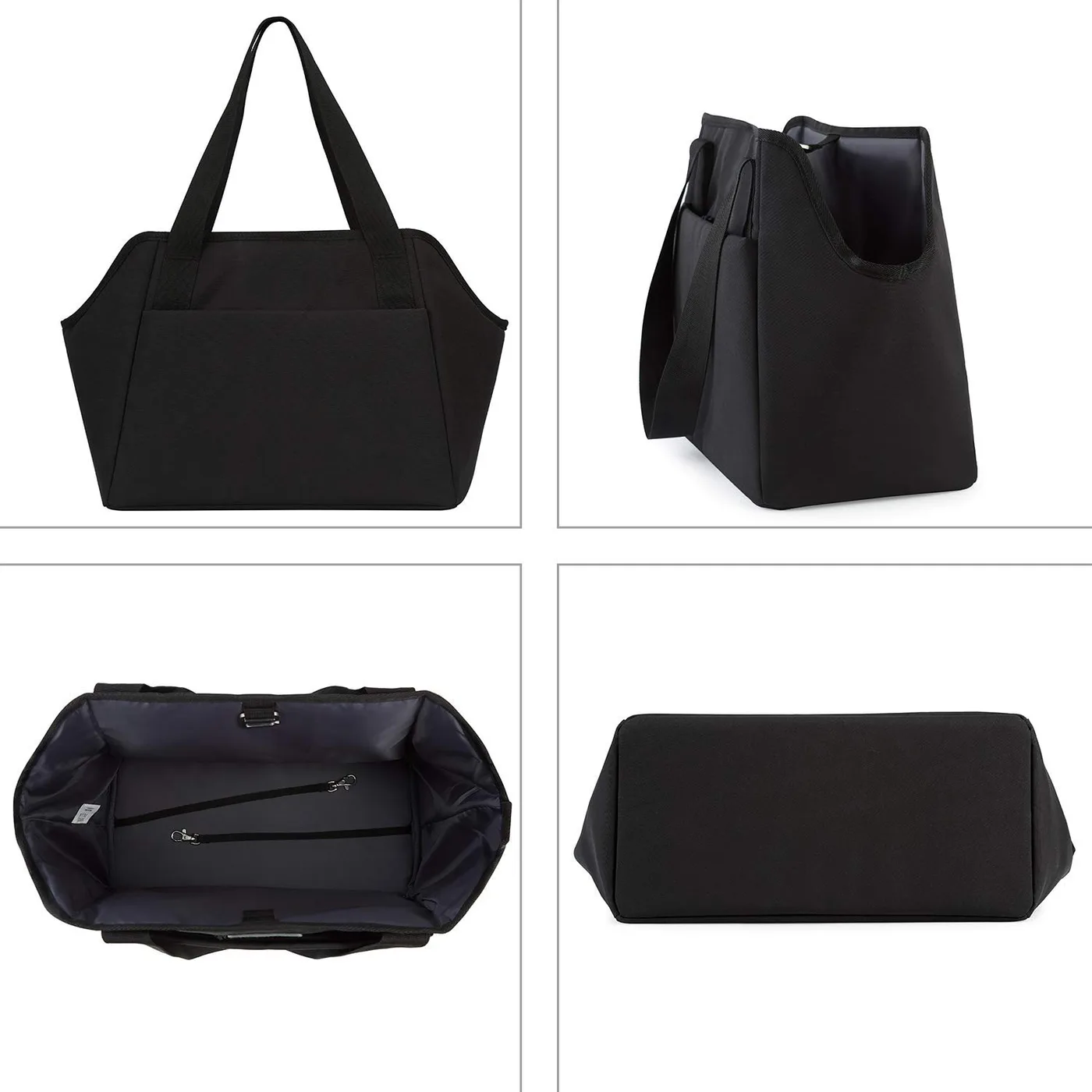
Placing a metal comb inside a soft carry bag is mechanically straightforward and it has one genuine hazard: fine teeth are delicate, and anything that bends them ruins the product without necessarily looking like damage.
The physical threat is lateral load against the teeth rather than impact. A comb lying loose among soft goods receives distributed pressure across the tooth face, and enough of it bends the tips permanently. Nothing about the surrounding bag cushions this, because soft goods transmit rather than absorb that kind of steady load.
A sheath changes the mechanics completely: it carries the load on the spine rather than the teeth. Four formats are available and the differences are mostly about cost against presentation.
The second consideration is abrasion the other way. Tooth tips are not sharp after deburring, but thirty days of contact against a zip or a buckle in a moving carton will mark either surface, which is why separation rather than cushioning is the answer.
| Format | Cost (USD) | Cube per unit (L) | Tooth protection | Presentation | Suits |
|---|---|---|---|---|---|
| Loose in carrier pocket | 0 | +0.02 | None | None | Reject |
| Poly sleeve, heat sealed | 0.02-0.07 | +0.03 | Low | Low | Minimum |
| Carded mount plus sleeve | 0.10-0.30 | +0.06 | Moderate | Good | Value bundle |
| Moulded or moulded-edge sheath | 0.28-0.85 | +0.09 | High | Very good | Premium kit |
| Stitched textile sheath | 0.55-1.60 | +0.12 | High | Very good | Premium kit |
| Folding carton with die-cut slot | 0.18-0.52 | +0.14 | High | Very good | Shelf retail |
A stitched textile sheath is worth particular mention because it is ordinary sewn-goods capability at a cost far below a moulded equivalent's tooling. It protects the teeth, it looks deliberate, and it can be made to match the host carrier's fabric.
Folded-cube arithmetic strongly favours shipping inside the carrier. A comb in a carded mount adds roughly 0.06 litres against a carrier occupying 22-46 litres, so the freight impact is negligible and shipping separately costs 0.22-0.68 USD per unit more for no benefit.
Case-level specification matters because combs are dense. Five thousand of them weigh 180-420 kilograms concentrated in one part of a container, and distributing rather than stacking them avoids axle-weight repositioning fees above about 20,000 units.
Inspection at destination covers the standard acceptances plus one specific check: AQL 2.5 visual including tooth alignment under a straight edge, because bent teeth are the one defect a picker will not necessarily notice and a customer will.
Sheath rather than sleeve anything going into a soft bag, prefer a stitched textile sheath on cost, and add tooth alignment to the AQL 2.5 check.
Variant Strategy and Minimum Structure
The final question for this product is how many variants to run, because the answer decides both tooling exposure and purchase minimum far more than it changes the product.
The natural variants are pitch, handle material, handle colour and length. Pitch variants each need their own forming tooling, which typically runs 900-3,800 USD. Handle colour does not. Length usually means a different die or a different cut, costing 60-280 USD.
That asymmetry drives the sensible plan: one pitch for the first order, differentiated by handle colour and presentation, then a second pitch once volume justifies the tooling.
Two-pitch double combs are worth considering as an alternative to two SKUs. A head combining fine and coarse pitches on one body costs 1.25-1.75 times a single-pitch unit and replaces two separate purchases, two minimum quantities and two sets of packaging development.
| Plan | Tooling (USD) | SKUs | Total units | Unit cost index | Suits |
|---|---|---|---|---|---|
| Single pitch, one colour | 900-2,600 | 1 | 500 | 1.00 | Test order |
| Single pitch, three colours | 900-2,600 | 3 | 1,500 | 1.04-1.12 | Palette launch |
| Two pitches | 1,800-5,200 | 2 | 1,000 | 1.18-1.35 | Confirmed demand |
| Double-pitch comb | 1,100-3,400 | 1 | 500 | 1.25-1.75 | Replacing two SKUs |
| Comb plus companion groomer | 1,400-4,200 | 1 kit | 500 | 1.30-1.85 | Gift bundle |
The double-pitch row looks expensive per unit and is cheaper per programme. Against two single-pitch SKUs it removes one tooling set, one minimum quantity, one set of artwork and one complete set of tests, and the delivered cost of covering two use cases is usually 20-35% lower.
The bundle row is where this item most often ends up. Paired with another grooming implement in one carded mount, it converts a low-value accessory into a kit that supports a higher price point for 0.10-0.30 USD of assembly.
Programme terms hold throughout. MOQ 500 pieces per variant applies whether the variant is pitch, colour or presentation. Prototypes in 6-10 working days cover finished units with the specified finish, and they should always be evaluated for edge radius and tooth alignment in that window. Bulk production runs 35-50 days after sample approval, with testing running in parallel rather than afterwards. Final random inspection follows AQL 2.5 with edge radius, tooth set, head retention and finish condition as defined acceptances. Terms are T/T 30/70, FOB Xiamen, with output through the SGS-verified production base operating under ISO 9001 and BSCI coverage.
Launch one pitch with colour differentiation, use a double-pitch comb to cover two use cases economically, and evaluate samples for edge radius rather than appearance.
Why brands source here
- Pet carrier programs run since 2014; founding team in sewn goods since 2004
- SGS-verified production floor of 4,950 m² with 137 workers across 7 lines
- Monthly capacity of 200,000 units, audited to BSCI and ISO 9001
People Also Ask
What tooth pitch is used for a fine companion comb?
0.20-0.35 millimetres with a wire diameter of 0.45-0.70 millimetres. Pitch and wire cannot be specified independently, because within a fixed pitch, thicker wire leaves a narrower aperture.
Why can this product not be described in terms of organisms?
Presentation governs classification. An article presented as destroying or repelling a pest falls within a regulated class requiring registration that this mechanical implement does not hold.
Is describing physical capture acceptable?
Yes. The product captures and removes by geometry, contains no active substance and delivers nothing. Saying so accurately is both true and commercially adequate.
What finish do the teeth need?
A minimum edge radius of 0.05 millimetres. Tumbling reaches 0.04-0.12 mm at 0.03-0.12 USD; electropolishing reaches 0.05-0.15 mm and also reaches internal corners.
Why must samples be cold-conditioned before impact testing?
Polymer handles lose impact strength sharply below 5 degrees Celsius, so shipped goods arrive more fragile than goods tested at ambient conditions.
Should a comb ship loose inside a carrier?
Never. Distributed pressure across the tooth face bends tips permanently, and soft goods transmit rather than absorb that steady load. A sheath carries the load on the spine instead.
How many variants should a first order cover?
One pitch with three handle colours. Different pitch costs 900-3,800 USD in new forming tooling, whereas colour costs nothing beyond a separate order quantity.
Frequently Asked Questions
Why specify teeth per unit length rather than total count?
It scales across handle widths and is independently checkable. Quoting a total invites adjustment of width rather than pitch.
Why add a minimum root radius at the tooth base?
A sharp internal corner there becomes a stress concentrator and teeth break at the root rather than anywhere else. It costs nothing to specify at drawing stage.
Why reject carbon steel at this wire diameter?
Corrosion pitting destroys geometry long before visible rust appears, and at 0.45-0.70 millimetres there is very little material to lose before the pitch is wrong.
Why screen plating separately from the substrate?
Nickel release attaches to the surface, not to the alloy. An alloy certificate answers a different question from the one that matters.
Why treat a bamboo handle as high-risk?
Material treated against biological attack during its own manufacture can carry residues appearing nowhere on the drawing. Only a supplier declaration plus a screen controls that.
Why test tooth set rather than just strength?
Dimension is function here. Permanent deformation above 4% of original pitch means the comb no longer matches its own specification, even though nothing about it has visibly broken.
Why sleeve combs individually in a shared carton?
Contact wear between units takes the plating off at contact points during a long voyage, and case-level vibration testing is what reveals it.
Should 'no burrs' be specified as such?
No. It is unarguable and unverifiable. Specify a minimum edge radius instead, which is measurable and therefore enforceable.
Why is passivation added after finishing?
Abrasive and chemical finishing exposes fresh iron at worked surfaces. Passivation at 0.02-0.07 USD removes it and is the cheapest corrosion control available.
What is the largest single hidden cost in this item?
Finishing plus verification at 0.05-0.45 USD per unit. It is the specification most often omitted from a first quotation and discovered when samples arrive unusable.
Why consider a double-pitch comb over two SKUs?
It removes one tooling set, one minimum quantity, one artwork set and one complete test cycle. The delivered cost of covering two use cases is usually 20-35% lower.
Why is a stitched textile sheath attractive here?
It is ordinary sewn-goods capability costing far less than moulded tooling, it protects teeth by loading the spine, and it can be matched to the host carrier's fabric.
What should be added to the AQL 2.5 check?
Tooth alignment under a straight edge. Bent teeth are the one defect a picker frequently misses and a customer immediately notices.
Why distribute comb weight inside a container?
Five thousand units weigh 180-420 kilograms and concentrating that invites axle-weight repositioning fees above about 20,000 units.
Talk to QUANZHOU JUNYUAN BAGS about a pet carrier program: MOQ 500 pieces per colourway, samples in 6-10 working days, bulk production in 35-50 days under AQL 2.5 inspection.
Get a free quote Request a sample