Dog Carrier Backpack Waste Bag Dispenser: Integration
A waste bag dispenser is specified by core diameter, slot geometry and pull force: rolls run on 32 mm or 38 mm cores, the dispensing slot is 28-35 mm wide with a 1.5-2.0 mm lip, and the tear-off force at the perforation should fall between 2 and 6 N so a bag can be pulled one-handed without unspooling the roll. Housings are ABS or TPU, mounted with a 12 mm bar-tack or two 3 mm rivets on a washer.
This page documents how a waste bag dispenser is integrated into a pet carrier backpack as an engineered subassembly rather than as a sewn-on accessory. It covers roll geometry and capacity maths, housing material selection across ABS, PP, TPU and silicone, four refill mechanisms with their cycle results, mounting positions and the load cases each one creates, pull-force and tear-off testing, hygiene and odour control, and the tooling and tolerance plan that keeps a moulded part consistent across a production run. Commercial terms follow the standard program: MOQ 500 pieces per colourway, prototypes in 6-10 working days, bulk production 35-50 days after approval, final random inspection to AQL 2.5, T/T 30/70 and FOB Xiamen. Dispensers are one of the few carrier components that require injection tooling, so the tooling decision has to be made several weeks before the carrier's own sampling path.
Private label pet bags sit at the centre of most dog carrier backpack briefs we handle: the buyer owns the brand, the barcode and the artwork, while our production team holds the pattern.
Dispenser Function: Core Diameter, Slot Geometry and Roll Capacity
Every dispenser design starts from the roll it has to accept, and the roll is defined by three dimensions: core inside diameter, roll outside diameter and roll width. Pet waste bag rolls on the market run on cores of 32 mm or 38 mm inside diameter, with roll outside diameters of 50-65 mm at 15 bags and 70-85 mm at 60 bags, and roll widths of 55-70 mm. A dispenser built for one core size will not reliably accept the other; a 38 mm core in a 32 mm post wobbles and binds, and a 32 mm core on a 38 mm post unspools loosely and birdnests inside the housing.
Housing internal volume is therefore derived, not chosen. The internal cavity needs a clearance of 2-3 mm over the maximum roll outside diameter the brand intends to support, which puts the internal diameter of a 15-bag dispenser at around 68-70 mm and a 60-bag dispenser at 85-90 mm. Housing depth follows roll width plus 3-4 mm of side clearance: 60-74 mm. Those two dimensions drive the visible size of the component on the carrier, which is why the bag count decision — 15 versus 60 — should be made before the industrial design is sketched.
Slot geometry controls how the bag leaves the housing. A plain rectangular slot tears bags at random points; a slot with a shaped notch or a 1.5-2.0 mm inward lip creates a controlled tear line at the perforation. Slot width of 28-35 mm passes a standard flat-packed bag without folding it, and slot length should be 3-5 mm shorter than the roll width so the bag is guided rather than free to wander. Radiusing the slot ends at R2 removes the corner stress concentration that cracks ABS housings after a few thousand cycles.
Capacity claims need to be honest about what fits. A housing dimensioned for a 60-bag roll will physically accept one, but the first few bags are hard to extract because the roll is tight against the wall; the practical comfort limit is reached at roughly 85% of the geometric maximum. Specify dispenser capacity as the bag count that extracts cleanly on the first pull, not the count that can be forced inside.
Housing Materials: ABS, PP, TPU and Silicone Compared
Four materials appear in dispenser housings and each carries a different balance of rigidity, cycle life and unit cost. ABS is the default: it moulds to tight tolerances, holds a crisp slot edge, takes paint and texture well, and costs less per part at volume. Its weakness is impact at low temperature and notch sensitivity at the slot corners, which is why radiused slot ends and a wall thickness of 2.0-2.5 mm are specified together with it.
Polypropylene is the cheap and flexible alternative. It survives a drop that would crack ABS, it has better chemical resistance to the cleaners used on pet products, and it is lighter. The trade-offs are a softer slot edge that wears over time, poorer dimensional stability — shrinkage of 1.0-2.0% against 0.4-0.7% for ABS — and difficulty holding a cosmetic finish. PP is the right choice for a dispenser that will be dropped often and looked at rarely.
TPU bridges the two. A 75-85 Shore A TPU housing flexes on impact, holds a clean slot, and can be radio-frequency or ultrasonically welded to a TPU-coated shell without any hardware at all. Unit cost sits between ABS and silicone, tooling cost is similar to ABS, and the material's abrasion resistance makes it the best option where the dispenser is mounted low on the carrier and will scrape against ground and door frames.
| Material | Hardness / type | Mould shrinkage | Wall (mm) | Cycle life | Part cost (USD) |
|---|---|---|---|---|---|
| ABS, injection moulded | Rigid, 100-110 Rockwell R | 0.4-0.7% | 2.0-2.5 | 5,000 cycles | 0.35-0.65 |
| PP, injection moulded | Rigid-flexible | 1.0-2.0% | 2.2-2.8 | 8,000 cycles | 0.22-0.45 |
| TPU, injection moulded | 75-85 Shore A | 0.8-1.6% | 2.0-3.0 | 10,000 cycles | 0.55-0.95 |
| Silicone, compression moulded | 50-65 Shore A | 2.0-3.5% | 1.8-2.5 | 6,000 cycles | 0.85-1.50 |
| Fabric sleeve, no moulding | 600D polyester | n/a | n/a | 1,500 cycles | 0.18-0.35 |
Silicone is used where the brand wants the dispenser to be squeezable and silent, and it takes colour well. It is the most expensive option and the least dimensionally stable, which matters for the slot: a silicone slot lip wears and rounds within a few thousand cycles, so the tear becomes less controlled over the product's life. It is specified mainly for premium programmes where tactile quality is the selling point.
The fifth row in the table — a fabric sleeve with an eyelet — is not a moulded dispenser at all, but it is worth including because it is what many programmes should use. It costs a fraction of a moulded housing, needs no tooling, and works well enough for the 60-70% of use cases where the wearer pulls a bag a few times a week. Moulding only pays when bag count, brand appearance or retail presentation justify the tool.

Refill Mechanisms: Zipper, Hook-and-Loop, Twist-Lock and Magnetic Catch
Refill access is where dispenser designs diverge most, and the choice determines both the user experience and the component count. A zippered housing lid is the most common: a #3 or #5 coil zip around a 180-degree arc of the housing periphery, with the roll dropped in from the side. Refill takes 15-25 seconds, seal quality is good, and the failure mode is zipper-related — slider wear and tape separation — rather than housing-related. Cycle testing runs 3,000 open-close operations with no tooth separation.
Hook-and-loop closure is the fastest and the least secure. A 20 mm hook-and-loop band around a hinged or fully removable lid opens in under five seconds and, critically, does not need alignment, which makes it the most forgiving mechanism for a wearer using one hand. Its weaknesses are well known: hook-and-loop loses shear strength when packed with lint and pet hair, and the hook side abrades fabric it rubs against. Specifying a 20 mm width with a hook side of 0.8-1.0 mm pile height, plus a fabric guard panel behind it, extends usable life considerably.
A twist-lock bayonet is the engineered option. The housing body carries two or three moulded lugs; the cap rotates 30-45 degrees to lock. Refill takes 8-12 seconds, the seal is positive, and there are no textile or metal components to wear out. The cost is tooling complexity — side-actions or a collapsing core in the mould, which typically adds 800-2,000 USD to tool cost — and a tolerance requirement: lug engagement of 1.5-2.5 mm with the mating feature held to ±0.2 mm.
A magnetic catch is the premium option and the one most sensitive to specification. Two or four neodymium magnets set into moulded pockets, with a pull force of 6-12 N total, hold the cap closed and let it swing open. Magnets must be fully encapsulated because a loose magnet in a pet product is a swallowing hazard, and encapsulation adds an overmoulding or ultrasonic welding step. Retail compliance teams also flag magnets in pet accessories, so documented pull-force testing and a retention test on the encapsulation are required before this mechanism will clear review at several large chains.
Mounting Position and Attachment Load Cases
Where the dispenser sits determines the loads it sees. The three positions used in production are the shoulder strap, the side panel low on the compartment, and the base panel. Each has a different load case and a different attachment method, and choosing on appearance alone produces field failures that are easy to predict in advance.
Shoulder-strap mounting is the most popular because the dispenser is within reach of either hand. Loads are modest — the roll is light — but the attachment is on a tension member that flexes constantly, so a rigid ABS housing riveted flat to a strap will crack at the rivet holes. The correct construction is a fabric or TPU sleeve stitched to the strap with a 12 mm bar-tack at each end, with the housing carried in the sleeve. Stitching directly through strap webbing also perforates load-bearing fibres, so the sleeve should be captured in the strap's existing binding stitch line wherever the pattern allows.
Side-panel mounting low on the compartment puts the dispenser in the abrasion zone: door frames, kerbs, and the ground when the carrier is set down. Loads are impact rather than tension. A TPU or PP housing survives here, an ABS housing with sharp internal corners does not. Attachment is two 3 mm rivets on a 3 mm backing washer, or a bar-tacked fabric cradle; rivets give a cleaner appearance and a positive attachment, but they penetrate the shell and need a bonded patch behind them to stop tear propagation.
Base-panel mounting is the least common and the most heavily loaded, because it is where the carrier lands. It is chosen when the dispenser doubles as a structural foot or when the brand wants it out of sight. The housing needs to be recessed into the base moulding or protected by a moulded skirt, and the attachment must survive repeated 600 mm drops onto concrete. Very few programmes choose this position deliberately; most arrive at it through an industrial design decision made before engineering review.
Regardless of position, one number governs the attachment: the dispenser plus a full roll weighs 60-140 g, but the dynamic load when the wearer pulls a bag one-handed while the carrier is worn can reach 25-40 N laterally. Attachments should be designed for the pull force, not the dead weight.
Pull-Force and Tear-Off Performance
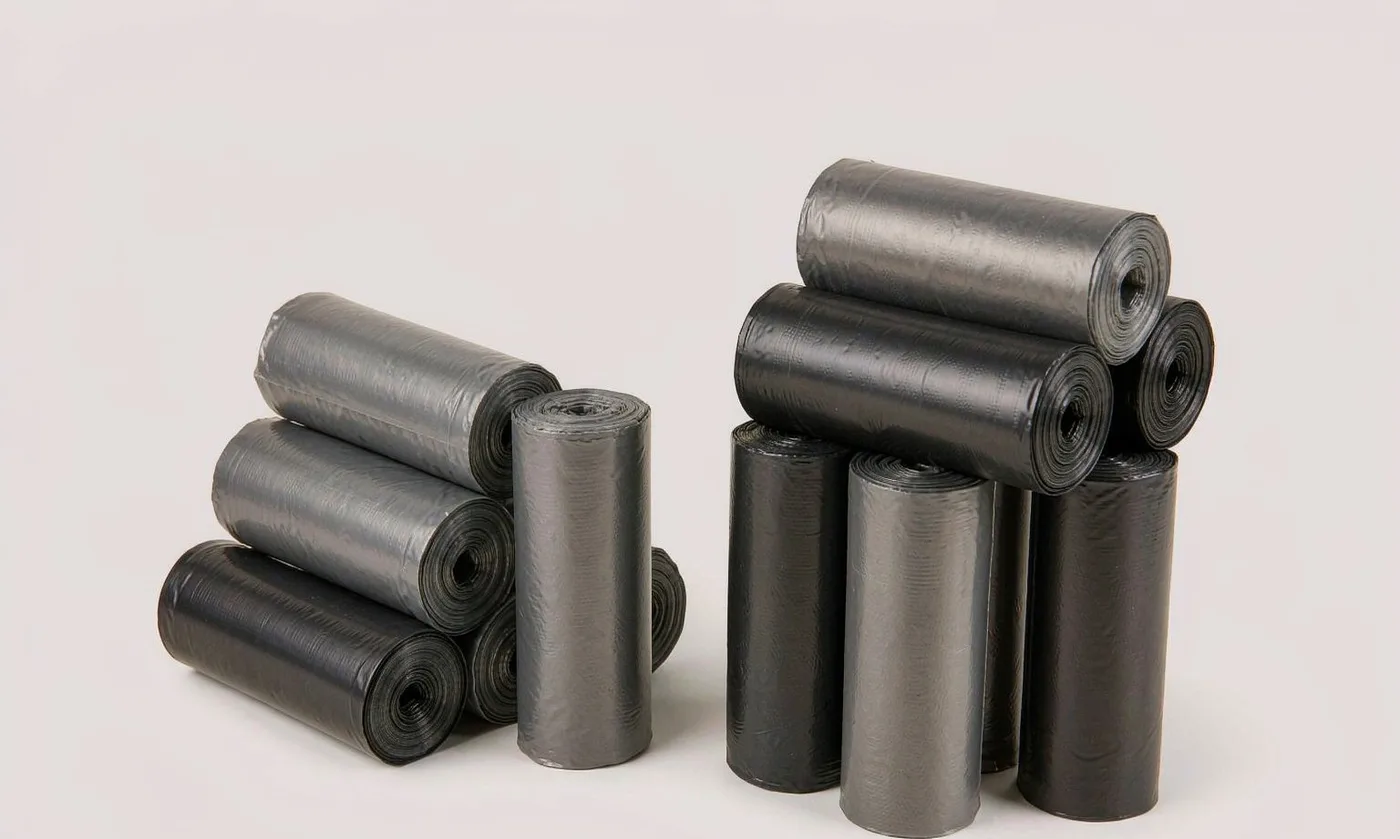
Pull force is the number that decides whether the dispenser works. Too high and the wearer needs two hands or tears the roll off its core; too low and bags unspool continuously into the housing. The measured window across production samples is 2-6 N to extract and tear the first bag, rising slightly as the roll diameter decreases and the moment arm shortens. Testing is done on a tensile tester at 300 mm/min with the housing mounted in its production orientation, measuring the peak force over the first 50 mm of travel.
The bag perforation, not the dispenser, controls the tear. A perforation with 1.0 mm ties at 3.0 mm pitch tears at 3-5 N; a heavier perforation with 1.5 mm ties at 2.5 mm pitch tears at 6-9 N and is unpleasant to use one-handed. Because the bag is usually supplied by a third party, the bag specification has to be part of the dispenser specification — a housing tuned around a 4 N bag will feel wrong with an 8 N bag even though nothing about the housing changed.
Roll-core friction is the second variable. If the core binds on the post, the pull force rises and the perforation tears inside the housing instead of at the slot, which is the most common field complaint in this category. The fix is a clearance of 0.3-0.6 mm between core inside diameter and post outside diameter, plus a post surface finish of Ra 0.8-1.6 micrometres. A post moulded with visible sink or flow lines will bind regardless of the nominal clearance.
Cycle testing closes the picture: 1,000 bag extractions on a fabric sleeve, 5,000 on ABS and 10,000 on TPU, with pull force measured at intervals and slot wear inspected. Acceptance is force retention within ±30% of the initial reading and no slot lip wear beyond 0.5 mm. A dispenser that drifts outside that band usually has a slot lip that is too thin for the material — 1.5 mm minimum on ABS, 2.0 mm on TPU.
Chemical and physical durability of the bag itself round out the specification. Film thickness of 14-18 micrometres with a declared puncture resistance, seam integrity under a 2 kg static load, and opacity sufficient to conceal contents are the three properties worth writing down. Bag thickness below 12 micrometres punctures on the smallest twig and generates complaints that the dispenser gets blamed for.
Hygiene, Cleanability and Odour Control
A dispenser sits at the intersection of two contamination paths: the bags carry waste outward, and the housing interior collects whatever the roll picks up. Hygiene design therefore focuses on keeping the interior cleanable and on stopping odour transfer into the carrier's fabric. Neither is difficult, but both are usually ignored until a retail review raises them.
Interior access is the first requirement. A housing that can only be refilled through a 30 mm slot cannot be wiped. Specifying a lid that opens to at least 70% of the housing's cross-section, with no internal undercut that traps debris, makes the interior cleanable with a cloth. Internal corners should be radiused at R3 or greater — sharp internal corners in a moulded part are both a stress riser and a dirt trap, and the radius costs nothing.
Odour control has three working approaches. The first is a scented or charcoal-impregnated bag, which is a consumable solution and therefore a recurring revenue line for the brand. The second is an activated-carbon pad in the housing lid, replaced every three to six months, which works but adds a component and a maintenance instruction most users will ignore. The third is simply a sealed lid with a compression gasket, which is the most reliable and the least glamorous: a 2 mm closed-cell foam gasket around the lid perimeter reduces odour transfer measurably without adding consumables.
Material choice supports this. PP and TPU resist the quaternary ammonium and chlorine cleaners used on pet products; ABS is attacked by some solvent-based cleaners and crazes. Where a wipe-clean claim is made, a disinfectant compatibility test over 50 wipe cycles should be run on the housing material, because crazing appears after 20-30 cycles with the wrong cleaner and turns into a crack at the slot corner.
Chemical documentation follows the usual path: the housing resin is declared for REACH SVHC under the framework published by ECHA, and for the US market the finished assembly is screened against CPSIA limits using the guidance published by the U.S. Consumer Product Safety Commission. Any fabric panel in contact with the dispenser is screened against OEKO-TEX criteria, since the same panel often sits against the animal.
Tooling, Tolerances and Assembly Sequence
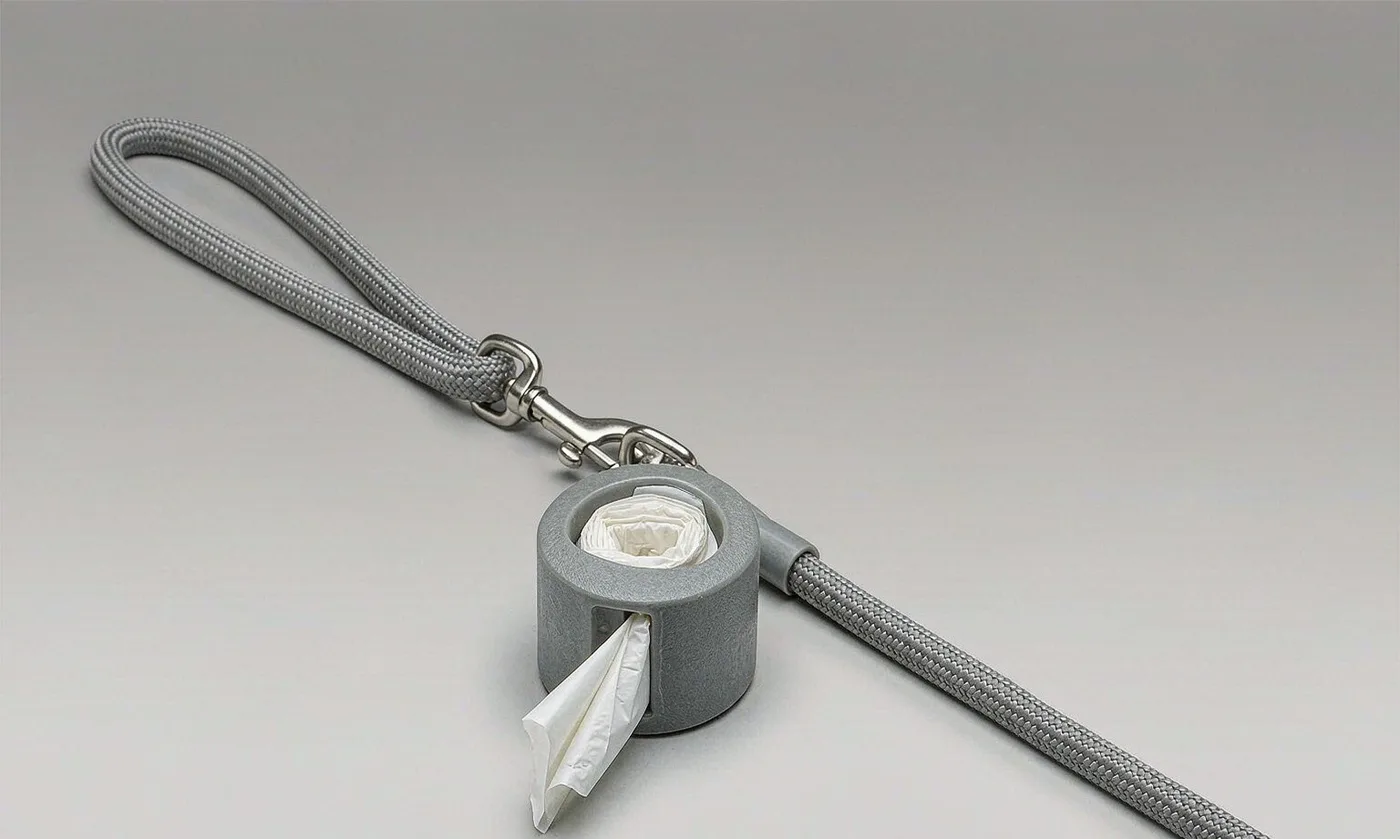
Injection tooling is the gating item in a dispenser programme. A single-cavity ABS tool with a simple open-close lid runs 2,500-5,000 USD and takes four to six weeks to first articles; a twist-lock design with side-actions runs 4,500-8,000 USD and six to eight weeks. Those lead times sit outside the carrier's own sampling path, so the sequence that works is to freeze the dispenser geometry first, commission the tool, and run the carrier prototype with a 3D-printed or soft-tooled stand-in until moulded parts arrive.
Tolerances that matter are few but consequential. Core post diameter at ±0.15 mm, slot width at ±0.20 mm, lid-to-body fit at 0.2-0.4 mm clearance, and lug engagement on twist-lock designs at ±0.2 mm. Everything else can run at general moulding tolerance. Specifying tight tolerances across the whole drawing raises tool cost sharply for no functional gain, which is why the tolerance callout should be limited to the features that control fit and pull force.
Assembly sequence on the sewing line is short but position-sensitive. The dispenser mount — sleeve, cradle or rivet pattern — is applied before the compartment is closed, for the same access reason as any other external component. Rivets are set with a controlled-stroke press and a recorded setting force on the first twenty pieces of each shift; hand-set rivets vary enough that a proportion will be loose, and a loose dispenser rattles audibly against the shell.
Incoming inspection of moulded parts is worth specifying separately from fabric inspection. Flash at the slot is the defect that most affects function, and it is invisible in a carton count. A go/no-go gauge for slot width, checked at an agreed sampling rate, catches flash before parts reach the line. Short shots, sink marks adjacent to the post, and weld lines at the slot corner are the other three defects to screen for; a weld line at the slot corner is a structural defect, not a cosmetic one, and those parts should be rejected rather than sorted for appearance. Moulding process windows for these parts are documented against the general practice published by ASTM International.
Cost, MOQ and Sampling Schedule
Dispenser cost has two components: the moulded part, from 0.22 to 1.50 USD depending on material, and the mount, from 0.10 to 0.45 USD depending on whether it is stitched, riveted or welded. A full ABS dispenser on a riveted cradle therefore adds 0.45-1.10 USD to the carrier, plus amortised tooling. At 500 units a 3,500 USD tool adds 7.00 USD per unit, which is prohibitive; at 5,000 units it adds 0.70 USD, which is not. This arithmetic, more than any design consideration, is what decides whether a programme uses a moulded dispenser or a fabric sleeve.
The program MOQ of 500 pieces per colourway applies to the carrier, but moulded components carry resin colour minimums and machine set-up charges that make small runs uneconomic. Where a brand wants a moulded dispenser from the first order, the workable path is a stock-colour housing with a branded decal or a pad-printed logo, moving to custom resin colour once annual volume passes a few thousand units.
Sampling runs 6-10 working days for the carrier and, in parallel, four to eight weeks for first moulded articles. The two paths should be planned to converge before the golden sample is signed, because a dispenser change after approval affects the shell pattern, the reinforcement patch and sometimes the moulded base. Programmes that approve a golden sample with a stand-in dispenser almost always revisit the pattern later.
Bulk production runs 35-50 days after sample approval with moulded parts kitted in advance. Final random inspection to AQL 2.5 covers slot width by go/no-go gauge, lid fit with no gap beyond 0.4 mm, attachment bar-tack placement within ±2 mm, and pull force sampled at 2-6 N on five pieces per carton lot. A dispenser that dispenses cleanly on the line and in the carton is the difference between a feature that earns reviews and one that generates returns.
Why brands source here
- Pet carrier programs run since 2014; founding team in sewn goods since 2004
- SGS-verified production floor of 4,950 m² with 137 workers across 7 lines
- Monthly capacity of 200,000 units, audited to BSCI and ISO 9001
People Also Ask
What core size do pet waste bag rolls use?
32 mm or 38 mm inside diameter, with roll outside diameters of 50-65 mm at 15 bags and 70-85 mm at 60 bags, and roll widths of 55-70 mm. A dispenser built for one core will not reliably accept the other.
How much force should it take to pull one bag?
Between 2 and 6 N measured at 300 mm/min. The bag perforation sets this number, so the bag specification belongs in the dispenser specification: a 1.0 mm tie at 3.0 mm pitch tears at 3-5 N.
Which housing material lasts longest?
TPU at 75-85 Shore A, rated to about 10,000 cycles, followed by PP at 8,000 and ABS at 5,000. ABS gives the crispest slot edge and lowest cost but is notch-sensitive at slot corners.
Why do bags tear inside the dispenser instead of at the slot?
Roll-core binding. Allow 0.3-0.6 mm clearance between core inside diameter and post outside diameter with a post finish of Ra 0.8-1.6 micrometres, and avoid sink or flow lines on the post.
How much does dispenser injection tooling cost?
2,500-5,000 USD for a single-cavity tool with a simple lid, four to six weeks to first articles. A twist-lock design with side-actions runs 4,500-8,000 USD and six to eight weeks.
Should the dispenser mount on the strap or the panel?
Strap mounting needs a sleeve bar-tacked at both ends rather than a rigid housing riveted flat, because the strap flexes. Panel mounting sees impact loads and suits TPU or PP housings on two 3 mm rivets with a backing washer.
Frequently Asked Questions
What slot width should a waste bag dispenser have?
28-35 mm wide with a 1.5-2.0 mm inward lip and a controlled tear notch, radiused at R2 at the ends. Slot length should be 3-5 mm shorter than roll width so the bag is guided.
How much clearance is needed around the roll?
2-3 mm over the maximum roll outside diameter and 3-4 mm of side clearance. That puts a 15-bag housing at 68-70 mm internal diameter and a 60-bag housing at 85-90 mm.
What lid opening makes the housing cleanable?
At least 70% of the housing cross-section with no internal undercut, and internal corners radiused at R3 or greater. A lid that only allows access through the dispensing slot cannot be wiped.
How is odour transfer controlled?
A 2 mm closed-cell foam gasket around the lid perimeter is the most reliable option. Activated-carbon pads in the lid work but need replacement every three to six months and users rarely do it.
Which cleaners damage ABS housings?
Some solvent-based cleaners craze ABS after 20-30 wipe cycles, and crazing at the slot corner becomes a crack. PP and TPU resist quaternary ammonium and chlorine cleaners; run a 50-cycle compatibility test before making a wipe-clean claim.
Are magnets safe in a pet product dispenser?
They can be, but magnets must be fully encapsulated by overmoulding or ultrasonic welding because a loose magnet is a swallowing hazard. Expect to supply pull-force and retention test data at retail review.
What tolerances matter on a moulded dispenser?
Core post diameter ±0.15 mm, slot width ±0.20 mm, lid-to-body clearance 0.2-0.4 mm, and lug engagement ±0.2 mm. Tight tolerances elsewhere raise tool cost with no functional gain.
Which moulding defects should be screened at incoming inspection?
Flash at the slot, short shots, sink marks adjacent to the post, and weld lines at the slot corner. A weld line at the slot corner is structural and those parts should be rejected rather than sorted for looks.
Why does a strap-mounted housing crack at the rivet holes?
The strap is a flexing tension member and a rigid housing riveted flat to it cannot follow the movement. Use a fabric or TPU sleeve bar-tacked over 12 mm at each end instead.
What bag thickness should be specified?
14-18 micrometres with declared puncture resistance, seam integrity under a 2 kg static load, and sufficient opacity. Below 12 micrometres the film punctures easily and the dispenser gets blamed.
How is cycle testing run on a dispenser?
1,000 bag extractions on fabric sleeves, 5,000 on ABS and 10,000 on TPU, with pull force measured at intervals. Acceptance is force within ±30% of initial and slot lip wear under 0.5 mm.
What is the MOQ for a dispenser-equipped carrier?
500 pieces per colourway for the carrier. Moulded housings carry resin colour minimums and set-up charges that make small runs uneconomic, so stock colours with a printed logo are advised for the first orders.
How long do samples and bulk production take?
Carrier prototypes in 6-10 working days, with four to eight weeks for first moulded articles in parallel. Bulk runs 35-50 days after approval, inspected to AQL 2.5 with T/T 30/70 and FOB Xiamen.
What does a dispenser add to unit cost?
0.22-1.50 USD for the moulded part plus 0.10-0.45 USD for the mount, so an ABS dispenser on a riveted cradle adds 0.45-1.10 USD before amortised tooling.
Talk to QUANZHOU JUNYUAN BAGS about a pet carrier program: MOQ 500 pieces per colourway, samples in 6-10 working days, bulk production in 35-50 days under AQL 2.5 inspection.
Get a free quote Request a sample