Dog Carrier Backpack Manufacturer in China: What to Expect
Working with a dog carrier backpack manufacturer in China means buying into a documented process: MOQ 500 pieces per colourway, samples in 6-10 working days, bulk production in 35-50 days, T/T 30/70 and FOB Xiamen. What separates capable partners from brokers is whether they will disclose line count, machine inventory, audit reports and lot-level test data on request.
Executive summary. This note describes what a brand should expect from a dog carrier backpack manufacturer in China, and what the manufacturer should expect from the brand, based on how pet carrier programmes actually run. The relationship works best when both sides treat the first order as a specification exercise rather than a purchase. Commercial terms are stable across the category: MOQ 500 pieces per colourway, development samples in 6-10 working days, bulk production in 35-50 days after approval, release under AQL 2.5 inspection, T/T 30/70 payment and FOB Xiamen as the default incoterm. Capacity disclosure, audit access and traceability are the three things that distinguish a production partner from a trading intermediary, and each can be verified in a single conversation. The sections below set out the numbers, the documents and the behaviours to expect, together with the misconceptions that most often damage a first programme. A partnership should be judged on the second season rather than the first, because that is where tooling amortisation, learning curve effects and material continuity appear in the numbers. All three verifications take a single conversation, which makes them the fastest way to separate a production partner from an intermediary before any money changes hands.
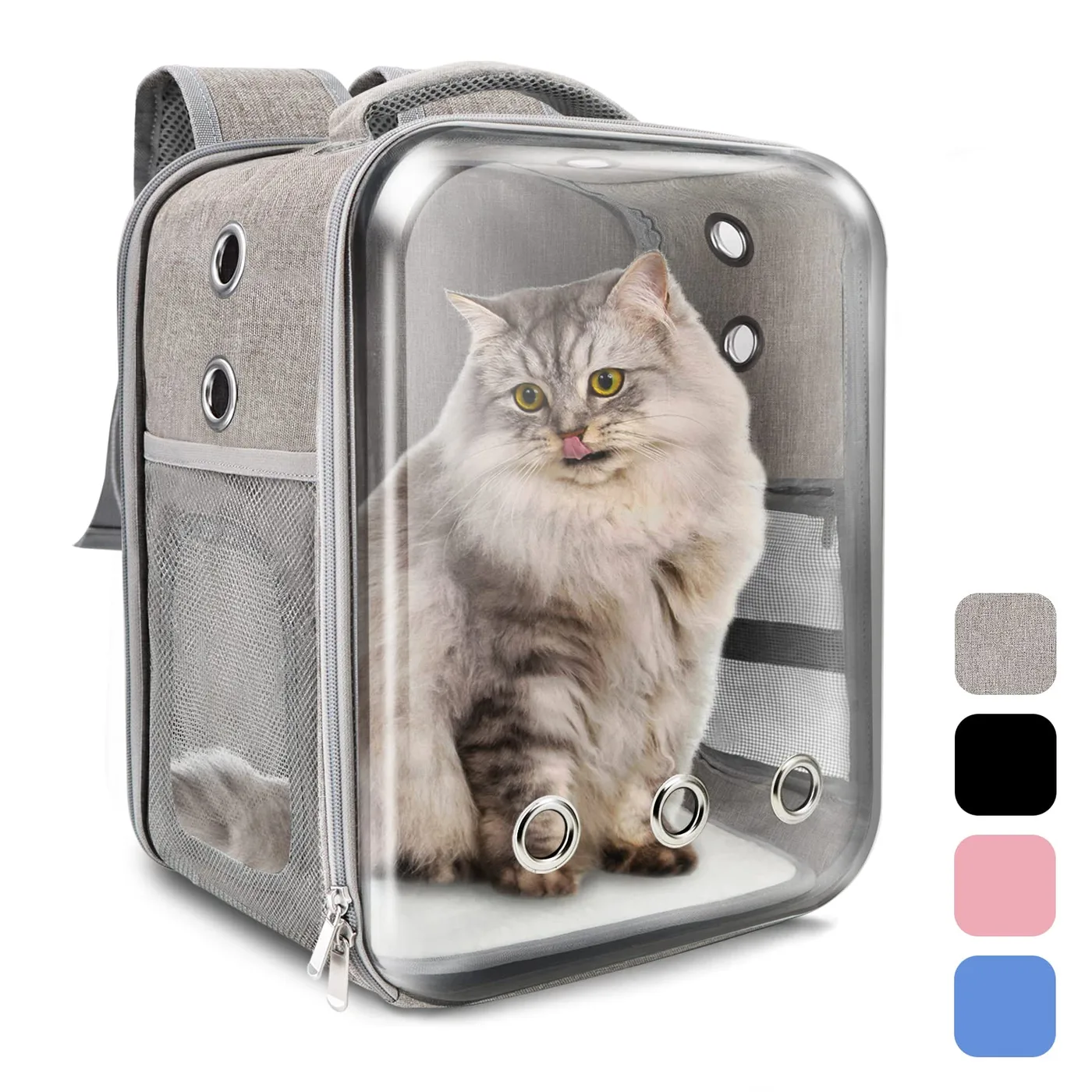
A custom pet carrier brief for dog carrier backpack is quoted against three variables before the sample is cut: fabric weight, hardware grade and print method.
What a Manufacturer Means in This Supply Chain
The word manufacturer is used loosely in this category. Three types of counterparty present themselves as one: a production operation with its own cutting, sewing, welding and assembly under one management system; a trading company that coordinates between independent workshops; and a hybrid that owns some processes and subcontracts others. All three can deliver acceptable product. What differs is the depth of process control and the speed of corrective action, and both of those are visible in the documentation rather than in the showroom.
The test is simple and it takes about ten minutes. Ask for the machine inventory with serial numbers, the line count and the monthly output by product type. Ask which processes are performed in-house and which are placed outside. Then ask for the maintenance and calibration records for one machine. A production operation answers all four from its own records. An intermediary answers the first two from memory and the last two by asking someone else, and the delay is the signal.
Buyers should also understand that the legal entity on the invoice is not the same thing as the production site. In China it is normal for a commercial entity to hold the contract and for production to be carried out across partner facilities under its own quality system. What matters contractually is that the entity accepting the order also owns the inspection release, the corrective action process and the warranty obligation, because those are the three things a buyer will need to exercise at some point.
From the manufacturer side, the expectation is symmetrical. A production partner expects a specification, a target price band, a target quantity and a decision timeline. A brief consisting of a photograph and a request for a price produces a number, but that number will move during development because it was built on assumptions. The programmes that hold their quoted price are the ones where the buyer brought a written specification to the first conversation.
Intellectual property is the last expectation to settle, and it is better settled early. A production partner will sign a confidentiality agreement covering drawings, patterns and specifications as standard practice. What it will not usually accept is an open-ended exclusivity that prevents it from using general construction knowledge gained across programmes. The workable position is confidentiality on the specific design plus, where a brand wants more, a time-limited exclusivity on the specific product with a volume commitment attached.
Capability Disclosure: Lines, Equipment and Capacity
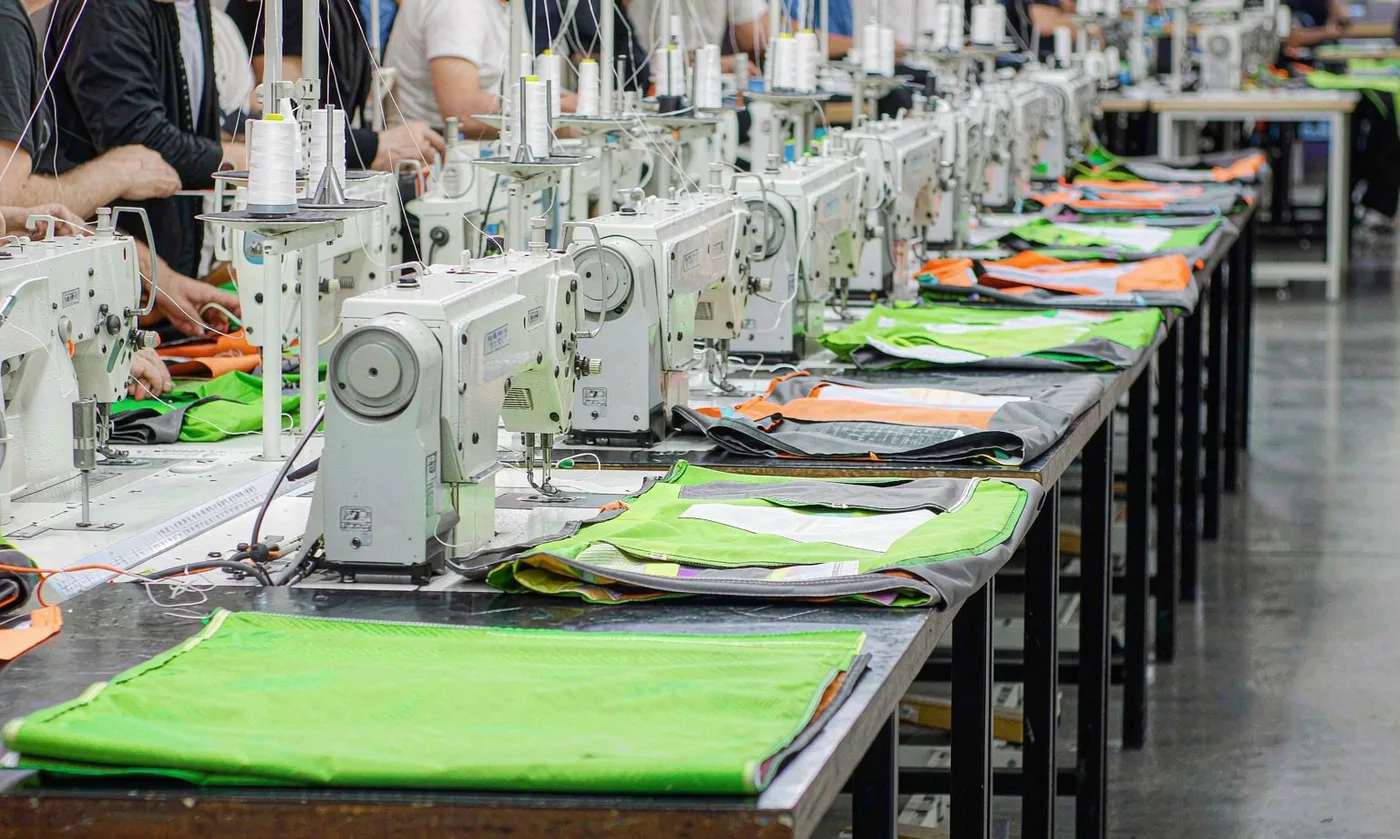
Capability data should be specific enough to be checked. Vague statements about large capacity are worthless; a line count, a machine count and a monthly output figure can be reasoned about. A mid-sized pet carrier operation typically runs 7 assembly lines with around 149 machines, which includes single-needle and double-needle lockstitch units, a bar-tack station, a walking-foot station for heavy assemblies, high-frequency welding equipment, a cutting bed with a digital cutter for single-ply work and a stack cutter for volume panels.
Output is the number that matters for scheduling. At a 15 minute takt and a 9 hour shift, a seven line operation running carriers produces roughly 20,000 units per month across all product types. A single programme is therefore allocated a share of that, and the allocation is negotiated in advance rather than claimed at the point of order. Buyers planning a seasonal launch should confirm their slot in writing, because a line promised to two programmes in the same month delivers to whichever one reserved first.
- Lines and machines: 7 lines, about 149 machines, disclosed with maintenance records.
- Monthly output: around 200,000 units across all categories, roughly 20,000 of them pet carriers.
- Process coverage: cutting, sewing, high-frequency welding, assembly, testing and packing under one system.
- Team: about 137 production staff, with a dedicated sample room separate from the bulk lines.
- Facility area: roughly 4,950 square metres, verified through third-party assessment.
The sample room deserves separate attention, because it is where schedule risk is absorbed. A dedicated sample room working in parallel with the bulk lines is what makes a 6-10 working day sample window possible; a shared line means samples queue behind production and the window doubles. When evaluating a partner, ask whether the sample room has its own equipment and its own operators, and ask to see the current sample queue.
Capacity planning is the buyer side of the same conversation. A programme needing 8,000 units in a single month should be discussing line allocation at least eight weeks ahead, because that is roughly the point at which fabric mill slots and hardware plating slots are still open. Inside six weeks the binding constraint is no longer the sewing line at all but the upstream material, and no amount of spare line capacity recovers it.
Certifications, Audit Access and What Can Actually Be Verified
Two frameworks govern most pet carrier programmes. Quality management is maintained to ISO 9001, which governs documented procedures, internal audit and corrective action. Social compliance is audited to BSCI, which covers working hours, health and safety, and the grievance mechanism. Both are periodic, and both produce a report that a buyer is entitled to request.
Certificates are the least useful part of the evidence. What is useful is the underlying record: the internal audit schedule, the corrective action log with dates and closure status, and the calibration register. A supplier that produces those three on request is running the system; one that only produces a certificate may be running a document management exercise. The difference matters most on the day something goes wrong, because the corrective action log is the only artefact that shows how the last problem was handled.
Audit access should be agreed in the contract rather than requested per visit. Standard practice is to allow buyer-appointed or third-party audits with reasonable notice, covering production areas, the laboratory and the records. A supplier that restricts access to a showroom and a meeting room is telling the buyer something, and it is not about confidentiality.
Product-level testing is separate from the management system and should be requested per programme rather than per supplier. The relevant outputs are the laboratory test summary with lot references, the input lot register and the finished goods inspection report. Where a buyer needs a specific consumer product rule referenced, that should be stated in the purchase order, because the default test schedule covers the standard eleven tests and nothing more.
The RFQ Package and Why Quote Accuracy Depends on It
Quote accuracy is a direct function of RFQ completeness. A request built from a photograph produces a price with an error band of roughly plus or minus 25 percent, because the estimator has to assume fabric, hardware grade, construction sequence and quantity. A request built from a written specification produces a price inside plus or minus 5 percent, and that price survives development.
The minimum RFQ package is nine items. A dimensioned drawing or a marked-up reference sample. A material specification with GSM, denier and coating for each panel. A hardware schedule with part references or clear equivalents. A construction description for the load path. Quantity per colourway and per size. Target FOB price and target delivery. Packaging requirement. Labelling and documentation requirement by destination market. And the test standard the buyer intends to enforce at inspection, with the mechanical test methods referenced where the buyer has a preference, since methods from bodies such as ASTM are not interchangeable with the internal methods used by default and the results are not directly comparable.
- Drawing or sample: dimensioned, with tolerances stated where they matter.
- Materials: per panel, with GSM, denier, coating and colour reference.
- Hardware: catalogue references, or the performance requirement if the brand has no preference.
- Load path: how the animal load reaches the straps, since that drives reinforcement.
- Quantity: per colourway and per size, plus the expected annual volume.
The last item on that list, expected annual volume, is the one buyers most often omit and suppliers most want. Tooling amortisation, fabric mill minimums and line allocation all depend on it, and a buyer who states a realistic annual figure will get a materially better first-order price than one who quotes only the opening quantity. It does not commit the buyer to anything; it informs the amortisation assumption.
Response time is a useful evaluation signal in itself. A partner running an engineering-led process returns a priced RFQ with questions in three to five working days. A partner that returns a single number within two hours has not read the specification, and the price will change later.
Currency and material escalation clauses belong in the same conversation, because both move the number between quotation and production. A standard clause holds the price for 30 days and then passes through any movement in fabric or hardware cost above an agreed threshold, usually 3 percent. Buyers who dislike pass-through clauses can instead reserve material at quotation, which fixes the input cost and removes the need for one, at the price of committing to the order earlier.
Communication Cadence and Engineering Change Handling
Communication on a running programme should follow a fixed cadence rather than an ad hoc one. The standard structure is a weekly written status during development covering sample progress, outstanding approvals and open questions, then a twice-weekly status during bulk production covering output against plan, inspection results and any material arrivals. Written status is not bureaucracy; it is what prevents a two-week delay from being discovered in the final week.
Time zone is a practical constraint that buyers underestimate. A question sent at the end of the European working day receives an answer the following morning in China, which means a decision point can consume three calendar days if each round trip is a day. The mitigation is to batch questions into a single daily message rather than sending them as they arise, and to state a decision deadline inside the message so the supplier can prioritise.
Engineering changes are where most schedule and cost damage occurs, and they should be handled formally. A change raised after sample approval is classified as affecting material, tooling, or process only, because those three have different consequences. A material change restarts laboratory testing; a tooling change adds 15 to 25 days; a process-only change can often be absorbed inside the existing schedule. Stating the classification when the change is requested prevents the surprise of discovering late that a small change moved the delivery date.
From the supplier side, the expectation is that changes arrive with a decision, not with a discussion. A programme that revisits the same open question across three weeks loses its production slot, because the slot cannot be held speculatively. Buyers who consolidate their internal approvals before engaging the supplier get earlier deliveries for that reason alone.
Documentation language is a small point that causes repeated delay. Technical specifications, test reports and inspection records are produced in English as standard, but material certificates originating from domestic mills may be issued in Chinese. A buyer should state at onboarding whether translated certificates are required for customs or retailer submission, because arranging them after production adds a week and sometimes a re-issuance fee at the mill.
Commercial Terms: Pricing Structure, Payment and Incoterms
Pricing on a pet carrier programme is quoted FOB Xiamen by default, which means the price covers goods, export packing and loading onto the vessel, and the buyer carries freight, insurance and import clearance. FOB is the sensible default for a buyer with an established freight forwarder; DDP is available where a buyer wants a single landed number, and it typically adds 18 to 32 percent to the FOB figure depending on the lane and the duty classification.
Payment is T/T 30/70: thirty percent deposit at order confirmation and seventy percent against the shipping documents or after inspection release, depending on what is agreed. The deposit covers material procurement, which is why it is requested at confirmation rather than at production start. Buyers new to a supplier sometimes ask for payment after delivery; the workable compromise is payment against inspection release with the goods held until funds clear, which protects both sides.
| Term | Standard value | What it covers | Where it flexes |
|---|---|---|---|
| MOQ | 500 pieces per colourway | Dye lot and hardware plating economics | Stock colourway at small quantities |
| Sample lead time | 6-10 working days | Pattern, cutting, sewing, weight report | Longer with custom hardware |
| Bulk lead time | 35-50 days | Material procurement to packed goods | Fabric mill slots set the range |
| Inspection | AQL 2.5, criticals at zero | Release decision and documentation | Level II on premium programmes |
| Payment | T/T 30/70 | Deposit and balance | Balance against inspection release |
| Incoterm | FOB Xiamen | Goods, export packing, loading | DDP on request, plus 18 to 32 percent |
| Validity | 30 days from quotation | Material and currency assumptions | Extended on reserved material |
Quotation validity is worth stating explicitly because it is a common source of friction. A quote is normally valid for 30 days, since fabric and hardware prices move and currency moves with them. A buyer who needs a longer decision window should ask for the material component to be reserved against a refundable deposit, which holds the price without requiring the order to be placed.
Common Misconceptions and What They Cost
Five misconceptions account for most of the friction in first programmes, and each has a measurable cost. Addressing them at the start of a relationship is worth more than any price negotiation.
| Misconception | Reality | Typical cost |
|---|---|---|
| A photograph is a specification | Assumptions fill the gaps and are corrected later as changes | Plus or minus 25 percent on price |
| Samples can be changed freely | Each round consumes the window and material changes restart testing | 2 to 3 weeks per extra round |
| Inspection is a formality | Critical defects stop shipment with no concession route | Full lot re-work or re-make |
| Lead time starts at order | It starts at approved sample plus material availability | 2 to 5 weeks of expectation gap |
| Lower MOQ means lower risk | Below 500 per colourway, stock material premiums exceed the saving | 9 to 14 percent material premium |
The second one deserves expansion because it is the most expensive. A sample round costs 6-10 working days and, in material terms, very little. What it costs is calendar time, and calendar time in this industry is the constraint that determines whether a seasonal launch happens. A programme that plans for three rounds and uses two finishes early; a programme that plans for one round and uses three misses its window.
The fourth misconception is a close second. Bulk lead time of 35-50 days runs from approved sample and material availability, not from order confirmation. A buyer who confirms an order on day one and approves the sample on day thirty will receive goods on day sixty-five to eighty, and that arithmetic surprises people every season. The practical fix is to write the definition into the purchase order: bulk lead time runs from the later of sample approval and material availability, and the supplier reports both dates weekly so the buyer can see which one is governing.
Evaluating and Onboarding a Production Partner
A practical evaluation takes about four weeks and costs very little. Week one: send the RFQ package and assess the response for questions, completeness and timing. Week two: request capability data, audit reports and the corrective action log. Week three: place a sample order for a single unit and evaluate the sample and its accompanying documentation. Week four: agree the commercial terms, the inspection standard and the change procedure in writing.
The sample order is the highest-value step and it is frequently skipped in favour of more meetings. A paid sample order tests every part of the system the buyer will depend on later: pattern interpretation, material sourcing, construction quality, documentation discipline and schedule reliability. A partner that delivers a sample on time with a weight report, a test summary and a component schedule will very likely deliver the bulk the same way. Evaluate the sample on its documentation as much as on its construction: a supplier that ships a sample with a component schedule and a test reference will ship the bulk with a lot register and an inspection report, and one that ships a bare sample will not.
Onboarding then formalises four things: the approved sample and its identifier, the specification with the protected list, the inspection standard with the defect catalogue, and the change procedure with its classification rules. Those four documents are what a programme refers back to when something goes wrong, and having them agreed before the first bulk order is the difference between a dispute and a corrective action.
Finally, plan the second order before shipping the first. Material reservation, tooling amortisation and line allocation all improve on a repeat programme, and the supplier can only plan for that if the buyer signals it. A single-order relationship is priced as a single order; a two-season relationship is priced with amortisation, and the difference is 4 to 6 percent on the second order.
Order and quality terms
- MOQ 500 pieces per colourway; samples in 6-10 working days
- Bulk production 35-50 days after approval; AQL 2.5 inspection standard
- T/T 30/70 terms, FOB Xiamen, full document set per shipment
People Also Ask
What MOQ should I expect from a Chinese pet carrier manufacturer?
500 pieces per colourway is the standard, set by dye-lot and hardware plating economics rather than by sewing capacity. Below that level, stock colourways carry a 9 to 14 percent material premium.
How do I tell a real manufacturer from a trading company?
Ask for the machine inventory with serial numbers, the line count, the monthly output by product type, and the maintenance and calibration records for one machine. A production operation answers all four from its own records; an intermediary has to ask someone else.
What payment terms are standard?
T/T 30/70, meaning thirty percent deposit at order confirmation and seventy percent against shipping documents or inspection release. The deposit covers material procurement, which is why it is due at confirmation.
When does the bulk production clock start?
At approved sample plus material availability, not at order confirmation. Confirming on day one and approving the sample on day thirty means goods arrive around day sixty-five to eighty.
Should I order a paid sample before placing a bulk order?
Yes. A sample order tests pattern interpretation, material sourcing, construction, documentation and schedule reliability, which are exactly the things a bulk order depends on.
What certifications should a pet carrier supplier hold?
ISO 9001 for the quality management system and BSCI for social compliance. More useful than the certificates are the internal audit schedule, the corrective action log and the calibration register.
How long is a quotation valid?
Typically 30 days, because fabric, hardware and currency move. A longer decision window can be secured by reserving material against a refundable deposit.
Frequently Asked Questions
What is included in an FOB Xiamen price?
Goods, export packing and loading onto the vessel. Freight, insurance and import clearance sit with the buyer. DDP is available at typically 18 to 32 percent above the FOB figure depending on lane and duty classification.
How much capacity should I expect a pet carrier supplier to have?
A mid-sized operation runs about 7 lines and 149 machines with roughly 137 production staff across 4,950 square metres, producing around 20,000 pet carriers a month within a larger total output.
Why does the legal entity differ from the production site?
It is normal in China for a commercial entity to hold the contract while production runs across partner facilities under its own quality system. What matters is that the contracting entity owns inspection release, corrective action and the warranty obligation.
What should an RFQ contain for an accurate quote?
A dimensioned drawing or sample, material spec per panel, hardware schedule, load path description, quantity per colourway and size, target price and delivery, packaging, labelling by market, and the inspection standard you intend to enforce.
Why do suppliers ask for annual volume?
Tooling amortisation, fabric mill minimums and line allocation all depend on it. Stating a realistic annual figure improves the first-order price and commits the buyer to nothing.
How are engineering changes classified?
As affecting material, tooling, or process only. Material changes restart laboratory testing, tooling changes add 15 to 25 days, and process-only changes can usually be absorbed within the existing schedule.
How often should status updates be given?
Weekly in writing during development, covering sample progress, approvals and open questions, then twice weekly during bulk production covering output against plan, inspection results and material arrivals.
Can I audit the production facility?
Yes, and it should be agreed in the contract rather than requested per visit. Standard practice is buyer-appointed or third-party audit with reasonable notice covering production, laboratory and records.
What is the AQL 2.5 release standard?
Sampling at general inspection level II with acceptance limits by lot size, and zero acceptance for critical defects. At a lot of 1,201 to 3,200 units the sample is 125 and the lot rejects at 8 major defects.
Why is a lower MOQ not lower risk?
Below 500 pieces per colourway the material is bought from stock at a 9 to 14 percent premium, which usually exceeds what the smaller quantity saves in working capital.
How long should supplier evaluation take?
About four weeks: RFQ and response assessment, capability and audit data, a paid sample order, then agreement of commercial terms, inspection standard and change procedure in writing.
What should be formalised before the first bulk order?
The approved sample and its identifier, the specification with the protected list, the inspection standard with the defect catalogue, and the change procedure with classification rules.
Does a repeat order get better pricing?
Typically 4 to 6 percent better, because tooling is amortised, the line has climbed its learning curve and the test history is established. Signalling the second season early lets the supplier plan material and line allocation for it.
Talk to QUANZHOU JUNYUAN BAGS about a pet carrier program: MOQ 500 pieces per colourway, samples in 6-10 working days, bulk production in 35-50 days under AQL 2.5 inspection.
Get a free quote Request a sample