Pet Carrier Manufacturer: How to Vet a Production Partner
Vet a pet carrier manufacturer on four axes: documented compliance, verifiable capacity, transparent costing and a written inspection standard. Ask for a business licence whose legal name matches the BSCI and ISO 9001 certificates, a named-laboratory test report less than 24 months old, line-level output arithmetic you can check yourself, and a quote split into fabric, hardware, labour and packaging. A supplier that answers all four in writing usually ships on schedule; one that answers with photos and adjectives usually does not.
Our baseline for wholesale pet carriers is a MOQ 500 per colourway, samples in 6-10 working days from an approved tech pack, bulk production 35-50 days after deposit and material confirmation, and final release against AQL 2.5 general inspection level II with zero tolerance for critical defects. Those four numbers are the spine of a sourcing calendar: add 7-14 days for material booking, 5-7 days for a second sample round if the first needs pattern changes, and 10-14 days for inland haulage and vessel scheduling out of Xiamen. Working backwards from a shelf date, a brand buying private-label pet carriers should open the conversation roughly 110-130 days before the goods need to land, because the first sample is never the last sample and freight markets do not wait for anyone. Every quote we issue separates the cost blocks so a buyer can see which line item moves when a specification changes, and every order ships under a written inspection protocol that both parties sign before cutting begins. If a supplier cannot give you these four figures in writing on day one, treat that silence as the first data point in your assessment.
What a "Pet Carrier Manufacturer" Really Means in a Contract
The single most expensive misunderstanding in this category is the word itself. A pet carrier manufacturer can be one of three very different commercial entities, and the difference only becomes visible when something goes wrong. The first is an integrated producer: cutting, sewing, assembly, needle detection, packing and in-house QC operating under one business licence, with compliance certificates issued in the same legal name that signs your pro-forma invoice. The second is an assembler that cuts and sews the main shell but buys out mesh panels, moulded shells, wheel assemblies or printed webbing from subcontractors. The third is a trading company or sourcing agent presenting someone else’s capacity as its own.
Why does the label matter commercially? Because liability follows the legal entity. If a load-bearing seam fails in a European warehouse and the retailer demands a recall contribution, a trading intermediary has no production records, no batch traceability and no corrective-action system to offer you. It can forward an email. An integrated pet carrier manufacturer can pull the fabric roll number, the sewing line, the operator shift, the in-line QC sheet and the needle-detection log for that specific batch within a day, and can re-engineer the seam on the next run. When you are buying wholesale pet carriers at container volume, that capability is the product as much as the bag is.
The check is administrative and takes ten minutes. Ask for the business licence and read the unified social credit code. Ask for the ISO 9001 certificate and the BSCI (amfori) audit report and read the legal name on both. Ask which entity will issue the commercial invoice and receive the T/T payment. All four must be the same string of characters. Where they diverge, you are not contracting with a pet carrier manufacturer, you are contracting with a broker, and brokers are priced for convenience rather than accountability.
There is a legitimate place for each model. Small test buys, mixed-category consolidation and seasonal top-ups often favour an agent. Programmes above roughly 5,000 units a year, orders with custom tooling, anything sold into a retailer with its own ethical-sourcing audit, and any programme where you intend to own the design should sit with a production partner that can be audited — a dog carrier factory with its own lines and records, not an intermediary that re-sells someone else’s output. Decide which one you are buying before you compare prices, because you are not comparing like with like.
The practical test of a pet carrier manufacturer is not a factory photograph but documentary consistency: licence, certificates, invoice and payment beneficiary all carrying one legal name.
The Document Pack: Certificates and Test Reports to Demand
Compliance paperwork is where a sourcing decision is really made. A credible pet bag supplier will send a document pack without being asked twice. What separates a real document from decoration is verifiability: an issuing body, a number, a date and a scope that names pet bags or soft goods.
Management systems first. ISO 9001 certification tells you there is a documented process for order review, in-process control, corrective action and record retention. It does not tell you the bags are good; it tells you deviations will be recorded and corrected rather than argued about. Ask which accredited body issued it and check that body’s own register. Social compliance next: a BSCI (amfori) audit report carries a DBID number and a validity window tied to the audit cycle, and should show the audit date, the number of workers interviewed and any open findings. A supplier that has been audited knows those numbers by heart.
REACH SVHC declarations cover the EU market, while California Proposition 65 warnings and CPSIA provisions matter for the US wherever a carrier contains coated fabrics, PVC trim or printed inks. Fabric certified to OEKO-TEX Standard 100 simplifies the chemical story considerably. For airline-facing SKUs the design must be reconciled against the IATA Live Animals Regulations, and programmes run by the Center for Pet Safety are worth referencing in your specification.
| Document | What it actually proves | How to verify | Watch for |
|---|---|---|---|
| Business licence | Legal entity, registered scope, capital | Match unified social credit code to invoice | Name differs from certificate holder |
| BSCI / amfori audit report | Working hours, wage and safety system | DBID number, audit date, open findings | Expired cycle, findings never closed |
| ISO 9001 certificate | Documented process and corrective action | Check issuing body register, check scope | Scope excludes soft goods |
| REACH / Prop 65 declaration | Chemical compliance for destination market | Signed, dated, lists substance groups | Generic one-line statement |
| OEKO-TEX Standard 100 | Trim and fabric tested for harmful substances | Certificate number + article class | Certificate held by mill, not supplier |
| Physical test report | Strap tensile, seam strength, zipper cycles | Lab name, report number, sample date | JPEG with no lab letterhead |
| Needle / metal policy | Foreign-object control in finished goods | Written SOP + detector log sample | No log, no detector calibration |
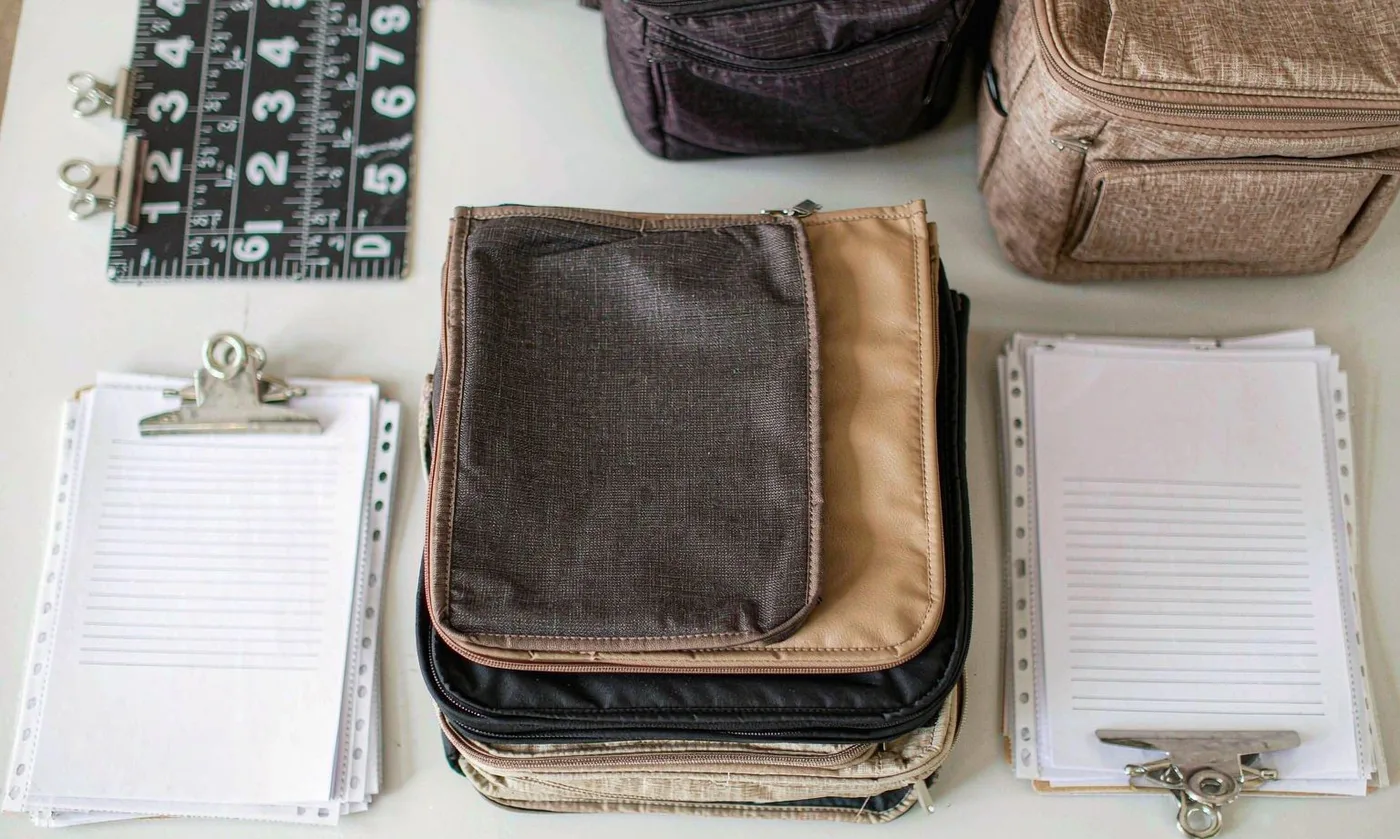
Physical testing deserves numbers rather than a general assurance. For a soft pet carrier we expect strap and handle assemblies tested to a static load above the rated pet weight, seam slippage measured on the load-bearing joins, colourfastness to rubbing and light recorded, zipper cycling counted in thousands of operations, and mesh tested for burst and tear. Ask for the ASTM or ISO method reference next to each result: bare pass/fail ticks let you compare nothing. Our protocol is documented in the pet carrier testing and quality assurance guide.
A document pack is only evidence if it carries an issuer, a number, a date and a scope; anything missing one of those four is marketing collateral.
Audit Questions That Separate Real Capacity from a Photo Library
Photographs are cheap and nearly worthless as evidence; a walk-through video of a finished-goods warehouse proves nothing about who sewed the goods. What separates a genuine pet carrier factory from a well-organised image folder is operational specificity — answers containing numbers, names, frequencies and admissions of imperfection. Below is the question set any serious buyer should run.
| Question | Green answer | Red answer | Weight |
|---|---|---|---|
| How many sewing lines run pet bags, and what is output per line per day? | Named line count with a daily figure and a name for the line leader | “We can do any quantity” | High |
| Who signs the in-line QC sheet, and how many inspectors are on shift? | Named QC head, inspector-to-line ratio, sample size per hour | “Our workers check themselves” | High |
| What is your AQL and how are defects classified? | AQL 2.5 level II, critical / major / minor definitions in writing | “We check 100 percent, no defects” | High |
| Can I see the last twelve months of inspection records? | Summaries with pass rates and recurring defect codes | Refusal, or records that start last month | High |
| What happens to a batch that fails final inspection? | Rework with re-inspection, or remake at supplier cost | “It will not happen” | High |
| How much spare capacity do you hold in the August-November peak? | Percentage reserved, or an honest admission of booking order | Unconditional yes to every date | Medium |
| Can you trace a finished bag back to a fabric roll and a shift? | Batch tag system with roll numbers retained | No batch identification on goods | Medium |
| Do you subcontract any operation, and may you disclose it? | Written disclosure with operation and partner name | Denial that becomes an admission later | High |
| What is the needle and metal detection procedure? | Detector at packing, calibrated, logged per carton | No detector, or one unplugged | Medium |
| Can I appoint my own inspector for pre-shipment and loading? | Yes, with a named contact for coordination | Hesitation or extra charges to allow it | Medium |
Score the answers rather than feeling them. Give each high-weight question three points and each medium-weight question one, and require a threshold before you release a deposit. That habit stops a persuasive salesperson from overriding your process and leaves a written record for whoever inherits the supplier relationship. Buyers who skip it discover the gap when their retailer’s own auditor does, which is the worst possible time.
Note also what a good supplier asks you. A competent production partner will push back on an under-specified tech pack, question a tolerance you cannot hold, and flag a fabric that will fail abrasion before you pay for tooling. Agreement with everything, at any price, on any date, is itself a finding. Our production team would rather lose a week to specification review than a season to a remake, and any pet carrier factory worth contracting will say the same.
Judge a supplier by the specificity of its answers: names, numbers, frequencies and admissions of limitation are the signature of a real production operation.
Verifying Capacity Claims Without Booking a Flight
Most buyers cannot visit before the first order, and a scheduled visit is in any case the least reliable form of evidence because it shows a facility on its best day. Remote verification, done properly, is more honest. The method is triangulation: take the claimed numbers and make them reconcile against each other and against physical constraints.
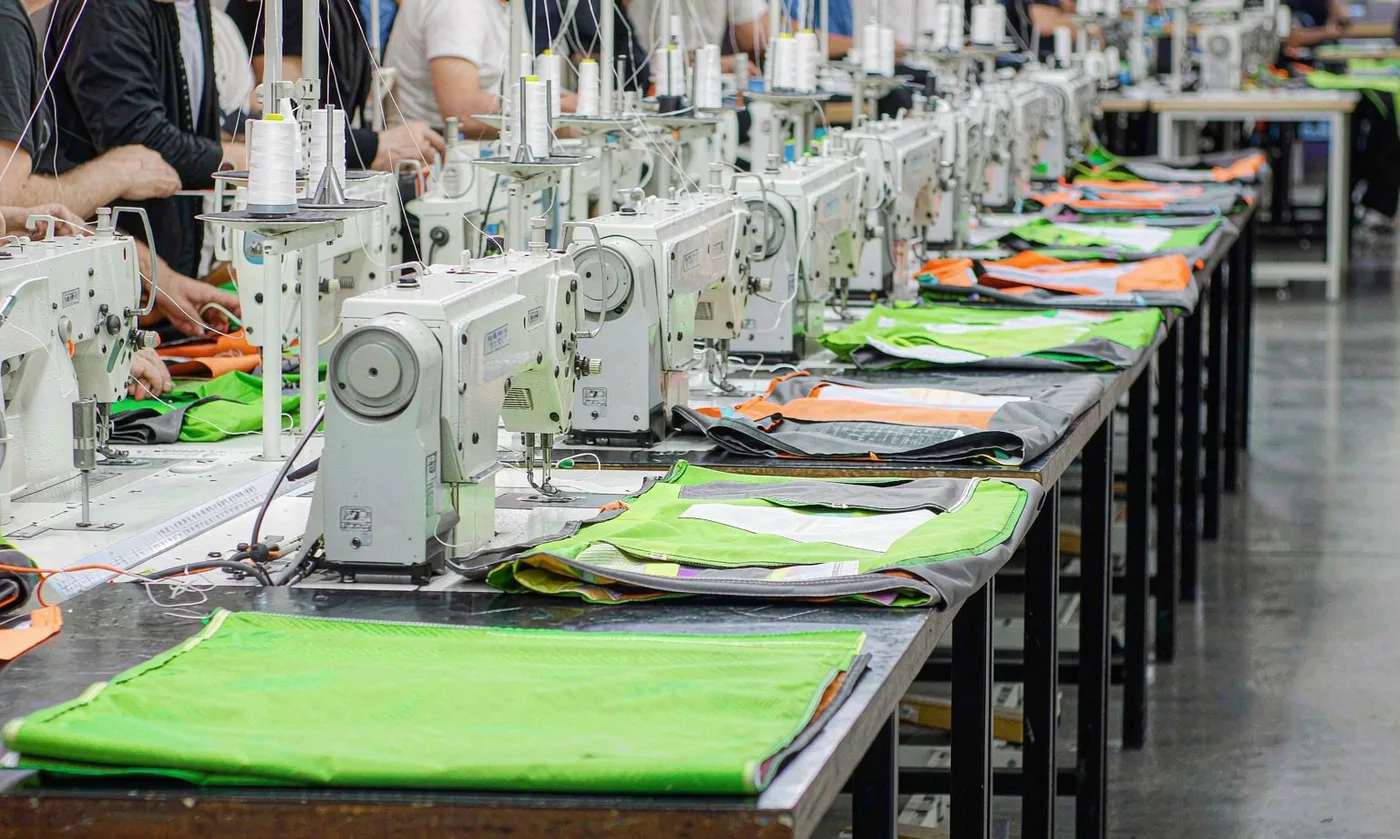
Every pet carrier manufacturer will claim adequate capacity, so start with the arithmetic. Our SGS-verified production base runs 4,950 square metres, 137 staff, 7 production lines and 149 machines, and turns out roughly 200,000 pieces a month. Check that against reality: 200,000 divided across 26 working days is about 7,700 pieces a day, or roughly 1,100 per line per day. For a soft pet carrier with a moderate stitch count that is a plausible figure; for a moulded airline shell with wheel assemblies it would not be. If a supplier claims the same monthly volume from two lines and forty people, the arithmetic fails and you have learned something important without leaving your desk. The same logic applies to floor area: cutting tables, spreading space, bundle storage and finished-goods staging all consume square metres, so output claims that imply more capacity than the footprint can hold deserve scepticism.
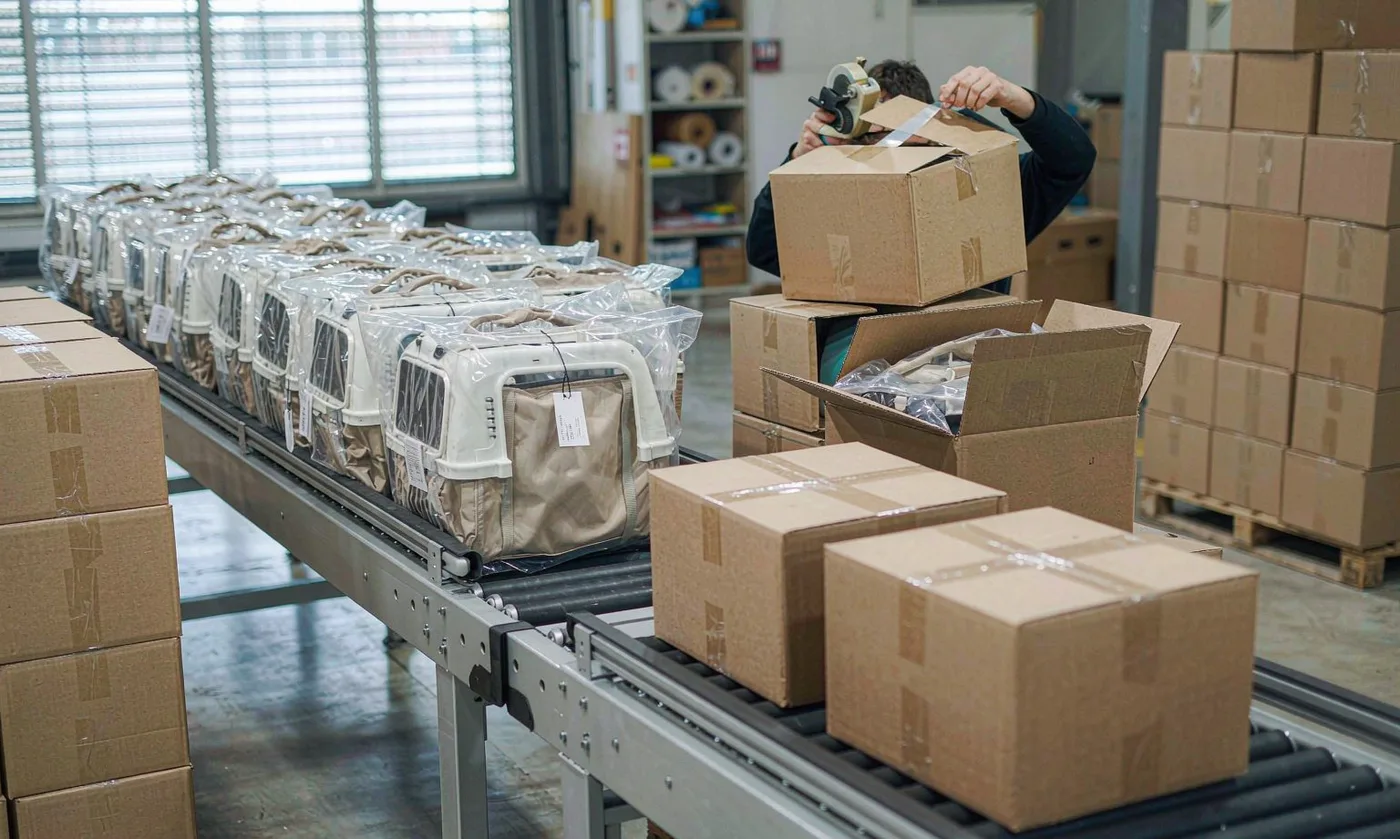
Then ask for evidence that is hard to stage. Request a live, time-stamped video walk-through with a specific sequence: cutting room with spreading in progress, sewing floor with the line identification cards visible, needle detection at the packing point, the QC bench with a tensile tester and a crockmeter, and the finished-goods warehouse showing batch tags on cartons. Ask the camera to stop at a carton and read the tag aloud. Ask for the previous day’s packing list. These requests are not rude; professional manufacturers field them weekly and buyers who never make them are the ones who get surprised.
Third-party verification is the shortcut where budget allows. An SGS-verified production base means an independent auditor has confirmed the site, the headcount band and the process claims against a standard, which substitutes for a first visit. Combine that with commercial evidence: ask how many containers shipped last quarter, to which ports, and whether a redacted bill of lading can be shared. A pet carrier factory shipping real volume can describe those records in detail, and the details are what resist fabrication.
Finally, test response behaviour under mild pressure. Send a specification change at 6pm their time and see whether the reply comes from a production person with a technical objection or from a sales account with a price change. Technical objections are a good sign: the document went to someone who makes bags.
Capacity claims are verifiable from your desk: make the headcount, floor area, line count and monthly volume reconcile, then confirm with a live walk-through and shipping records.
Quote Structure: Where Every Dollar in a Pet Carrier Goes
Two quotes for the same drawing can differ by 40 percent and both be honest. The difference is specification, and the only way to see it is to require a cost breakdown. Ask any pet carrier manufacturer to split a quote into material, trim, labour, packaging, tooling and overhead, because that is how cost is actually built internally and because it makes later changes negotiable instead of mysterious.
| Cost block | Typical share | What moves it most | Your lever |
|---|---|---|---|
| Outer fabric (600D / 900D polyester, coating) | 30-42% | Denier, coating type, colour, order size vs dye lot | Standardise colourways; avoid custom dye lots |
| Lining and mesh | 8-12% | Mesh grade, airflow vs tear resistance, anti-scratch finish | Specify mesh by burst and tear value, not by look |
| Hardware (zippers, buckles, D-rings, hooks) | 10-18% | Brand, zinc alloy vs iron, plating, custom moulding | Use stock hardware; customise finish not geometry |
| Padding, foam and structural boards | 6-12% | Foam density, EVA or PE board, base reinforcement | Set density in kg/m3 and rebound, not thickness |
| Webbing, binding and thread | 4-7% | Width, tensile rating, anti-UV treatment | Limit webbing SKUs across the range |
| Labour (cutting, sewing, assembly, trimming) | 12-20% | Stitch count, panel count, jig availability, line efficiency | Design for panel reduction and repeat operations |
| Packaging (polybag, hangtag, carton, insert) | 3-6% | Print method, carton grade, retail-ready requirements | Consolidate artwork; avoid late packaging changes |
| Tooling and moulds | One-off | Custom buckles, logo plates, silicone patches, embossing | Amortise across the annual programme, not one PO |
| Testing and certification allocation | 1-3% | Destination market, number of test items, retests | Plan the test matrix once per platform, not per colour |
| QC, compliance and overhead | 1-2% | Audit upkeep, inspection man-days, documentation | Accept it; removing it removes your recourse |
| Inland haulage and FOB Xiamen handling | 1-3% | Distance to port, carton cube, peak-season trucking | Optimise carton cube before quoting freight |
Read the table as a negotiation map. Without a breakdown you cannot tell whether a ten percent increase came from a better zipper or from a margin decision. With it, useful moves appear: standardising colourways attacks the largest block, and amortising tooling across a year of orders changes the unit economics of custom hardware entirely.
Understand the incoterm before comparing. Our quotations are FOB Xiamen: the price covers goods, inland haulage, export clearance and loading onto the vessel, after which ocean freight, insurance, duty and destination handling belong to the buyer. A CIF or DDP number from another supplier is not cheaper or dearer, it is a different scope, and comparing them directly is the most common costing error in this category. Convert everything to a landed cost per unit first.
Then ask for the requote rule: what happens if fabric moves more than five percent, or quantity changes after booking? A pet carrier manufacturer with a written validity window is protecting both parties from an argument in month two.
Never compare lump sums: convert every quote to a line-item breakdown and a landed cost per unit on the same incoterm, or you are comparing different products.
MOQ, Sampling and the Bulk Production Calendar
Minimum order quantity is not an arbitrary gate; it is the point at which a production run becomes technically and economically coherent. Our standard is 500 pieces per colourway. Below that threshold three things break: the mill will not confirm a dye lot at a rational price, print set-ups cannot be amortised, and the line changeover consumes a disproportionate share of the shift. Buyers who push a dog carrier factory or a pet carrier manufacturer below its natural MOQ pay for the privilege in unit price, material compromise, or a fabric substitution nobody documented.
That said, MOQ is negotiable in the right currency. Consolidating sizes within one colourway, accepting a stock fabric from the mill’s shade card, or committing to a second repeat order in writing will often move the number; simply asking rarely does. Bring a trade, not a request. The mechanics are set out in our MOQ and minimum order quantity guide, including how MOQ interacts with private-label packaging runs.
| Stage | Duration | Gate / decision | Who waits on whom |
|---|---|---|---|
| Enquiry and tech pack review | 2-4 working days | Specification gaps closed | Buyer supplies drawings and tolerance |
| Quotation with cost breakdown | 2-4 working days | Price and incoterm agreed | Supplier |
| First sample | 6-10 working days | Fit, construction, material hand-feel | Supplier |
| Sample revision round (if required) | 5-7 working days | Pattern or spec correction | Buyer returns marked comments |
| Deposit, T/T 30% | 1-3 working days | Order confirmed and scheduled | Buyer |
| Material booking and incoming QC | 7-14 days | Fabric, trim and hardware confirmed | Mill and trim vendors |
| Pre-production sample | 3-5 days | Golden sample sealed and signed | Joint |
| Bulk production | 35-50 days | In-line QC against sealed sample | Supplier |
| Final inspection, AQL 2.5 | 1-2 days | Pass, rework or remake decision | Inspector |
| Balance T/T 70%, release and loading | 3-7 days | Bill of lading issued | Buyer then supplier |
Two lessons follow. First, the critical path is usually materials, not sewing: 7-14 days of fabric and hardware booking sits ahead of the 35-50 day production window, and a custom-dyed fabric or a branded zipper programme extends it further. Second, the calendar is only as reliable as the approval loop. Every day a sample sits on a buyer’s desk without comments is a day added to the landing date. Build your own internal approval deadline into the schedule and the full timeline, set out stage by stage in the production lead time timeline, becomes manageable rather than aspirational.
Peak season deserves explicit planning. Capacity tightens from roughly August to November as Western buyers stock for the holidays, and booking order matters: the buyer who confirms in June gets the line, the buyer who confirms in September gets a promise. With a fixed shelf date, work backwards and place the deposit early even if artwork is still in review. A hangtag can be changed late; a sold production slot cannot be recovered.
Plan from the material booking date, not the sewing date, and treat the sample approval loop inside your own company as part of the critical path.
OEM or ODM: Choosing the Engagement Model
The OEM / ODM decision is a decision about where you spend money: on development or on differentiation. Both models produce a bag; they differ in who owns the risk of the design and who owns the resulting intellectual property.
ODM means you start from an existing platform — a pattern, a set of moulds, a tested structure the supplier already runs. The advantages are real: shorter development, no tooling charge, lower effective MOQ, and a construction whose failure modes are already known because it has shipped before. The costs are equally real: limited differentiation, dimensional constraints inherited from existing tooling, and the possibility that a visually similar product appears under another brand. For a first market test, ODM is usually correct — you learn whether the category sells before committing five figures to tooling.
OEM means you bring the design. You supply the tech pack, the tolerances, the material specification and the test protocol; the production partner executes. Development is slower and tooling is chargeable, but you own the geometry, you can enforce exclusivity by contract, and the product cannot be replicated by a competitor buying from the same catalogue. Programmes that have passed a market test, private-label ranges for retailers with their own specification standards, and anything with a structural claim you intend to advertise should be OEM.
The hybrid is often the best commercial answer. Take an ODM platform for the base structure and shell geometry, then apply OEM-level customisation where the customer actually perceives value: a custom printed outer fabric, a branded hardware finish, a proprietary colourway, a logo system executed in silicone or embossed leatherette, and retail packaging designed to your grid. You get most of the differentiation at a fraction of the tooling, and you keep the structural reliability of a platform that has already been tested. When you ask a pet carrier manufacturer for a quote, ask for the ODM and the hybrid number side by side; the gap is usually narrower than buyers expect, and it tells you how much of the price is actually tooling.
Whichever route you take, settle intellectual property in writing before the first sample. An NDA is the floor, not the ceiling. State who owns the pattern, the tooling, the moulds and any process improvement developed during the programme, and state what happens to them if you move the programme elsewhere. Tooling paid for by the buyer should be identified, marked, and removable. This clause is cheap to write and extremely expensive to litigate.
Use ODM to prove demand, move to OEM once volume justifies tooling, and consider the hybrid platform route when you need differentiation without a full development budget.
Red Flags That Should End the Conversation
Some problems announce themselves early. The signals below are drawn from failure patterns that recur in this category, and any one is sufficient reason to slow down before releasing money.
Reports without identifiers. A test report delivered as an image with no laboratory name, no report number and no sample date is not evidence. Neither is a certificate cropped so that the scope statement and expiry are outside the frame. Ask for the PDF and check the issuer.
Audit avoidance. Refusing a third-party audit, or claiming certification while declining to share the report, or repeatedly rescheduling a video walk-through, all point the same direction. A supplier with a valid BSCI report will send it in an hour because it is already in a folder.
An anomalously low MOQ. A dog carrier factory quoting 50 or 100 pieces per colourway on a custom fabric is not being flexible; it is either reselling stock someone else made or planning a substitution it has not told you about. Compare the claimed flexibility against the dye-lot and set-up costs in the costing table above and the number will not survive contact with arithmetic.
A price below material cost. Add the fabric, trim and hardware cost implied by your specification and compare it to the quote. If the total is below the material floor, the gap will be recovered somewhere you will not like: a lighter coating, an unbranded zipper, a lower foam density, or an unapproved substitution after you have signed.
Nameless materials. “Polyester” is not a specification. A professional pet bag supplier names the denier, the weave, the coating and the mill, and will state the test values for abrasion, tear and colourfastness. If the material answer is an adjective, the material will change.
Perfect sample, different bulk. The classic sample bias: a hand-made first sample built by the best operator on the floor, photographically perfect, followed by a bulk run that does not match. The cure is a signed golden sample retained by both parties, an in-line check against it, and a pre-shipment inspection that references it by number.
Entity and payment mismatches. Business licence in one name, certificates in a second, invoice in a third, and a request to pay a personal or unrelated account. This combination creates a situation in which nobody is liable when something fails. It also usually predicts a push for full prepayment, which professional buyers decline: T/T 30/70 is the market norm, and a demand for 100 percent up front from a counterparty you have never audited is not a term, it is a warning.
No inspection rights. Any resistance to your own inspector, to a pre-shipment AQL 2.5 check, or to container loading supervision should be treated as decisive. Inspection rights cost a good supplier nothing and cost a bad one everything.
Red flags cluster: a supplier that shows one of these signals usually shows three, and the cheapest moment to act on them is before the deposit, not after the inspection.
Contracts, Payment Terms and the Inspection Standard
The contract is where the previous sections become enforceable. A purchase agreement for wholesale pet carriers needs less legal language than buyers expect and more technical annexes. The body should cover price, quantity, incoterm, delivery window, payment, inspection, defect liability, intellectual property, exclusivity and termination. The annexes carry the engineering: specification with tolerances, material declaration, test matrix, packaging specification, and a reference to the sealed golden sample.
Be specific about tolerances, because “approximately” is where disputes start. State linear tolerance in millimetres, colour tolerance as a delta-E value against an approved swatch, fabric weight tolerance as a percentage, and stitch density with a range. State what happens when a measurement falls outside: rework, credit or rejection. Vague specifications produce vague outcomes, and vague outcomes are resolved in favour of whoever holds the goods.
Payment follows risk. The market standard is T/T 30/70: thirty percent deposit releases materials and books the production slot, and seventy percent is paid against a copy of the bill of lading after the goods pass final inspection. That structure aligns incentives, because the bulk of the money moves only after the buyer’s inspector has signed. Letters of credit at sight are common on larger programmes where the volume justifies the bank cost. Buyers should avoid full prepayment to an un-audited counterparty; suppliers should avoid open account on a first order.
On incoterms, FOB Xiamen keeps control with the buyer: you appoint the forwarder, you see the freight cost line by line, and you pay no hidden margin on a service you did not choose. Confirm in writing who bears inland haulage, export clearance, terminal handling and the cost of any inspection-induced delay, and name the port explicitly rather than relying on a generic port clause.
Inspection is the clause that decides whether the others ever get used. Most pet carrier manufacturer contracts release against AQL 2.5 at general inspection level II, with critical defects accepted at zero, major at 2.5 and minor at 4.0. Define the classes in the contract rather than leaving them to the inspector. Critical means a failure that can injure an animal or a person: a broken load-bearing seam, a strap or buckle releasing under rated load, a defeated safety latch, an exposed sharp point, non-compliant labelling. Major means a defect a retail customer would reject: staining, misaligned panels, a binding zipper, a print outside tolerance. Minor means a cosmetic imperfection a customer would not notice at arm’s length. Agree the carton selection method and require photographs of every critical and major finding.
Finally, agree the failure remedy before you need it: who pays for rework and remaking, the credit per defective unit, and the penalty for a delivery missed without force majeure. A supplier that accepts a late-delivery clause is telling you it intends to be on time.
A contract is only as strong as its annexes: tolerances, defect taxonomy, inspection method and the remedy for failure are what actually resolve a disputed shipment.
Putting It Together: A Three-Week Vetting Workflow
Pulling the preceding sections into a sequence, here is the workflow we would run if we were buying rather than making. It fits inside three weeks of part-time effort and it removes most of the downside from a first order with any pet carrier manufacturer.
Week one is documentary. Send the same request for information to four or five candidates, whether they present as a dog carrier factory or as an integrated pet carrier manufacturer: business licence, BSCI and ISO 9001 certificates, REACH and Prop 65 declarations, two recent test reports with laboratory identifiers, and a cost breakdown template you have filled in yourself so the replies are comparable. Do not send a drawing yet. You are testing responsiveness and documentation quality, and the difference between candidates will be obvious by Friday.
Week two is technical. Send the tech pack to the two or three that survived week one and ask for clarifying questions rather than a price. Evaluate the questions: the best candidate will identify an over-tolerance dimension, suggest a cheaper hardware route that holds the same test value, or warn you that a specified fabric will not meet the abrasion target. Those objections are free engineering. Then request the live walk-through with the sequence described earlier, and score it while watching rather than afterwards.
Week three is commercial and contractual. Compare landed cost per unit on a single incoterm, confirm the MOQ 500 per colourway structure and what would legitimately reduce it, fix the calendar from material booking to vessel, agree T/T 30/70 and FOB Xiamen, and exchange the specification annex with tolerances and the defect taxonomy. Place a first order that is large enough to be taken seriously and small enough to be a test — one colourway, one or two sizes — and inspect it as if it were your last order with that supplier, not your first.
QUANZHOU JUNYUAN BAGS has run pet bag programmes since 2014, with a founder who entered the bag trade in 2004, operating through an SGS-verified production base of 4,950 square metres, 137 staff, 7 production lines and 149 machines at roughly 200,000 pieces a month, under BSCI and ISO 9001 certification. Our production team works to the numbers in this article: MOQ 500 per colourway, samples in 6-10 working days, bulk production in 35-50 days, release against AQL 2.5, T/T 30/70 and FOB Xiamen. We publish them because a buyer who knows the standard is easier to work with, and because the alternative to transparency is a long email thread in month three. If you are evaluating a pet carrier manufacturer for a 2026 programme, send us the same document request you would send anyone else; the comparison will be useful even if you place the order elsewhere.
Three weeks of structured vetting — documents, then technical objections, then landed cost and contract terms — converts a sourcing gamble into a managed decision.
SGS-verified production base
- SGS-verified production floor of 4,950 m², 149 machines, 7 assembly lines
- 137-person team running pet carrier programmes since 2014
- 200,000 units monthly, audited to BSCI and ISO 9001
People Also Ask
What is the minimum order quantity for a pet carrier manufacturer?
The industry norm for a custom soft pet carrier is 500 pieces per colourway. That threshold is set by fabric dye-lot minimums, print and heat-transfer set-up costs, and sewing line changeover efficiency rather than by policy. Quantities below it are sometimes possible in exchange for a trade — accepting a stock shade from the mill, consolidating sizes within one colourway, or committing to a repeat order in writing.
How long does sampling take for custom pet carriers?
From an approved tech pack, a first sample takes 6-10 working days at a competent production partner. If the sample needs pattern or specification changes, budget a further 5-7 working days for a revision round. Samples built from scratch without a tech pack take considerably longer, because the pattern itself has to be developed before anything can be sewn.
How do I verify a pet carrier factory is real without visiting?
Triangulate the numbers and then confirm them live. Make the claimed monthly output reconcile with the stated line count, headcount and floor area; then request a time-stamped walk-through covering cutting, sewing, needle detection, the QC bench and finished-goods batch tags; then ask for third-party verification such as an SGS-verified site record and a description of recent container shipments with ports and dates.
What certifications should a pet carrier manufacturer hold?
Ask for ISO 9001 for process control, a BSCI or amfori audit report for social compliance, REACH and California Proposition 65 declarations for chemical compliance, OEKO-TEX Standard 100 on fabric and trim where available, and physical test reports naming the laboratory, method and date for strap tensile, seam strength, zipper cycling and colourfastness.
Why do quotes for the same pet carrier design differ so much?
Usually because the specification is not actually the same. Fabric denier and coating, zipper brand, foam density, base reinforcement and hardware plating can each move the unit price by several percent, and incoterms change the scope entirely. Require a line-item breakdown and convert every quote to landed cost per unit on one incoterm before comparing.
Should I choose OEM or ODM for my first pet carrier order?
ODM is usually correct for a first order: you start from a tested platform, avoid tooling charges and reach the market faster. Move to OEM once volume justifies tooling and you need exclusivity or a structure you can advertise. A hybrid — ODM structure with custom fabric, hardware finish and packaging — often delivers most of the differentiation at a fraction of the development cost.
Frequently Asked Questions
What payment terms are standard when ordering wholesale pet carriers?
T/T 30/70 is the market standard: a 30 percent deposit releases materials and books the production slot, and the 70 percent balance is paid against a copy of the bill of lading after the goods have passed final inspection. Letters of credit at sight are used on larger programmes where the bank cost is justified. Full prepayment to a counterparty you have not audited is not a term worth accepting.
What does FOB Xiamen include and who pays for what?
FOB Xiamen covers the goods, inland haulage to the port, export clearance and loading onto the vessel. From that point, ocean freight, marine insurance, import duty, customs clearance and destination handling belong to the buyer. Naming the port explicitly in the contract avoids the argument that arises when a generic port clause meets a congested booking window.
How is AQL 2.5 applied on a pet carrier order?
Cartons are selected at random under general inspection level II and units are drawn from them. Critical defects are accepted at zero, major defects at 2.5 and minor defects at 4.0. A result above the acceptance number triggers rework with re-inspection, or a remake at the supplier's cost. Every critical and major finding should be photographed and listed in the report.
Can I mix sizes or colours within one minimum order quantity?
Sizes can usually be mixed within a single colourway, because the fabric and trim purchase is unchanged and only the cutting marker differs. Mixing colourways is different: each colourway is its own dye lot and its own MOQ. If you want four colours, plan four colourway runs or consolidate to a fabric the mill already holds in stock.
Who owns the tooling and moulds I pay for?
The buyer should own them, in writing. The contract should identify each tool, require it to be marked as buyer-owned, and state that it can be transferred or removed if the programme moves. Without that clause, tooling paid for by you remains in the supplier's possession and your design travels with it.
Can I nominate my own fabric mill or hardware brand?
Yes, and most production partners prefer it because it removes ambiguity. Nominate the mill, the denier, the coating and the test values, or name the zipper and buckle brand and finish. Expect the lead time to move: nominated materials often add days to the booking window, particularly for branded hardware programmes.
How are labelling and country-of-origin requirements handled?
Labelling is a specification item, not an afterthought. Fibre content, country of origin, care instructions, batch or date coding and any warning text required by the destination market should appear in the tech pack and on the sealed golden sample. Retailers frequently impose their own format, so confirm the artwork before packaging runs rather than after.
What happens if the bulk shipment fails final inspection?
The remedy should already be written down: rework with mandatory re-inspection for major defects, unit credit for minor defects above tolerance, and remake at the supplier's cost where critical defects or a rate above the agreed threshold appear. Payment of the 70 percent balance is withheld until the re-inspection passes, which is the practical reason the T/T 30/70 structure protects buyers.
Do you provide documentation for airline-approved pet carriers?
Ventilation geometry, base rigidity, leakage containment and maximum pet weight can all be built to a written airline-facing specification, and the dimensional and structural evidence can be supplied as part of the document pack. Because carrier rules vary by airline and change periodically, the buyer remains responsible for confirming acceptance with the specific carriers their customers will fly.
Can I visit or audit the production base?
Yes. Buyers are welcome to visit, and third-party auditors are welcome to audit. Where travel is not practical, a scheduled live video walk-through with a specified route — cutting, sewing, needle detection, the QC bench and finished-goods batch tags — is an accepted substitute for a first assessment.
How is my design protected before the first sample is made?
An NDA is the minimum. The stronger protection is a contract clause stating who owns the pattern, drawings, tooling and any process improvement developed during the programme, plus an exclusivity term covering territory and channel. Register your design rights in your own market as well; contract clauses bind the counterparty, registered rights bind everyone else.
How should I plan around peak season capacity?
Capacity across the industry tightens from roughly August to November as Western buyers stock for the holiday period, and production slots are allocated in booking order. Confirm deposits early, even if artwork is still in review, and hold the packaging change window open late — artwork can be changed after booking, a sold production slot cannot be recovered.
Talk to QUANZHOU JUNYUAN BAGS about a pet carrier programme: MOQ 500 pieces per colourway, samples in 6-10 working days, bulk production in 35-50 days under AQL 2.5 inspection.
Get a free quote Request a sample