Dog Carrier Backpack with Bowl Holder: Manufacturing
A bowl holder is dimensioned around the collapsed bowl, not the expanded one: a 500 ml collapsible silicone bowl measures 95-110 mm across the rim and 20-28 mm collapsed, so the sleeve needs a 115-125 mm opening, a 30 mm depth and an elastic mouth tension of 8-12 N. Bowl material must be platinum-cured silicone at 40-60 Shore A with food-contact documentation, and the holder assembly is cycle-tested to 1,000 insert-and-remove operations at 8-12 N pull.
This page covers the manufacturing path for pet carrier backpacks with an integrated bowl holder, from bowl geometry through material compliance, holder construction, thermal and drainage design, attachment load cases and the hygiene testing that supports a food-contact claim. Four holder constructions are compared on cost, retention and cycle life, with the assembly sequence and the sewing constraints that each one imposes. Commercial terms follow the standard program: MOQ 500 pieces per colourway, prototypes in 6-10 working days, bulk production 35-50 days after sample approval, final random inspection to AQL 2.5, T/T 30/70 payment and FOB Xiamen loading. Because the bowl is a food-contact article, the documentation package is heavier than for a plain pocket, and the compliance file should be opened at quotation stage rather than after the golden sample is approved.
The economics of wholesale pet carriers move with carton cubage, so dog carrier backpack programmes are quoted both by unit price and by filled container.
Defining the Bowl Holder: Retention Geometry from Collapsed Bowl Dimensions
The first drawing decision is which state of the bowl the holder is built for. A collapsible silicone bowl has two: collapsed, it is a squat disc; expanded, it is a truncated cone with a wide rim and a narrow base. The holder must retain the collapsed state during transport, because that is when the product is moving, and release it quickly when the wearer stops. Designing for the expanded state produces a holder that lets the bowl rattle loose on every step.
A 500 ml bowl typically measures 95-110 mm across the rim, 70-85 mm across the base, and 20-28 mm in height when collapsed, with a collapsed weight of 90-130 g. A 1 L bowl runs 130-145 mm across the rim and 30-40 mm collapsed. The sleeve or cradle is then dimensioned with 10-15 mm of ease on the collapsed diameter and a depth 5-8 mm greater than the collapsed height, so the bowl sits fully inside without protruding past the holder mouth.
Retention force is the number that decides whether the design works in the field. Too loose and the bowl ejects under a 1.5 G vertical cycle; too tight and the wearer cannot extract it one-handed while holding a lead. The working window measured across production samples is 8-12 N of extraction force for a 500 ml bowl, rising to 12-18 N for a 1 L bowl because the mass is greater. Force is set by the elastic mouth circumference, which is cut at 85-88% of the bowl's collapsed circumference and verified on the first ten units of every production run.
Orientation matters more than it appears to. A holder mounted on the side panel with its mouth facing upward collects rain and dust; the same holder with the mouth angled 15-20 degrees from vertical sheds water but loses retention under lateral acceleration. The compromise used in production is a near-vertical mouth with a 25 mm storm flap over the top edge and a 5 mm drain eyelet at the base, which keeps retention numbers intact while solving the contamination problem. The bowl holder should be treated as a retention device with a specified extraction force, not as an open pocket that happens to hold a bowl.
Silicone Bowl Material: Hardness, Cure Chemistry and Food-Contact Compliance
Bowl material is specified by cure chemistry, hardness and thermal range before anything else. Platinum-cured (addition-cured) silicone is the standard for food contact because the reaction leaves no peroxide by-products, so there is no post-cure odour and no need for a long post-bake. Peroxide-cured silicone is cheaper by 10-18% but carries a characteristic smell for several weeks and can fail odour screening at retail. Hardness of 40-60 Shore A is the working range: below 40 the bowl collapses under its own water weight when lifted, above 60 it resists folding and the collapsed height grows.
Wall thickness interacts with hardness. At 1.2-1.5 mm wall and 45 Shore A, a 500 ml bowl stands reliably when filled and folds to roughly 22 mm. At 2.0 mm wall the same bowl folds to 30 mm and the holder has to grow with it, which starts to affect the carrier's silhouette. The practical approach is to specify wall thickness and hardness together in the bowl drawing and to hold both in incoming inspection, because a supplier who compensates for a soft compound by thickening the wall will quietly break the collapsed-height dimension.
Food-contact documentation is the compliance core. For the US market the bowl should be supported by a declaration against the relevant FDA food-contact rubber article provisions, plus CPSIA screening for lead and phthalates because retailers apply that screen to pet accessories by default; the reference point for US consumer-product chemical limits is the U.S. Consumer Product Safety Commission. For the EU, overall and specific migration testing is run against the framework maintained by ECHA and national food-contact rules, with LFGB-style sensory testing — odour and taste transfer — frequently requested by German retailers.
Colourants and additives are the usual failure point, not the base polymer. Pigments must be from a food-contact-approved masterbatch list, and any antimicrobial additive must be declared, because several common silver-based systems are restricted in food-contact applications. Requesting a full additive declaration alongside the migration report is standard practice and avoids a re-test when a retailer's compliance team asks what the colourant carrier is.
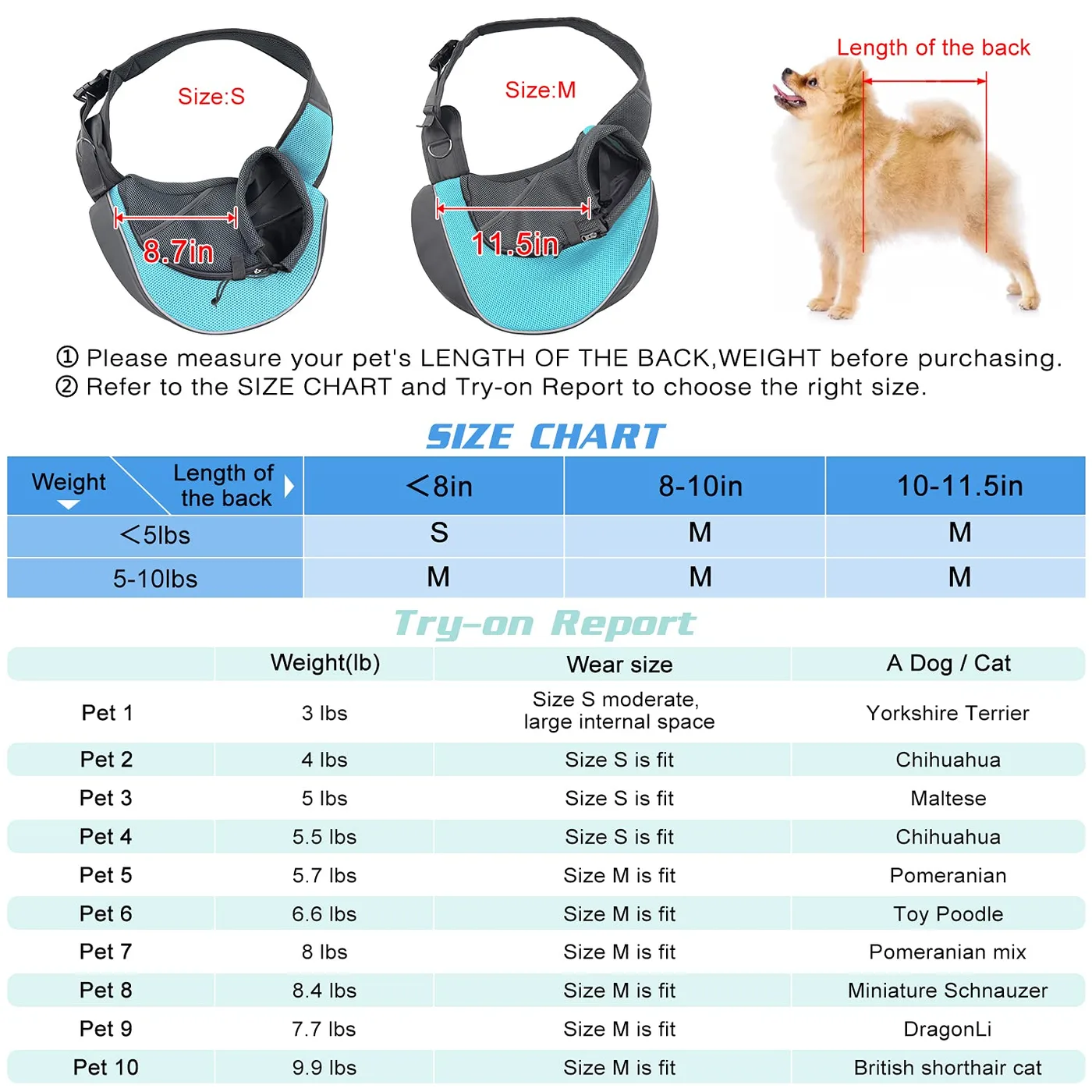
Holder Constructions: Sleeve, Cradle, Strap Loop and Moulded Dock
Four constructions cover most production programmes and they differ sharply in cost and in what they do to the sewing line. A fabric sleeve is the simplest: a shaped panel sewn to the shell with an elastic-bound mouth, assembled flat on the same station as a side pocket. Cost is 0.30-0.55 USD and it adds under a minute of labour. Retention depends entirely on the elastic, so it is the construction most sensitive to elastic fatigue over the product's life.
A webbing cradle is the middle option. Two or three 20-25 mm webbing straps span the bowl and hold it against a backing panel, with one strap carrying a side-release buckle or a hook-and-loop closure. This construction is robust, tolerates bowl dimensional variation of ±6 mm without rework, and is the preferred choice when the bowl is sourced separately from the carrier. Cost is 0.55-0.95 USD and it adds two bar-tacked anchors per strap.
| Construction | Extraction force (N) | Cycle life | Bowl tolerance | BOM add (USD) | Line time |
|---|---|---|---|---|---|
| Fabric sleeve, elastic mouth | 8-12 | 1,000 cycles | ±3 mm | 0.30-0.55 | 55 s |
| Webbing cradle, 2 straps | 12-20 | 3,000 cycles | ±6 mm | 0.55-0.95 | 110 s |
| Webbing loop + hook-and-loop tab | 6-10 | 800 cycles | ±8 mm | 0.25-0.45 | 45 s |
| Moulded EVA dock | 18-30 | 5,000 cycles | ±1.5 mm | 1.20-1.90 | 75 s |
| Insulated zippered sleeve | Not retention-based | 5,000 zipper cycles | ±10 mm | 1.40-2.20 | 160 s |
A moulded EVA dock is the engineered solution. The dock is compression-moulded to the bowl's collapsed profile with an interference fit of 1.0-1.5 mm, giving positive retention that does not depend on elastic at all. It holds dimensional tolerance tightly — which is the downside, because a bowl change of more than 1.5 mm requires new tooling at 1,500-3,000 USD. Docks are specified for programmes with a locked bowl supply and annual volume above roughly 5,000 units.
The fourth option, an insulated zippered sleeve, is used when the bowl is carried wet or pre-filled. It abandons retention-force design in favour of containment, uses closed-cell foam of 3-5 mm bonded to a coated lining, and needs a sealed base seam plus a drain path. It is the most expensive construction on the list and the only one that tolerates a wet bowl without contaminating the rest of the carrier.
Thermal and Hygiene Design: Insulation, Drainage and Drying
Water in a carrier is a hygiene and a materials problem. A bowl put away damp will colonise the holder lining within 48 hours at ambient temperature, and the resulting odour complaint is one of the most common field issues in this category. Design response has three parts: keep liquid away from the shell, let it escape if it gets in, and let the assembly dry.
Insulation is the first part where the bowl may be carried filled. Closed-cell EVA or PE foam of 3-5 mm bonded to the lining slows temperature change but does not prevent it; a filled bowl at 15 °C in a 30 °C ambient reaches ambient in roughly 90-120 minutes with 4 mm foam, so insulation should be described in terms of hours of temperature hold rather than as thermal performance in the abstract. Reflective aluminium facing on the foam adds little in this geometry and is usually a styling choice.
Drainage is the second part and is more effective than insulation at preventing complaints. A 5-6 mm eyelet or a mesh panel at the lowest point of the holder lets water out; the eyelet needs a 20 mm bonded backing patch and must be positioned so it does not press against the wearer's back when the carrier is worn. A holder without drainage and without a drainable base is the configuration most likely to generate returns.
Drying is the third part, and it is a design-for-use question rather than a component question. The holder should open wide enough that the lining can be inverted or at least exposed to air — in practice a mouth that opens to at least 80% of the holder's width. Specifying a coated lining here is a trade-off: it wipes clean but dries slowly at the seams unless the seams are sealed. Programmes that ship to humid climates generally do better with a sealed-seam coated lining plus drainage than with an uncoated lining that dries faster but stains.
Cleanability testing closes this section. The lined holder is soiled with a standard soil, wiped with a damp cloth, and assessed for residual staining against a grey scale, with a second cycle after 24 hours to check for odour development. Acceptance is grade 4 or better for staining and no perceptible odour after the second cycle.
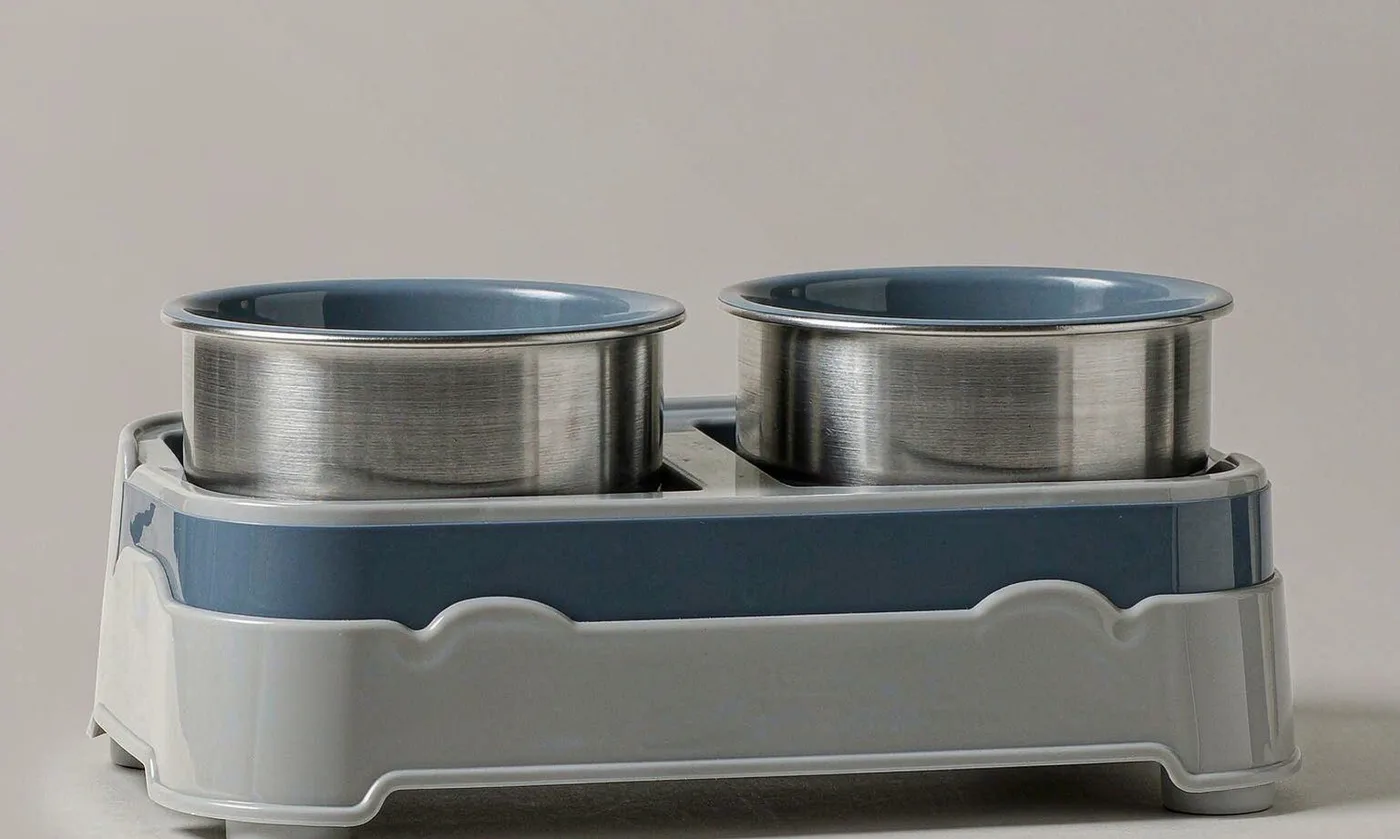
Attachment Load Cases and Cycle Testing
The holder's attachment to the shell carries every load the bowl generates, and those loads are larger than they look because they are dynamic. A 130 g bowl filled with 500 ml of water is roughly 630 g static; under a 1.5 G vertical walking cycle the effective load reaches 950 g, and under a mis-step transient it can exceed 1.5 kg for a few milliseconds. The attachment is therefore tested as a structural joint, not as a trim detail.
Static load is run first: the holder is loaded to 2 kg and held for 24 hours at 23 °C, then at 40 °C for a further 24 hours because adhesive-backed constructions soften at temperature. Acceptance is no permanent deformation beyond 2 mm and no stitch elongation at any anchor. Anchors that fail here are almost always bar-tacked over too short a length — the specification is 12 mm minimum, joined into the shell with a 12 mm seam allowance.
Cycle testing is the test that predicts field life. Insert-and-remove is run for 1,000 cycles on sleeve and loop constructions and 3,000 on cradles, with extraction force measured at cycle 1, 100, 500 and the final cycle. Acceptance is force retention above 75% of the initial reading. Elastic-mouth sleeves typically drop to about 80% by cycle 500 and then plateau; a construction that is still falling at cycle 1,000 has too little initial elastic reserve and will be loose in the field.
Vibration and drop complete the set. The loaded carrier is run on a vertical vibration table for two hours and then dropped from 600 mm in the orientations that load the holder, six drops per orientation. Failure modes seen in practice are bar-tack stitch breakage, elastic pull-out from the binding, and — for moulded docks — cracking at the dock-to-shell rivet holes. Riveted docks need a 3 mm washer on the back face; without one, the rivet head pulls through the shell within a few hundred cycles.
Hardware inside the holder deserves its own note. Any metal component adjacent to food contact should be 304 stainless or have a declared food-safe coating, and should pass 48 hours of neutral salt spray. Plated carbon steel hardware adjacent to a damp bowl corrodes within weeks and stains the lining permanently.
Migration, Odour and Cleanability Testing
Food-contact testing is run on the bowl and on any lining or hardware that can touch it. The bowl is tested for overall migration and, where the market requires it, specific migration of the relevant metal and organic species. Simulants are chosen by contact conditions: distilled water or 3% acetic acid for aqueous contact, 10% or 50% ethanol depending on the market protocol, and a fatty simulant where the bowl may carry wet food. Contact time and temperature follow the market rule, commonly 2 hours at 40 °C or 10 days at 40 °C for long-term storage scenarios.
Odour and taste transfer is the sensory screen that decides whether a bowl passes in practice. The bowl is held in a closed vessel with a reference medium, and a panel or an instrumental method assesses transferred odour. Platinum-cured compounds pass this routinely; peroxide-cured compounds frequently fail it even when migration is compliant, which is why cure chemistry belongs in the specification rather than in the supplier's discretion.
The holder lining is tested separately because it is a textile in proximity to food. Screening against OEKO-TEX criteria covers the dye and finishing chemistry of the fabric stack, and the coating is declared for REACH SVHC under the framework published by ECHA. Where the lining is claimed as wipe-clean, a disinfectant-compatibility test is worth running: several quaternary ammonium cleaners degrade PU coatings within a few dozen applications, turning a wipe-clean claim into a warranty problem.
Documentation discipline is what makes these tests useful. Each report should carry the bowl's material lot, the mould cavity set, and the production date, and those identifiers should appear on the packing record for the order. A migration report that cannot be tied to a specific lot is not evidence, and retailers increasingly reject it as such.
Assembly Sequence and Sewing Considerations
Bowl holders are assembled early in the sequence, before the compartment is closed, for one reason: access. Every holder construction except a simple strap loop needs bar-tacking, and a bar-tack machine needs the panel flat and open. Retrofitting a holder after closure requires a narrow-arm post machine and produces visibly lower stitch quality, so the sequence decision made at tech-pack stage determines whether the holder can be built well at all.
Elastic binding on the sleeve mouth is the operation with the highest defect rate. The elastic is stretched to 85-88% of relaxed length during feed, and variation in feed tension of more than 5% produces a mouth that is either loose or puckered. The control is a tension-measured feed attachment rather than operator judgement, plus a first-piece check of mouth circumference on every shift. On a 200,000-unit monthly plan, this single control removes most holder-related defects.
Bonded constructions — foam-insulated sleeves and moulded docks — introduce adhesive process windows. Flame lamination or a solvent-based contact adhesive gives peel strength above 12 N/25 mm, but the adhesive must be given 24 hours at 23 °C before the assembly is flexed or tested. Assembly lines that skip the dwell produce parts that pass visual inspection and delaminate in the field, which is a difficult failure to diagnose after shipment.
Riveting a moulded dock is the last assembly consideration. Rivets should be set with a controlled stroke rather than by hand pressure, with a 3 mm backing washer and a setting force recorded on the first twenty pieces. Hand-set rivets vary enough in clinch depth that a proportion will be loose, and a loose dock is a rattling defect that customers notice immediately. Where volume justifies it, an ultrasonic weld through the dock flange into a TPU-coated shell removes the hardware entirely and removes the rattle risk with it.
Cost, MOQ and Sampling Schedule
Bowl holder programmes carry two bills of material: the carrier and the bowl. The bowl itself is 0.85-2.40 USD depending on capacity, wall thickness and cure chemistry, and the holder adds 0.25-2.20 USD depending on construction. A carrier with a 500 ml bowl and a webbing cradle therefore lands roughly 1.40-3.35 USD above the same carrier without one — enough to move a retail price point, which is why the bowl capacity decision should be made with the retail assortment rather than in isolation.
MOQ is set at 500 pieces per colourway for the carrier, but bowls carry their own minimums. A custom-colour silicone bowl requires a moulding run typically starting at 3,000-5,000 pieces, and custom colours in food-contact masterbatch have higher minimums still. The practical path is to specify a stock bowl in a standard colour for the first two orders and commission custom colours once annual volume supports the run. Silicone moulding also needs a longer window: eight to twelve weeks for a new tool and first articles, against 6-10 working days for the carrier prototype that uses a stock bowl.
Sampling should exercise the bowl and the holder together, not separately. A prototype in 6-10 working days should be evaluated with the production bowl at both temperature extremes the product will see — a bowl is measurably stiffer at 5 °C and measurably softer at 45 °C, and both states change extraction force by 10-20%. Measuring force only at room temperature is how a design passes development and fails in a winter or summer market.
Bulk production runs 35-50 days after sample approval, with bowls procured in parallel and kitted before the sewing line starts. Final random inspection to AQL 2.5 covers holder mouth circumference within ±4 mm, bar-tack placement within ±2 mm, extraction force sampled at 8-12 N on five pieces per carton lot, and bowl food-contact documentation matched to the lot packed. A bowl holder programme is only as consistent as its weakest supply link, and the bowl is usually that link, so bowl lot control belongs in the inspection plan alongside the carrier.
Order and quality terms
- MOQ 500 pieces per colourway; samples in 6-10 working days
- Bulk production 35-50 days after approval; AQL 2.5 inspection standard
- T/T 30/70 terms, FOB Xiamen, full document set per shipment
People Also Ask
What size bowl holder fits a 500 ml collapsible bowl?
A 500 ml bowl measures 95-110 mm across the rim and 20-28 mm collapsed. The sleeve needs a 115-125 mm opening with 10-15 mm ease and a depth 5-8 mm greater than the collapsed height so the bowl sits fully inside.
How much force should it take to pull the bowl out?
8-12 N for a 500 ml bowl and 12-18 N for a 1 L bowl. Below that the bowl ejects under a 1.5 G walking cycle; above it the wearer cannot extract the bowl one-handed while holding a lead.
Should the bowl be platinum-cured or peroxide-cured silicone?
Platinum-cured. The addition cure leaves no peroxide by-products, so there is no post-cure odour. Peroxide-cured compounds cost 10-18% less but often fail the sensory odour and taste transfer screen.
What hardness should a collapsible pet bowl be?
40-60 Shore A. Below 40 the bowl collapses under its own water weight when lifted; above 60 it resists folding and the collapsed height grows, which forces the holder to grow with it.
Can a wet bowl be stored in the holder?
Only in an insulated zippered sleeve with a sealed base seam and a drain path. A damp bowl in an open holder will colonise the lining within 48 hours at ambient temperature.
How long does a new silicone bowl tool take?
Eight to twelve weeks for a new mould and first articles, against 6-10 working days for the carrier prototype when a stock bowl is used. Custom colours usually need 3,000-5,000 piece moulding runs.
Frequently Asked Questions
What extraction force retention is required after cycling?
Force must stay above 75% of the initial reading, measured at cycles 1, 100, 500 and the final cycle — 1,000 cycles for sleeves and loops, 3,000 for webbing cradles. A construction still falling at the final cycle lacks elastic reserve.
How is the holder attachment load-tested?
Loaded to 2 kg for 24 hours at 23 °C then 24 hours at 40 °C. Acceptance is under 2 mm permanent deformation and no stitch elongation at anchors, which are bar-tacked over 12 mm with a 12 mm seam allowance.
Why do riveted moulded docks crack?
Rivet heads pull through the shell without a backing washer. A 3 mm washer on the back face is required, and rivets should be set with a controlled stroke rather than hand pressure.
What drainage does a bowl holder need?
A 5-6 mm eyelet or mesh panel at the lowest point, on a 20 mm bonded backing patch, positioned so it cannot press against the wearer's back when the carrier is worn.
How should the holder mouth be oriented?
Near-vertical for retention, with a 25 mm storm flap over the top edge and a drain eyelet at the base. Angling the mouth 15-20 degrees sheds water but loses retention under lateral acceleration.
What hardware is safe next to food contact?
304 stainless or hardware with a declared food-safe coating, passing 48 hours of neutral salt spray. Plated carbon steel near a damp bowl corrodes within weeks and stains the lining permanently.
Which migration simulants are used?
Distilled water or 3% acetic acid for aqueous contact, 10% or 50% ethanol depending on market protocol, and a fatty simulant where wet food is carried — commonly 2 hours at 40 °C or 10 days at 40 °C.
Does the holder lining need its own certification?
Yes. The lining is screened against OEKO-TEX criteria for dye and finishing chemistry and the coating is declared for REACH SVHC. Disinfectant compatibility should also be checked, since quaternary ammonium cleaners degrade some PU coatings.
Why is adhesive dwell time critical?
Bonded foam and dock assemblies need 24 hours at 23 °C before flexing or testing. Skipping the dwell produces parts that pass visual inspection and delaminate in the field.
How is elastic feed tension controlled in production?
By a tension-measured feed attachment with variation under 5%, plus a first-piece mouth circumference check each shift. Operator-controlled feed tension is the largest source of holder defects.
Should extraction force be tested at temperature extremes?
Yes. A bowl is stiffer at 5 °C and softer at 45 °C, changing extraction force by 10-20%. Testing only at room temperature is how a design passes development and fails in a winter or summer market.
What is the program MOQ for a bowl holder carrier?
500 pieces per colourway for the carrier. Custom-colour silicone bowls carry separate moulding minimums of 3,000-5,000 pieces, so stock colours are recommended for the first two orders.
What inspection checks apply to the holder?
Mouth circumference within ±4 mm, bar-tack placement within ±2 mm, extraction force sampled at 8-12 N on five pieces per carton lot, and bowl food-contact documentation matched to the packed lot — all inside the AQL 2.5 plan.
How much does a bowl holder add to unit cost?
The bowl is 0.85-2.40 USD and the holder 0.25-2.20 USD, so a 500 ml bowl with a webbing cradle adds roughly 1.40-3.35 USD over a carrier without one.
Talk to QUANZHOU JUNYUAN BAGS about a pet carrier program: MOQ 500 pieces per colourway, samples in 6-10 working days, bulk production in 35-50 days under AQL 2.5 inspection.
Get a free quote Request a sample